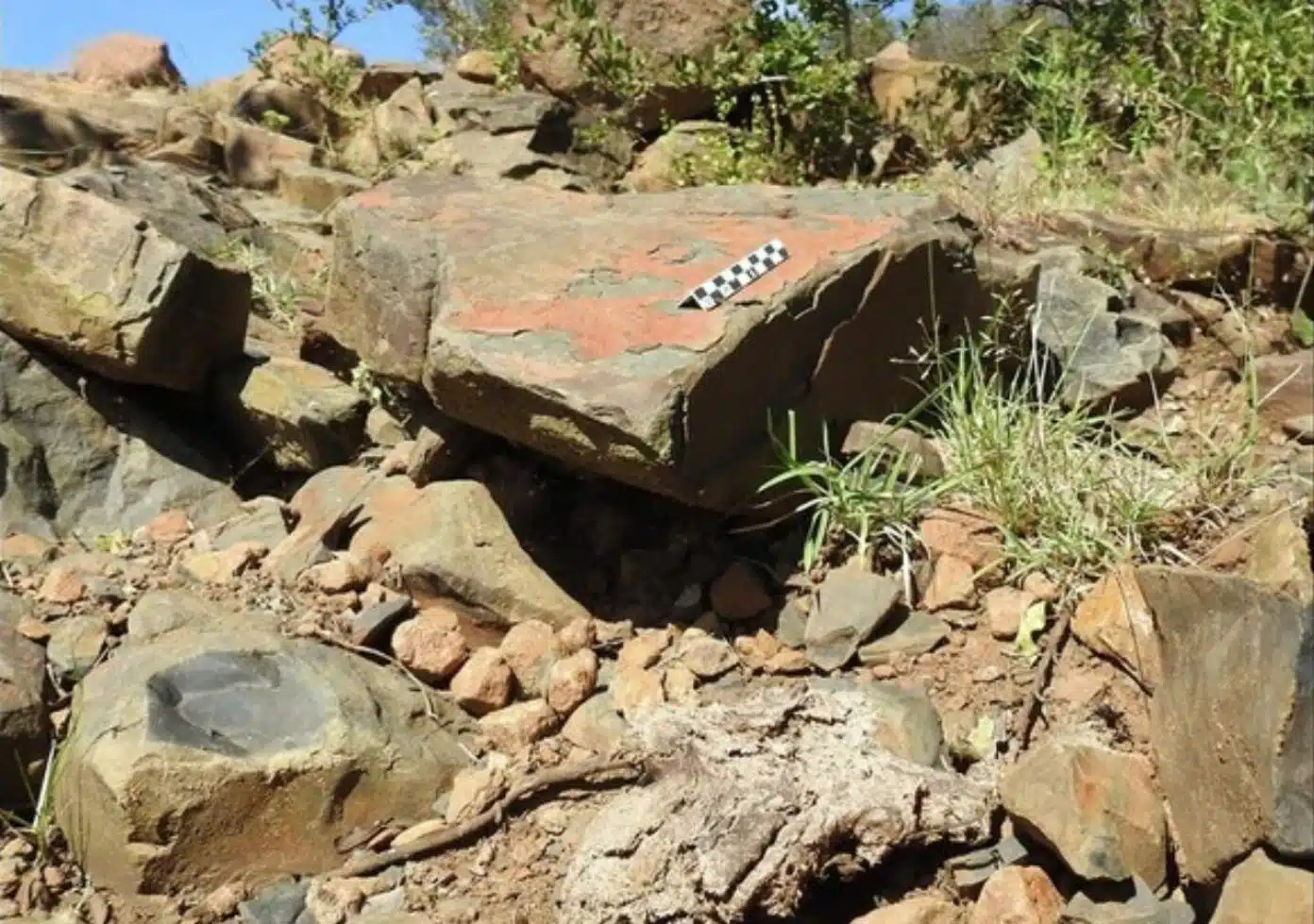
Imagine standing in the vast, windswept grasslands of eastern South Africa, about 140 kilometers inland from the Indian Ocean. The landscape is carved by deep erosional gullies, scars in the earth that expose secrets buried for hundreds of millennia. Here, 220,000 years ago, a group of early humans did something that modern science didn’t think they were capable of yet. They weren’t just wandering, picking up stones as they stumbled across them while hunting for food. Instead, they were commuters with a plan. They traveled to this specific spot with a single, focused goal: to mine the earth. This discovery at a site called Jojosi is rewriting the timeline of human logic, proving that our ancestors were organized, strategic, and far-sighted long before we gave them credit for it.
The Discovery in the Gullies
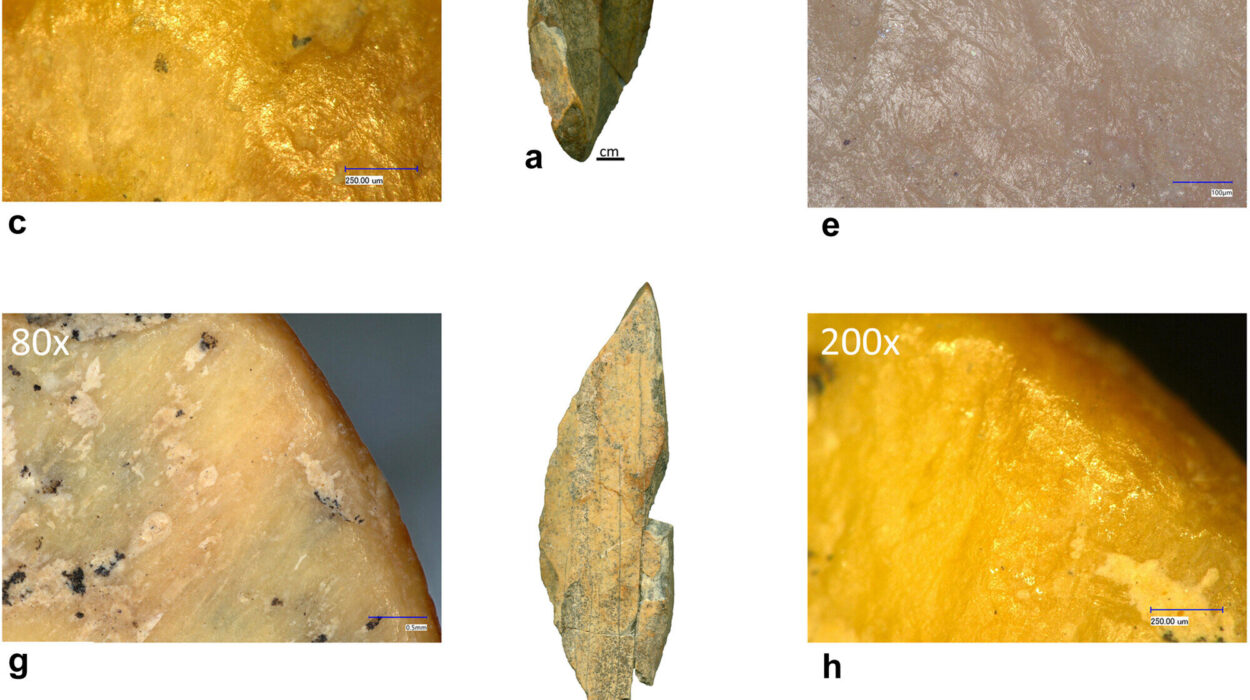
The story of Jojosi began in 2022 when an international research team led by the University of Tübingen arrived to study the geology of the region. Using a combination of foot surveys and drones, they spotted something an amateur might have missed. In the eroded sediment of the gullies, they found perfectly preserved, unweathered hornfels flakes. Hornfels is a metamorphic shale, a fine-grained rock that was the high-tech plastic of the Stone Age. Because it was protected from the elements for so long, these flakes looked as fresh as the day they were struck from the earth. Finding such crisp artifacts in an open-air site is an absolute rarity, and it signaled to the researchers that they had stumbled upon an undisturbed workshop from the deep past.
As the team began to dig, the sheer volume of material was staggering. They uncovered stratified artifact horizons—distinct layers in the earth—where the concentration of finds was as high as 200,000 to 2 million pieces per cubic meter. This wasn’t just a casual campsite. To ensure they didn’t miss a single detail, the researchers sieved every bit of sediment, catching even the smallest fragments of stone. What they found was a massive collection of production waste, hammerstones, and cobbles that had been tested for their quality. It was the ancient equivalent of a factory floor, littered with the off-cuts of a manufacturing process that had been active for an incredible stretch of time.
Solving the Three Dimensional Puzzle
The evidence of what happened at Jojosi isn’t just in the number of stones, but in how they fit together. Gunther Möller, a doctoral student on the team, undertook the painstaking task of creating refits. These are essentially 3D puzzles where researchers take the discarded stone chips and try to piece them back together into the original rock they were struck from. Möller successfully assembled 353 of these puzzles, a feat that allowed the team to see the exact sequence of the work. They could track precisely where and how material was chipped off, following the “ghost” of the tool-maker’s hands.
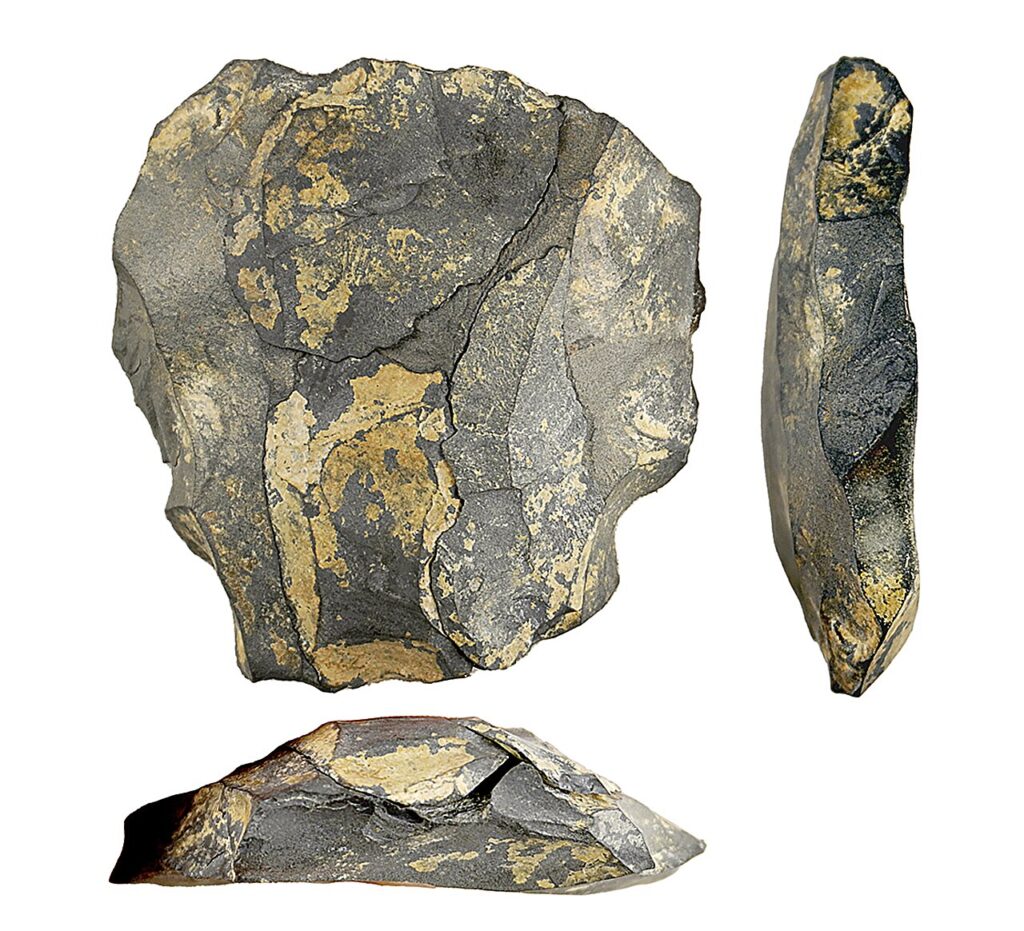
These puzzles revealed a fascinating pattern. By looking at what was left behind, the researchers could figure out what was missing. They found thousands of millimeter-sized pieces of waste and larger discarded flakes, but they almost never found the finished products. The people at Jojosi weren’t living there, eating there, or sleeping there. There were no traces of a typical settlement. Instead, they were coming to the site, working the hornfels until they had achieved the desired shape from the rock, and then taking those pre-formed cores or finished tools away to another place. This behavior is the definition of deliberate rock quarrying. It shows that these early humans recognized the value of the raw material and were willing to travel and work specifically to obtain it.
A Tradition That Defied the Ages
Perhaps the most mind-boggling aspect of Jojosi is its longevity. Using luminescence dating, a technique that determines when a mineral was last exposed to sunlight, the team found that this quarrying behavior began at least 220,000 years ago. But it didn’t stop there. The site remained in use until at least 110,000 BCE. For over 100,000 years—a span of time that dwarfs all of recorded human history—generations of early Homo sapiens returned to these same gullies to extract the same coveted stone.
This long-term consistency challenges the “incidental” view of the Paleolithic era. For a long time, the prevailing scientific view was that hunter-gatherers were opportunistic, picking up tool-making materials as a side-task while they moved around for food or water. Jojosi proves otherwise. It suggests a cultural memory and a level of social organization that stretched across thousands of generations. These people knew exactly where the best hornfels layers were exposed by the landscape, and they passed that knowledge down for millennia. They weren’t just reacting to their environment; they were mapping it and exploiting its resources with intentionality and foresight.
Why the Stones of Jojosi Matter Today
The finds from Jojosi offer a rare and clear view into the very roots of what makes us human: our ability to plan. This research shows that the capacity to select resources deliberately and organize complex activities isn’t a “recent” development in our evolutionary story. Instead, the roots of humanity’s planning ability reach back hundreds of thousands of years further than we previously thought.
This matters because it changes our understanding of early Homo sapiens. We often think of our ancient ancestors as being in a constant struggle for survival, living moment-to-moment. Jojosi reveals a different side of them—one that was capable of long-term acquisition of resources and the management of “industrial” sites. It shows that the human mind has been geared toward strategy, quality control, and geographic planning for nearly a quarter of a million years. By studying these ancient piles of stone waste, we aren’t just looking at old rocks; we are looking at the birth of the strategic human spirit, proving that even 220,000 years ago, we were already a species that looked at the world and saw potential, opportunity, and a way to build a better future.
Study Details
Manuel Will et al, Specialised and persistent raw material procurement by humans in the Middle Pleistocene, Nature Communications (2026). DOI: 10.1038/s41467-026-70783-8