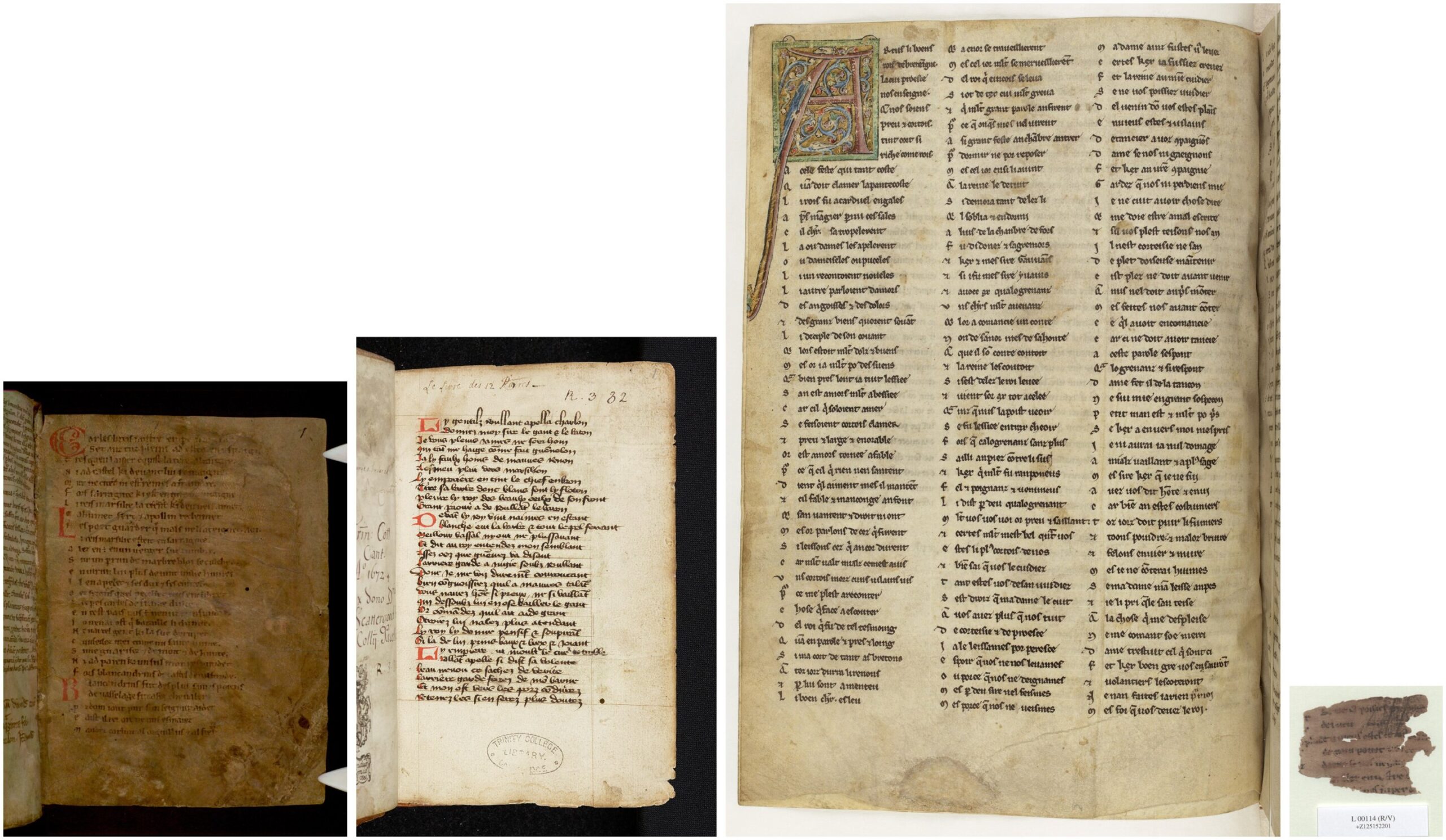
Much of medieval chivalric literature may have disappeared over the centuries, according to new research. Using computer simulations inspired by evolutionary science, researchers estimate that up to 60% of original texts and more than 95% of individual manuscripts have been lost, highlighting how chance, history, and copying practices shaped the literary record that survives today.
The medieval stories that have endured for centuries can create the impression that they represent the literary world of their time. Yet the surviving works may be only a small fraction of what once existed. New research suggests that the vast majority of medieval chivalric literature vanished long before the modern era, leaving today’s readers with an incomplete picture of the past.
The study, published in PNAS Nexus, applies methods from complexity science to investigate how medieval texts survived—or disappeared—over generations of handwritten copying. By modeling the way manuscripts were reproduced and lost, researchers found that the surviving collection of chivalric narratives likely represents only a small remnant of a much larger literary tradition.
Borrowing Ideas From Evolutionary Science
Before the invention of the printing press, every manuscript had to be copied by hand. Each new copy could introduce mistakes, deliberate revisions, or other changes. Over time, these differences accumulated as manuscripts were copied again and again.
Researchers note that this process resembles biological evolution. Just as genetic mutations help scientists reconstruct evolutionary relationships among living organisms, variations introduced during manuscript copying allow philologists to build family trees of texts, known as stemmata.
These textual family trees trace relationships among surviving manuscripts. However, they have a significant limitation: they can only include copies that still exist. Any text or manuscript that disappeared without leaving descendants remains invisible, making it difficult to estimate how much literature has been lost.
Simulating the Fate of Medieval Literature
To address that problem, Jean-Baptiste Camps and colleagues turned to agent-based simulations, a computational approach that models how individual entities interact over time.
Rather than examining only surviving manuscripts, the researchers simulated the creation, copying, and disappearance of medieval chivalric narratives beginning in the 12th century. The goal was to estimate how many works once existed and how many were ultimately lost through centuries of copying and historical change.
The simulations produced striking estimates. According to the model, up to 60% of original texts may have disappeared completely. The loss of physical manuscripts appears even more dramatic, with more than 95% of copies likely having vanished.
These findings suggest that surviving medieval literature represents only a small portion of the works that were once available to readers and scribes.
The Critical Early Years of a Text
One of the study’s central findings is that a text’s survival depended heavily on what happened shortly after it was created.
The model indicates that the first few years of a work’s existence were especially important. If only a small number of copies were produced during this period, the text faced a much greater risk of disappearing entirely. Without enough manuscripts circulating, accidental losses could erase a work before it became widely established.
This early vulnerability helps explain why some stories survived for centuries while others may have vanished without leaving any trace.
Why the Original Versions May Be Gone Forever
The simulations also challenge the assumption that surviving manuscripts preserve an author’s original wording.
According to the researchers, for most medieval texts, no surviving manuscript is likely to represent the original state of the work. Instead, every existing copy probably descends from a later branch of the text’s family tree rather than directly from the earliest version.
The researchers illustrate this idea with the Song of Roland, suggesting that its oldest form is probably impossible to recover because every surviving manuscript likely descends from an already modified version of the original work.
Rather than preserving a pristine original, today’s manuscripts may instead capture successive stages in a long history of copying, revision, and transmission.
Chance Played a Powerful Role
The study also points to the importance of unpredictable events in determining which texts survived.
Seemingly random accidents could eliminate manuscripts, while major historical disruptions could erase large portions of literary culture. Among the examples discussed by the researchers is the Black Death, which likely contributed to the disappearance of numerous texts by disrupting the communities responsible for copying and preserving manuscripts.
These events were not necessarily connected to the quality or popularity of a work. Instead, survival often depended on circumstances beyond the control of authors, scribes, or readers.
Understanding a Fragile Cultural Record
The findings paint a picture of medieval literature as the product of both deliberate human activity and unpredictable historical forces.
By combining literary scholarship with computational modeling, the researchers provide a new way to estimate losses that cannot be observed directly. Their approach suggests that surviving manuscripts reveal only part of the history of medieval storytelling, while an unknown number of works disappeared without leaving descendants.
According to the authors, the research underscores the fragility of cultural heritage. Random events, historical contingencies, and countless human decisions collectively determined which stories endured and which faded from history. The literary canon that survives today, they argue, reflects not only creative achievement but also centuries of chance preservation and irreversible loss.