Human communities were repeatedly living and returning to some of the highest parts of the Pyrenees for more than 10,000 years, according to a newly published open-access database. Built from 124 carbon-14-dated samples across 45 archaeological sites, the research challenges the long-held idea that high-mountain landscapes were largely untouched and inhospitable throughout prehistory.
For decades, high mountain regions have often been viewed as remote environments visited only occasionally by ancient people. But new evidence from Spain’s Aigüestortes i Estany de Sant Maurici National Park paints a very different picture.
Researchers from the Universitat Autònoma de Barcelona (UAB) have assembled an openly accessible database containing 124 carbon-14 dates that helped establish a detailed timeline for 380 archaeological sites documented across the national park. The findings reveal a remarkable pattern of long-term and recurring human occupation, including at elevations above 2,000 meters (6,562 feet).
Published alongside a new study in Archeologica Data, the database provides what researchers describe as the first openly published systematic series of absolute dates for a high-mountain region of the Pyrenees.
A Timeline Stretching Back More Than 10 Millennia
The newly compiled evidence confirms that people were present in the region shortly after the end of the last glacial period.
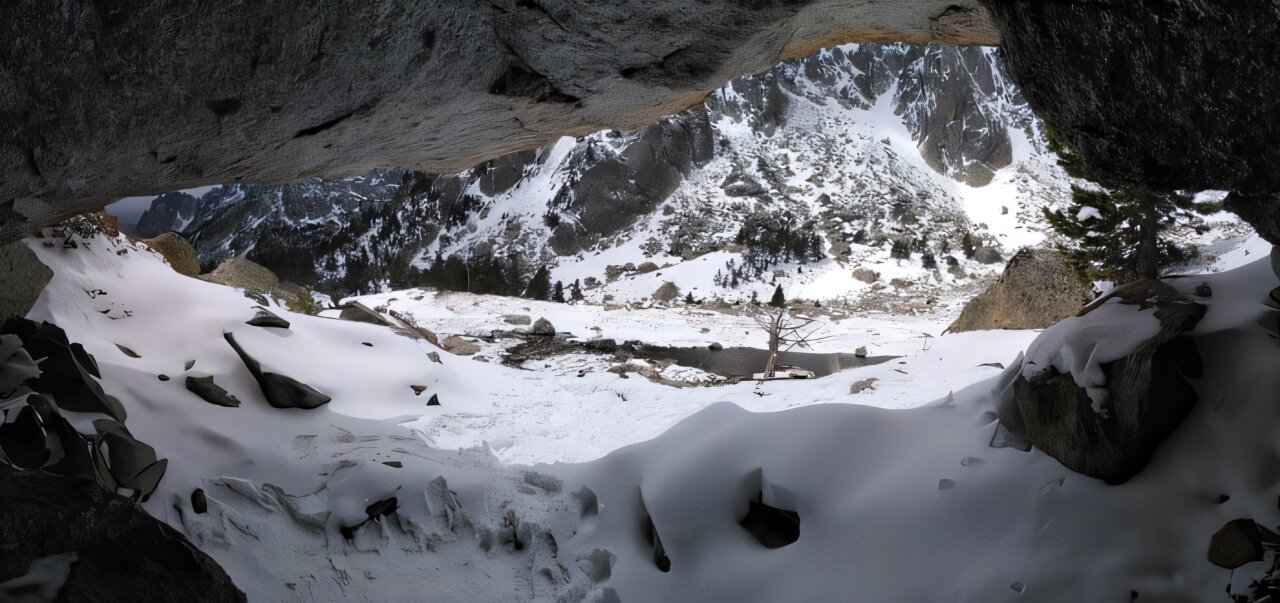
Among the most significant locations is the Obagues de Ratera rock shelter, situated at 2,320 meters (7,612 feet) above sea level. Researchers found evidence that the site was first occupied around 10,000 years ago, making it the oldest continuously documented location in the study.
Two other sites also display exceptionally long occupational histories. Human activity at Cova del Sardo, located at 1,780 meters (5,840 feet), extends back approximately 7,500 years, while the Portarró rock shelter, at 2,280 meters (7,480 feet), shows evidence of occupation dating back 7,300 years.
According to the researchers, these sites preserve rare chronological sequences spanning multiple cultural periods and thousands of years.
Continuous Use Across Different Eras
The record from Obagues de Ratera stands out for its extraordinary continuity.
The site contains evidence from the Mesolithic, the transition into the Neolithic, and occupations throughout the Neolithic period itself. Human presence continued during the Chalcolithic, the Early and Middle Bronze Age, the beginning of the Iron Age, the Visigothic period of the High Middle Ages, and even into the 19th and 20th centuries.
Such an uninterrupted sequence is unusual not only for mountain environments but for archaeological sites in Catalonia more broadly.
The findings suggest that people repeatedly returned to the same high-altitude landscapes across vastly different historical periods, adapting to changing environmental and social conditions over time.
Hunter-Gatherers Reached Alpine Areas Early
Excavations at Obagues de Ratera also provide a glimpse into life shortly after the last Ice Age.
Researchers found evidence indicating that small groups of hunter-gatherers were already moving through alpine areas while the climate was gradually warming and remnants of small glaciers still existed in the region.
These discoveries push back the timeline of sustained human interaction with high-elevation environments and show that mountain landscapes were part of human activity much earlier than might be expected.
Periods of Intensified Human Activity
While people occupied the region over thousands of years, the data show that human presence was not always equally intense.
Statistical analyses identified periods when activity in high-mountain areas increased significantly. One major phase occurred during the late Neolithic, between approximately 5,300 and 4,500 years ago.
Another notable increase took place during late antiquity and the early medieval period.
The research provides a clearer picture of when people were most actively using these landscapes and helps refine previous interpretations developed during more than two decades of archaeological work in the area.
Interestingly, researchers note that the period around 5,300 years ago coincides with the lifetime of Ötzi the Tyrolean Iceman. The data suggest that while Ötzi crossed the Tisenjoch glacier, human activity was also increasing in other high-mountain regions such as the national park studied here.
The Oldest Known Stone Architecture in the Pyrenees
The dating evidence also sheds light on the development of early mountain structures.
At the Portarró rock shelter, excavations uncovered constructions built with a dry-stone base and wood that date to approximately 5,000 years ago.
Researchers say this currently represents the oldest known example of stone architecture in the Pyrenees.
The discovery demonstrates that prehistoric communities were not simply passing through these mountain areas. Instead, they were creating built environments and modifying the landscape in ways that left lasting archaeological traces.
Hundreds of Sites Reveal a Complex Human Landscape
The broader archaeological record in the national park includes a wide variety of site types.
Among the 380 documented sites are enclosures of different sizes and purposes, possible dwelling structures, rock shelters modified with walls and interior divisions, and a small number of stone circles that may have served as funerary monuments.
Many locations that were only sampled on a limited scale also showed evidence of repeated occupation at different points in time.
Together, these sites reveal a complex and enduring human presence spread across the mountainous landscape rather than isolated episodes of visitation.
Why This Matters
The newly released open-access database does more than provide dates for archaeological sites. It challenges the long-standing perception of high-mountain environments as largely untouched wilderness.
Instead, the evidence shows that human presence in the Pyrenees was continuous and recurrent throughout the Holocene, even as climates changed over thousands of years. By making the data, laboratory reports, site information, and analytical methods publicly available, the project also gives researchers new tools to explore how people interacted with mountain ecosystems over time.
Ultimately, the findings reveal that some of Europe’s highest landscapes were not marginal spaces on the edge of human history. They were places where generations of people lived, returned, built structures, and adapted to changing conditions for more than 10 millennia.