Centuries after a ship carrying thousands of Moroccan gold coins disappeared off England’s south coast, researchers have finally uncovered its identity. Evidence gathered over nearly three decades reveals the wreck was the Dutch trading vessel Dom van Keulen, which sank in 1633 after battling severe weather, leaving behind a remarkable cargo that sheds new light on global trade networks of the 17th century.
For nearly 30 years, a shipwreck resting beneath the waters off southern England posed a tantalizing mystery. Divers recovered hundreds of gold coins from the seabed, but one crucial question remained unanswered: what ship had carried such a valuable cargo?
Now, researchers say they finally have the answer.
A newly published book, From Morocco to the Coast of England: The Story of the Dom van Keulen and its Remarkable Cargo, identifies the wreck as the Dutch trading ship Dom van Keulen, a vessel that sailed from Morocco toward the Netherlands in the autumn of 1633 before meeting disaster near the English coast.
A Ship Lost in Stormy Seas
The breakthrough came after years of collaboration involving specialists from the British Museum, Bournemouth University, and the South West Maritime Archaeology Group.
Independent historian Ian Friel played a key role in solving the mystery by uncovering archival documents related to the vessel’s final voyage. Records found in the National Archives revealed that the ship encountered “much tempestuous weather” while traveling from Morocco to the Netherlands.
According to those documents, the vessel developed a leak during the stormy conditions and eventually sank near Salcombe, Devon, on England’s south coast.
Remarkably, despite the loss of the ship, all crew members survived the incident.
A Cargo Packed With Valuable Trade Goods
The ship was carrying an impressive assortment of goods when it went down.
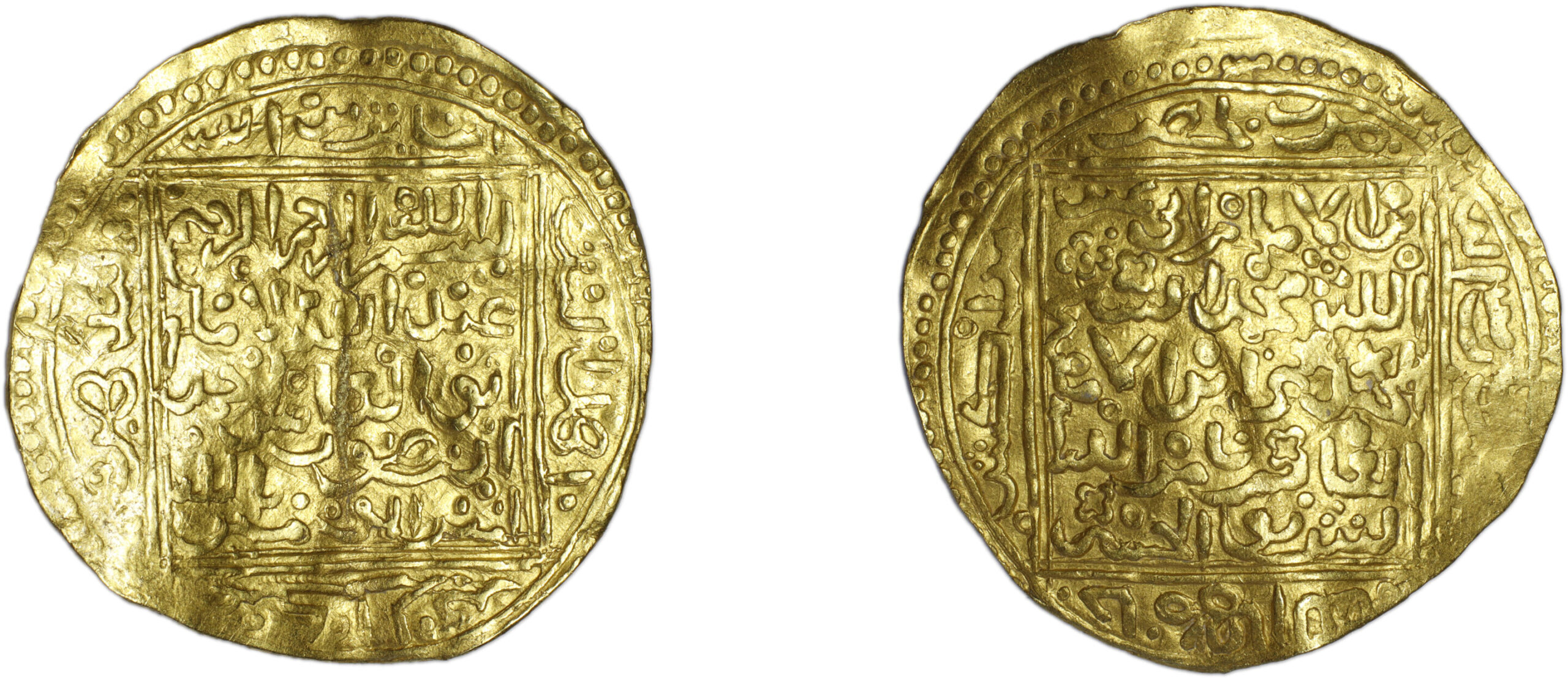
Researchers determined that its cargo included 150 bags of gum arabic, 64 bags of saltpeter, 320 goat skins, and an extraordinary 9,000 Barbary ducats, gold coins originating from Morocco.
Professor Dave Parham, a maritime archaeologist at Bournemouth University and co-editor of the new book, said most of the cargo was likely salvaged shortly after the wreck occurred. However, not everything was recovered.
More than 400 gold coins remained hidden on the seabed for centuries until members of the South West Maritime Archaeology Group discovered them in 1995.
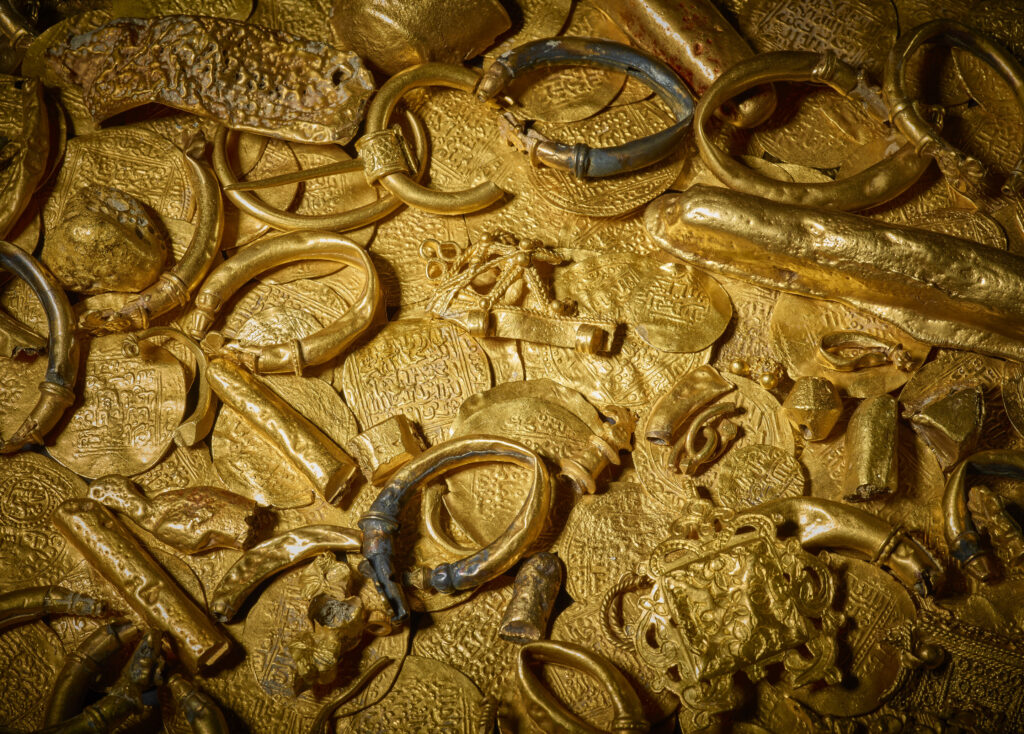
Those coins became one of the most important clues in the long effort to identify the vessel.
African Gold and Global Trade Connections
The recovered coins originated from the Barbary Coast, known today as Morocco.
Their presence highlights the extensive trade networks operating across Europe and North Africa during the 16th and 17th centuries. At the time, Dutch merchants regularly exchanged manufactured goods for highly valued West African gold.
The Netherlands possessed a major maritime industry and a far-reaching trading empire. Imported gold coins were often melted down and transformed into Dutch currency, which became widely accepted in international commerce.
According to researchers, the cargo carried by the Dom van Keulen offers valuable evidence of these economic connections.
Parham noted that the discovery provides important context for understanding the wealth and architecture of the Sa’dian Sharifs, the ruling dynasty of Morocco during that era, as well as the broader trade in African gold.
What Remains of the Wreck
Although researchers have identified the vessel, many details about its physical appearance remain unknown.
No known paintings of the Dom van Keulen have survived, and little documentation exists describing the ship itself.
The wreck site measures approximately 30 meters (98 feet) in length and lies at a depth of about 18 meters (59 feet) below the surface.
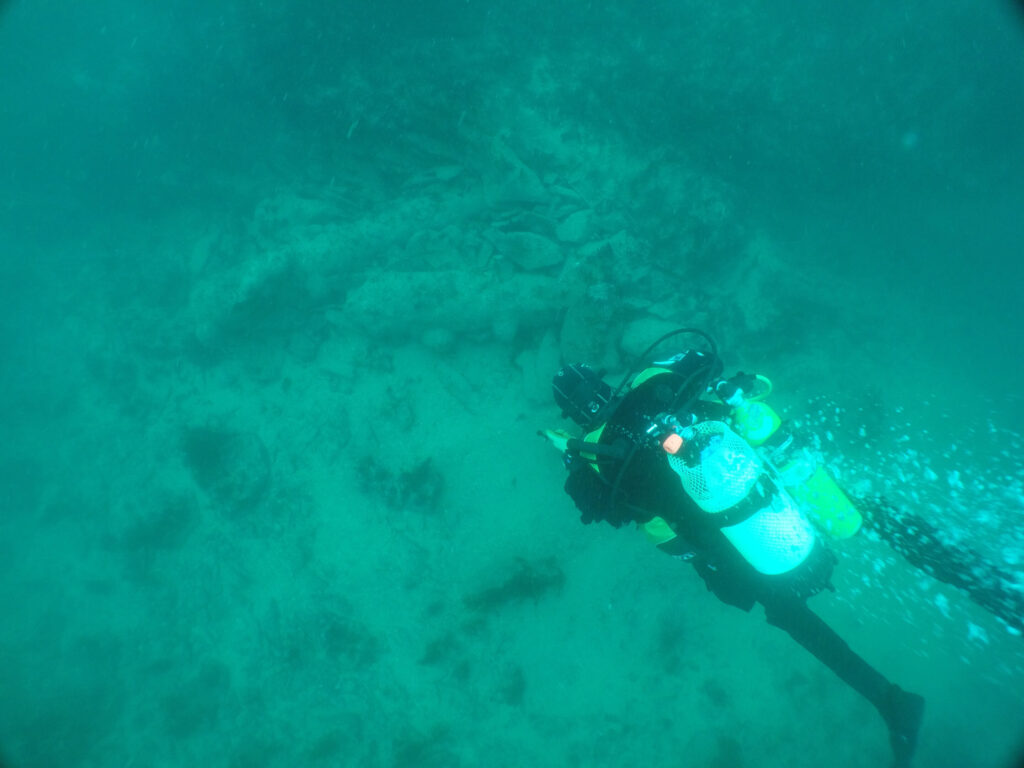
Archaeologists have documented cannons, anchors, and smaller cargo items scattered across the site. These remains continue to provide insights into the vessel and the circumstances surrounding its sinking.
More Than Just Gold Coins
The shipwreck has yielded far more than currency.
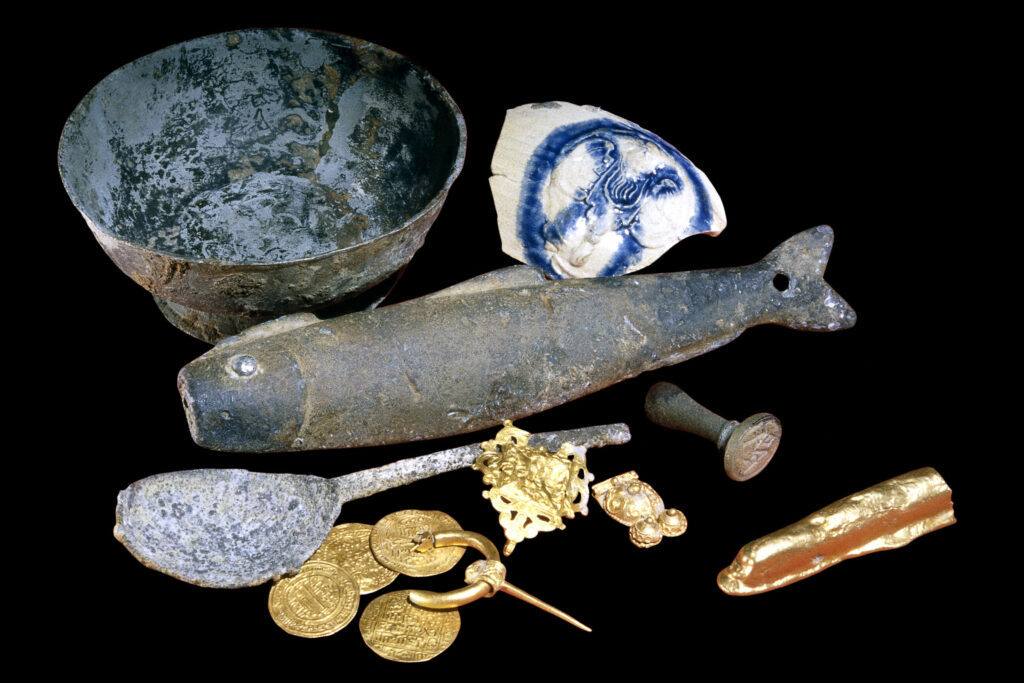
Artifacts recovered from the site and now held by the British Museum include a pewter bowl, a spoon, gold jewelry, a fish-shaped sounding weight, a stamp seal, pottery, and a gold finger nugget.
Together, these objects help paint a fuller picture of life aboard a 17th-century trading vessel and the commercial world in which it operated.
The newly published book not only details the recovery of the wreck but also explores the cultural and historical background of the Sa’dian Sharifs, whose kingdom played a central role in the trade represented by the ship’s cargo.
An Internationally Important Discovery
Jeremy D. Hill, Head of Research at the British Museum, described the find as a discovery that raised major questions from the moment African gold was found beneath the waters off Devon.
Answering those questions required years of cooperation among historians, archaeologists, and researchers working across multiple institutions.
The result is a detailed reconstruction of how a Dutch vessel transporting North African gold came to be wrecked along the English coast, transforming what began as an intriguing archaeological find into a story with international historical significance.
Why This Matters
The identification of the Dom van Keulen demonstrates how archaeology, historical records, and long-term scientific investigation can work together to solve mysteries that have endured for centuries.
Beyond revealing the identity of a single ship, the discovery provides tangible evidence of 17th-century maritime trade, the movement of African gold, and the economic links connecting Morocco, the Netherlands, and Britain. It also shows how artifacts preserved beneath the sea can continue to reshape our understanding of global history, even hundreds of years after a ship disappears beneath the waves.