Bronze bells discovered in the 2,600-year-old tomb of Lord Qiu were likely dismantled on purpose rather than damaged by looters, according to new research. The study argues that the bells were believed to possess active spiritual power, prompting mourners to silence them after a political alliance made their original purpose obsolete.
The scattered bronze bells found inside the tomb of an ancient Chinese ruler may preserve evidence of a remarkable ritual rather than a case of ancient destruction. According to new research, the damaged arrangement appears to reflect a deliberate effort to end the bells’ spiritual function after the political world that gave them meaning had changed.
The study, published in the Cambridge Archaeological Journal, focuses on the burial of Lord Qiu, a noble of the Zeng state who lived during China’s Spring and Autumn period. Instead of viewing the bells simply as musical instruments or ceremonial objects, researcher Chinglong Tse argues they should be understood as participants in a spiritual world where communication with ancestors was considered real and consequential.
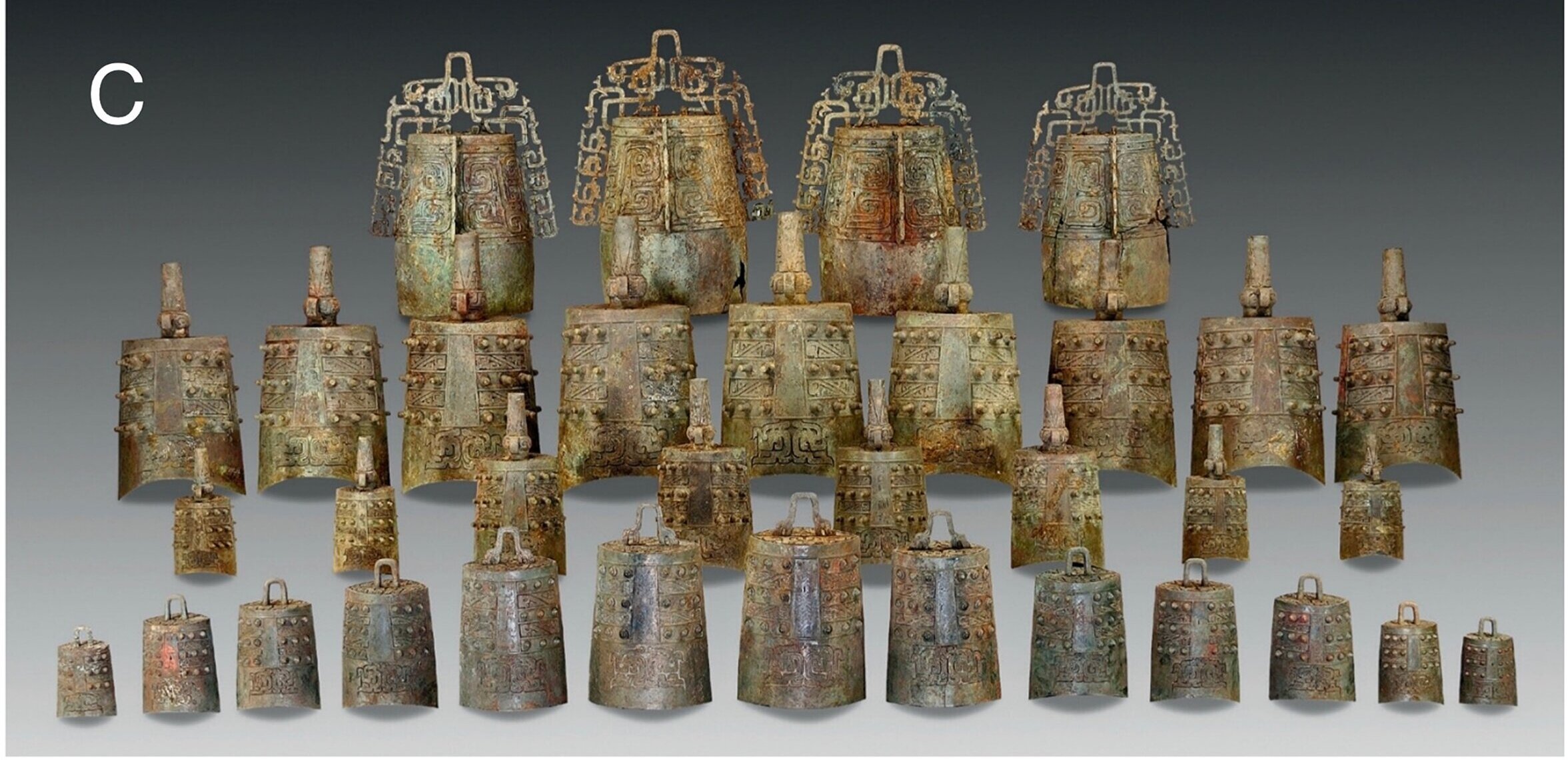
When archaeologists first examined the tomb, they found that the impressive bronze bells had been removed from their wooden framework and scattered across the burial chamber. While such disorder might initially suggest grave robbers, the rest of the tomb remained largely intact, pointing to a different explanation.
Bells created for war lost their purpose after peace
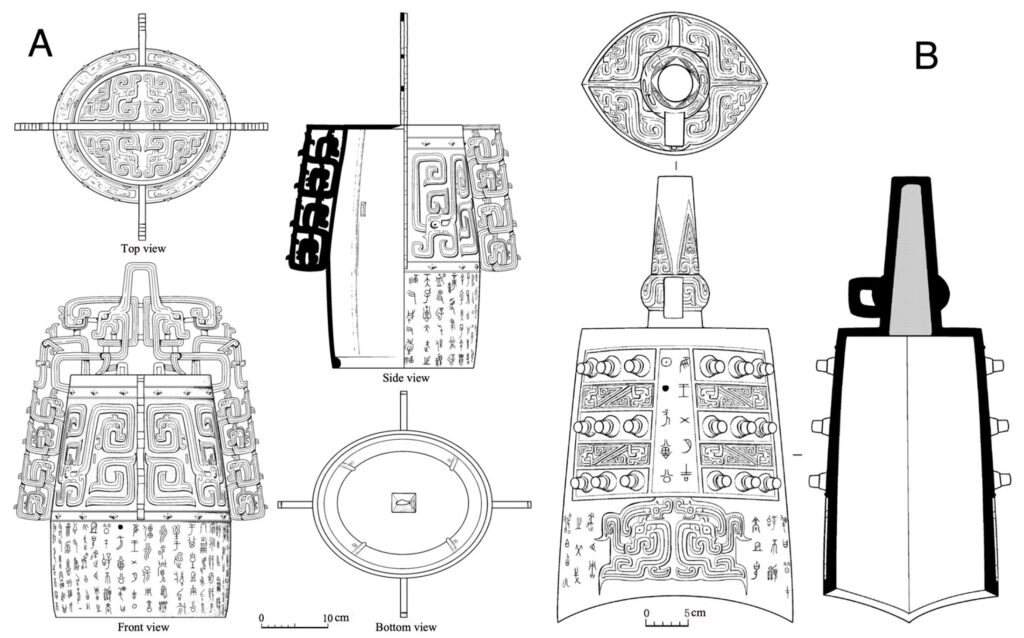
Lord Qiu commissioned the elaborate bell set around 656 or 625 B.C., when the Zeng state faced pressure from the neighboring Chu state. At the time, the bells carried a deeply political and spiritual role.
Decorated with dragon motifs and inlaid with quartz, the bells bore inscriptions celebrating Lord Qiu’s ancestors and calling upon them to defend the territory of Zeng. Their ringing was intended to summon ancestral protection during a period of rivalry and conflict.
That purpose changed dramatically before Lord Qiu’s death.
A political marriage united the former rivals when the king of Chu gave his sister in marriage to Lord Qiu. With the two states now allied, the messages engraved on the bells—once intended to invoke ancestral support against Chu—no longer reflected the new political reality.
Rather than allowing those calls to continue into the afterlife, Tse argues, Lord Qiu’s family intentionally dismantled the instrument.
More than musical instruments
The research challenges a modern tendency to view ancient artifacts primarily through their practical use.
According to the study, bronze bells during the Zhou dynasty were closely connected to their owners, their family lineages, and their relationships with ancestors. Their sound was understood as carrying messages upward, described as a form of “birdsong” reaching the heavens.
Equally important was how the bells were arranged. Their spiritual effectiveness depended on being suspended correctly on a wooden rack. Breaking that arrangement would have prevented them from performing their intended role.
Because of this belief, dismantling the bell set may have represented an intentional act of ritual transformation rather than destruction.
The condition of the burial supports that interpretation.
Although looting can disturb grave goods, Tse notes that the otherwise well-preserved tomb provides evidence that “indicates deliberate dismantling at the time of burial.”
A new set of bells for a different afterlife
The original bells were not simply discarded without replacement.
Instead, Lord Qiu commissioned another collection of bronze bells that reflected his changed circumstances. These newer bells were smaller and simpler than the earlier set and appear to have been intended specifically for his existence after death.
Unlike the dismantled bells, the replacement set was carefully arranged inside the tomb. They were stacked neatly while facing southeast and carried inscriptions written solely for use in the afterlife.
The contrast between the two sets suggests that the burial was carefully planned to reshape Lord Qiu’s continuing relationship with his ancestors.
Within the Zhou worldview described in the study, death did not end those relationships. Ritual practices remained necessary to maintain connections between the living, the deceased, and earlier generations. The replacement bells therefore represented not a rejection of ritual but an adaptation of it to new political and spiritual circumstances.
Rethinking how archaeologists interpret ancient objects
Beyond the specific case of Lord Qiu’s tomb, the study raises broader questions about how archaeologists interpret artifacts.
Tse argues that viewing ancient objects only as tools or symbols risks imposing modern assumptions on societies that understood the world very differently.
“If archaeologists treat objects as tools, they risk projecting the image of a modern, rational, secular man onto the past,” he said.
Instead, he suggests that researchers should combine archaeological evidence with ancient writings and detailed analysis to better understand how people themselves viewed the objects around them.
According to Tse, simply documenting artifacts and “assigning them functional or symbolic meaning is not always sufficient.” He believes archaeologists should “let the ancient things and people speak” by considering how material objects participated in the beliefs, rituals, and relationships of the societies that created them.
Searching for the workshops behind the bells
The research also points toward future discoveries that could deepen understanding of the Zeng state.
Tse hopes to excavate one of the cities where these bronze bells were produced. Such work could reveal more about the methods used to cast the instruments and the cultural ideas that shaped their creation.
“We still know very little about how bronze bells were produced in the Zeng state,” he said.
Learning more about their manufacture, he argues, could provide a clearer picture of the beliefs that connected craftsmanship, ritual, ancestry, and political authority in the ancient kingdom.
Taken together, the evidence from Lord Qiu’s tomb suggests the scattered bells were not the result of chance or violence. Instead, they may represent a carefully planned ritual in which powerful objects were intentionally silenced, allowing their owner to enter the afterlife with a new spiritual role that matched a transformed political world.