European Space Agency’s Euclid space telescope has uncovered 31 of the oldest known quasars, including two record-breaking objects that shone when the universe was only 670 million years old, about 5% of its current age. The discoveries more than double the number of known quasars from this remote era and provide an unprecedented look at how the earliest supermassive black holes and galaxies emerged.
For decades, astronomers have searched for the universe’s first quasars—extraordinarily luminous galactic cores powered by rapidly growing supermassive black holes. These rare objects offer a direct glimpse into one of the earliest chapters of cosmic history, when the first massive galaxies and black holes were taking shape.
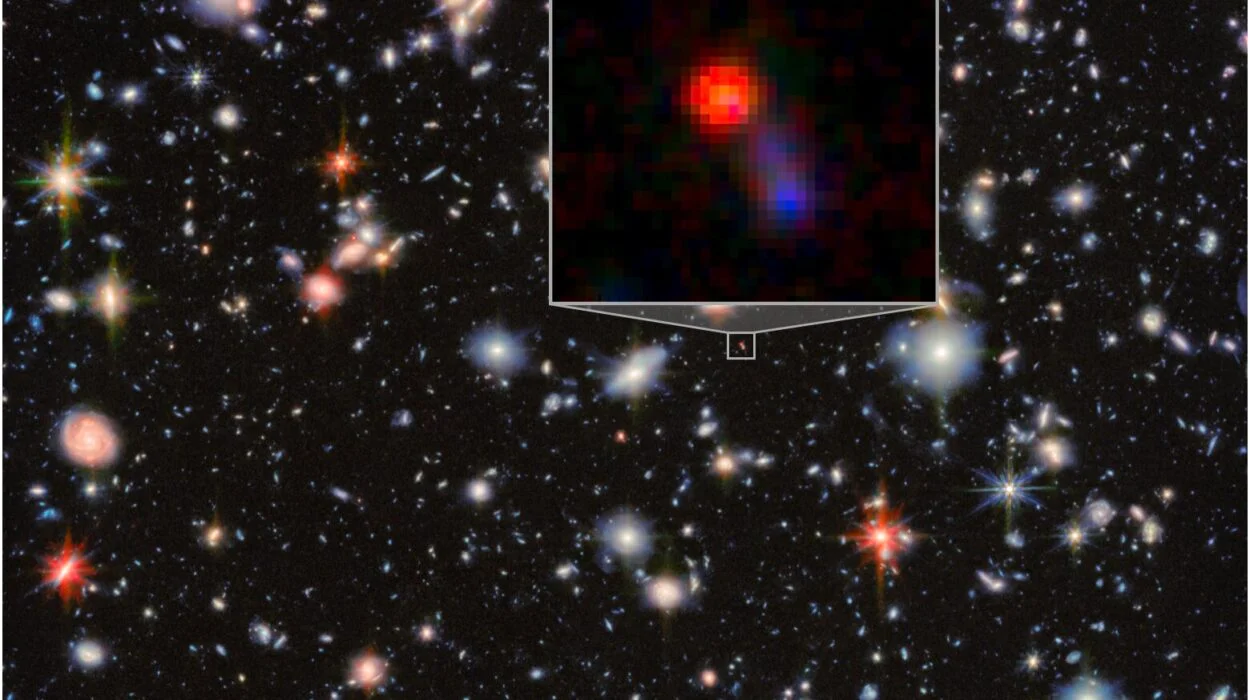
Now, the European Space Agency’s Euclid space telescope has dramatically expanded that picture. Using observations from its ongoing survey of the sky, Euclid has identified 31 previously unknown ancient quasars, including the two earliest ever observed, reaching back to a time when the universe was just 670 million years old.
The discoveries significantly increase the known population of quasars from the universe’s infancy, giving astronomers a much broader sample for studying how these extraordinary systems formed and evolved.
Looking deeper into the universe’s earliest history
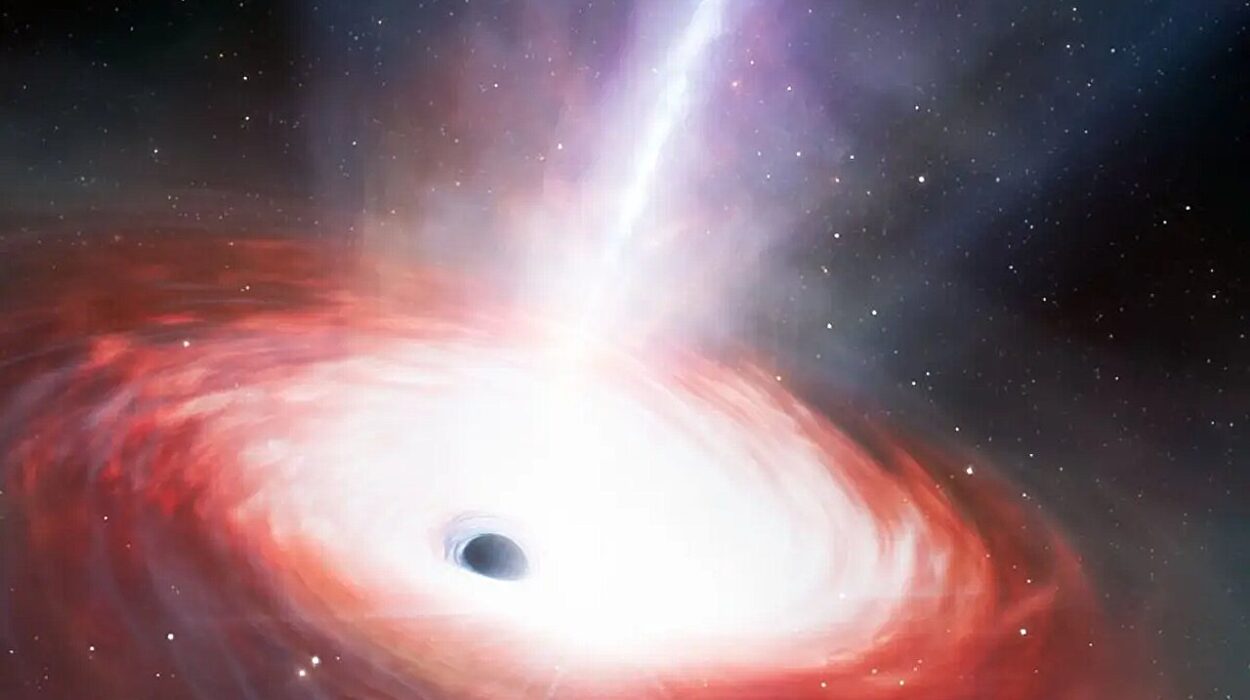
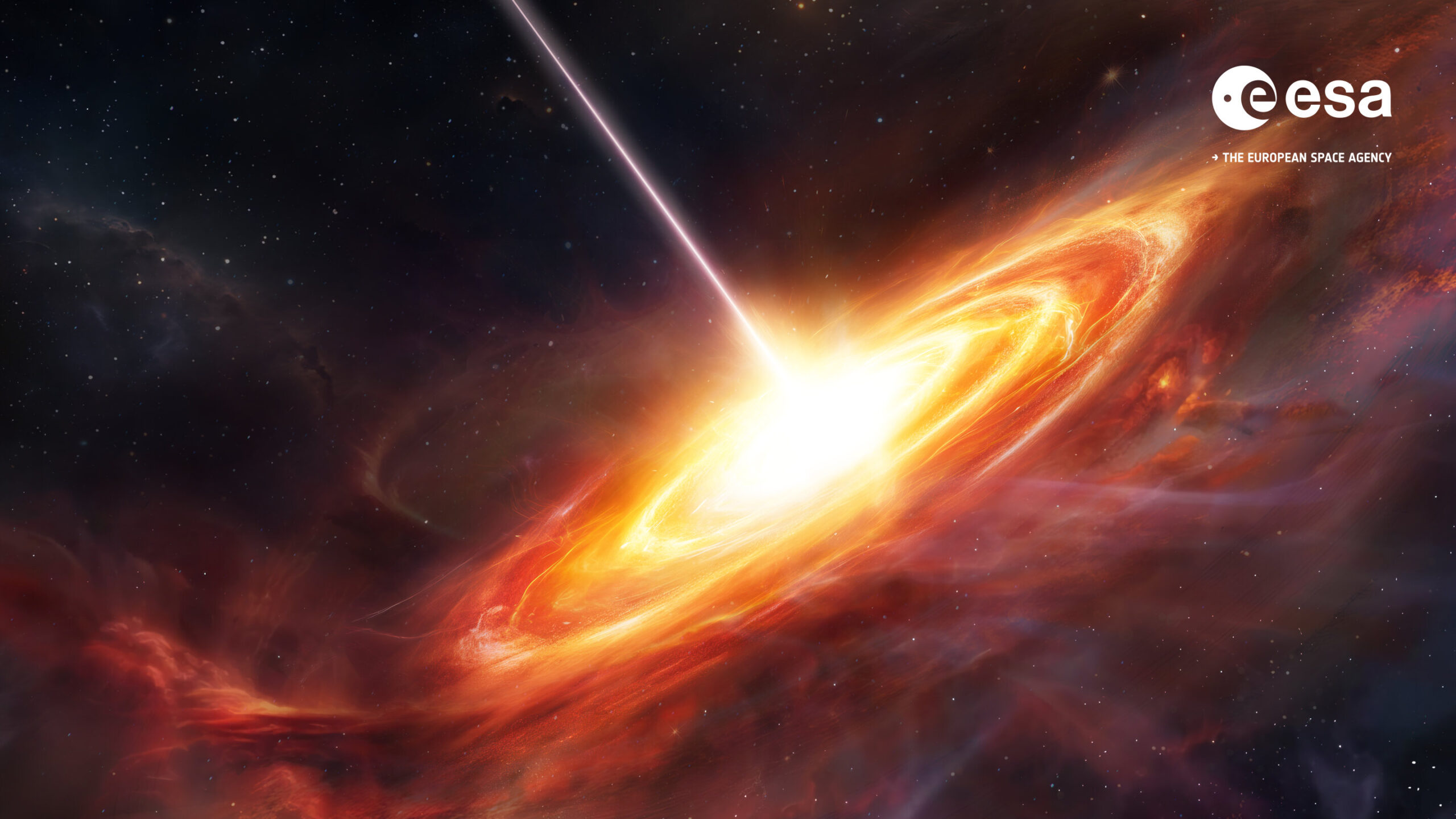
Quasars represent a brief but exceptionally bright stage in the life of a galaxy. During this phase, enormous amounts of material spiral into the galaxy’s central supermassive black hole, releasing vast quantities of energy. The galactic nucleus can become hundreds or even thousands of times brighter than the rest of its host galaxy, making quasars among the brightest objects in the universe.
Finding the earliest examples has always been challenging. In the young universe, only a small number of galaxies had grown large enough to host such powerful black holes. Their ancient light is also extremely faint by the time it reaches Earth and can easily be mistaken for the light from much closer stars.
Launched in 2023, Euclid is designed to probe this distant era with greater efficiency. Its latest discoveries show the telescope can detect not only the brightest ancient quasars but also much fainter members of this early population.
“These early quasars date back to the universe’s infancy,” said lead author Daming Yang of Leiden University in the Netherlands. “By finding and studying them, we can better understand how these enormous systems formed and grew so quickly—one of the greatest mysteries in astrophysics.”
Beyond the brightest cosmic outliers
Until now, astronomers had identified only a small number of exceptionally bright ancient quasars. Those objects represented only the most conspicuous examples, leaving researchers without enough discoveries to understand the broader population.
Euclid is changing that picture.
“Euclid is a true game-changer,” Yang said. “Before, we could only find a handful of the very brightest ancient quasars, but Euclid lets us search far more efficiently across huge areas of sky to capture much fainter light. It’s a unique tool for quasar hunting.”
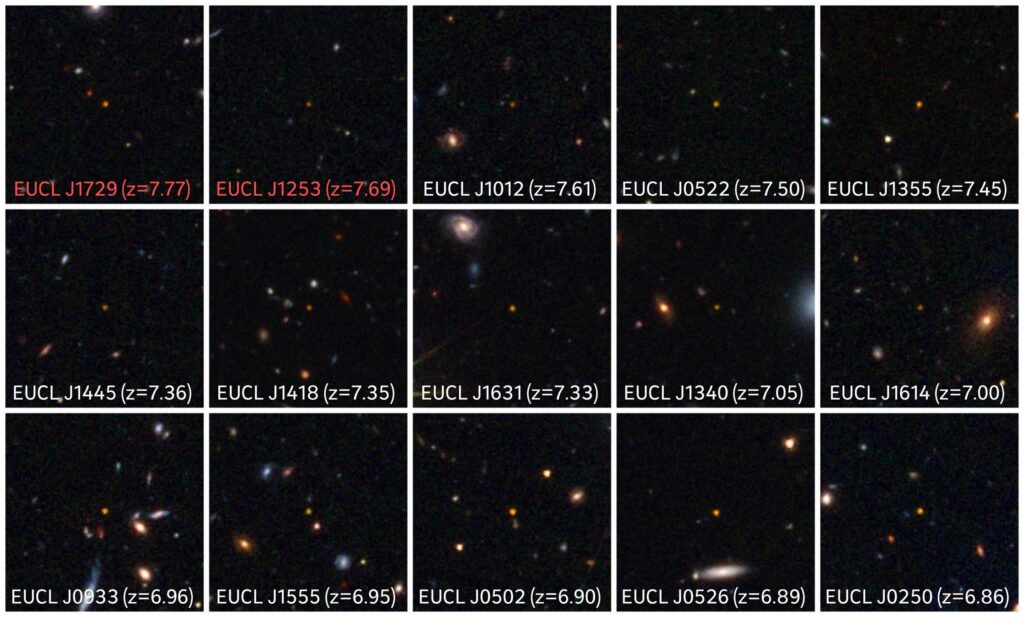
Among the newly identified objects are 12 quasars with redshifts of 7 or higher, placing them within the universe’s first 770 million years. Redshift measures how much an object’s light has been stretched as the universe expands, allowing astronomers to determine both its distance and how far back in time they are observing.
The two oldest discoveries have set a new benchmark.
The quasar EUCL J172902.75+641018.1 has a redshift of 7.77, while EUCL J125308.55+705432.3 has a redshift of 7.69. Both lie just over 13 billion light-years away and emitted their light when the universe was only 670 million years old, making them the earliest quasars yet detected.
More than doubling the known population
The new survey represents a dramatic increase in the number of known quasars from this remote period of cosmic history.
“This finding more than doubles the number of quasars we know of that are so ancient,” said Antonio La Marca, an ESA research fellow working on the Euclid mission.
The pace of discovery also highlights Euclid’s capabilities. According to La Marca, identifying the first ten or so quasars with redshifts of 7 or greater required more than a decade of astronomical observations. Euclid has now surpassed that total in only a single year.
“The Euclid team has taken a true ‘census’ of quasars at the dawn of the universe for the first time,” La Marca said. “It’s a big step toward understanding these fascinating objects on a more fundamental level.”
Clues about the first galaxies
One of Euclid’s record-setting discoveries has already provided additional insight into the environment surrounding an early supermassive black hole.
The second-most ancient quasar identified by Yang and colleagues was later examined in greater detail by Silvia Belladitta and collaborators. Those observations revealed that the quasar resides within a dusty, gas-rich galaxy undergoing intense star formation.
The finding offers an early glimpse of what the host galaxies of the universe’s first supermassive black holes may have looked like, suggesting that vigorous star formation and black hole growth were occurring together during this early epoch.
Illuminating a pivotal era in cosmic evolution
The newly discovered quasars date to the epoch of reionization, a transformative period when the universe transitioned from the cold, dark conditions often called the dark ages to a state in which energetic radiation ionized matter throughout the cosmos.
This era marked a major turning point in cosmic evolution and laid the foundation for the large-scale universe observed today.
“Ancient quasars are rare discoveries. They’re interesting in themselves, but also time machines that enable us to explore the early universe and understand how the first generation of galaxies came to be,” said ESA Euclid Project Scientist Valeria Pettorino.
Pettorino also emphasized that Euclid’s strength comes from combining wide sky coverage, deep observations, sharp imaging, and space-based infrared vision. Together, these capabilities allow the mission to identify rare and extremely distant objects much more efficiently than previous searches.
She added that processing Euclid’s enormous data sets depends on the work of thousands of scientists and engineers in the Euclid Consortium, whose efforts make it possible to isolate these exceptionally distant quasars for follow-up observations with ground-based telescopes.
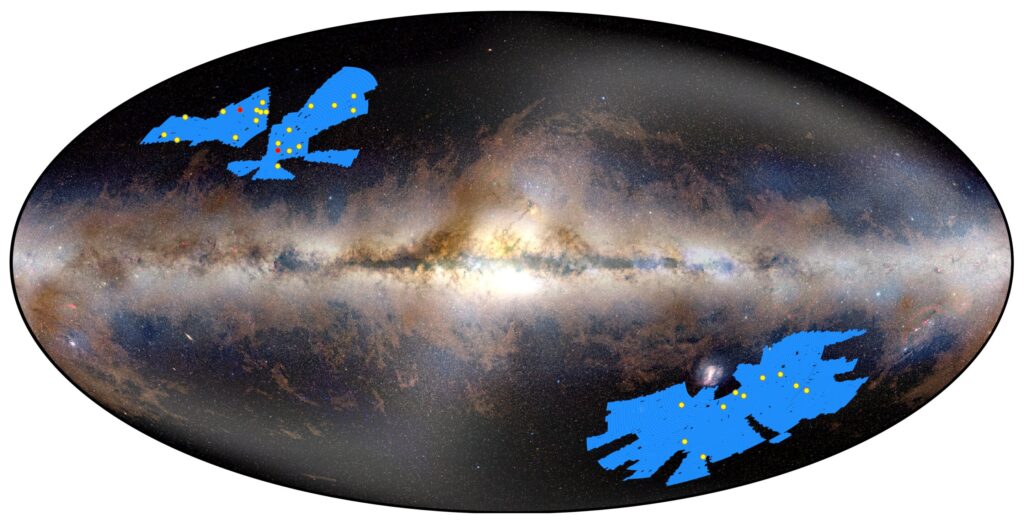
The 31 quasars were identified using data from the Euclid Wide Survey, which will eventually map more than one-third of the entire sky. As Euclid continues its mission to explore the composition, history, and evolution of the dark universe while observing billions of galaxies, astronomers expect it to uncover many more distant quasars, opening an increasingly detailed window onto the universe’s earliest history.