Flexible family structures, long-distance movement, and socially connected burial practices were already shaping human communities in Neolithic Europe more than 5,000 years ago, according to a new genetic analysis of 203 individuals buried in megalithic tombs. The findings challenge long-held assumptions that early farming societies were built mainly around tightly connected biological family groups.
Modern family life may have far deeper roots than anyone expected.
New research analyzing ancient DNA from Neolithic burial sites in Central Europe suggests that people living between 3600 and 2800 BCE formed communities that were socially complex, mobile, and not strictly organized around biological nuclear families. Instead, the evidence points to what researchers describe as “patchwork communities,” where social relationships could matter just as much as blood ties.
The study, published in the journal Science, examined genetic material from 203 Neolithic individuals buried in megalithic tombs across present-day Germany.
Massive Stone Tombs Hold Unexpected Clues
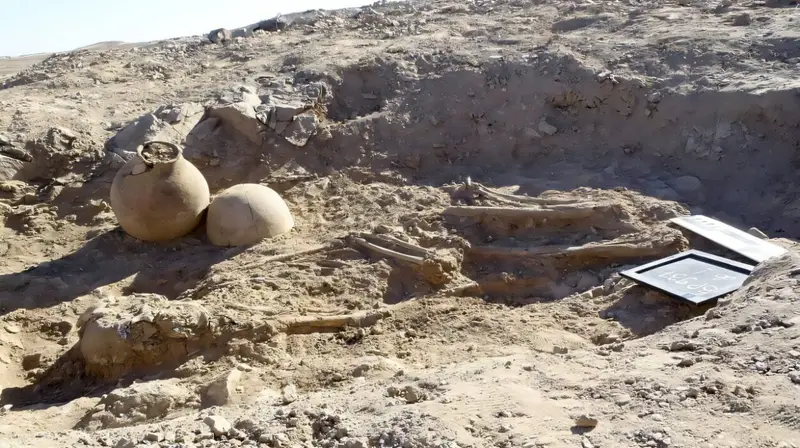
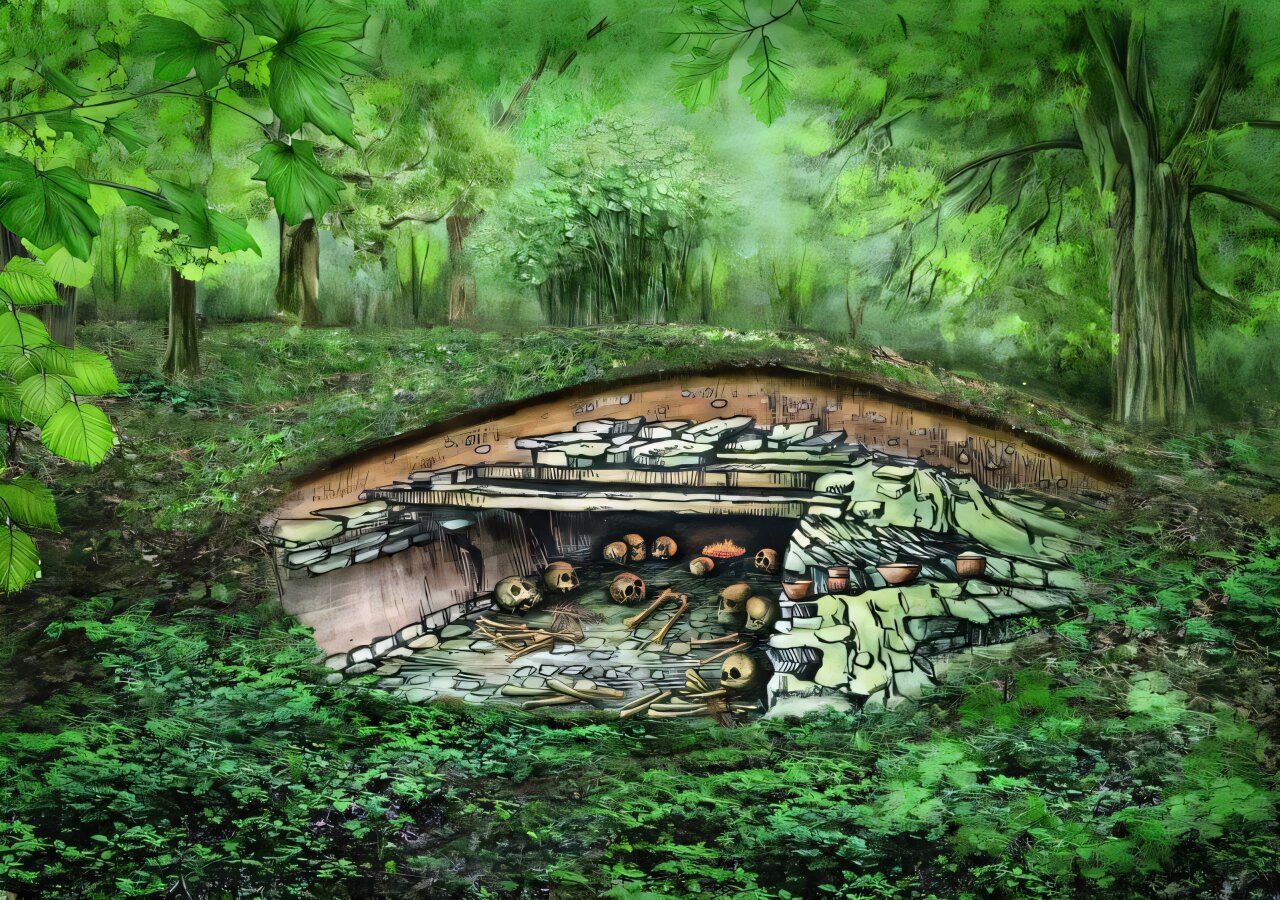
The Neolithic period marked one of the biggest transformations in human history. Communities shifted from hunting and gathering to settled farming and livestock raising. During this era, people across parts of Europe also constructed enormous stone burial monuments known as megalithic tombs.
These structures, built from massive stones and still visible today in some regions, have long fascinated archaeologists. But many questions remained unanswered: who built them, how ideas about megalithic architecture spread, and who was actually buried inside.
To investigate, researchers focused on tombs linked to the Wartberg culture in what is now Lower Saxony, Hesse, and North Rhine-Westphalia.
The DNA results produced a surprising pattern.
People buried together in the same tomb were often not closely biologically related.
According to the researchers, this suggests burial practices were shaped not only by family lineage but also by broader social relationships. That contrasts with earlier studies from Ireland and Sweden, where megalithic tombs appeared more strongly tied to biological family groups.
Professor Ben Krause-Kyora of Kiel University’s Institute of Clinical Molecular Biology said the findings reveal that social and biological ties in these communities were “surprisingly flexible.”
Neolithic People Traveled Farther Than Expected
The study also uncovered evidence of remarkable mobility during the Neolithic era.
One of the clearest examples came from the megalithic tomb at Sorsum, where researchers identified the remains of a young man whose biological father had been buried at Niedertiefenbach — roughly 250 kilometers away.
That distance is striking given the time period. Domesticated horses were not yet being used for transportation in Central Europe, meaning people were traveling substantial distances by other means.
Researchers say the findings show that movement across several hundred kilometers could occur within a single generation.
The father-son pair was not an isolated case. Genetic data from other individuals also showed close relatives frequently lived and died far apart from one another.
Women and girls appeared especially mobile, a finding that challenges earlier assumptions that Neolithic people typically spent most of their lives within relatively small geographic areas.
The results suggest these farming societies were far more interconnected than previously believed.
Megalithic Culture Spread Through Ideas, Not Migration
The researchers also compared DNA from the Wartberg communities with previously published genetic data from Western European groups associated with megalithic tomb construction.
The comparison revealed another major insight: the Wartberg populations were genetically distinct from other Western European megalith-building groups.
That weakens the idea that a single migrating population spread megalithic traditions across Europe.
Instead, the findings support the possibility that the practice of constructing large stone monuments spread culturally, passing from community to community rather than through direct population replacement.
Lead author Dr. Nicolas da Silva said the evidence points toward cultural transmission rather than large-scale migration as the driving force behind the spread of megalithic architecture.
Rethinking Family and Society in Prehistoric Europe
The study adds to a growing body of evidence showing that Neolithic Europe was socially diverse and far more dynamic than once imagined.
For decades, prehistoric farming communities were often viewed through the lens of stable biological family units living relatively isolated lives. But the new genetic evidence paints a more fluid picture — one involving blended communities, long-distance connections, and social networks extending across large regions.
Researchers say the increasing amount of ancient DNA data is transforming how scientists understand prehistoric societies.
The Wartberg communities now appear to have balanced biological kinship with broader social bonds, creating burial traditions and community structures that do not fit neatly into traditional assumptions about early European farming populations.
Why This Matters
The findings reshape our understanding of how early human societies functioned during one of the most important periods in European history.
By showing that Neolithic communities were socially flexible, geographically mobile, and culturally connected across long distances, the study challenges simplified ideas about prehistoric family life. It also suggests that social identity in ancient Europe may have depended on far more than direct biological relationships.
Most importantly, the research reveals that human communities were already experimenting with complex forms of social organization more than 5,000 years ago — long before written history began documenting how people lived together.
Study Details
Nicolas Antonio da Silva et al, Long-distance genetic relatedness in megalithic central Europe, Science (2026). DOI: 10.1126/science.aeb2926