Dozens of previously invisible quasars have suddenly come into focus, offering the clearest evidence yet of a violent transition phase in galaxy evolution. Using data from NASA’s SPHEREx telescope, astronomers identified 77 new heavily reddened quasars, including some dating back to just 2.1 billion years after the Big Bang.
For decades, astronomers suspected that some of the universe’s most powerful black holes were hiding behind enormous walls of cosmic dust. Now, that hidden population is finally starting to emerge.
In a new study uploaded to arXiv on May 7, researchers revealed the discovery of 77 heavily reddened quasars (HRQs) — rare, dust-obscured objects powered by actively feeding supermassive black holes. The findings more than double the number of known HRQs and provide the strongest observational support so far for the idea that these objects represent a short-lived but critical stage in galaxy evolution.
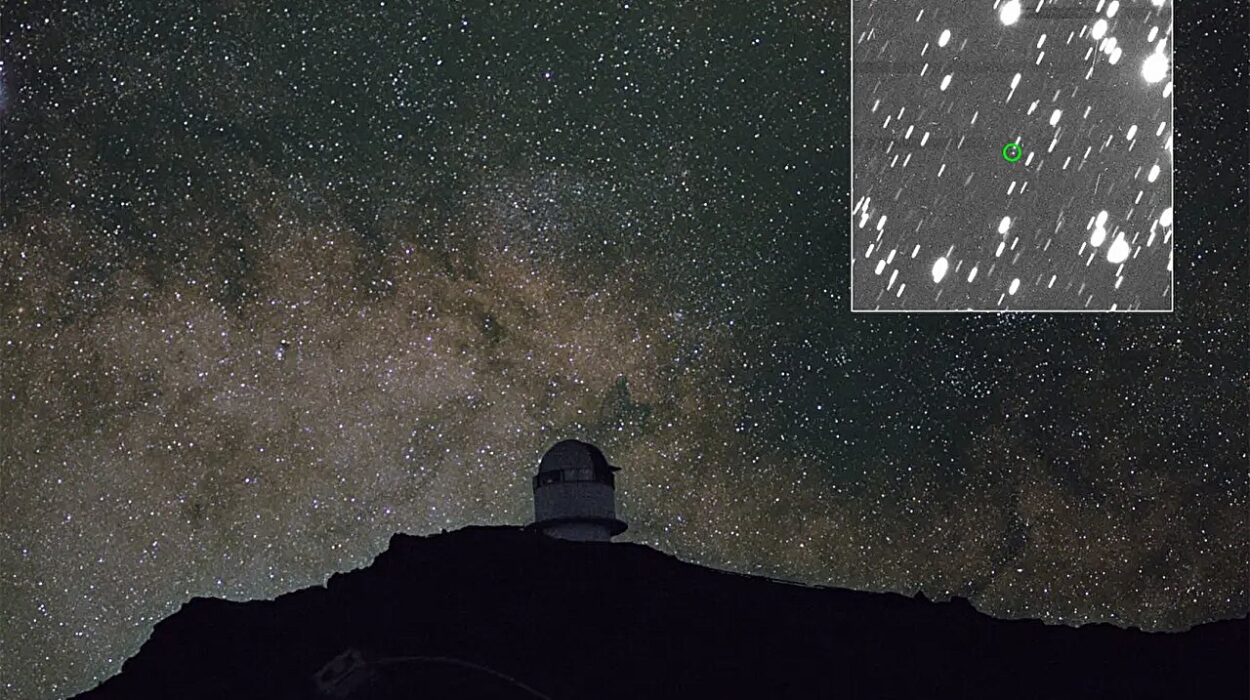
The discoveries were made using infrared observations and spectrophotometry from NASA’s SPHEREx telescope, allowing scientists to peer through thick cosmic dust that normally hides these extreme objects from traditional optical surveys.
Hidden Black Holes in Violent Galaxies
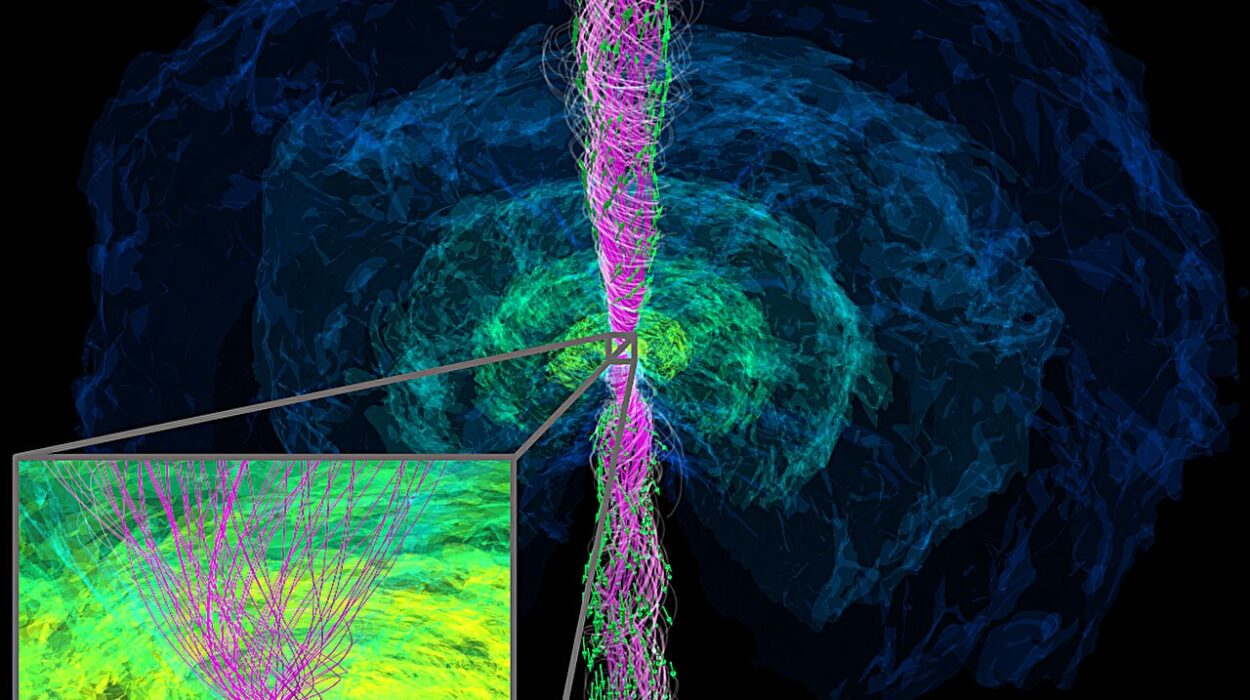
At the centers of most massive galaxies lie supermassive black holes. When these black holes actively consume surrounding material, they can shine as quasars — some of the brightest objects in the universe.
But not all quasars are easy to spot.
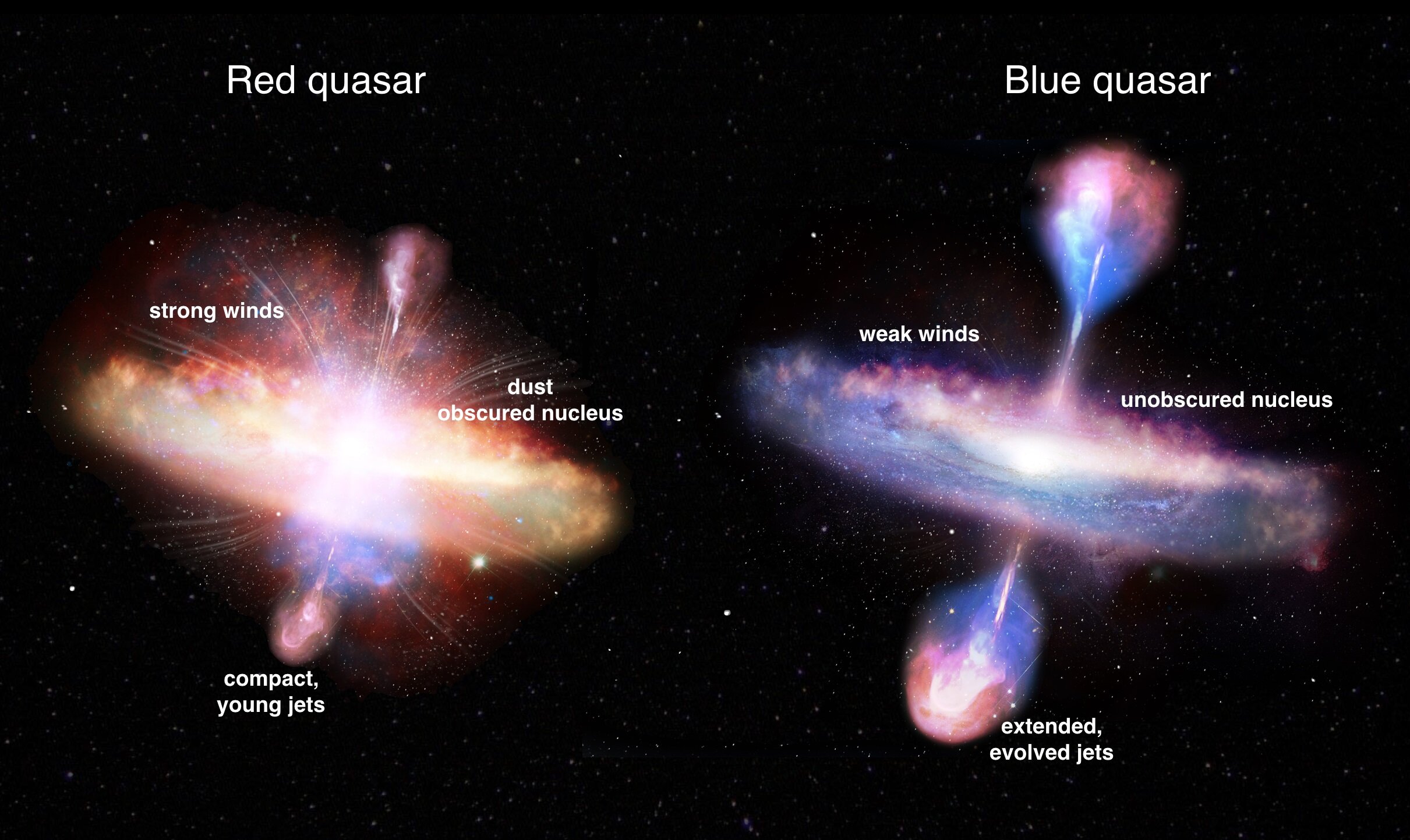
Some appear heavily wrapped in dust, making them faint or nearly invisible at optical wavelengths. According to the leading theory of galaxy evolution, these obscured quasars emerge during turbulent galaxy mergers. When galaxies collide, huge amounts of gas rush inward, triggering intense star formation while simultaneously feeding the central black hole.
That same dust also traps radiation and amplifies powerful winds driven by the growing black hole. Scientists believe this creates an extreme feedback phase capable of reshaping the host galaxy itself.
Despite their importance, heavily reddened quasars have remained frustratingly difficult to study. Their faint appearance and scattered distribution across the sky meant astronomers previously had to locate them one by one using time-consuming infrared observations.
Before this study, only around 50 HRQs had been confirmed.
SPHEREx Uncovers a Much Larger Population
The new research, led by Matthew Stepney of the Center of Excellence in Astrophysics and Related Technologies in Chile, dramatically expands that number.
Using SPHEREx data, the team identified 77 new dust-obscured quasars dating from when the universe was between 1.6 billion and 4.3 billion years old.
Among the discoveries were the first seven heavily reddened quasars ever found at redshifts above 3, meaning they existed within the universe’s first 2.1 billion years after the Big Bang.
That early appearance suggests these hidden black holes may have played a much larger role in the growth of galaxies than previously understood.
To better understand the newly discovered objects, the researchers compared them with two other known classes of galaxies and quasars.
One comparison group was Hot Dust-Obscured Galaxies, often called Hot DOGs, which are among the most deeply buried cosmic objects known. Their light is dominated by thick layers of hot dust.
The other group consisted of “blue quasars,” the more familiar unobscured quasars whose dust has largely already been blown away.
The heavily reddened quasars appeared to occupy a middle stage between those two extremes — but the data revealed something unexpected.
Missing Dust Hints at a Violent Transition
Although the newly discovered quasars are heavily obscured, the researchers found they actually contain surprisingly low amounts of hot dust compared to even unobscured blue quasars.
After correcting for dust extinction, the HRQs also turned out to be among the most intrinsically luminous quasars ever observed.
That combination caught researchers’ attention.
Normally, astronomers expect highly luminous quasars to produce strong infrared emissions from surrounding dusty structures. Instead, these objects appeared unusually weak in those infrared wavelengths.
The researchers argue that this mismatch may reveal quasars caught during a brief “blow-out” phase — a period when feedback from the rapidly feeding black hole begins violently clearing away the dusty cocoon surrounding the galactic core.
In the paper, the team explains that the combination of depleted dust reservoirs and extremely high luminosities supports the idea that HRQs represent a stage where obscuring material is actively being expelled from the central regions of galaxies.
If correct, the findings offer direct observational evidence for a long-theorized transitional phase linking deeply buried black holes to fully visible quasars.
Strange Ultraviolet Light Adds Another Mystery
The researchers also identified another surprising signal.
Roughly three-quarters of the newly discovered quasars showed an unexpected excess of ultraviolet (UV) light.
That UV radiation could come from quasar light scattering around the edges of surrounding dust clouds. However, the team says intense star formation inside the host galaxies may also contribute to the signal — and in some cases could even dominate it.
The finding suggests these galaxies may still be undergoing major bursts of star formation while their central black holes continue rapidly growing.
That overlap between black hole activity and star formation is considered a key piece of galaxy evolution models.
Why This Matters
Astronomers have long believed that the universe’s biggest black holes passed through hidden, dust-choked growth phases before emerging as fully visible quasars. But until now, the evidence remained limited by the small number of known examples.
The discovery of 77 new heavily reddened quasars changes that picture dramatically.
By uncovering a much larger sample — including some from the universe’s earliest epochs — researchers can begin testing how black holes grew, how galaxy mergers triggered their evolution, and how powerful feedback reshaped galaxies over cosmic time.
The study also demonstrates the power of infrared sky surveys like SPHEREx to reveal objects invisible to traditional telescopes.
Study Details
Matthew Stepney et al, Hidden Monsters with SPHEREx I: A goldmine for heavily reddened quasars at cosmic noon, arXiv (2026). DOI: 10.48550/arxiv.2605.06791