For a time, Comet 3I/ATLAS was lost to us, hidden in the glare of the Sun as it swept through the inner solar system. Then, quietly, it returned. Emerging from behind the Sun’s blinding light, the comet reappeared in the dark sky, carrying new clues about what it had endured during its closest brush with our star. This return was not witnessed by scientists alone. Students and members of the public around the world were there too, peering into deep space alongside researchers as the story of an interstellar visitor continued to unfold.
The moment was captured by Gemini North, one of the world’s most advanced telescopes, perched high on Maunakea in Hawai’i. What it recorded was more than just a new image. It was a snapshot of change, of heat and chemistry at work, and of science opening its doors to the wider world.
A Night on Maunakea With an Interstellar Guest
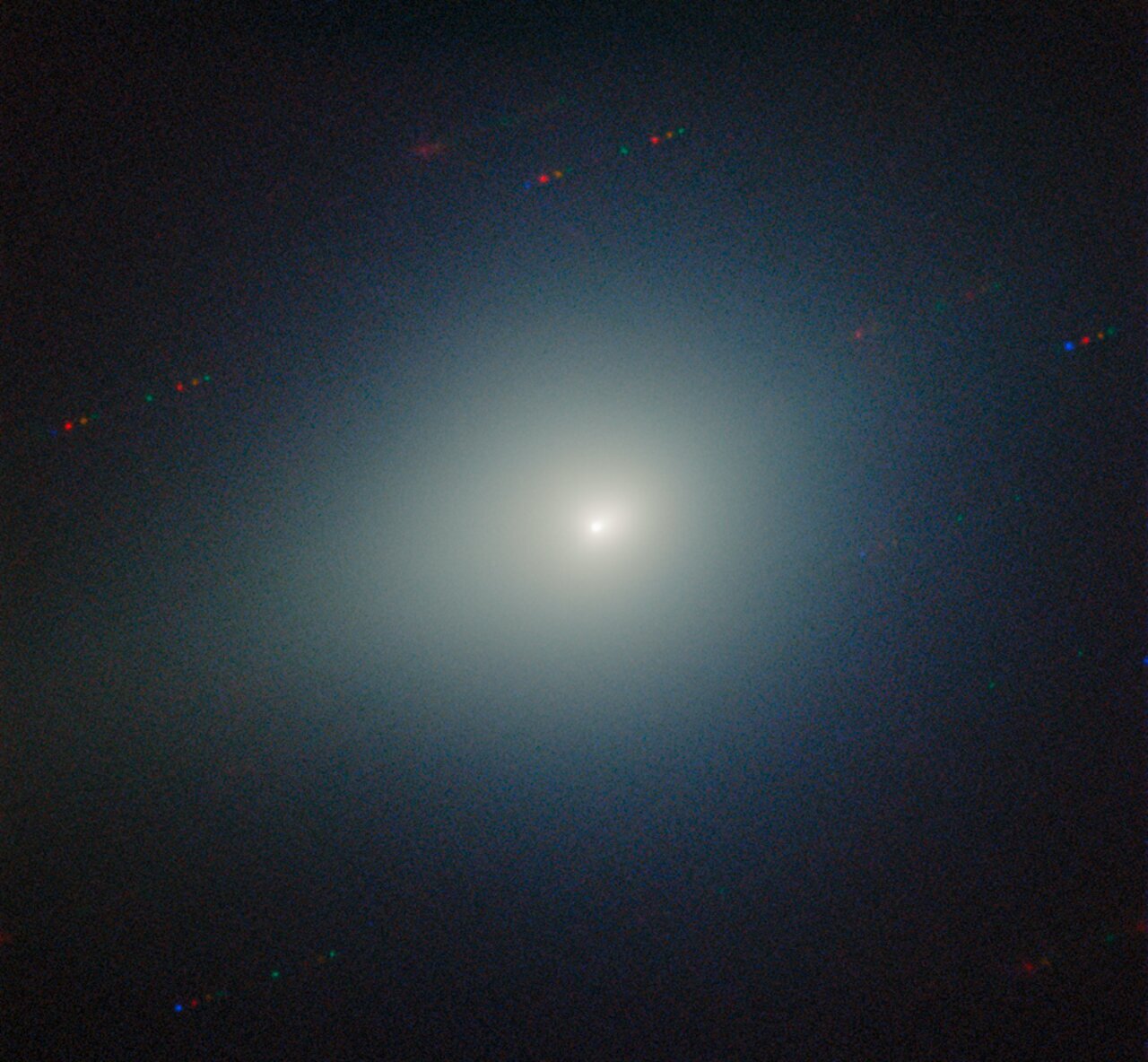
On 26 November 2025, scientists turned the Gemini Multi-Object Spectrograph, known as GMOS, toward a faint target moving steadily away from the Sun. This target was Comet 3I/ATLAS, the third-ever detected interstellar object, a traveler that began its journey far beyond our solar system. Gemini North, part of the International Gemini Observatory operated by NOIRLab, gathered fresh data revealing how the comet looked after its close solar encounter.
By the time it came back into view, 3I/ATLAS had drifted into a region of sky near Zaniah, a triple-star system in the constellation Virgo. Against this stellar backdrop, the comet told a subtle but compelling story of transformation. These observations were conducted during a Shadow the Scientists session, a public outreach initiative organized by NOIRLab in collaboration with Shadow the Scientists. The program was led by Bryce Bolin, a research scientist from Eureka Scientific, who guided both the scientific effort and the shared observing experience.
This was not just a technical observation run. It was an invitation. Learners around the globe joined the session, watching in real time as a rare interstellar object was studied, seeing the universe through the same instruments and methods used by professional astronomers.
Painting the Sky With Motion and Color
The image that emerged from Gemini North is rich with motion and color, shaped by a careful observing technique. The final picture is composed of exposures taken through four filters: blue, green, orange, and red. As each exposure was captured, the telescope tracked the comet itself, holding it steady at the center of the field of view.
Because the comet was kept fixed, the background stars did not remain still. Instead, their positions shifted relative to the comet as Earth and the telescope moved, turning those distant points of light into colorful streaks across the image. The result is a vivid scene where the comet stands calm and sharp, while the stars behind it seem to race past, tracing lines that reveal the passage of time and motion in space.
This method does more than create a striking visual. It allows scientists to focus on the comet’s structure and glow, separating it from the busy background of stars and letting its changing appearance speak clearly.
From Red to Green, a Subtle Transformation
Earlier images of Comet 3I/ATLAS, taken during a previous Shadow the Scientists session at Gemini South in Chile, showed the comet with a distinctly red hue. The new image, released after the Gemini North observations, tells a different story. This time, the comet appears to glow faintly green.
The reason lies in the gases streaming from the comet’s coma, the hazy envelope that surrounds its solid core. As the comet was heated during its close approach to the Sun, gases began to evaporate. Among them is diatomic carbon, known as C2, a highly reactive molecule made of two carbon atoms. When C2 emits light, it does so at green wavelengths, giving the comet its new, subtle color.
This shift from red to green is a sign of change, a visible marker of the comet’s response to solar heating. It shows that even after passing its closest point to the Sun, the comet continues to evolve, its chemistry reshaped by warmth absorbed deep within its body.
Heat That Lingers and Questions That Remain
Despite the new insights, much about Comet 3I/ATLAS remains uncertain. Scientists do not yet know how it will behave as it moves farther away from the Sun and begins to cool. Comets are known for delayed reactions to solar heat. The warmth absorbed during their closest approach can take time to travel through their interiors.
This delay means that changes may still be coming. New chemicals could begin to evaporate, altering the comet’s appearance again. In some cases, built-up pressure can trigger a sudden comet outburst, releasing gas and dust in dramatic fashion. Whether 3I/ATLAS will follow this pattern is an open question.
To find answers, Gemini will continue to monitor the comet as it leaves the solar system. By tracking changes in its gas composition and watching for signs of outburst behavior, scientists hope to better understand how this interstellar visitor responds to its journey past the Sun.
Science With the Doors Wide Open
What sets these observations apart is not only what they reveal about the comet, but how they were made. The collaboration with Shadow the Scientists builds on NOIRLab’s long-standing tradition of pairing cutting-edge research with public engagement. Instead of keeping discovery behind closed doors, this program brings learners directly into the observing process.
Participants do not simply see finished images. They witness data being collected, decisions being made, and questions being asked in real time. In doing so, they experience science as it truly happens, filled with uncertainty, excitement, and careful attention to detail.
“Sharing an observing experience in some of the best conditions available gives the public a truly front-row view of our interstellar visitor,” says Bolin. “Allowing the public to see what we do as astronomers and how we do it also helps demystify the scientific and data collection process, adding transparency to our study of this fascinating object.”
Why This Moment Matters
Comet 3I/ATLAS is more than a fleeting object passing through our skies. It is a messenger from beyond our solar system, carrying information about environments far from the Sun. Every change in its color, every shift in its gas emissions, offers clues about its composition and history.
The Gemini North observations capture a moment of transition, showing how the comet has changed after its closest approach to the Sun and hinting at further transformations yet to come. At the same time, the Shadow the Scientists collaboration demonstrates a powerful idea: that frontier science does not have to be distant or exclusive.
By opening the observing process to the public, this effort turns a rare astronomical event into a shared human experience. It advances knowledge while inspiring curiosity, inviting new generations to look up, ask questions, and imagine themselves as part of the ongoing exploration of the universe.
In watching an interstellar visitor fade into the night, we are reminded that discovery is not only about what we find, but about who we invite along for the journey.