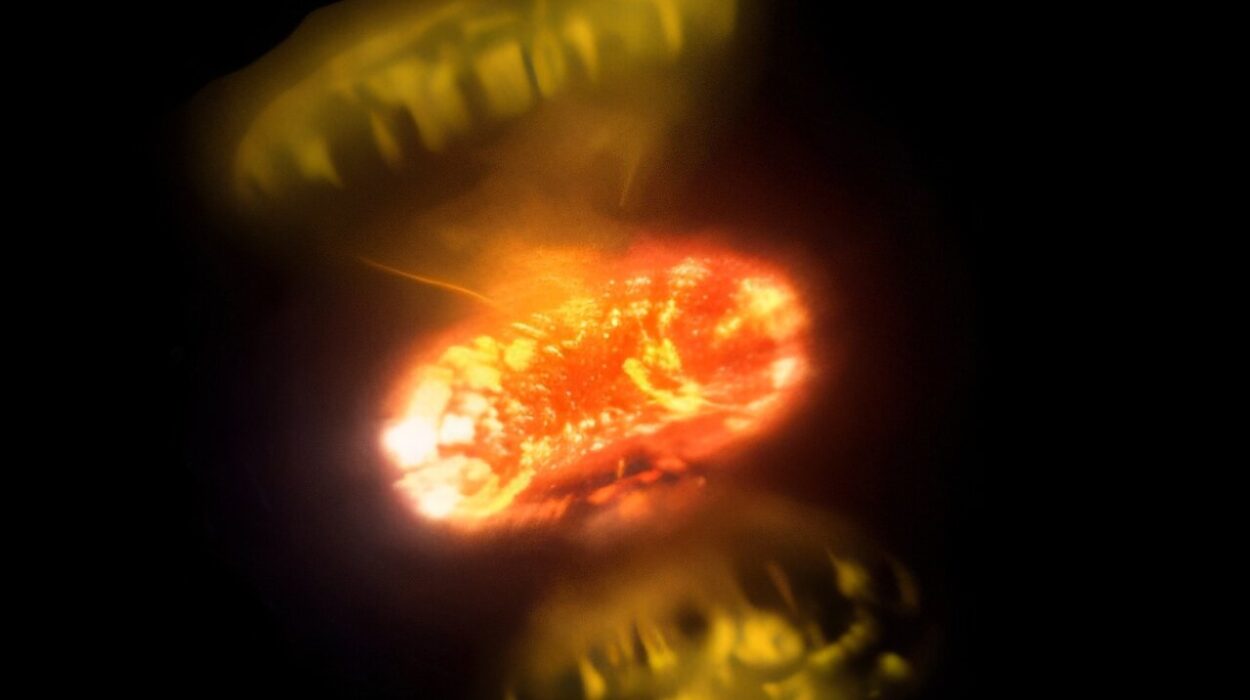
Astronomers have captured one of the clearest views yet of a rare binary system where one white dwarf is actively stripping material from its companion while the pair circles each other every 8.5 minutes. The newly studied system, called ATLAS J1013−4516, could become a prime future target for the space-based gravitational wave mission LISA, offering scientists a powerful new way to study some of the universe’s most extreme stellar remnants.
A violent stellar relationship unfolding thousands of times faster than a typical orbit has given astronomers a rare front-row seat to one of the most elusive processes in astrophysics.
Researchers led by Emma Chickles at MIT have identified a compact binary system in which one white dwarf is actively pulling matter away from another. The discovery provides an unusually detailed look at how these dead stellar cores exchange mass under extraordinarily tight orbital conditions — a phenomenon scientists have struggled to fully understand for decades.
The findings were published in The Astrophysical Journal.
Dead Stars Locked in an Extreme Orbit
White dwarfs are the dense remnants left behind after Sun-like stars exhaust their nuclear fuel and shed their outer layers. Though only about the size of Earth, they retain masses comparable to full stars, making them some of the densest known objects in the universe.
In some binary systems, two white dwarfs orbit so closely that powerful gravitational forces distort one or both stars. These systems can trigger dramatic mass transfer events, where material from one star is siphoned onto the other.
But according to Chickles, systems with orbital periods shorter than 10 minutes remain deeply mysterious.
“Even these burnt-out cores can be stripped apart under the right conditions,” she explained. “How this actually plays out on orbits shorter than 10 minutes is still largely unknown, and every mass-transferring binary we’ve caught at these extreme periods looks different from the last.”
The newly identified system pushes scientists closer to understanding just how chaotic these compact binaries can become.
Searching Through Millions of Stellar Images
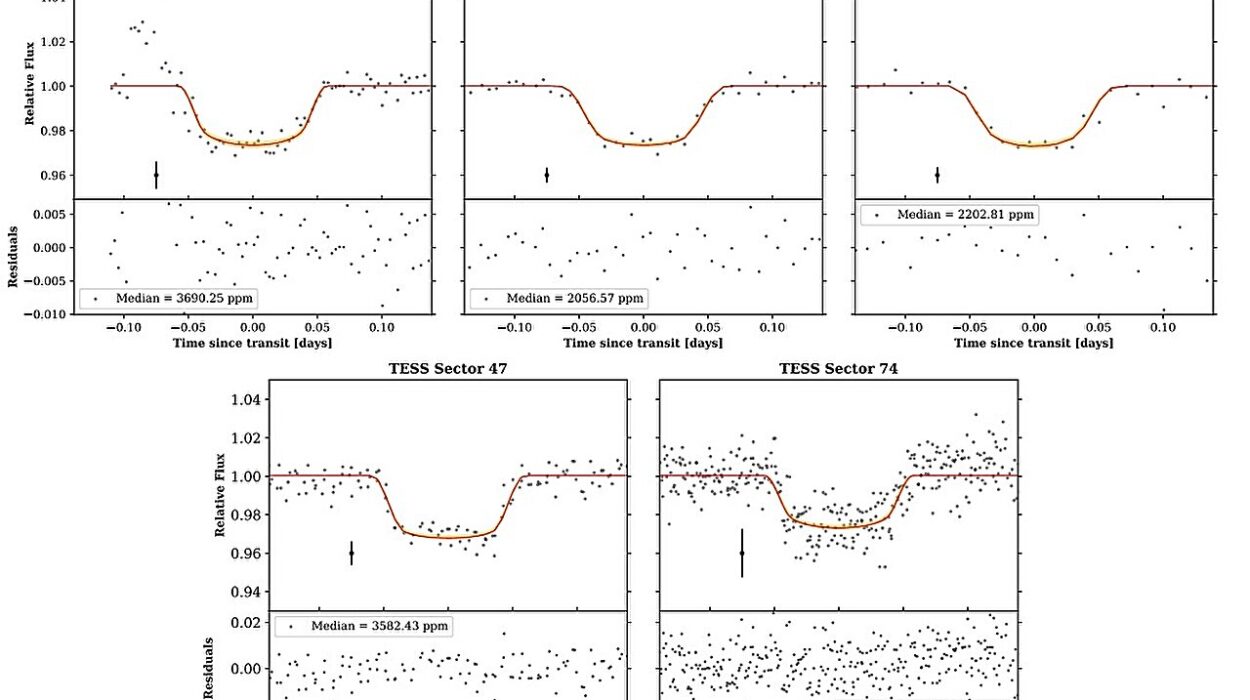
To find the system, the research team analyzed millions of images collected over the past decade by multiple stellar surveys. Instead of relying on obvious signals, the astronomers used an extensive algorithmic search designed to detect tiny variations in brightness that earlier studies had overlooked.
Those subtle fluctuations hinted that a compact object — possibly a single white dwarf — was transferring material.
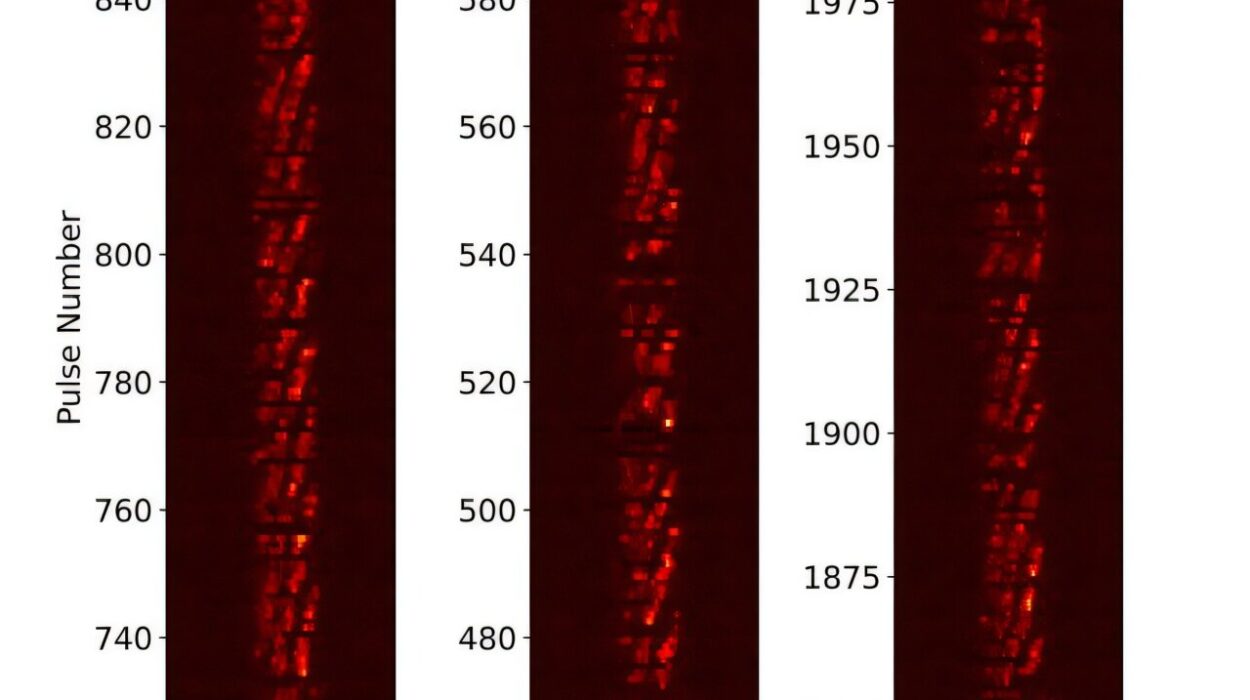
The breakthrough prompted follow-up observations using the Magellan telescopes in Chile, where Chickles worked with a new high-speed camera called proto-Lightspeed.
“Pointing at the system, I could actually watch the light rising and falling in real time as the two stars eclipsed each other,” she said.
That direct view allowed researchers to track the stars’ movement with exceptional precision.
One White Dwarf Is Being Torn Apart
The system, known as ATLAS J1013−4516, contains two white dwarfs orbiting each other in just over 8.5 minutes — an astonishingly short period that places them among the most compact binary systems ever observed.
As they whirl around each other, one star is actively losing material to its companion.
The doomed white dwarf possesses an interior density roughly 250 times greater than lead, yet even that extreme density cannot resist the gravitational pull of its partner. Gas stripped from the star spirals inward, forming a compact accretion disk approximately the size of Saturn.
That disk has become intensely superheated, reaching temperatures far hotter than the surface of the Sun.
Because the binary system eclipses from Earth’s point of view, astronomers can repeatedly observe one star passing in front of the other. That alignment provides a rare opportunity to precisely measure the stars’ properties.
“Because the system eclipses from our line of sight, we literally watch one star slide in front of the other every orbit, letting us weigh and measure the pair with a precision you almost never get for objects this exotic,” Chickles explained.
A Future Target for Gravitational Wave Astronomy
Beyond the dramatic visuals, the discovery may have major implications for the future of gravitational wave research.
The system is considered a promising candidate for detection by LISA, the upcoming space-based observatory designed to study gravitational waves in frequencies inaccessible to ground-based detectors like LIGO.
While LIGO has already detected hundreds of gravitational wave events involving black holes and neutron stars, LISA is expected to observe subtler ripples generated by smaller compact systems, including orbiting white dwarfs.
Scheduled for launch in the 2030s, the mission could allow astronomers to study binaries like ATLAS J1013−4516 in unprecedented detail.
“The system is on the short list of binaries that LISA should detect directly,” Chickles said. “And if we found one this extreme already, many more are likely sitting in archives we already have; we just need better ways to look.”
Why This Matters
The discovery of ATLAS J1013−4516 offers more than just a dramatic example of stellar destruction. It provides astronomers with a rare natural laboratory for studying how compact stars behave under some of the most extreme gravitational conditions known.
By observing how one white dwarf tears material from another in such a tightly packed orbit, scientists can refine models of stellar evolution, binary interactions, and mass transfer physics that remain poorly understood.
The system also highlights the growing importance of archival data and advanced analysis techniques. Hidden within years of astronomical observations may be many more exotic binaries waiting to be uncovered.
Most importantly, ATLAS J1013−4516 may soon become one of the clearest gravitational wave sources ever observed from a white dwarf pair. If future missions like LISA detect it directly, astronomers could gain an entirely new way to study these ultracompact systems — not through light alone, but through ripples in spacetime itself.
Study Details
Emma T. Chickles et al, An Eclipsing 8.56 Minutes Orbital Period Mass-transferring Binary, The Astrophysical Journal (2026). DOI: 10.3847/1538-4357/ae4871