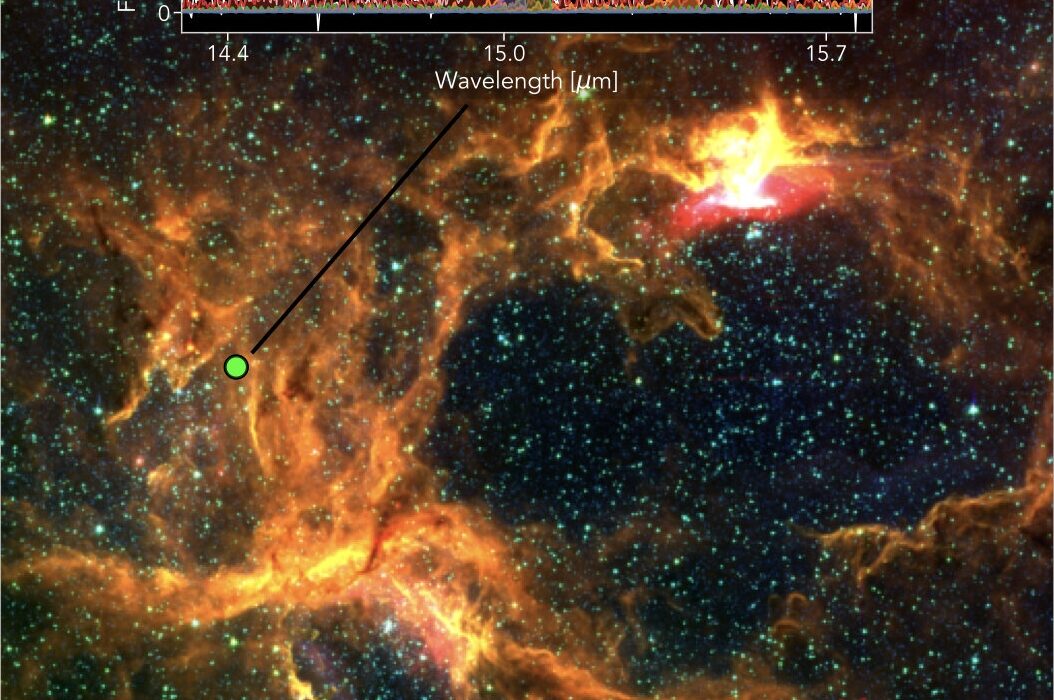
For thousands of years, humans have looked up at the night sky and wondered what lies beyond the stars. Ancient civilizations imagined gods, mythical creatures, and heavenly kingdoms. Today, powerful telescopes, robotic spacecraft, and sophisticated computers have replaced many ancient myths with scientific understanding. We know that Earth is just one planet orbiting an ordinary star in a galaxy containing hundreds of billions of stars. We know that the observable universe contains perhaps hundreds of billions or even trillions of galaxies, each filled with countless worlds.
Yet, despite all this incredible progress, the universe remains astonishingly mysterious.
The more scientists learn about the cosmos, the more questions seem to appear. Some of the greatest discoveries in astronomy have revealed puzzles that challenge our deepest understanding of reality. Invisible matter appears to outweigh everything we can see. A mysterious force is causing the universe to expand faster and faster. Black holes hide secrets that seem to break the known laws of physics. We still do not know what happened before—or even during—the earliest moments of the universe.
These are not mysteries because scientists have failed. They are mysteries because the universe is far richer, stranger, and more beautiful than anyone imagined.
This journey explores some of the greatest unsolved cosmic enigmas. Each mystery reminds us that even after centuries of scientific discovery, humanity has only begun to understand the universe we call home.
Why the Universe Is Still Full of Mysteries
Modern science has achieved remarkable success. Astronomers have mapped distant galaxies billions of light-years away. Spacecraft have landed on comets and explored the outer planets. Physicists have discovered the particles that make up ordinary matter. Gravitational waves, predicted by Albert Einstein over a century ago, have now been directly detected.
These achievements might suggest that science has nearly completed its work.
In reality, the opposite is true.
Every major breakthrough has uncovered new puzzles.
Imagine exploring a vast forest. At first, you see only the trees near the edge. As you walk deeper, the forest becomes larger, more complex, and more mysterious. The more you explore, the more you realize how much remains unseen.
Science works in much the same way.
Every answer opens the door to even bigger questions.
What Is the Universe Actually Made Of?
If someone asked what the universe is made of, the obvious answer might seem simple.
Stars.
Planets.
Gas.
Dust.
People.
Animals.
Everything we can see.
Surprisingly, all of these familiar things make up only a tiny fraction of the universe.
According to current observations, ordinary matter—the atoms that form everything visible—accounts for only about five percent of the universe’s total energy and matter.
The remaining ninety-five percent appears to consist of two mysterious components.
Dark matter.
Dark energy.
Scientists know they exist because of their effects, yet neither has been directly identified.
This realization may be one of the greatest scientific surprises in history.
It means humanity understands only a small portion of the cosmos.
The Mystery of Dark Matter
Imagine watching leaves swirling in the wind.
You cannot see the wind itself.
You know it exists because of what it does.
Dark matter is similar.
Astronomers cannot see dark matter directly because it neither emits nor reflects light.
Yet its gravitational influence appears everywhere.
Galaxies rotate too quickly.
Galaxy clusters remain bound together more strongly than visible matter alone can explain.
Light from distant galaxies bends around invisible concentrations of mass through gravitational lensing.
All these observations suggest enormous amounts of unseen matter surround galaxies.
Scientists have proposed many possible explanations.
Perhaps dark matter consists of undiscovered particles.
Maybe it is made of extremely light particles unlike anything currently known.
Some researchers have suggested tiny primordial black holes.
Others wonder whether gravity itself behaves differently over enormous distances.
So far, no explanation has been confirmed.
Powerful underground detectors continue searching for dark matter particles.
Particle accelerators explore new possibilities.
Astronomers carefully map the universe hoping to uncover additional clues.
Despite decades of research, dark matter remains invisible.
The Even Stranger Mystery of Dark Energy
Dark matter is mysterious.
Dark energy is even more astonishing.
For much of the twentieth century, scientists assumed gravity would gradually slow the expansion of the universe after the Big Bang.
Then, in the late 1990s, astronomers made a shocking discovery.
The universe is not slowing down.
Its expansion is accelerating.
Something appears to be pushing galaxies apart faster over time.
This unknown phenomenon became known as dark energy.
Unlike ordinary energy, dark energy seems to act across enormous distances.
Its effects become noticeable only on the largest cosmic scales.
No one knows exactly what dark energy is.
Perhaps empty space itself possesses energy.
Perhaps Einstein’s equations require modification.
Perhaps an entirely new form of physics remains undiscovered.
Whatever the answer, dark energy appears to dominate the universe.
Yet its true nature remains one of modern science’s greatest unsolved problems.
What Happened Before the Big Bang?
The Big Bang theory successfully explains much of the universe’s history.
Evidence includes the expansion of galaxies, the abundance of light elements, and the cosmic microwave background—the faint afterglow of the early universe.
But one profound question remains.
What happened before the Big Bang?
Scientists honestly do not know.
Some physicists argue the question itself may be meaningless because time as we know it began with the Big Bang.
Without time, the concept of “before” loses its ordinary meaning.
Other researchers propose that our universe emerged from an earlier collapsing universe.
Some imagine eternal cycles of expansion and contraction.
Others explore quantum models in which universes spontaneously emerge.
There are also theories involving multiverses, higher dimensions, or quantum fluctuations.
At present, none of these ideas has been confirmed.
The earliest moments of existence remain hidden behind one of the greatest scientific mysteries ever encountered.
Why Did the Universe Begin?
Closely connected to the previous mystery is an even deeper question.
Why does the universe exist at all?
Physics describes how the universe evolves after its earliest moments.
But why did it come into existence?
Why is there something rather than nothing?
Science currently has no complete answer.
Some physicists investigate whether quantum processes can create universes.
Others search for deeper physical laws that naturally produce cosmic beginnings.
Some philosophers argue that existence itself may not require a cause in the ordinary sense.
This question sits at the boundary between science, philosophy, and perhaps ideas we have not yet imagined.
The Puzzle of Cosmic Inflation
One remarkable idea called cosmic inflation suggests that the newborn universe expanded at an incredibly rapid rate during an unimaginably tiny fraction of a second.
Inflation helps explain why the universe appears remarkably smooth on large scales.
It also explains why space seems nearly flat.
Many observations support inflation.
Yet scientists still do not know exactly what caused it.
What field powered this extraordinary expansion?
Why did inflation stop?
Did inflation occur only once?
Or does it continue elsewhere, constantly creating new universes?
These questions remain unanswered.
Are There Other Universes?
The possibility of a multiverse fascinates both scientists and the public.
Some theories suggest our universe may be just one bubble among countless others.
Each universe could possess different physical laws, different particles, or even different dimensions.
This idea naturally emerges in certain versions of inflation theory and some interpretations of quantum mechanics.
However, there is currently no direct evidence that other universes exist.
The challenge is enormous.
If other universes cannot interact with ours, detecting them may be impossible.
For now, the multiverse remains an intriguing scientific hypothesis rather than an established fact.
What Happens Inside a Black Hole?
Black holes rank among the universe’s most fascinating objects.
Their gravity becomes so intense that once something crosses the event horizon, escape is impossible.
Scientists understand many aspects of black holes remarkably well.
They have detected gravitational waves from merging black holes.
Astronomers have even photographed the shadow of supermassive black holes.
Yet their interiors remain deeply mysterious.
General relativity predicts that matter collapses toward a singularity, where density becomes effectively infinite.
Such infinities usually indicate that current theories have reached their limits.
Quantum mechanics likely becomes important under these extreme conditions.
Unfortunately, no complete theory successfully combines gravity and quantum physics.
What truly happens inside a black hole remains unknown.
The Information Paradox
Black holes present another famous mystery.
According to quantum mechanics, information about physical systems should never be completely destroyed.
Yet classical descriptions suggest information falling into a black hole disappears forever.
Stephen Hawking showed that black holes slowly evaporate through quantum effects known as Hawking radiation.
If black holes eventually disappear, what happens to the information they contained?
Has it vanished?
Is it somehow encoded within the radiation?
Does our understanding of quantum mechanics require revision?
This puzzle has inspired decades of research and remains one of theoretical physics’ greatest challenges.
Can Gravity Be Quantum?
The universe follows two extraordinarily successful theories.
General relativity explains gravity, planets, stars, galaxies, and the large-scale universe.
Quantum mechanics explains atoms, particles, and microscopic phenomena.
Both theories work exceptionally well.
The problem is that they do not fully fit together.
At extremely high energies, such as inside black holes or during the universe’s earliest moments, both theories should apply simultaneously.
Yet current mathematics breaks down.
Physicists have spent decades searching for quantum gravity.
String theory offers one possible approach.
Loop quantum gravity offers another.
Several alternative ideas also exist.
None has yet been experimentally confirmed.
Finding a successful theory of quantum gravity may revolutionize science.
Why Does Time Move Forward?
Time always seems to flow in one direction.
Yesterday becomes today.
Today becomes tomorrow.
We remember the past.
We cannot remember the future.
Yet many fundamental equations of physics work equally well whether time moves forward or backward.
Why, then, does time possess an arrow?
Many scientists connect this question to entropy, a measure related to disorder.
The universe began in an extraordinarily low-entropy state.
As entropy increases, time appears to move forward.
But why did the universe begin in such an unusual condition?
That mystery remains unsolved.
What Is Time?
Even the nature of time itself remains mysterious.
We experience time continuously.
Clocks measure it.
Aging reflects its passage.
But what exactly is time?
Einstein showed that time depends on gravity and motion.
Two observers moving differently may measure different amounts of elapsed time.
Some modern theories even suggest time may emerge from deeper quantum relationships rather than existing as a fundamental ingredient of reality.
Understanding time may ultimately require entirely new physics.
Are We Alone in the Universe?
This question has inspired countless stories, movies, and scientific investigations.
The universe contains unimaginable numbers of stars.
Many possess planets.
Thousands of exoplanets have already been discovered.
Some orbit within regions where liquid water could exist.
Given these enormous numbers, many scientists suspect life may exist elsewhere.
Yet no confirmed evidence has been found.
This creates an intriguing puzzle known as the Fermi Paradox.
If intelligent civilizations are common, why have we found no clear signs?
Perhaps intelligent life is extremely rare.
Perhaps civilizations destroy themselves.
Perhaps they communicate differently than we expect.
Perhaps they deliberately remain quiet.
Or perhaps we simply have not looked long enough.
The answer remains unknown.
What Is Consciousness?
Although consciousness primarily belongs to neuroscience and philosophy, it also touches cosmology in unexpected ways.
How does awareness arise from matter?
Can consciousness emerge elsewhere in the universe?
Would alien intelligence think like humans?
Could artificial intelligence eventually become conscious?
Science continues making progress, yet consciousness remains one of humanity’s deepest mysteries.
What Is Dark Flow?
Astronomers have reported evidence suggesting some galaxy clusters may move together in a preferred direction.
This phenomenon became known as dark flow.
Some researchers proposed it might hint at enormous structures beyond the observable universe.
Others argue improved observations weaken the evidence.
Whether dark flow represents a genuine cosmic phenomenon or a statistical coincidence remains uncertain.
It demonstrates how astronomy constantly evolves as better data become available.
Fast Radio Bursts
One of astronomy’s newest mysteries involves brief flashes of radio waves called fast radio bursts.
These signals last only milliseconds.
Yet during that tiny instant, they can release enormous amounts of energy.
Some repeat.
Others appear only once.
Astronomers have linked several bursts to highly magnetized neutron stars called magnetars.
However, not every fast radio burst is fully understood.
Researchers continue investigating whether multiple kinds of cosmic events produce them.
Each new detection adds another piece to the puzzle.
The Mystery of Ultra-High-Energy Cosmic Rays
Space constantly bombards Earth with particles traveling at extraordinary speeds.
Most originate from ordinary astrophysical processes.
But some possess astonishingly high energies.
Scientists still debate exactly what accelerates these particles.
Possible sources include supermassive black holes, exploding stars, neutron stars, or entirely new phenomena.
The mystery remains active today.
The Missing Matter Problem
Ordinary matter accounts for only about five percent of the universe.
Even within that small fraction, astronomers once struggled to find all the expected material.
For years, much of the ordinary matter appeared missing.
Recent observations suggest that a significant portion resides as extremely hot, diffuse gas stretching between galaxies.
Although much progress has been made, scientists continue refining their understanding of where ordinary matter resides throughout the cosmos.
Why Are Physical Constants So Precise?
The universe depends upon several fundamental constants.
These include the strength of gravity, the charge of the electron, and the speed of light.
If some values differed even modestly, stars might never form.
Chemistry could become impossible.
Life as we know it might never emerge.
Why do these constants possess their observed values?
Were they determined by deeper physical laws?
Chance?
A multiverse?
Scientists continue exploring these possibilities.
What Is the Shape of the Universe?
On local scales, planets appear spherical.
Galaxies possess complex shapes.
But what about the universe itself?
Observations suggest space appears remarkably flat on enormous scales.
Yet scientists still investigate whether the universe is finite or infinite.
Could space curve back on itself?
Could traveling far enough eventually return you to your starting point?
Current observations provide strong constraints but not complete certainty.
How Will the Universe End?
Every beginning raises questions about endings.
Astronomers continue studying the universe’s ultimate fate.
If dark energy remains constant, galaxies will drift farther apart until the universe becomes cold and dark.
This scenario is sometimes called heat death.
Alternative possibilities exist.
If dark energy changes, expansion might eventually tear galaxies, stars, planets, and even atoms apart.
Other speculative models imagine future cosmic cycles.
At present, available evidence favors continued expansion, but scientists continue investigating.
Could There Be New Laws of Physics?
History teaches an important lesson.
Every generation believed physics was nearly complete.
Then unexpected discoveries changed everything.
Newtonian mechanics gave way to relativity.
Classical ideas yielded to quantum mechanics.
Dark matter and dark energy revealed previously unknown components of the universe.
It would therefore be unwise to assume today’s theories represent the final word.
Future discoveries may completely reshape our understanding of reality.
Why Exploring Cosmic Mysteries Matters
Some people wonder why scientists spend decades studying questions with no immediate practical applications.
History provides the answer.
Curiosity-driven research has repeatedly transformed civilization.
Electricity once seemed like an abstract scientific curiosity.
Quantum mechanics appeared bizarre and impractical.
Today both underpin nearly every aspect of modern life.
Studying cosmic mysteries expands more than technology.
It expands perspective.
Looking outward reminds us how small Earth is within the vast universe.
At the same time, it highlights something remarkable.
Tiny creatures living on one small planet have developed the ability to ask questions about galaxies billions of light-years away.
That achievement alone is extraordinary.
The Future of Cosmic Exploration
The coming decades promise exciting discoveries.
New telescopes will peer farther into the universe than ever before.
Gravitational-wave observatories will detect collisions involving black holes and neutron stars with increasing precision.
Spacecraft will continue exploring planets, asteroids, and icy moons.
Particle accelerators will search for new forms of matter.
Artificial intelligence will help scientists analyze enormous amounts of astronomical data.
Perhaps one of today’s greatest mysteries will become tomorrow’s textbook knowledge.
History suggests this is exactly how science progresses.
Every answer leads to deeper questions.
Every mystery invites another generation of explorers.
Conclusion
The universe is the greatest mystery humanity has ever encountered. It contains billions of galaxies, countless stars, and unimaginable distances, yet some of its most important ingredients remain invisible and unexplained. Dark matter, dark energy, black holes, the origin of the cosmos, the nature of time, and the possibility of life beyond Earth continue to challenge even the brightest scientific minds.
These mysteries should not be seen as failures of science but as signs of its success. Every unanswered question exists because scientists have learned enough to recognize that something important is still missing. The more carefully we observe the cosmos, the more we realize that reality is richer and more complex than anyone once believed.
Perhaps the most inspiring lesson is that humanity’s journey of discovery is far from over. Somewhere among the countless stars, hidden within invisible matter, or buried in the mathematics of spacetime, the answers to today’s greatest cosmic enigmas are waiting to be found. Future generations of scientists may solve mysteries that seem impossible today, just as previous generations unlocked secrets that once appeared beyond imagination.
Until then, the universe continues to invite us to look upward with wonder, ask bold questions, and never stop exploring. Every clear night sky is a reminder that although we have come remarkably far in understanding the cosmos, its greatest secrets may still lie just beyond the next discovery.