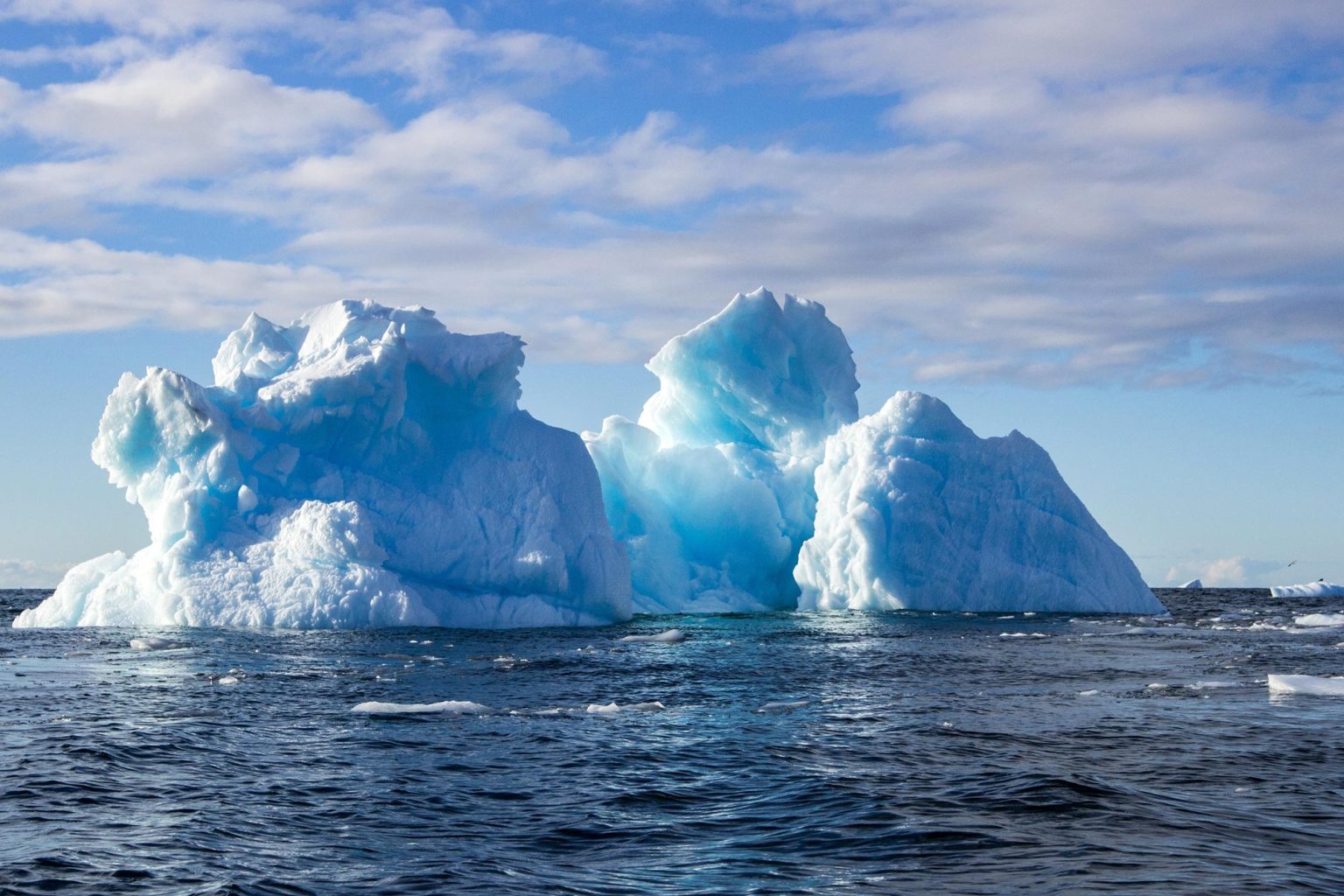
Unexpected cooling around Antarctica may have been driven in part by human-caused ozone depletion rather than ocean processes alone. Climate model experiments show that changes in the ozone layer strengthened Antarctic winds, reshaped ocean circulation, and cooled the Southern Ocean between 1982 and 2005, offering a clearer explanation for one of climate science’s long-standing puzzles.
The Southern Ocean has long challenged scientists’ understanding of Earth’s changing climate. While greenhouse gases have warmed most of the world’s oceans, the waters surrounding Antarctica experienced an unusual period of cooling during the late 20th and early 21st centuries. During much of that time, Antarctic sea ice also expanded in some regions before later declining, creating an apparent contradiction with the broader trend of global warming.
A new study published in Geophysical Research Letters offers an important piece of the explanation. Using climate model experiments that isolated changes in the Antarctic ozone layer, researchers found that human-driven ozone depletion likely played a major role in cooling the Southern Ocean between 1982 and 2005. Their findings show how changes high in the atmosphere can ripple downward, altering winds, ocean circulation, and even regional sea ice.
How Ozone Loss Changed Antarctic Winds
The ozone hole formed largely because of human-made chemicals released during the 20th century. Its development cooled the lower stratosphere, the atmospheric layer above where weather occurs. That cooling altered the temperature contrast between the polar regions and the tropics, changing the behavior of the powerful westerly winds that circle Antarctica.
According to the study, ozone depletion strengthened these winds and shifted them closer to the Antarctic continent. Rather than remaining an atmospheric change alone, the stronger winds affected the ocean surface, influencing how seawater moved across the Southern Ocean.
This connection between the atmosphere and ocean proved to be a key driver of the observed cooling.
Wind-Driven Ocean Movement Produced Rapid Cooling
The researchers found that stronger westerly winds enhanced Ekman transport, a process in which winds push surface water while Earth’s rotation causes it to curve.
South of approximately 46°S latitude, the intensified winds increased the northward movement of surface water. This transported cold water away from Antarctica and spread it farther into the Southern Ocean, lowering surface temperatures across much of the region.
The shifting winds also changed patterns of sea surface temperature, reinforcing the movement of colder water and strengthening the overall cooling effect.
Although interactions between the atmosphere and ocean can sometimes warm surface waters through heat exchange, the study found that this effect remained too weak to offset the much stronger cooling caused by wind-driven circulation during the study period.
Slower Ocean Processes Worked in the Opposite Direction
The study also examined what happened beneath the ocean’s surface.
As Antarctic winds intensified, they increased upwelling, drawing deeper ocean water toward the surface. In the Southern Ocean, this deeper water can actually be warmer than the surface layer, meaning the process can eventually contribute to warming.
However, the researchers found that this response unfolded much more slowly than the rapid cooling caused by surface water movement.
Their simulations revealed a two-stage pattern. The first stage involved immediate cooling driven by horizontal transport of cold surface water. The second stage produced a slower, weaker warming effect as vertical mixing and upwelling gradually brought warmer deep water upward.
Over time scales of several decades, these opposing processes did not balance each other. The stronger, sustained wind-driven transport continued to keep the Southern Ocean cooler than it otherwise would have been under greenhouse gas warming alone.
A Better Explanation for Antarctic Sea Ice Changes
The findings also help explain why Antarctic sea ice behaved differently from expectations during part of the satellite era.
The climate models suggest that ozone-driven cooling contributed to regional sea ice expansion, particularly in areas such as the Ross Sea. This matches observations showing sea ice growth in some parts of the Southern Ocean even while global ice trends generally moved in the opposite direction.
At the same time, the study emphasizes that sea ice changes were far from uniform. Some regions experienced increases, while others still saw declines.
These contrasting patterns reflect the combined influence of changing winds, ocean heat transport, and regional feedbacks involving temperature and salinity. The researchers stress that ozone depletion alone cannot explain all observed Antarctic sea ice changes, even though it made a meaningful contribution.
Resolving Part of a Climate Puzzle
The research also sheds light on a long-standing difference between observations and climate model results.
Many climate models simulate warming across the Southern Ocean over recent decades, while observations have documented periods of cooling. By isolating ozone depletion in their experiments, the researchers showed that it acts as a regional cooling influence superimposed on the broader warming caused by greenhouse gases.
When all major climate influences—including greenhouse gases, aerosols, natural variability, and ozone changes—are considered together, greenhouse gas warming remains the dominant long-term signal. Ozone depletion creates a significant regional cooling effect, but it is not powerful enough to reverse the overall trend toward global warming.
Instead, the findings suggest that the Southern Ocean has been responding to several competing influences operating simultaneously rather than to a single driving force.
Why This Matters
The study provides a clearer explanation for one of the climate system’s most unusual regional patterns. By showing that human-driven ozone depletion strengthened Antarctic winds and altered ocean circulation, the research demonstrates how atmospheric changes can directly shape ocean temperatures over decades.
Rather than viewing the Southern Ocean’s cooling as an isolated mystery, the findings place it within a broader picture of interacting climate processes. They also highlight that regional climate trends can differ from global averages because multiple human-driven and natural influences often act at the same time. Understanding those competing forces is essential for interpreting past climate changes and improving how scientists represent the Southern Ocean in future climate simulations.