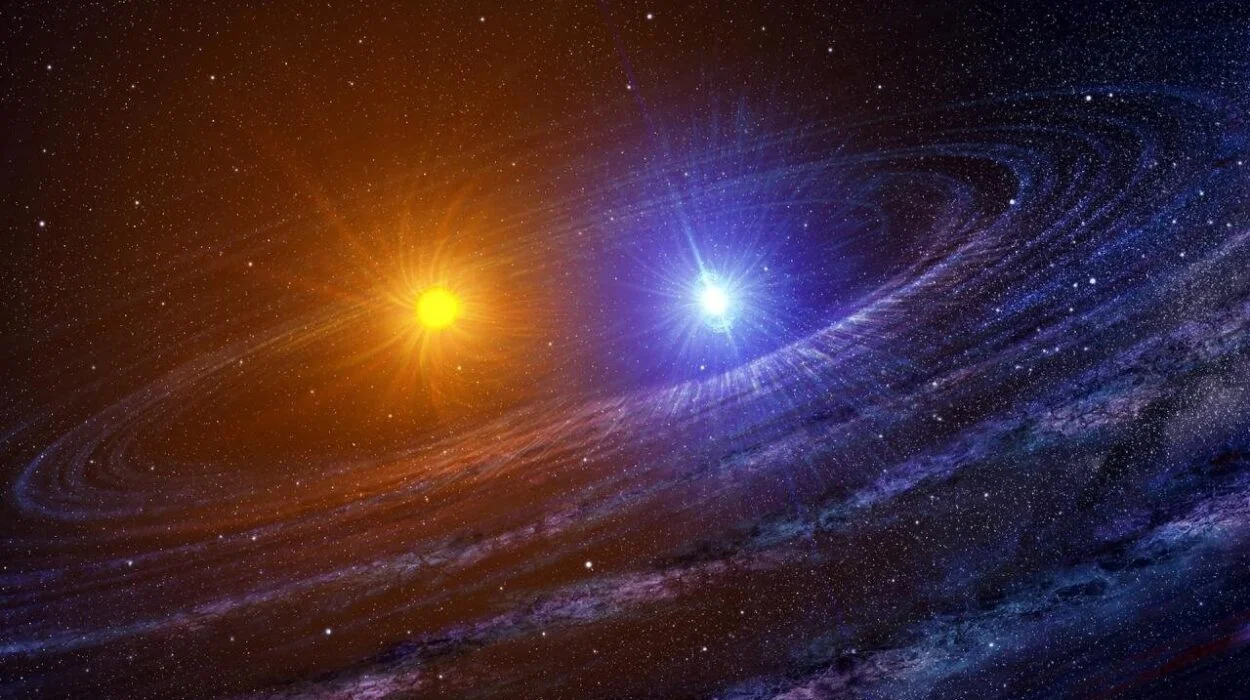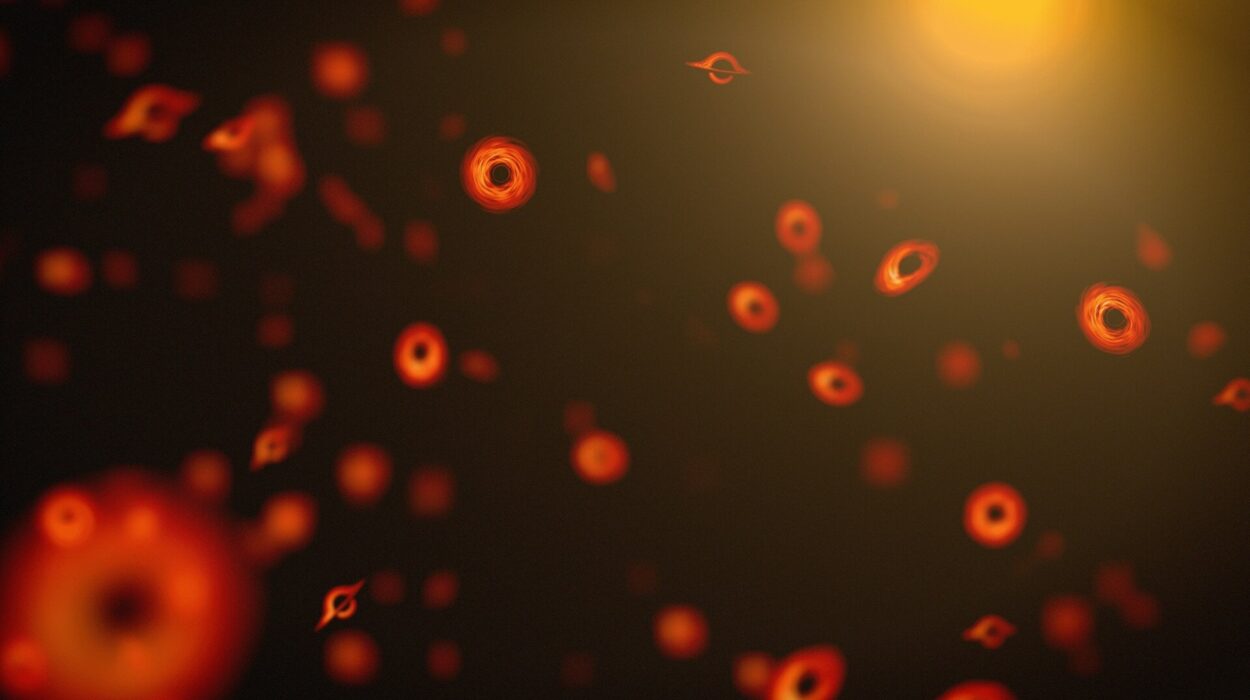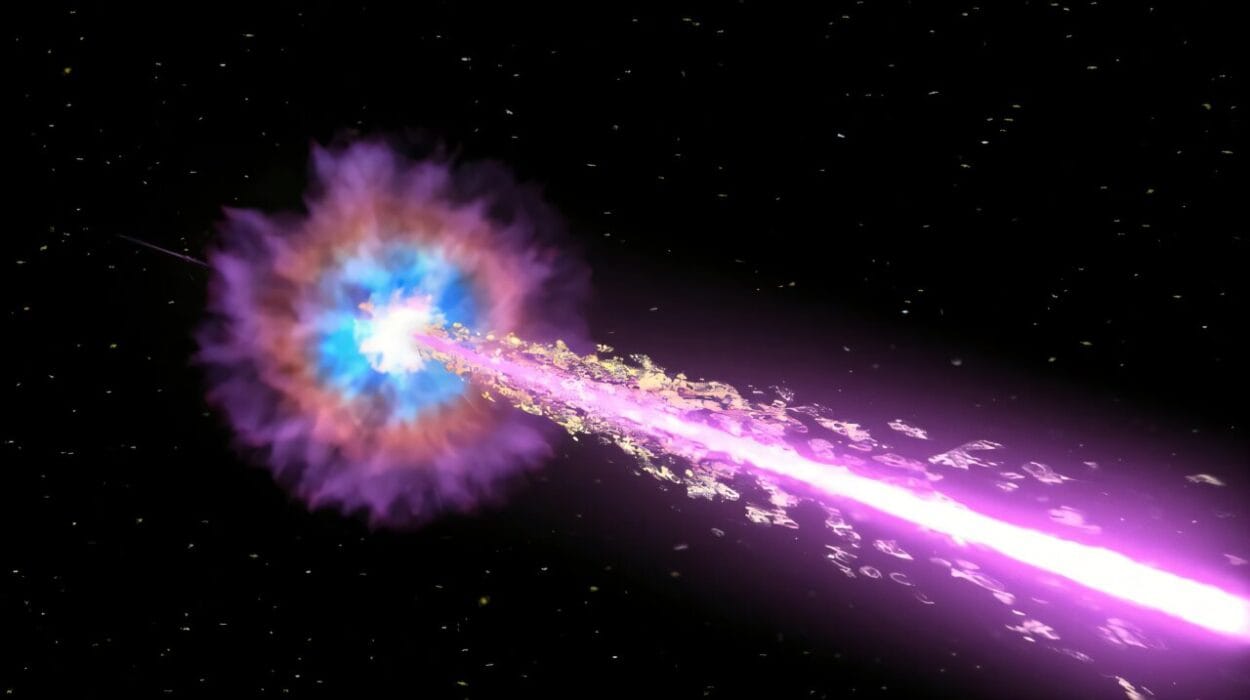
In the vastness of space, something strange is happening. Galaxies, those massive collections of stars, gas, and dust, are not just drifting in isolation. Some of them are colliding, merging, and in doing so, sparking a cosmic phenomenon so intense it could rival the brightest lights in the universe. We’re talking about supermassive black holes, the dark giants at the center of nearly every massive galaxy. These black holes are usually quiet, lurking in the shadows, only giving off a faint glow as they slowly devour material from their surroundings. But every now and then, they erupt into brilliant displays of light and power, shining so brightly that they outshine the galaxies themselves.
Astronomers have long wondered what triggers this kind of explosive activity in supermassive black holes. Could it be the result of a quiet accumulation of gas and dust over time, or is there something more violent at play? Now, thanks to a groundbreaking dataset from the Euclid telescope, scientists have uncovered a surprising answer, one that reveals the immense power of galaxy mergers in igniting the most luminous black holes.
A Million Galaxies and a New Window to the Universe
Before the Euclid telescope, understanding the role of galaxy mergers in triggering active supermassive black holes was a daunting task. Previous attempts were hampered by limited data and small sample sizes, making it difficult to draw definitive conclusions. But all that changed within a single week of the telescope’s launch. Euclid’s advanced imaging capabilities provided a dataset covering an area nearly as large as the Hubble Space Telescope’s total observational field, a feat that had taken Hubble over thirty years to accomplish.
This wealth of new data was more than just a quantity boost—it was a quality leap. To make sense of this treasure trove of images, a team of scientists from the Euclid consortium, including Berta Margalef-Bentabol and Lingyu Wang from SRON, developed a revolutionary AI image decomposition tool. This tool not only identified active galactic nuclei (AGN)—the bright, energetic centers of galaxies where supermassive black holes are most active—but also measured their output with unprecedented precision. As Margalef-Bentabol explains, “This new approach can even reveal faint AGN that other identification methods will miss.”
This was a game-changer. For the first time, astronomers had the ability to spot and quantify the output of AGN with incredible accuracy, enabling them to track the cosmic footprints of supermassive black holes like never before.
Galaxy Mergers: The Cosmic Trigger
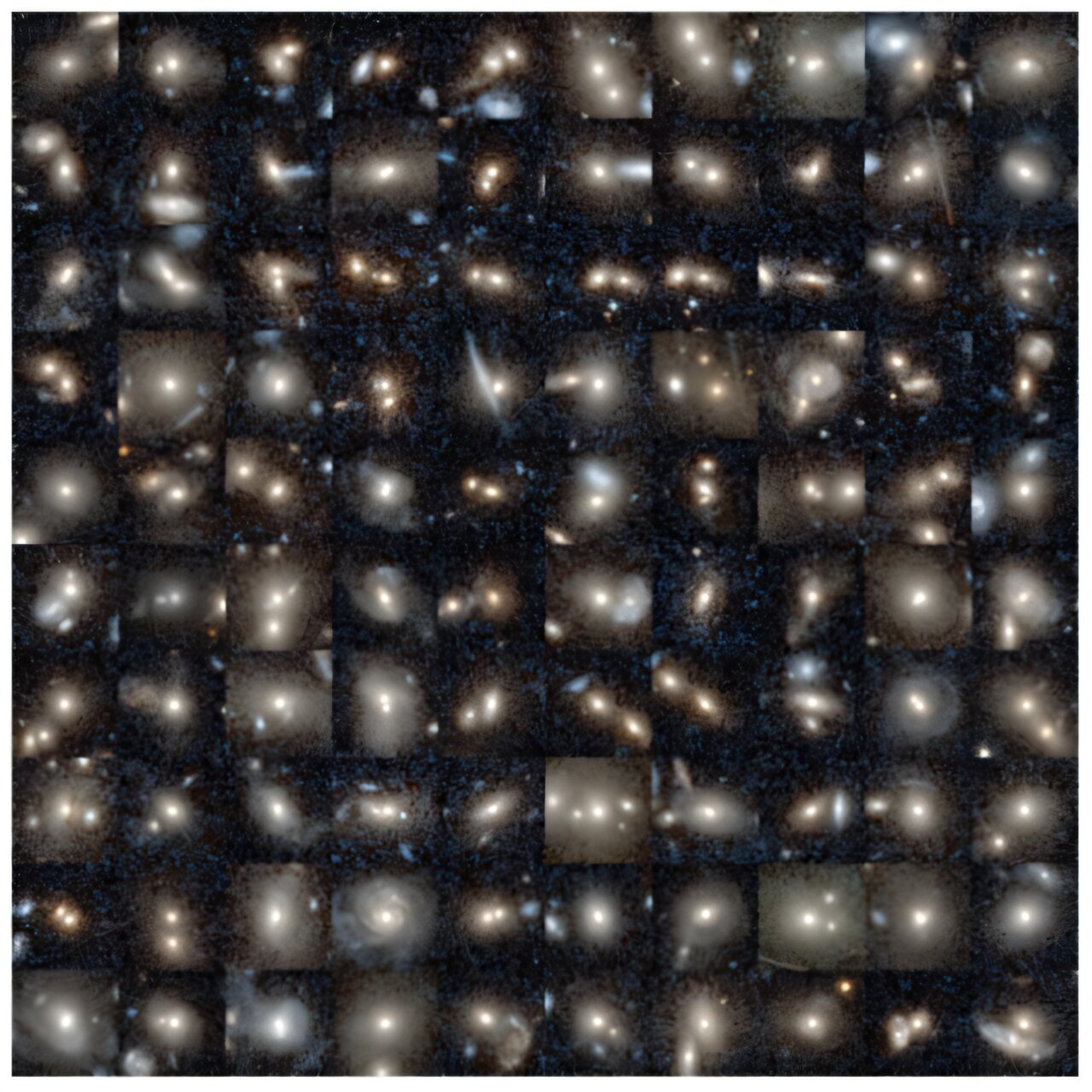
With this new tool in hand, the Euclid team dove into a dataset of over a million galaxies, examining both merging galaxies—where two or more galaxies collide—and non-merging galaxies. What they found confirmed a long-standing hypothesis that had only been speculated about in the past: galaxy mergers play a dominant role in the ignition of AGN.
Antonio la Marca, a lead author of the study, put it simply: “We also conclude that mergers are very likely to be the only mechanism capable of feeding the most luminous AGN. At the very least, they are the primary trigger.”
In their analysis, the team discovered that merging galaxies were far more likely to house active supermassive black holes compared to their non-merging counterparts. In fact, merging galaxies contained two to six times as many AGN. But the most stunning revelation came when the team focused on the most luminous AGN—those that shine with extraordinary brightness. These incredibly bright black holes were overwhelmingly found in galaxies that had undergone or were in the process of merging.
The numbers were staggering. Among dynamically young, dust-rich mergers—where the AGN is only visible in infrared light—there were six times as many active black holes compared to non-merging galaxies. As mergers reached their final stages, when the dust had settled and the AGN became visible in X-rays, the numbers were still striking, with twice as many AGN present.
It was a clear pattern: galaxy mergers weren’t just playing a part in fueling supermassive black holes; they were the primary trigger for the brightest, most energetic AGN in the universe.
The Hidden Truths of Merged Galaxies
As the researchers dug deeper into the data, they uncovered another fascinating layer to the story. In cases where the merger had already been completed and the galaxies appeared to be a single, stable entity, it became increasingly likely that the AGN still lurking at the galaxy’s center was, in fact, the result of an earlier merger.
La Marca elaborates: “This difference between the two AGN types could mean that many AGN found in non-mergers are actually in merged galaxies that have completed the chaotic stages and appear as a single galaxy in a regular form.”
In other words, some of the AGN that scientists had previously classified as being in non-merging galaxies were actually the result of past mergers. The cosmic chaos that typically accompanies these galaxy collisions may not always be visible in the present-day appearance of the galaxies. But deep within, the supermassive black holes continue to shine, their power fueled by the ancient collision of galaxies.
Why This Discovery Matters
The findings from the Euclid telescope are more than just an academic breakthrough—they have profound implications for our understanding of the universe. By revealing that galaxy mergers are the primary mechanism behind the ignition of the most luminous black holes, this research helps to answer one of the most intriguing questions in modern astronomy: what triggers the spectacular activity in supermassive black holes?
But the significance goes beyond that. Understanding how black holes are powered is key to understanding the evolution of galaxies themselves. Supermassive black holes are not just passive observers of the cosmos; they influence their surroundings in powerful ways, shaping the structure and behavior of entire galaxies. By studying the connection between galaxy mergers and AGN ignition, scientists can gain new insights into how galaxies form, grow, and interact over cosmic timescales.
Moreover, the use of the Euclid telescope’s new AI tools opens up exciting possibilities for future astronomical discoveries. With the ability to identify even the faintest AGN, researchers can now probe deeper into the cosmos, unlocking new mysteries about the life cycles of galaxies and the supermassive black holes that sit at their centers.
In the end, this research reminds us of the dynamic and ever-changing nature of the universe. Galaxies aren’t static; they collide, merge, and evolve, and in doing so, they give birth to some of the most powerful forces in the cosmos. As astronomers continue to study these cosmic collisions, the story of the universe will only become more complex—and more fascinating.
More information: Euclid Quick Data Release (Q1). First Euclid statistical study of galaxy mergers and their connection to active galactic nuclei, Astronomy & Astrophysics (2025). DOI: 10.1051/0004-6361/202554579. On arXiv: DOI: 10.48550/arxiv.2503.15317
Euclid Quick Data Release (Q1). First Euclid statistical study of the active galactic nuclei contribution fraction, arXiv (2025). DOI: 10.48550/arxiv.2503.15318