Across the ancient landscapes of Earth, long before human cities rose from stone and steel, predators roamed that seemed almost mythical in appearance. Among them was one of the most iconic animals of the Ice Age: the saber-toothed tiger. With enormous curved fangs extending far beyond its jaw, powerful shoulders, and the build of a muscular ambush hunter, this creature has captured human imagination for centuries.
Yet despite its legendary status, the saber-toothed tiger vanished from the Earth thousands of years ago. Its bones lie buried in ancient sediments, its teeth preserved in museums, and its story scattered across the fossil record. The question that continues to fascinate scientists and the public alike is simple but profound: what really happened to the saber-toothed tiger?
The answer is not a single moment of extinction but a complex story of evolution, survival, environmental change, and ultimately disappearance. To understand why the saber-toothed tiger vanished, we must first understand what it truly was, how it lived, and how the world around it changed.
A Name That Misleads
The animal most people imagine when they hear “saber-toothed tiger” was not actually a tiger at all. Its scientific name is Smilodon, and although it belonged to the cat family, it was not closely related to modern tigers, lions, or leopards.
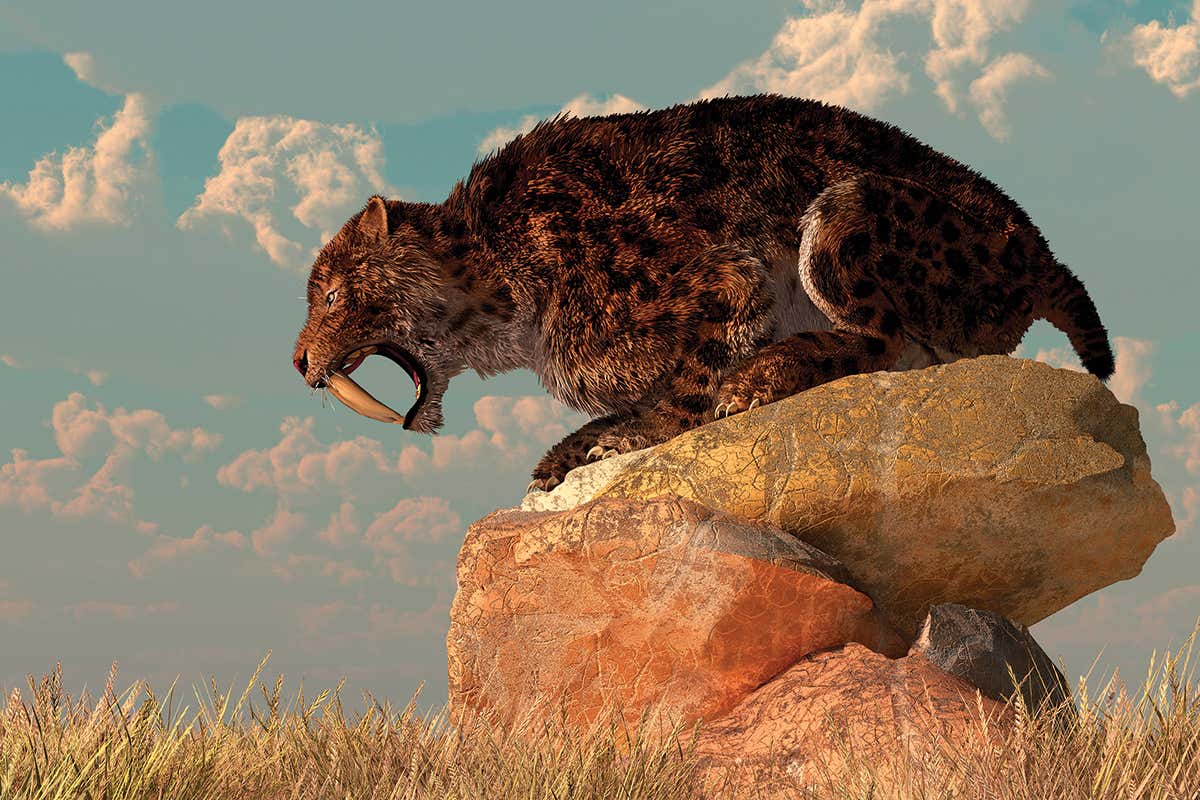
Instead, Smilodon belonged to a distinct branch of prehistoric cats known as machairodonts. These cats evolved extraordinary saber-shaped canine teeth that could reach up to 20 centimeters in length in some species.
The most famous species is Smilodon fatalis, which lived throughout North and South America during the late Ice Age. Another species, Smilodon populator, was even larger and roamed South America.
These animals looked somewhat similar to modern big cats at first glance, but closer examination reveals important differences. Smilodon had an extremely robust body, with massive forelimbs and a comparatively shorter tail. Its chest and shoulders were heavily muscled, suggesting immense strength rather than speed.
This physical design reveals something about how the animal lived and hunted.
The Evolution of the Saber Teeth
The dramatic canine teeth of Smilodon were not merely for display. They were specialized tools shaped by millions of years of evolution.
Fossils show that saber-toothed cats evolved as early as 42 million years ago. Many different species appeared across North America, Europe, Asia, Africa, and South America. These predators belonged to several evolutionary groups, but they shared the defining feature of elongated upper canines.
One theory suggests that these teeth evolved because they allowed predators to deliver deep, fatal wounds to large prey animals. Ice Age ecosystems were filled with massive herbivores such as mammoths, giant bison, horses, and ground sloths. A powerful predator capable of quickly disabling such prey would have a major advantage.
The saber teeth were not designed for crushing bone like the jaws of hyenas. Instead, they were delicate but extremely sharp blades. Scientists believe Smilodon used its powerful forelimbs to wrestle prey to the ground before delivering a precise throat bite.
Its jaw could open to an astonishing angle—nearly 120 degrees—allowing those massive canines to clear the lower jaw.
But this specialization also came with a cost.
The teeth were fragile compared to the rest of the animal’s anatomy. If they broke, the predator could lose its ability to hunt effectively. Evolution had created a highly specialized predator that thrived under certain conditions but might struggle if those conditions changed.
The Ice Age World
To understand Smilodon, we must step back into the world it inhabited. During the last Ice Age, vast glaciers covered large parts of the Northern Hemisphere. Cold climates shaped ecosystems across continents.
This period, known scientifically as the Pleistocene epoch, lasted from about 2.6 million years ago until roughly 11,700 years ago.
Despite the icy conditions, many regions were rich in wildlife. Grasslands and open woodlands stretched across continents, supporting enormous herds of herbivores. Mammoths, mastodons, giant camels, horses, bison, and ground sloths roamed these landscapes.
Where prey thrived, predators followed.
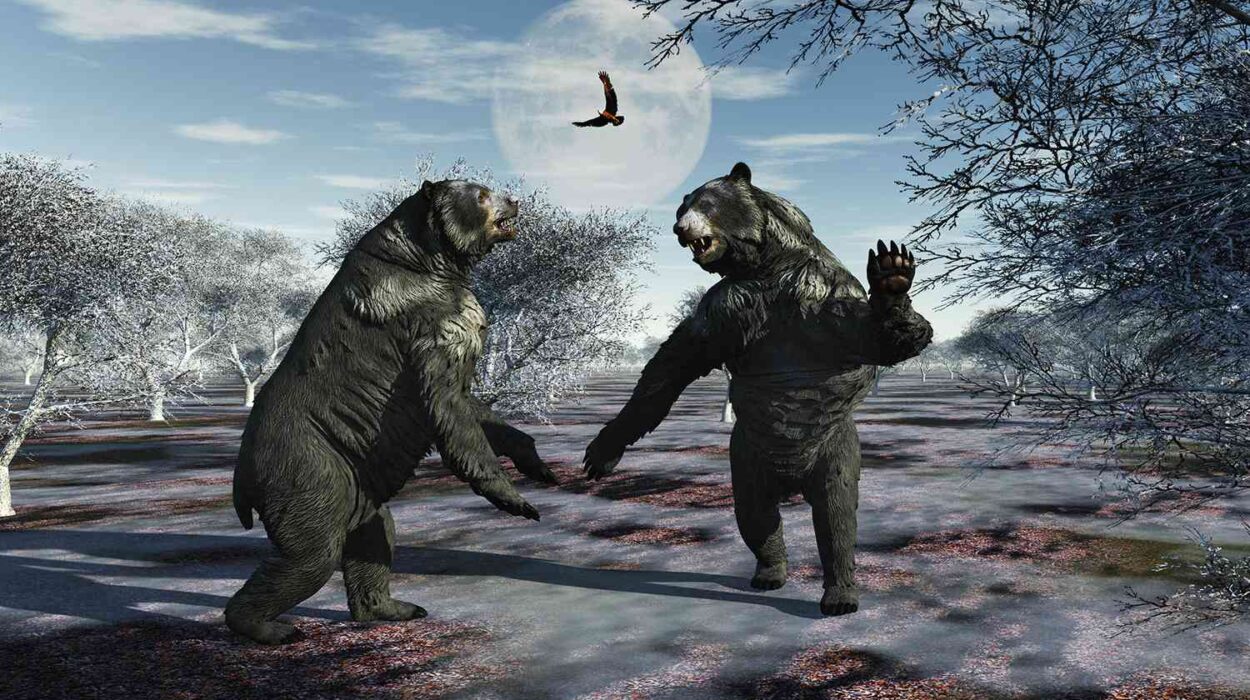
Smilodon shared its world with other formidable carnivores. Among them were the giant short-faced bear, dire wolves, and American lions. Competition was fierce, but ecosystems were balanced by abundant prey.
For thousands of years, Smilodon was one of the dominant predators of this world.
Evidence from the Fossil Record
One of the most extraordinary windows into the life of Smilodon comes from the famous La Brea Tar Pits.
For tens of thousands of years, natural asphalt seeps trapped animals that wandered into the sticky surface. Herbivores became stuck first, struggling desperately. Their distress attracted predators, which often became trapped as well.
The result is one of the richest fossil sites in the world.
Thousands of Smilodon skeletons have been discovered there, far more than any other large predator. These fossils reveal details about the animal’s anatomy, injuries, and behavior.
Many skeletons show healed fractures and injuries that would have been difficult to survive alone. Some scientists believe this suggests a form of social behavior. Like modern lions, Smilodon may have lived in groups that helped injured members survive.
The La Brea fossils also reveal how dangerous life was for these predators. Broken bones, arthritis, and bite wounds show that hunting large prey was a risky business.
Yet for tens of thousands of years, Smilodon endured.
Hunting Like No Other Cat
Modern big cats rely on speed and stealth to chase prey. Cheetahs sprint across open plains, while lions coordinate group hunts. Smilodon hunted differently.
Its heavy build suggests it was not a pursuit predator. Instead, it likely relied on ambush.
Scientists believe Smilodon hid within vegetation or rough terrain before launching a sudden attack. Its powerful forelimbs could grapple prey animals much larger than itself. Once the prey was pinned, the cat would deliver a fatal bite to the throat using its saber teeth.
This method worked best against large herbivores. Ice Age landscapes offered plenty of such prey.
But this strategy depended on the presence of megafauna—massive animals that formed the foundation of the ecosystem.
When those animals began to disappear, Smilodon’s survival was threatened.
The End of the Ice Age
Around 12,000 years ago, Earth’s climate began warming dramatically as the last Ice Age ended. Glaciers retreated, sea levels rose, and ecosystems transformed.
Grasslands gave way to forests in many regions. Weather patterns shifted. Plant communities changed.
These environmental changes disrupted the habitats of many large animals. Some species migrated to new areas. Others declined.
At the same time, another powerful force had arrived on the continents.
Humans.
The Arrival of Humans
Modern humans spread across the Americas roughly 15,000 to 20,000 years ago. As skilled hunters equipped with tools and cooperative strategies, humans quickly became a major ecological influence.
Early humans hunted many large herbivores, including mammoths and giant bison. Some researchers believe human hunting played a role in the decline of these megafauna populations.
This debate remains active among scientists. Some argue that climate change was the primary driver, while others believe human hunting accelerated the process.
Whatever the cause, the result was clear: large herbivores began disappearing.
And when prey vanished, predators followed.
The Collapse of the Megafauna
The late Pleistocene extinction was one of the most dramatic ecological events in recent geological history. Across multiple continents, large animals disappeared.
In North America alone, mammoths, mastodons, giant sloths, and many other species vanished within a relatively short period.
Smilodon was part of this extinction wave.
Because it relied heavily on large prey animals, the decline of those species would have devastated its food supply. A predator built to kill massive herbivores could not easily switch to smaller prey.
Its anatomy was too specialized.
Modern predators such as wolves or cougars can adapt their diet. Smilodon may not have had that flexibility.
Competition with Other Predators
As prey populations declined, competition among predators likely intensified.
Dire wolves, American lions, and other carnivores hunted in the same environments as Smilodon. With fewer herbivores available, these predators competed for the same dwindling food resources.
Smilodon’s heavy build and specialized teeth may have made it less adaptable in this changing world.
Predators that could chase smaller prey or scavenge more efficiently may have had an advantage.
Over time, Smilodon populations began shrinking.
The Final Disappearance
By approximately 10,000 years ago, Smilodon had vanished from the fossil record.
Its extinction coincided with the broader disappearance of many Ice Age megafauna. Scientists believe a combination of factors contributed to its demise.
Climate change altered habitats and ecosystems. Large herbivores declined or vanished. Human hunting may have accelerated these losses. Predator competition intensified.
Together, these pressures created a perfect storm.
A highly specialized predator that had dominated Ice Age ecosystems for hundreds of thousands of years could not adapt quickly enough.
And so, Smilodon disappeared.
The Legacy of a Lost Predator
Though the saber-toothed tiger is gone, its legacy remains.
Fossils continue to reveal new details about its biology and behavior. Modern technologies such as CT scanning and isotope analysis allow scientists to study ancient bones in unprecedented ways.
These studies show that Smilodon was not simply a monstrous predator but a complex animal adapted to a unique ecological niche.
Its story also reminds us of the fragility of ecosystems. When key species disappear, entire food webs can collapse.
Understanding the extinction of Ice Age animals helps scientists understand modern environmental challenges.
Could Saber-Toothed Tigers Return?
The idea of bringing extinct animals back through genetic technology has captured public imagination. Projects exploring the revival of mammoths or other extinct species have sparked debate.
In theory, recovering DNA from Smilodon fossils might one day provide insights into its genome. However, recreating such an animal would be extraordinarily difficult.
DNA degrades over time, and no complete genome of Smilodon has yet been recovered.
Even if it were possible, the ecosystems that once supported saber-toothed cats no longer exist.
Extinction, once it occurs, is usually permanent.
Why the Saber-Toothed Tiger Still Fascinates Us
The saber-toothed tiger remains one of the most iconic prehistoric animals. Its enormous fangs, powerful body, and mysterious disappearance make it a symbol of the Ice Age.
But beyond its dramatic appearance lies a deeper story about evolution, adaptation, and extinction.
Smilodon was not a monster. It was a finely tuned product of natural selection, perfectly adapted to the world it inhabited.
When that world changed, the predator could not survive.
Its story echoes across deep time as a reminder that life on Earth is always evolving, always changing, and sometimes disappearing.
And in the silent bones preserved in ancient sediments, the saber-toothed tiger still tells its story—a story of power, survival, and ultimately, loss.