The civilization commonly known as the Aztec Empire remains one of the most studied yet frequently misunderstood societies in world history. Popular imagination often reduces it to dramatic imagery—warriors, pyramids, and ritual sacrifice. But beneath these simplified narratives lies a deeply sophisticated political, scientific, ecological, and philosophical world.
At its height in the early sixteenth century, this imperial system governed millions of people across central Mesoamerica. Its capital, the extraordinary island city of Tenochtitlan, stood among the largest urban centers on Earth. Its population rivaled that of major European cities. Its infrastructure demonstrated engineering brilliance. Its intellectual traditions reflected complex cosmology, astronomy, and environmental knowledge.
Yet much of what made this civilization remarkable remains hidden beneath layers of conquest narratives, colonial reinterpretation, and modern misconception. Archaeology, ethnohistory, linguistics, and environmental science have gradually revealed deeper truths.
These are not myths or exaggerations, but carefully reconstructed realities—ten profound and scientifically grounded insights that reveal the remarkable sophistication of this civilization.
1. The Empire Was Built on Water Engineering Mastery
The most astonishing feature of the imperial capital was not its temples or palaces—it was its environment. The city stood on an island within Lake Texcoco, a large, shallow body of water in the Valley of Mexico. Constructing a massive urban center in such a setting required advanced hydraulic engineering far beyond what many contemporary societies achieved.
The inhabitants transformed unstable marshland into productive territory through artificial agricultural islands known as chinampas. These were not simple floating gardens, as they are sometimes described. They were carefully engineered plots built by layering sediment, vegetation, and soil within shallow lake zones, anchored by tree roots and stabilized by canals.
These agricultural systems were extraordinarily productive. Modern ecological studies suggest they could produce multiple harvests annually. Nutrient-rich lake sediment continuously replenished soil fertility, creating a sustainable food production system capable of feeding hundreds of thousands of urban residents.
Water control extended far beyond farming. Engineers constructed dikes to separate fresh water from brackish water, preventing contamination of drinking supplies. Causeways connected the island to the mainland. Aqueducts transported spring water from distant sources into the city.
Hydrological modeling conducted by modern researchers shows that these systems required precise environmental knowledge. The capital functioned not in opposition to nature but through careful integration with it.
2. Urban Planning Reached Extraordinary Levels of Organization
Visitors from Europe who entered the capital in the early sixteenth century described a city of geometric precision and astonishing cleanliness. The conqueror Hernan Cortes compared its scale and order to the greatest cities of his homeland.
Archaeological reconstruction reveals a carefully planned urban layout. Broad avenues divided districts. Canals functioned as transportation corridors. Market zones, ceremonial precincts, residential neighborhoods, and administrative centers were spatially organized.
Waste management systems were highly advanced. Human waste was collected, transported, and reused as agricultural fertilizer. Streets were regularly cleaned. Water channels were maintained to prevent stagnation and disease.
Population density estimates suggest that hundreds of thousands lived within the metropolitan region. Managing such density required administrative systems capable of organizing labor, taxation, and resource distribution.
Urban planning was not accidental. It reflected a governing philosophy in which order, symmetry, and functionality expressed cosmic harmony.
3. Education Was Universal and Structured
Unlike many premodern societies where education was restricted to elites, formal instruction was widely institutionalized. Nearly all children received structured training based on social role and community expectations.
Different types of schools existed. Some trained future leaders and priests in astronomy, theology, history, and governance. Others trained common citizens in practical skills, discipline, and moral conduct.
Instruction emphasized memorization of historical narratives, ritual knowledge, and ethical principles. Oral transmission preserved complex cultural memory across generations.
Ethnohistorical records show that education included physical training, artistic expression, and philosophical reflection. Intellectual formation was seen as essential to maintaining social order and cosmic balance.
This widespread educational system helped sustain administrative cohesion across a vast and diverse population.
4. The Economy Functioned Without Metal Currency
Despite operating a vast trade network, the empire did not rely on metal coinage. Instead, economic exchange functioned through standardized goods used as units of value.
Cacao beans served as a widely accepted medium of exchange. Cotton cloth functioned as another standardized value unit. Regional markets operated with remarkable consistency in pricing structures.
The largest commercial center was the massive marketplace of Tlatelolco, where thousands of merchants traded daily. Observers reported strict regulation, official inspectors, and organized dispute resolution.
Economic historians note that this system demonstrates a sophisticated understanding of value standardization without metallic currency. Exchange networks connected distant ecological regions, allowing distribution of obsidian, jade, feathers, textiles, food products, and crafted goods.
The economy combined tribute extraction, long-distance trade, and local market exchange into a complex integrated system.
5. Astronomy Shaped Governance and Daily Life
Timekeeping in this civilization involved multiple interlocking calendar systems based on astronomical observation. Priests and scholars tracked solar cycles, planetary motion, and ritual timing with extraordinary precision.
One calendar followed a 365-day solar cycle. Another followed a 260-day ritual cycle. Their interaction created a larger repeating pattern used for divination and ceremonial scheduling.
Architectural alignments within the sacred precinct of Templo Mayor correspond to solar positions during significant seasonal transitions. Archaeological and archaeoastronomical analysis confirms deliberate orientation to celestial events.
Astronomy was not merely observational science—it structured agricultural timing, religious practice, and political legitimacy. Rulers were expected to maintain cosmic order through ritual alignment with celestial cycles.
Understanding time meant understanding the universe’s moral structure.
6. Medicine Combined Empirical Knowledge and Ritual Practice
Medical knowledge included extensive use of botanical remedies derived from regional biodiversity. Ethnobotanical research confirms that many plant-based treatments had pharmacological effectiveness.
Healers treated wounds, infections, digestive disorders, and fevers using prepared herbal compounds. Surgical procedures included bone setting and treatment of traumatic injuries.
Medical practice also incorporated spiritual frameworks. Illness could be interpreted as imbalance, supernatural disturbance, or physical dysfunction. Treatment therefore addressed both bodily and symbolic causes.
Codices created after European contact documented hundreds of medicinal plants and preparation methods. Comparative pharmacological analysis has confirmed antimicrobial, anti-inflammatory, and analgesic properties in many recorded treatments.
Medical knowledge was accumulated through generations of observation and experimentation.
7. Political Power Was Maintained Through Strategic Alliances
Imperial expansion did not rely solely on military conquest. It depended on complex political relationships among city-states.
The empire emerged from a strategic alliance between three dominant centers that coordinated tribute collection and military campaigns. This system allowed expansion without uniform administrative control over all regions.
Local rulers often retained authority as long as tribute obligations were met. This flexible structure enabled governance across culturally diverse territories.
The emperor Montezuma II ruled within a network of nobles, priests, and military leaders whose authority depended on maintaining ritual legitimacy and economic stability.
Political anthropology shows that imperial cohesion depended as much on diplomacy and symbolic power as on force.
8. Warfare Served Religious and Political Purposes
Military activity was not simply territorial expansion. Warfare fulfilled ideological, ritual, and strategic functions.
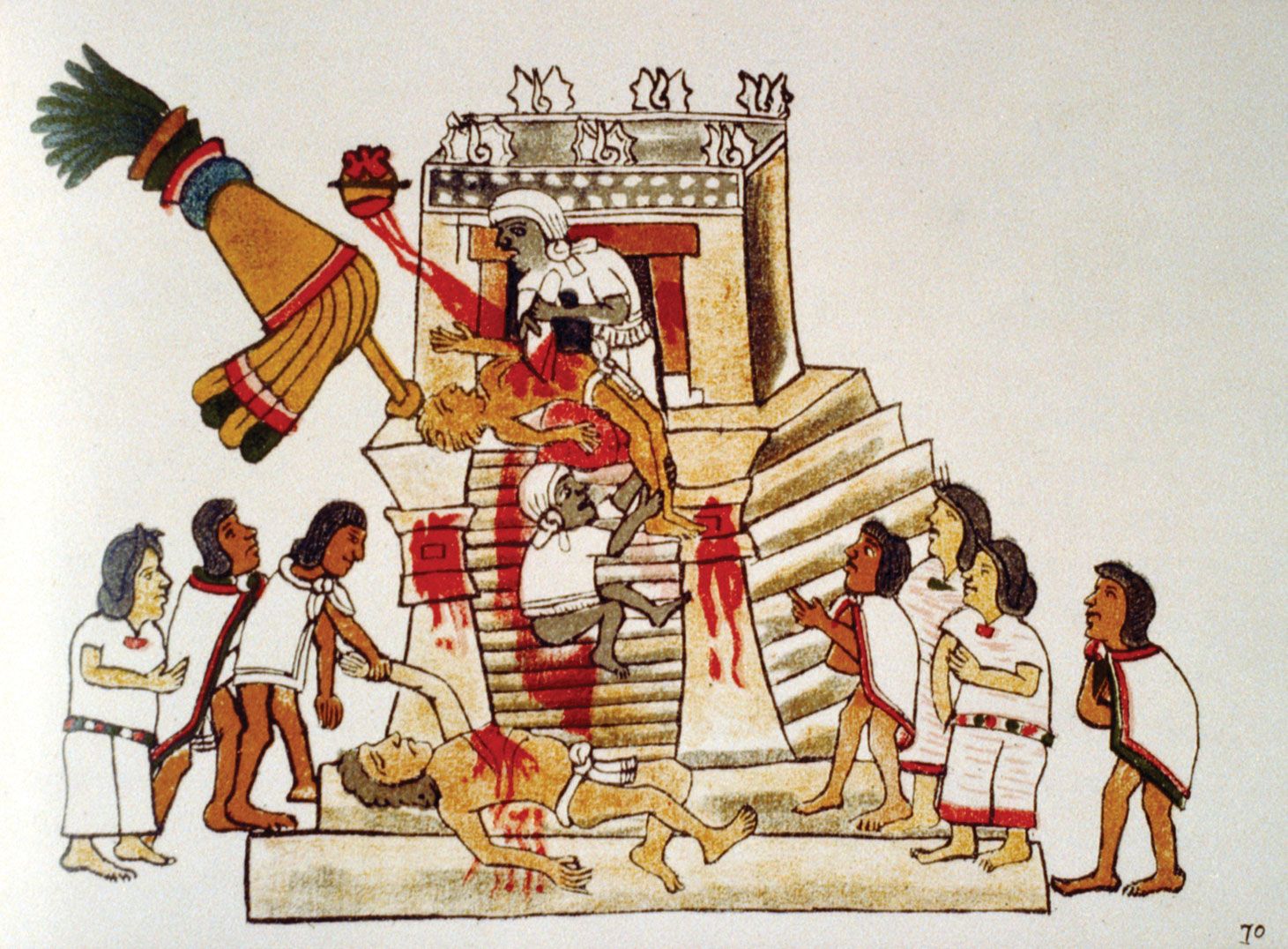
Capturing opponents alive was often more important than killing them. Prisoners played roles in ceremonial practices that reinforced cosmological beliefs about sustaining divine forces.
Military training began early in life. Warrior societies formed ranked groups with distinctive regalia and social prestige. Success in battle could elevate social status.
Conflict also functioned as a mechanism of tribute enforcement and political intimidation. Strategic warfare reinforced imperial authority across vast territories.
Understanding warfare requires understanding cosmology, social structure, and economic control simultaneously.
9. The Empire Was Ecologically Adaptive Rather Than Environmentally Destructive
Environmental archaeology increasingly shows that resource management strategies were sophisticated and sustainable in many regions.
Agricultural terraces reduced soil erosion. Chinampa farming recycled nutrients efficiently. Water control systems regulated flooding and drought cycles.
Urban resource consumption was balanced through tributary networks distributing goods from diverse ecological zones. This reduced pressure on local environments.
Pollen analysis and sediment cores indicate long-term landscape modification without widespread ecological collapse prior to European arrival.
The society’s environmental practices reflected deep ecological knowledge developed through centuries of adaptation to highland basin conditions.
10. Collapse Was Driven by Multiple Interacting Forces
The fall of imperial power is often attributed solely to Spanish conquest. Modern historical analysis reveals a far more complex process.
Military confrontation with forces representing the Spanish Empire played a major role, but it was only one factor among many.
Epidemic disease, especially smallpox introduced from Eurasia, devastated populations lacking prior exposure. Mortality rates were catastrophic.
Political instability intensified as tributary states rebelled or allied with external forces. Environmental stress and supply disruption compounded instability.
Urban infrastructure, dependent on coordinated maintenance, became vulnerable during prolonged conflict.
The collapse was therefore systemic—biological, political, military, and ecological pressures interacting simultaneously.
The Enduring Legacy of a Complex Civilization
What emerges from these insights is not a simple narrative of rise and fall but a portrait of remarkable human ingenuity. Engineering shaped water into farmland. Astronomy structured governance. Education molded social cohesion. Medicine blended empirical observation with spiritual interpretation. Political systems balanced power across diverse populations.
Archaeology continues to uncover new evidence beneath modern Mexico City, where the remains of the ancient capital still lie buried under urban development. Each excavation reveals additional layers of complexity.
The civilization’s intellectual, technological, and ecological achievements challenge outdated stereotypes. Its systems of knowledge were not primitive approximations but sophisticated responses to environmental and social realities.
Understanding these deeper truths transforms perception. What once appeared distant becomes recognizable as a highly organized society grappling with universal human challenges—food production, governance, belief, health, and survival.
The secrets revealed through science do not diminish the mystery of the past. They deepen it. They show that beneath legend lies structure, beneath myth lies evidence, and beneath silence lies a civilization whose sophistication continues to reshape historical understanding.