History is often imagined as something written in ink—on parchment, in chronicles, carved into stone. But the deeper history of our planet is not written in human language. It is written in bone, in tooth, in shell, in the delicate imprint of a leaf pressed into ancient rock. It is written in fossils.
Fossils are not merely remnants of long-dead organisms. They are messages from vanished worlds. Each fossil carries within it a story of survival, extinction, transformation, and time. Some fossils confirm what scientists suspected. Others shatter assumptions and force humanity to rethink its place in the grand narrative of life.
Over the past two centuries, certain fossil discoveries have profoundly reshaped our understanding of biological evolution, human origins, extinction events, and even the very timeline of life on Earth. These discoveries did not simply add new chapters to history—they rewrote entire volumes.
Here are eight fossil discoveries that changed our understanding of history in ways no one could have predicted.
1. Archaeopteryx: The Fossil That Bridged Dinosaurs and Birds
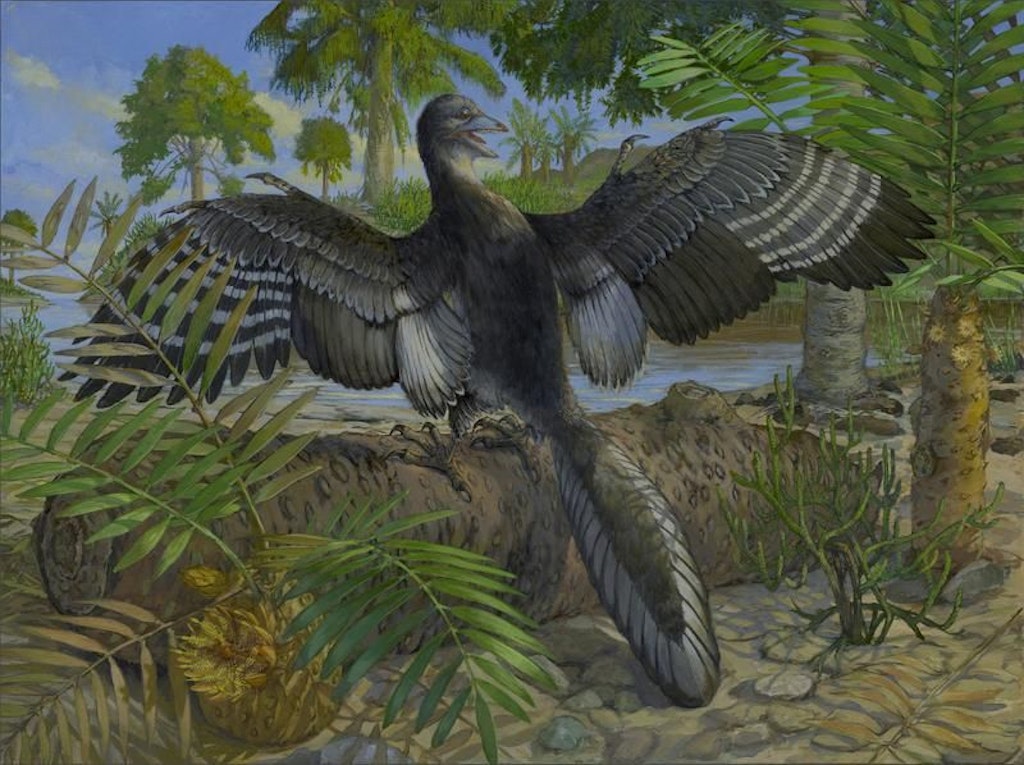
In 1861, in limestone quarries in Bavaria, Germany, workers uncovered a fossil that would ignite one of the most important scientific debates of the 19th century. The fossil, later named Archaeopteryx lithographica, looked like something caught between worlds.
It had feathers—clear, unmistakable feathers, preserved in stunning detail. But it also had teeth, a long bony tail, and clawed fingers on its wings. These were reptilian features, not avian. The creature lived about 150 million years ago during the Late Jurassic period.
At the time, Charles Darwin’s theory of evolution by natural selection had only recently been published. Critics demanded transitional fossils—evidence of organisms that linked major groups. Archaeopteryx became one of the first and most powerful examples of such a transitional form.
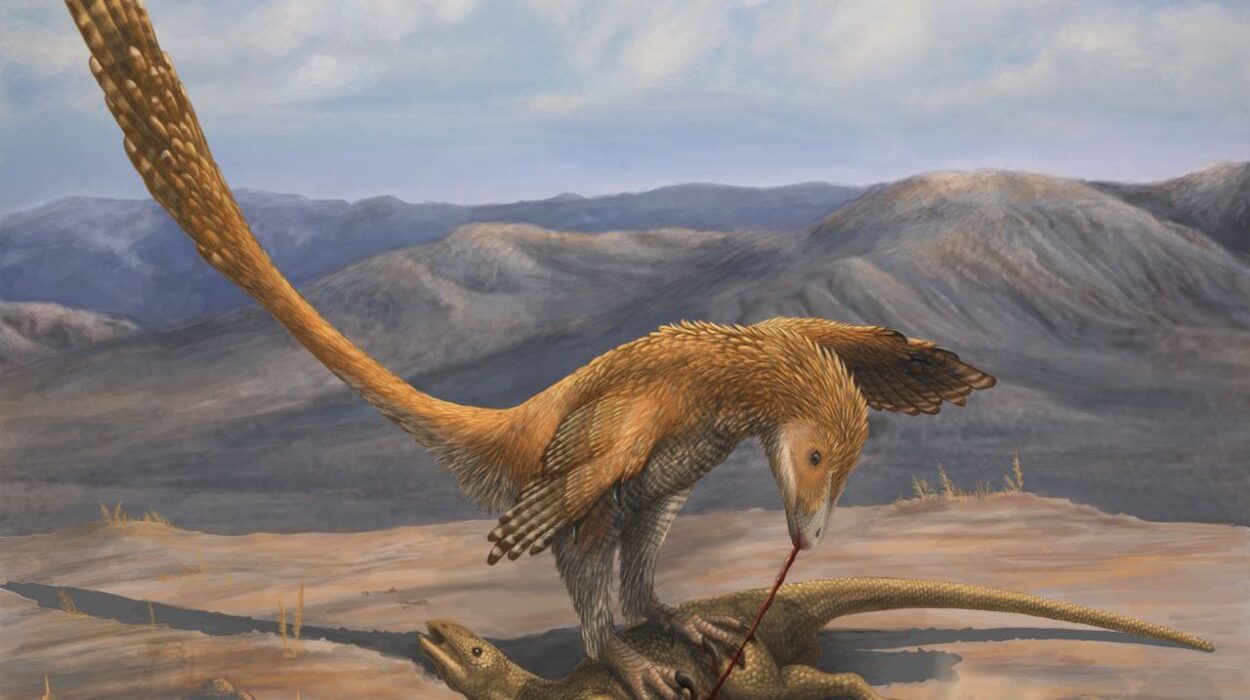
Before its discovery, birds were largely seen as distinct and separate creations. Archaeopteryx demonstrated that birds evolved from theropod dinosaurs. Over the following decades, additional fossil discoveries confirmed this evolutionary connection, revealing feathered dinosaurs in China and elsewhere.
Archaeopteryx did more than connect birds and dinosaurs. It helped validate evolutionary theory itself. It showed that dramatic transformations in anatomy could unfold gradually over millions of years, leaving behind traces in stone.
The image of a feathered dinosaur no longer seems shocking today. But in the 19th century, it shook the foundations of biological thought.
2. Tiktaalik: The Creature That Walked Out of the Water
For decades, evolutionary biologists searched for a fossil that could illuminate one of the most dramatic transitions in vertebrate history: the move from water to land. In 2004, in the Canadian Arctic, they found it.
The fossil belonged to a species named Tiktaalik roseae, a 375-million-year-old creature that possessed a remarkable combination of features. It had scales and fins like a fish, yet those fins contained bones arranged in a pattern similar to the limbs of early tetrapods. It had a mobile neck—unusual for fish—and lungs as well as gills.
Tiktaalik lived in shallow, swampy environments during the Devonian period. Its anatomy suggests it could prop itself up on its fins, perhaps navigating muddy banks or shallow waters.
Before Tiktaalik, there were fossils of fish and fossils of early land-dwelling tetrapods, but fewer clear examples bridging the gap. Tiktaalik filled that evolutionary space with elegant clarity.
Its discovery reinforced the predictive power of evolutionary theory. Scientists had carefully chosen rock formations of the right age and environment to search for transitional forms—and they found exactly what theory suggested should exist.
Tiktaalik reminds us that our own limbs—our arms and legs—have deep roots in ancient aquatic ancestors. When we walk, we are echoing a movement that began in shallow waters hundreds of millions of years ago.
3. Lucy: A Window Into Human Origins
In 1974, in Ethiopia’s Afar region, paleoanthropologists uncovered a partial skeleton that would become one of the most famous fossils in the world. The skeleton belonged to a species called Australopithecus afarensis and was nicknamed Lucy.
Lucy lived approximately 3.2 million years ago. Her skeleton revealed a being that walked upright on two legs but retained some adaptations for climbing trees. Her brain was relatively small, closer in size to that of a chimpanzee than a modern human.
Before Lucy’s discovery, debates raged over whether brain enlargement or upright walking came first in human evolution. Lucy provided strong evidence that bipedalism evolved before significant brain expansion.
This shifted the narrative of human evolution. It showed that walking upright was not a late development but a foundational change in our lineage. Bipedalism freed the hands, altered the pelvis, and reshaped the spine. It influenced tool use, social interaction, and migration.
Lucy’s discovery also reinforced Africa as the cradle of humanity. Over time, additional fossils from Ethiopia, Kenya, and Tanzania built a clearer picture of early hominin diversity.
Lucy is more than bones. She is a reminder that our story stretches back millions of years and that the line between “human” and “not human” is part of a gradual evolutionary continuum.
4. The Burgess Shale: A Glimpse of Evolution’s Early Experiments
High in the Canadian Rockies lies one of the most extraordinary fossil sites ever discovered: the Burgess Shale. In 1909, paleontologist Charles Doolittle Walcott uncovered exquisitely preserved fossils dating back more than 500 million years to the Cambrian period.
Unlike typical fossil sites that preserve only hard parts such as shells and bones, the Burgess Shale preserved soft-bodied organisms in astonishing detail. Creatures like Anomalocaris canadensis and Hallucigenia sparsa seemed almost alien in their anatomy.
The Cambrian explosion, a relatively rapid diversification of animal life, had long been known from fossils of shells and skeletons. But the Burgess Shale revealed just how diverse and experimental early animal evolution truly was.
Some Burgess organisms possessed body plans unlike anything seen today. Over time, scientists realized that many evolutionary experiments did not survive. The history of life was not a straight line of progress but a branching tree filled with extinct possibilities.
The Burgess Shale transformed our understanding of early animal life. It revealed that complexity and diversity emerged earlier than once thought and that extinction has always been a powerful force shaping life’s trajectory.
5. The Chicxulub Impact Evidence: Understanding Dinosaur Extinction
For much of the 20th century, the extinction of the non-avian dinosaurs at the end of the Cretaceous period remained mysterious. Then, in 1980, scientists discovered unusually high concentrations of iridium—a rare element on Earth but common in meteorites—at the boundary between Cretaceous and Paleogene rock layers.
This finding led to the hypothesis of a massive asteroid impact. Subsequent discoveries identified a vast impact crater beneath the Yucatán Peninsula, known as the Chicxulub crater.
Fossil evidence showed a sudden and dramatic loss of species at this boundary, approximately 66 million years ago. The impact would have triggered massive wildfires, tsunamis, and a global “impact winter” caused by dust blocking sunlight.
This discovery fundamentally changed our understanding of extinction. Instead of gradual decline alone, a catastrophic event played a central role in wiping out dominant species, including dinosaurs.
The extinction opened ecological niches that allowed mammals to diversify and eventually gave rise to primates—and ultimately humans. In a sense, our own existence is linked to that ancient impact.
The Chicxulub evidence demonstrated that Earth’s biological history is influenced not only by internal processes but also by cosmic events.
6. The Laetoli Footprints: Traces of Ancient Steps
In 1976, in Tanzania, paleontologist Mary Leakey and her team discovered fossilized footprints preserved in volcanic ash. These prints, attributed to early hominins likely belonging to Australopithecus afarensis, date back about 3.6 million years.
The Laetoli footprints show two individuals walking upright across damp ash. The impressions reveal a human-like gait, with a heel strike and toe push-off similar to modern humans.
Unlike skeletal fossils, footprints capture behavior in motion. They are moments frozen in time. The Laetoli tracks provided direct evidence that early hominins were fully bipedal long before large brains evolved.
Seeing those footprints evokes something deeply emotional. It is not just a skeleton in a lab. It is a path taken by individuals who lived, walked, and perhaps looked up at the same sky.
The Laetoli discovery strengthened the case that upright walking was central to early human evolution and offered a rare, intimate glimpse into our ancient past.
7. Sue the Tyrannosaurus: Rewriting Dinosaur Biology
In 1990, fossil hunter Sue Hendrickson discovered one of the most complete and well-preserved skeletons of Tyrannosaurus rex ever found. Nicknamed Sue, this specimen provided an unprecedented opportunity to study the anatomy and biology of this iconic predator.
Before Sue, much of what was known about Tyrannosaurus rex came from incomplete remains. Sue’s skeleton allowed scientists to analyze growth patterns, bone injuries, and biomechanics in detail.
Studies of Sue and similar specimens reshaped ideas about dinosaur physiology. Evidence increasingly suggested that many theropod dinosaurs were more active and possibly had higher metabolic rates than once believed. The image of sluggish, tail-dragging reptiles gave way to dynamic, agile animals.
Fossils like Sue also revealed signs of disease and healed injuries, hinting at lives marked by struggle and survival.
The discovery of Sue helped humanize dinosaurs—not as mythical monsters but as living organisms shaped by evolution and ecology.
8. The Denisovans: A Hidden Branch of Humanity
In 2010, researchers analyzing a fragment of finger bone from Denisova Cave in Siberia made a startling discovery. Genetic analysis revealed that the bone belonged to a previously unknown group of archaic humans, now called the Denisovans.
The fossil itself was small and unremarkable. But its DNA told a revolutionary story. Denisovans were distinct from both Neanderthals and modern humans, yet interbred with both.
Before this discovery, human evolution was often depicted as a relatively simple branching tree. The Denisovan evidence revealed a more complex web of interactions. Modern humans carry traces of Denisovan DNA, particularly in populations in parts of Asia and Oceania.
This discovery reshaped our understanding of what it means to be human. Our species did not evolve in isolation. We encountered, interacted with, and genetically mixed with other human groups.
The Denisovan fossil demonstrated the power of combining paleontology with modern genetics. A single fragment of bone expanded the human family tree.
The Living Power of Stone
These eight fossil discoveries are not isolated curiosities. They are turning points in our understanding of life’s history. They reveal that evolution is real and measurable, that extinction can be sudden and catastrophic, that humanity’s roots are deep and intertwined.
Fossils remind us that the Earth has witnessed unimaginable spans of time. Entire ecosystems have risen and vanished. Dominant species have flourished and disappeared. Continents have shifted, climates have transformed, and life has adapted again and again.
When we hold a fossil—or even gaze at one behind museum glass—we are confronting deep time. We are seeing a fragment of a world that no longer exists.
And yet, through careful study, scientific rigor, and human curiosity, we can reconstruct those lost worlds with astonishing detail.
Fossils changed our understanding of history because they showed that history is not limited to human records. It stretches back billions of years, written in stone.
They remind us that we are part of an ongoing story—one shaped by chance, catastrophe, adaptation, and resilience. The rocks beneath our feet are not silent. They are whispering. And when we listen carefully, they tell us who we are and where we came from.