In the dry hills of southeastern Turkey, under a sky that has watched over shepherds and empires alike, rises a place that quietly rewrote human history. Its name is Göbekli Tepe. Long before pyramids, long before cities, long before writing, people gathered here to carve stone, raise towering pillars, and shape something that still challenges our understanding of civilization’s beginnings. For decades, textbooks told a neat story: first agriculture, then villages, then temples. Göbekli Tepe forced scholars to pause and reconsider. Perhaps belief came first. Perhaps monument-building preceded farming. Perhaps the human story is more mysterious—and more beautiful—than we imagined.
Here are ten things we know so far about Göbekli Tepe, each one a window into a world over eleven thousand years old.
1. Göbekli Tepe Is One of the Oldest Known Monumental Structures in the World
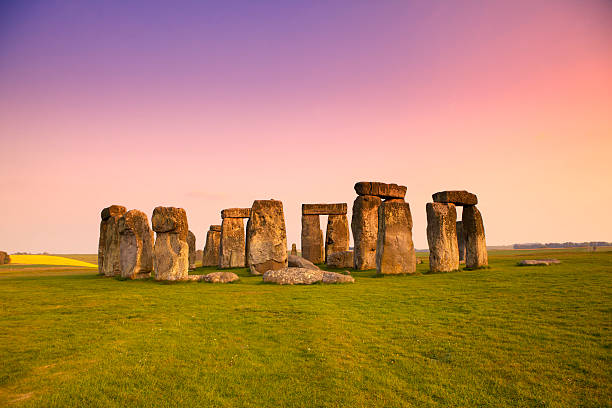
The most astonishing fact about Göbekli Tepe is its age. Radiocarbon dating places its earliest layers around 9600 BCE, more than 11,000 years ago. That makes it significantly older than the pyramids of Egypt and older than Stonehenge. It was built during the Pre-Pottery Neolithic period, a time when humans were transitioning from a purely hunter-gatherer lifestyle toward early forms of settled life.
This timeline matters deeply. For much of the twentieth century, archaeologists believed that large-scale monuments were products of organized agricultural societies. Farming, they thought, created food surpluses. Surpluses allowed specialization. Specialization enabled architecture and religion on a grand scale. Göbekli Tepe does not fit that model neatly. It suggests that complex social and ritual life existed before widespread agriculture had fully developed in the region.
The people who gathered here were not city dwellers with metal tools. They lived in a world without pottery, without wheels, without written language. Yet they conceived of monumental architecture that required planning, coordination, and shared purpose.
2. It Was Discovered Relatively Recently
Although the hill of Göbekli Tepe had long been visible in the landscape near the modern city of Şanlıurfa in southeastern Turkey, its true significance was not recognized until the late twentieth century. In 1994, German archaeologist Klaus Schmidt began systematic excavations at the site. What had previously been thought to be a medieval cemetery or a minor mound revealed something far older and far more extraordinary.
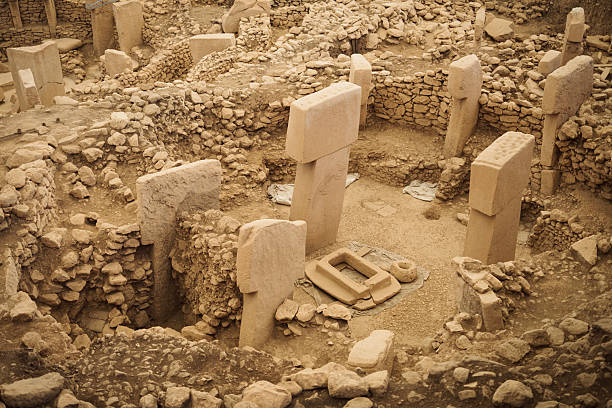
As layers of soil were carefully removed, massive T-shaped limestone pillars emerged. These were not natural formations. They were clearly shaped by human hands. Soon, circular enclosures began to take form in the ground—stone rings surrounding pairs of towering central pillars.
The discovery stunned the archaeological community. Here was evidence of sophisticated stone architecture from a time when humans were believed to live in small, mobile bands. The site immediately became one of the most important archaeological discoveries of the late twentieth century.
3. The Monumental Pillars Are Carved with Intricate Animal Reliefs
Perhaps the most visually striking feature of Göbekli Tepe is its pillars. Many stand several meters tall and weigh up to 16 tons. They are carved from local limestone and arranged in circular or oval enclosures.
On the surfaces of these pillars are detailed reliefs of animals. Foxes, snakes, wild boars, vultures, cranes, scorpions, and lions appear in dynamic poses. Some seem to slither or leap. Others stare outward with intense stillness. The carvings are not random decorations; they are carefully composed images.
The animals depicted are primarily wild species. There is no clear representation of domesticated animals in the earliest layers. This detail supports the idea that the builders were still primarily hunter-gatherers. The art reflects a world intimately connected to wildlife, danger, and survival.
In some cases, the T-shaped pillars themselves appear to represent stylized human forms. Arms and hands are carved in low relief along the sides, suggesting that the pillars may symbolize abstract human figures—perhaps ancestors, deities, or mythical beings. The combination of animal imagery and anthropomorphic forms creates a rich symbolic landscape that researchers are still striving to interpret.
4. Göbekli Tepe Was Likely a Ritual or Ceremonial Center
Unlike many later Neolithic sites, Göbekli Tepe shows little evidence of permanent residential structures in its earliest levels. There are no clear signs of houses clustered around the enclosures from the initial building phases. Instead, the site appears to have been primarily ceremonial.
The circular enclosures, each with two large central pillars surrounded by smaller ones, suggest a space designed for gathering. The layout is not random. It indicates intentional planning and possibly shared ritual practices.
Many archaeologists interpret Göbekli Tepe as one of the world’s earliest known temple complexes. If that interpretation is correct, it would mean that large-scale ritual spaces existed before the establishment of settled agricultural villages in the region. This challenges earlier assumptions that organized religion was a byproduct of farming and urban life.
Rather than agriculture giving rise to religion, Göbekli Tepe raises the possibility that religious or symbolic motivations may have encouraged groups to gather regularly in one place—potentially contributing to the development of farming itself.
5. It Was Built by Hunter-Gatherers
One of the most revolutionary aspects of Göbekli Tepe is that it appears to have been constructed by people who had not yet fully adopted agriculture. The site dates to a period before clear evidence of widespread domesticated crops in the immediate area.
The builders likely lived in mobile or semi-sedentary communities, moving seasonally but returning to specific gathering points. They hunted wild animals and gathered wild plants. The scale of construction at Göbekli Tepe suggests that multiple groups may have cooperated to build and maintain the enclosures.
Quarrying and transporting massive limestone pillars without metal tools would have required coordination and knowledge of engineering principles, even if informally understood. The stones were shaped using stone tools and then erected upright in prepared sockets.
The existence of such monumental architecture among hunter-gatherers forces scholars to reconsider stereotypes about early human societies. These were not “primitive” people in any simplistic sense. They possessed complex social structures, symbolic systems, and technical skills.
6. The Site Was Intentionally Buried
One of the most intriguing aspects of Göbekli Tepe is that many of its enclosures were deliberately buried in antiquity. After periods of use, the circular structures were filled with soil, stone debris, and other materials. Then new enclosures were built on top or nearby.
This pattern of burial was not accidental. The fill appears intentional and systematic. The reasons remain debated. Some researchers suggest that burial may have been part of a ritual cycle—closing one sacred space before opening another. Others speculate about social or environmental changes prompting shifts in site use.
The act of burying such monumental structures would have required significant labor. It indicates that the people who built Göbekli Tepe were not merely abandoning it. They were transforming it.
Ironically, this intentional burial helped preserve the site. Covered and protected for millennia, the pillars survived erosion and human interference until modern excavation revealed them again.
7. Göbekli Tepe Sits Within a Broader Cultural Landscape
Göbekli Tepe did not exist in isolation. It is part of a broader region in southeastern Anatolia and northern Mesopotamia where early Neolithic communities flourished. Other sites in the region have yielded evidence of early architecture, ritual activity, and the beginnings of domesticated plant use.
The region lies within what is sometimes called the Fertile Crescent, an area known for early developments in agriculture. Wild varieties of wheat and barley grew nearby. Over time, human interaction with these plants would lead to domestication.
The location of Göbekli Tepe on a hilltop provided wide visibility across the surrounding landscape. From its heights, one can imagine gatherings of people arriving from different directions, bringing stories, tools, and shared traditions.
The site reflects a period of profound transformation in human history. Communities were experimenting with new ways of living, organizing, and understanding the world. Göbekli Tepe was likely one of several important nodes in a network of cultural exchange and ritual practice.
8. The Art Suggests a Complex Symbolic World
The imagery carved into the pillars is not purely decorative. The repetition of certain animals and motifs suggests shared symbolic meanings. Some researchers propose that the animals may represent clans, mythological beings, or aspects of the natural world imbued with spiritual significance.
Vultures, for example, appear prominently in some carvings. In later Neolithic contexts in the region, vultures are associated with mortuary practices, possibly symbolizing the transition between life and death. Whether similar meanings applied at Göbekli Tepe remains uncertain, but the thematic recurrence of certain species hints at structured belief systems.
The absence of clear domestic scenes reinforces the idea that the site was focused on symbolic and ritual expression rather than daily subsistence. The carvings may encode narratives, cosmologies, or mythic stories that are now lost to us.
Despite decades of study, there is no single agreed-upon interpretation of the imagery. That uncertainty is not a weakness but a reminder of how distant this world is from our own. We see the carvings, but we do not hear the songs or stories that once accompanied them.
9. It Challenges Linear Narratives of Civilization
Before Göbekli Tepe, the dominant narrative in archaeology suggested a linear progression: first agriculture, then villages, then religion and monumental architecture. The site complicates that sequence.
The existence of large ceremonial structures built by non-fully agricultural communities suggests that symbolic and social complexity may have preceded economic transformation. Shared rituals could have fostered cooperation on a scale that made farming more feasible or attractive.
This reversal has profound implications. It suggests that belief systems and collective identity may have played a central role in shaping human development. People may have gathered not only for practical survival but for meaning.
Göbekli Tepe invites us to rethink the origins of civilization. It implies that the desire to create shared sacred spaces may be as fundamental to humanity as the need for food and shelter.
10. Much of the Site Remains Unexcavated
Despite its global fame, only a fraction of Göbekli Tepe has been excavated. Large portions of the mound remain untouched beneath the soil. Archaeologists work carefully and methodically, knowing that excavation is a destructive process—once soil is removed, it cannot be replaced.
New technologies, including ground-penetrating radar and advanced dating techniques, continue to reveal additional features. As research progresses, interpretations evolve.
Göbekli Tepe is not a solved mystery. It is an ongoing conversation between the present and the deep past. Each new discovery refines our understanding and sometimes raises even more questions.
The site stands today not only as a monument of stone but as a monument to human curiosity. It reminds us that history is not static. It is layered, complex, and occasionally surprising.
The Enduring Mystery
Göbekli Tepe does not give us easy answers. It offers something more powerful: perspective. It shows that more than eleven thousand years ago, people gathered under open skies to carve symbols into stone, to raise pillars toward the heavens, to create a shared space of meaning.
They did so without writing their names, without leaving behind books or chronicles. Yet their work endures. It whispers across millennia that humans have always sought connection—with each other, with nature, with something beyond the visible world.
What is Göbekli Tepe? It is a temple, perhaps. A meeting ground. A statement of identity. A ritual landscape. It is also a challenge to our assumptions. It reminds us that the story of civilization is not a straight line but a tapestry woven from countless threads of belief, creativity, and cooperation.
In the silent stone circles of southeastern Turkey, we glimpse the dawn of organized spirituality and collective ambition. We see that even in deep prehistory, humans were capable of extraordinary vision. And as we continue to excavate its secrets, Göbekli Tepe continues to ask us a profound question: What truly came first—bread, or belief?