Long before telescopes pierced the darkness and satellites circled the globe, human beings looked up. The night sky was not merely a ceiling of glittering lights; it was a clock, a calendar, a compass, and a sacred text written in fire. The rising of a star could signal the flooding of a river. The setting of a constellation could mark the time to plant crops. The steady path of the Sun across the horizon structured rituals, myths, and entire civilizations.
Across continents and cultures, ancient builders carved their understanding of the heavens into stone. They raised monuments that were not randomly placed but carefully oriented toward celestial events. Some aligned with the rising Sun at solstice. Others framed the Moon’s rare extremes. Still others pointed toward specific stars that held symbolic or practical importance.
These alignments were not accidents. Archaeology, astronomy, and careful measurement have shown that many ancient sites were deliberately constructed to track and honor the sky. The field that studies these connections is known as archaeoastronomy. It combines precise astronomical calculations with cultural context, seeking to understand how ancient societies observed and interpreted celestial cycles.
Below are nine ancient sites whose architecture aligns with the stars, the Sun, or the Moon in ways that continue to astonish modern observers. Each stands as a reminder that our ancestors were not merely stone builders. They were sky watchers.
1. Stonehenge, England
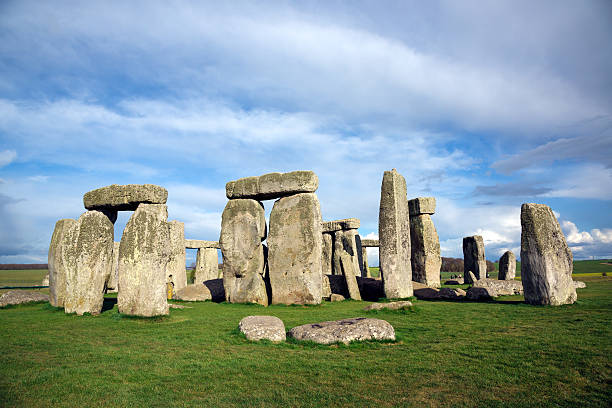
Few monuments are as iconic as Stonehenge, standing on the windswept Salisbury Plain in southern England. Constructed in stages between roughly 3000 and 2000 BCE, this circle of massive standing stones has inspired centuries of speculation. Modern archaeological and astronomical research, however, has revealed that its alignment is deliberate and precise.
Stonehenge is famously aligned with the sunrise of the summer solstice. On the longest day of the year, the Sun rises in the northeast and shines directly along the central axis of the monument, passing over the Heel Stone and into the heart of the stone circle. At the winter solstice, the setting Sun aligns in the opposite direction along the same axis.
These solar alignments are not vague approximations. They are carefully structured within the geometry of the site. The positioning suggests that the builders had a detailed understanding of the Sun’s annual movement along the horizon. Over the course of a year, the rising and setting positions of the Sun shift north and south, reaching their extremes at the solstices. Stonehenge marks these extremes with remarkable clarity.
Some researchers have also suggested lunar alignments within the broader landscape, including connections to the 18.6-year cycle of the Moon’s maximum and minimum declinations. While debate continues regarding the extent of lunar tracking, the solar alignment is firmly established.
Stonehenge was not just an observatory in the modern sense. It was a ceremonial landscape where astronomy, ritual, and community intertwined. Its stones frame the sky, turning celestial motion into architecture.
2. The Great Pyramid of Giza, Egypt
Rising from the desert plateau near modern Cairo, the Great Pyramid of Giza was constructed around 2560 BCE during the reign of the pharaoh Khufu. It is one of the most precisely aligned structures in the ancient world.
The pyramid’s sides are oriented almost perfectly toward the cardinal directions—north, south, east, and west. The deviation from true north is extraordinarily small, less than a fraction of a degree. Achieving such precision without modern instruments required careful observation of the sky.
One leading hypothesis suggests that ancient Egyptian builders used circumpolar stars—stars that never set below the horizon—to determine true north. By observing the rotation of specific stars around the celestial pole, they could establish a stable reference direction.
Inside the pyramid, narrow shafts extend from the King’s and Queen’s Chambers toward the outer surface. Studies have shown that some of these shafts align with specific stars as they would have appeared around the time of construction. For example, alignments toward stars in Orion and toward circumpolar stars have been proposed.
Orion held symbolic significance in ancient Egyptian religion, associated with the god Osiris. The alignment toward circumpolar stars may have symbolized eternal life, as these stars never dipped below the horizon and thus were considered “imperishable.”
While interpretations vary, the astronomical precision of the pyramid’s orientation is undeniable. It reflects not only technical mastery but a worldview in which the cosmos and kingship were deeply connected.
3. Chichén Itzá, Mexico
In the Yucatán Peninsula stands Chichén Itzá, a major center of the Maya civilization. Among its most famous structures is the pyramid known as El Castillo, or the Temple of Kukulcán, built between the 9th and 12th centuries CE.
El Castillo is aligned with the equinoxes. During the spring and autumn equinoxes, as the Sun sets, a play of light and shadow creates the illusion of a serpent descending the staircase of the pyramid. The triangular shadows cast by the stepped terraces align with carved serpent heads at the base, producing a striking visual effect.
This phenomenon occurs because of the pyramid’s orientation and the angle of the Sun during equinox sunsets. The equinox marks the time when day and night are approximately equal in length, and the Sun rises due east and sets due west.
The Maya were accomplished astronomers. They tracked the cycles of Venus, recorded eclipses, and developed complex calendar systems. The alignment of El Castillo demonstrates their ability to integrate astronomical knowledge into monumental architecture.
The descending serpent likely symbolized Kukulcán, a feathered serpent deity. The equinox alignment may have marked agricultural cycles or ritual events. At Chichén Itzá, astronomy was not abstract science. It was woven into myth, governance, and daily life.
4. Newgrange, Ireland
Older than Stonehenge and the pyramids of Giza, Newgrange in Ireland was built around 3200 BCE. This large circular mound contains a passage and chamber aligned with extraordinary precision.
At dawn on the winter solstice, sunlight enters a specially designed roof box above the entrance. The light travels down the narrow passage and illuminates the inner chamber for a few minutes. For most of the year, the chamber remains in darkness.
This alignment required a deep understanding of the Sun’s lowest rising point on the horizon, which occurs at the winter solstice. The builders had to anticipate the exact angle of the Sun’s rays on that day and construct the passage accordingly.
The winter solstice marks the shortest day of the year and the turning point when daylight begins to increase. For Neolithic communities, this event may have symbolized rebirth and renewal. The illumination of the chamber, deep within the earth, creates a dramatic and likely spiritual experience.
Newgrange demonstrates that astronomical alignment was important in prehistoric Europe. It also shows that such knowledge could be encoded in architecture long before written records.
5. Machu Picchu, Peru
High in the Andes Mountains, Machu Picchu was built in the 15th century by the Inca civilization. Its terraces, temples, and stonework reflect sophisticated engineering and astronomical awareness.
One notable structure is the Intihuatana stone, often described as a ritual stone associated with the Sun. Its orientation appears to align with solar events, including the equinoxes. During these times, the Sun stands almost directly above the stone, casting minimal shadow at local noon.
Other structures in Machu Picchu, such as the Temple of the Sun, are aligned with the June solstice sunrise. Windows are positioned so that sunlight enters at specific times of the year, illuminating interior spaces.
The Inca tracked solar movements to regulate agriculture and religious ceremonies. The mountainous horizon, with its peaks and valleys, served as a natural reference for observing the Sun’s position.
Machu Picchu illustrates how astronomy was adapted to local geography. The sky was observed not in abstraction but in relation to the surrounding landscape.
6. Abu Simbel, Egypt
The temples of Abu Simbel, built during the reign of Ramesses II in the 13th century BCE, stand near the Nile in southern Egypt. Their alignment is both precise and dramatic.
Twice a year, sunlight penetrates the entrance and travels deep into the inner sanctuary, illuminating statues of deities and the seated figure of Ramesses II. These events occur around late February and late October, dates believed to correspond roughly to the king’s coronation and birthday.
The alignment required careful planning. The temple’s axis had to match the Sun’s position on those specific days. Over centuries, slight shifts in Earth’s axial tilt and calendar adjustments have caused minor changes in the exact dates, but the phenomenon remains observable.
Abu Simbel demonstrates the integration of astronomy into royal ideology. The Sun’s rays illuminating the king’s statue reinforced his divine association with solar deities.
Here, celestial alignment was not merely practical. It was political and symbolic, linking earthly rule with cosmic order.
7. Teotihuacan, Mexico
North of modern Mexico City lie the ruins of Teotihuacan, a vast city that flourished between the 1st and 7th centuries CE. Its main avenue, known as the Avenue of the Dead, and its pyramids exhibit specific orientations.
The Pyramid of the Sun and other major structures are aligned approximately 15.5 degrees east of north. This orientation does not correspond exactly to the cardinal directions but appears intentional.
Researchers have proposed connections to solar events on specific dates, possibly related to agricultural cycles. Some alignments may correspond to the setting of certain stars significant to the culture.
While interpretations vary, the consistent orientation across the city suggests deliberate astronomical planning. The layout transforms the city into a cosmic diagram, aligning urban space with celestial patterns.
Teotihuacan shows that astronomy could shape not only individual monuments but entire city plans.
8. Nabta Playa, Egypt
In the Nubian Desert of southern Egypt lies Nabta Playa, a prehistoric site dating to around 6000–4000 BCE. It contains stone circles and alignments that predate Stonehenge by millennia.
Some stones appear to align with the summer solstice sunrise. During this period, the return of monsoon rains would have been crucial for pastoral communities in the region.
The alignments suggest that these early societies tracked seasonal changes through careful observation of the horizon. By marking the solstice, they could anticipate environmental shifts.
Nabta Playa demonstrates that astronomical awareness existed deep in prehistory. Even mobile or semi-nomadic communities could construct monuments reflecting celestial cycles.
It stands as one of the earliest known examples of monumental architecture with astronomical significance.
9. Angkor Wat, Cambodia
Angkor Wat, built in the 12th century by the Khmer Empire, is the largest religious monument in the world. Its orientation and bas-reliefs reveal astronomical connections.
The temple is oriented toward the west, unusual for Hindu temples, which often face east. During the equinoxes, the Sun rises directly over the central tower when viewed from the western entrance.
Researchers have also identified alignments corresponding to solstices and possible lunar cycles. The temple’s dimensions and layout may encode cosmological symbolism linked to Mount Meru, the mythological center of the universe in Hindu cosmology.
Angkor Wat integrates architecture, mythology, and astronomy on a grand scale. Its towers mirror the heavens, and its corridors trace cosmic order.
Standing at sunrise, watching the Sun crown its central spire, one senses the deliberate dialogue between stone and sky.
The Science Behind the Alignments
How do researchers determine whether an ancient site truly aligns with celestial events? The process involves precise measurement of orientation, careful reconstruction of ancient skies, and statistical analysis.
Because Earth’s axis slowly wobbles over thousands of years in a process called precession, the positions of stars shift gradually relative to the horizon. Astronomers can calculate past sky configurations using well-established models of Earth’s motion. This allows them to determine whether a structure built thousands of years ago would have aligned with a specific star or solar event at that time.
Archaeologists also consider cultural context. Alignment alone is not enough. Evidence from inscriptions, artifacts, and ethnographic parallels helps establish whether astronomical interpretation is plausible.
Scientific accuracy requires caution. Not every apparent alignment is intentional. Humans are pattern-seeking creatures, and chance alignments can occur. Therefore, researchers apply rigorous standards before concluding that a site was deliberately oriented toward the stars.
Why Ancient People Looked to the Sky
The sky provided reliable cycles in a changing world. The Sun’s path marked seasons. The Moon’s phases structured months. The heliacal rising of certain stars could signal flooding rivers or planting seasons.
Beyond practicality, the sky inspired mythology. Constellations became heroes and gods. Celestial motions symbolized death and rebirth. Aligning monuments with the heavens may have reinforced cosmological beliefs and social order.
Astronomy offered both survival and meaning. By building in harmony with celestial cycles, ancient societies expressed their place within the cosmos.
Earth and Sky, Forever Connected
These nine sites are scattered across continents and millennia. They were built by cultures separated by oceans and languages. Yet they share a common impulse: to anchor human life to the stars.
Physics explains why the Sun’s path shifts, why stars appear to move, why precession alters the sky over ages. Archaeology reveals how humans responded to these patterns. Together, they tell a story of observation, creativity, and wonder.
When we stand at Stonehenge during solstice, or watch sunlight enter Newgrange, or see the serpent shadow descend at Chichén Itzá, we witness not magic but mastery—an ancient mastery of celestial rhythms.
The stars have always been distant, yet they have shaped our calendars, our monuments, and our myths. In aligning stone with starlight, our ancestors bridged the vastness between Earth and sky.
And in studying these alignments today, we rediscover something essential: that long before modern science named the motions of the heavens, human beings were already listening to the universe, carving its patterns into the enduring language of stone.