Archaeology is more than the study of old stones and broken pottery. It is the science of human memory. It is the art of listening to the whispers of vanished civilizations and bringing them back into the light. Each great archaeological discovery reshapes our understanding of who we are, where we came from, and how fragile and brilliant human societies can be. When buried cities rise from desert sands, when ancient scrolls are unrolled after two thousand years, when forgotten tombs open to reveal faces that have not seen sunlight for millennia, something extraordinary happens. The past stops being distant. It becomes immediate.
Across continents and centuries, certain discoveries stand apart—not just for their beauty or mystery, but for their transformative impact on science and history. They forced scholars to rewrite textbooks. They revealed lost languages. They exposed everyday life in forgotten worlds. They showed that ancient people were not primitive shadows but thinking, feeling, creative beings whose achievements still astonish us.
Here are ten of the greatest archaeological discoveries ever made—moments when the ground opened and humanity learned something profound about itself.
1. The Rosetta Stone
In 1799, during Napoleon’s campaign in Egypt, a French soldier near the town of Rosetta—modern-day Rashid—stumbled upon a slab of black granodiorite that would forever change the study of the ancient world. The stone bore a decree issued in 196 BCE under King Ptolemy V. What made it extraordinary was not the decree itself, but the fact that it was inscribed in three scripts: Greek, Demotic, and hieroglyphic.
The Rosetta Stone became the key to deciphering Egyptian hieroglyphs, a writing system that had been silent for nearly 1,400 years. Scholars had long admired the mysterious symbols carved into temple walls along the Nile, but no one could read them. The breakthrough came in 1822 when the French scholar Jean-François Champollion demonstrated that hieroglyphs were not merely symbolic pictures but represented sounds and words.
With the Rosetta Stone, ancient Egypt found its voice again. Texts describing royal decrees, religious rituals, historical events, and everyday transactions could finally be understood. It transformed Egyptology from speculation into science. Today, the Rosetta Stone is housed in the British Museum, and its impact echoes through every translation of ancient Egyptian texts.
Without this single object, much of what we know about pharaohs, temples, and daily life along the Nile would remain locked in silence.
2. The Tomb of Tutankhamun
In 1922, British archaeologist Howard Carter made one of the most dramatic discoveries in archaeological history in the Valley of the Kings near Luxor. After years of searching, he uncovered the nearly intact tomb of Tutankhamun, a relatively minor pharaoh who ruled in the 14th century BCE.
When Carter peered through a small opening into the burial chamber and was asked what he could see, he famously replied, “Wonderful things.” He was not exaggerating. The tomb contained more than 5,000 artifacts, including gilded furniture, chariots, jewelry, weapons, and the iconic golden funerary mask that has become a symbol of ancient Egypt.
Unlike many royal tombs that had been looted in antiquity, Tutankhamun’s burial chamber remained largely undisturbed. This provided an unprecedented glimpse into the wealth, artistry, and burial practices of New Kingdom Egypt. The craftsmanship of the artifacts demonstrated extraordinary technical skill and aesthetic sophistication.
Beyond its treasures, the tomb sparked worldwide fascination with ancient Egypt. It fueled Egyptomania in art and culture and drew public attention to archaeology as never before. Scientifically, it offered a detailed snapshot of royal life and death in the 18th Dynasty.
The tomb of Tutankhamun did not just reveal a boy king. It revealed a civilization’s brilliance.
3. Pompeii and Herculaneum
In 79 CE, Mount Vesuvius erupted violently, burying the Roman cities of Pompeii and Herculaneum under ash and volcanic debris. For centuries, the cities lay hidden, preserved in eerie stillness. In the 18th century, systematic excavations began, revealing one of the most astonishing archaeological time capsules ever found.
Pompeii and Herculaneum provide an unparalleled snapshot of Roman urban life. Streets, houses, shops, bathhouses, temples, and theaters emerged from beneath the ash. Frescoes still adorned walls. Loaves of bread remained in ovens. Graffiti scrawled by ordinary citizens survived intact.
Perhaps most haunting were the plaster casts of victims, created by filling cavities left in the hardened ash where bodies had decomposed. These casts captured final moments of terror and despair, humanizing the disaster across millennia.
The discovery transformed our understanding of daily life in the Roman Empire. It revealed social hierarchies, economic systems, domestic architecture, and even dietary habits. Unlike monumental ruins that glorify emperors, Pompeii and Herculaneum preserved ordinary lives.
They remind us that history is not only about rulers and wars. It is about people—families, workers, children—whose lives were frozen in time by catastrophe.
4. The Dead Sea Scrolls
In 1947, a Bedouin shepherd searching for a lost goat near the Dead Sea stumbled upon a cave containing ancient scrolls stored in clay jars. Over the following years, more than 900 manuscripts were discovered in caves near Qumran.
The Dead Sea Scrolls include some of the oldest known copies of Hebrew Bible texts, along with sectarian writings and community rules dating from the third century BCE to the first century CE. They are invaluable for understanding the religious landscape of ancient Judea during the Second Temple period.
Before their discovery, the earliest surviving Hebrew biblical manuscripts dated to around the 10th century CE. The Dead Sea Scrolls pushed that record back more than a thousand years. This allowed scholars to compare texts across centuries and study how scriptures evolved over time.
The scrolls also shed light on Jewish sects, beliefs about messianism, and the cultural context in which early Christianity emerged. They provided a richer, more complex picture of religious life in antiquity.
Preserved by the arid climate of the Judean Desert, these fragile parchments connected modern readers directly with voices from over two thousand years ago.
5. The Terracotta Army
In 1974, farmers digging a well near Xi’an in China uncovered fragments of clay figures. What followed was the revelation of one of the most spectacular burial complexes ever found: the Terracotta Army of Emperor Qin Shi Huang, who unified China in 221 BCE.
Thousands of life-sized terracotta soldiers, horses, and chariots were buried to guard the emperor in the afterlife. Each figure is unique, with distinct facial features, hairstyles, and expressions. The level of detail reflects extraordinary craftsmanship and organizational capability.
The discovery transformed understanding of early imperial China. It revealed the scale of Qin Shi Huang’s ambition and the administrative sophistication required to produce such a vast army of clay warriors. It also offered insights into military organization, armor, and weaponry of the time.
Beyond its historical significance, the Terracotta Army is a powerful testament to human creativity and belief. It demonstrates how rulers sought to extend power beyond death and how art served political and spiritual purposes.
Standing among the silent ranks of these clay soldiers, one feels the weight of an empire’s vision.
6. Machu Picchu
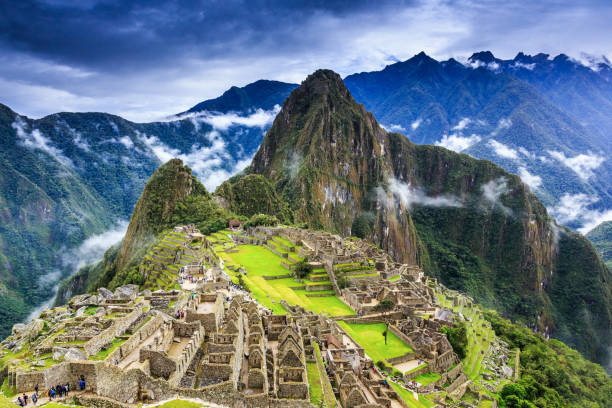
High in the Andes Mountains of Peru, the Inca citadel of Machu Picchu remained largely unknown to the outside world until 1911, when American explorer Hiram Bingham brought it to international attention.
Built in the 15th century during the reign of Emperor Pachacuti, Machu Picchu was likely a royal estate or ceremonial center. Its precisely cut stone structures fit together without mortar, demonstrating remarkable engineering skill. Terraces carved into steep slopes prevented erosion and allowed agriculture at high altitude.
The site offered new insights into Inca architecture, astronomy, agriculture, and political organization. Its remote location preserved it from Spanish destruction during the conquest.
Machu Picchu revealed the sophistication of Andean civilization, challenging earlier assumptions that monumental architecture and complex urban planning were exclusive to Eurasian societies. It stands today as a symbol of Indigenous achievement and resilience.
Its discovery broadened global appreciation of pre-Columbian cultures and underscored the diversity of human innovation.
7. The Library of Ashurbanipal
In the mid-19th century, excavations at Nineveh in modern-day Iraq uncovered thousands of clay tablets in cuneiform script. These tablets formed the Library of Ashurbanipal, established by the Assyrian king Ashurbanipal in the 7th century BCE.
The library contained literary works, scientific texts, administrative records, and religious writings. Among them was the Epic of Gilgamesh, one of the oldest known works of literature.
This discovery revealed the intellectual life of ancient Mesopotamia. It demonstrated that systematic knowledge preservation existed long before classical Greece. The texts provided insights into astronomy, medicine, mathematics, and mythology.
The Epic of Gilgamesh, with its exploration of friendship, mortality, and the search for meaning, showed that ancient Mesopotamians grappled with universal human questions.
The Library of Ashurbanipal illuminated a civilization often remembered for warfare, revealing instead a culture deeply invested in knowledge and storytelling.
8. Göbekli Tepe
In southeastern Turkey lies Göbekli Tepe, a site dating to around 9600 BCE—far older than Stonehenge or the pyramids of Egypt. Excavations beginning in the 1990s revealed massive stone pillars arranged in circular enclosures, carved with intricate animal reliefs.
The site predates agriculture in the region, challenging long-held assumptions that complex monumental construction required settled farming communities. Instead, it suggests that ritual and communal gatherings may have preceded agriculture.
Göbekli Tepe reshaped understanding of the Neolithic Revolution. It implies that spiritual or social motivations may have driven people to organize on large scales before farming became widespread.
Its discovery forces archaeologists to reconsider the origins of civilization itself. It reveals that even at the dawn of settled life, humans were capable of astonishing architectural and artistic achievements.
9. The Sutton Hoo Ship Burial
In 1939, excavations at Sutton Hoo in England uncovered an Anglo-Saxon ship burial dating to the early 7th century CE. Though the wooden ship had decayed, its outline remained in the soil, along with a treasure of artifacts including a magnificent helmet, gold jewelry, and ceremonial objects.
The burial likely belonged to an East Anglian king, possibly Rædwald. The richness of the grave goods challenged previous views of early medieval England as culturally impoverished after the fall of Rome.
Sutton Hoo revealed a society with far-reaching trade connections, artistic sophistication, and complex political structures. It bridged the gap between Roman Britain and the later medieval kingdoms.
The discovery transformed understanding of the so-called “Dark Ages,” showing them instead as a period of dynamic cultural exchange and creativity.
10. The Cave Paintings of Lascaux
In 1940, four teenagers exploring a cave in southwestern France discovered paintings on its walls that were around 17,000 years old. The Lascaux cave paintings depict horses, deer, bulls, and other animals in vivid colors and dynamic motion.
These artworks demonstrated that Paleolithic humans possessed extraordinary artistic skill and symbolic capacity. The paintings are not crude sketches but carefully composed scenes using perspective and shading.
Lascaux challenged assumptions about prehistoric people as primitive. It revealed a deep aesthetic sense and possibly complex spiritual beliefs.
The paintings connect modern viewers directly with ancient minds. Across tens of thousands of years, we can still see the lines drawn by hands long vanished. We can still feel the impulse to represent, to imagine, to create.
The Living Dialogue Between Past and Present
These ten discoveries are not merely treasures of stone and parchment. They are bridges across time. They remind us that humanity has always been inventive, curious, and capable of profound beauty. They show that civilizations rise and fall, but their stories endure—waiting patiently beneath soil and sand.
Archaeology continues to evolve with new technologies such as radiocarbon dating, DNA analysis, and ground-penetrating radar. Each excavation has the potential to reshape history once more. What remains buried today may tomorrow transform our understanding of the human journey.
The greatest archaeological discoveries do more than inform. They inspire. They awaken humility in the face of deep time. They remind us that we, too, are part of history’s unfolding narrative. And they whisper a powerful truth: the past is never truly gone. It is waiting to be rediscovered.