History is often imagined as a steady march forward, a continuous thread linking ancient ancestors to our present moment. But when archaeologists brush away sand from forgotten cities, when divers descend into drowned streets beneath the sea, when satellite images reveal faint outlines of lost walls in remote jungles, a different truth emerges. Human civilization has not always moved forward in an unbroken line. It has risen, flourished, and—at times—collapsed so completely that entire cultures slipped into silence.
Some civilizations leave behind grand monuments and deciphered texts that tell their stories in detail. Others fade more mysteriously. Their cities empty. Their languages vanish. Their achievements become fragmented puzzles scattered across landscapes. They did not literally disappear without leaving a single trace—archaeology proves otherwise—but they vanished from collective memory for centuries or millennia, leaving modern scholars to reconstruct their lives from fragments.
Here are eight lost civilizations that once shaped their worlds, then slipped into obscurity, challenging us to understand how societies thrive—and how they fall.
1. The Indus Valley Civilization
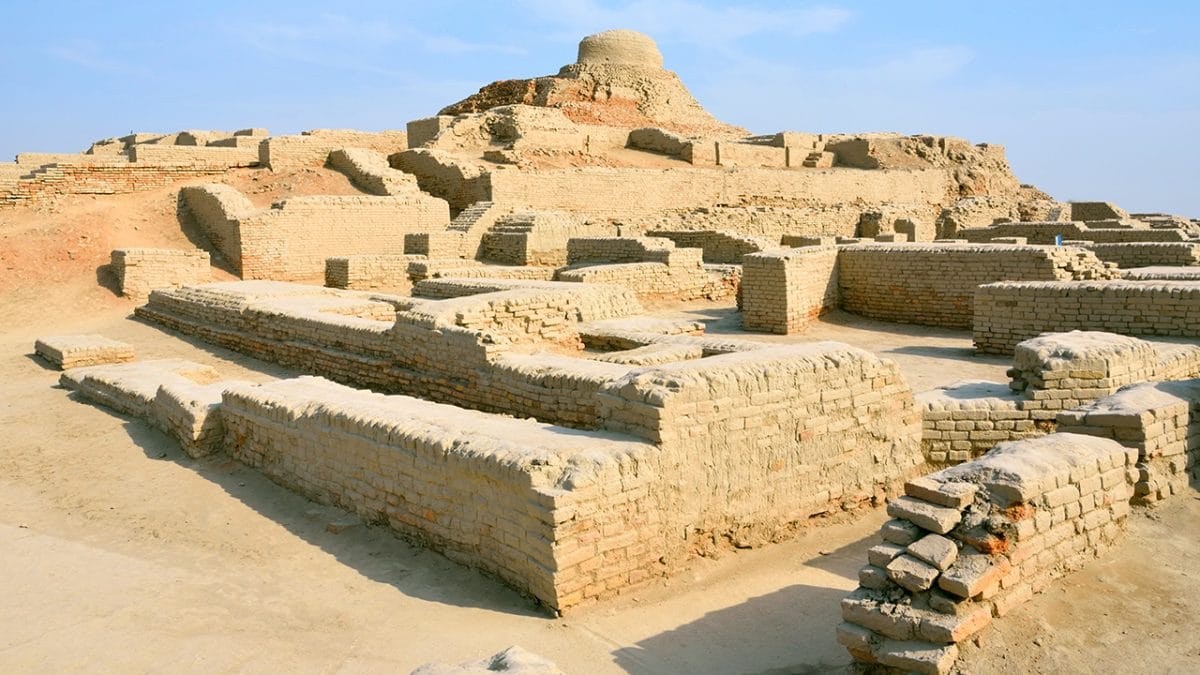
Long before the rise of classical Greece or imperial Rome, a sophisticated urban culture flourished along the Indus River and its tributaries in what is now Pakistan and northwest India. Known as the Indus Valley Civilization, or the Harappan Civilization after one of its major sites, it emerged around 2600 BCE and endured for several centuries.
When archaeologists first uncovered cities like Harappa and Mohenjo-daro in the early twentieth century, they were astonished. These were not primitive settlements. They were carefully planned urban centers with grid-patterned streets, advanced drainage systems, standardized brick sizes, and large public baths. Houses often had private wells and toilets connected to underground sewage systems. For a civilization more than four thousand years old, the engineering sophistication was extraordinary.
The Indus people engaged in trade with distant regions, including Mesopotamia. They produced finely crafted beads, seals carved with intricate animal motifs, and standardized weights for commerce. Yet despite these signs of complexity, much about them remains mysterious. Their script, found on hundreds of seals and tablets, has not been definitively deciphered. Without readable texts, their political structure, religious beliefs, and social organization remain partly hidden.
Around 1900 BCE, the great cities began to decline. Urban centers were gradually abandoned. Populations dispersed into smaller rural settlements. The reasons are still debated. Evidence suggests that climate change may have played a role. Shifts in monsoon patterns and the drying of river systems could have undermined agriculture and trade networks. There is little sign of large-scale invasion or violent destruction.
The Indus Valley Civilization did not vanish in a single catastrophic moment. Instead, it faded. Its urban brilliance dissolved into quieter rural life, and its memory disappeared until rediscovered thousands of years later. Its silent script still waits for its voice to be heard again.
2. The Minoan Civilization
On the island of Crete in the eastern Mediterranean, a vibrant Bronze Age civilization flourished around 2000 BCE. Today we call them the Minoans, named after the legendary King Minos of Greek mythology. Their palaces, such as the vast complex at Knossos, reveal a society rich in art, trade, and maritime power.
Minoan architecture was elaborate and multi-storied, with fresco-covered walls depicting dolphins, dancers, and bull-leaping rituals. Unlike many ancient societies, Minoan art portrays lively scenes of daily life rather than primarily war or conquest. Their cities were not heavily fortified in their earlier phases, suggesting a period of relative stability and naval dominance.
They developed a writing system known as Linear A, which remains undeciphered. Later, a related script called Linear B was used by the Mycenaeans, who eventually dominated Crete and whose language has been identified as an early form of Greek.
Around 1600 BCE, a massive volcanic eruption on the nearby island of Thera, now known as Santorini, shook the region. The eruption was one of the most powerful in recorded geological history. It likely caused tsunamis and widespread destruction. While the Minoan civilization survived for some time afterward, it never fully recovered its earlier prominence.
By around 1450 BCE, many Minoan centers were destroyed, and Mycenaean influence became dominant. Whether the eruption weakened them fatally or internal factors played a larger role remains debated. The Minoans vanished as a distinct cultural force, leaving behind palaces and art that still whisper of a maritime world lost to myth and ash.
3. The Olmec Civilization
In the tropical lowlands of what is now southern Mexico, a civilization emerged around 1500 BCE that would profoundly influence later Mesoamerican cultures. The Olmecs are often called the “mother culture” of Mesoamerica because elements of their art, religion, and urban planning appear in later societies such as the Maya and the Aztecs.
The most striking legacy of the Olmecs is their colossal stone heads. Carved from basalt boulders transported over long distances, these heads can weigh up to twenty tons. Their realistic facial features suggest they may depict rulers. The effort required to create and move these monuments indicates organized labor and centralized authority.
The Olmecs built ceremonial centers with pyramids and plazas. They likely practiced complex religious rituals and may have developed early forms of writing and calendrical systems. Yet unlike the Maya, they left few decipherable inscriptions.
By around 400 BCE, major Olmec centers such as San Lorenzo and La Venta were abandoned. The reasons remain uncertain. Environmental changes, including river shifts and possible flooding, may have disrupted agriculture. Political instability or internal social change may also have contributed.
The Olmecs did not disappear without influence. Their cultural patterns echoed through centuries of Mesoamerican history. But as a distinct civilization, they faded, leaving behind massive stone faces staring silently into the forest.
4. The Nabataean Kingdom
In the deserts of present-day Jordan, a trading civilization carved its capital directly into rose-colored sandstone cliffs. Petra, the Nabataean capital, is one of the most visually stunning archaeological sites on Earth.
The Nabataeans flourished between the fourth century BCE and the first century CE. They controlled key trade routes connecting Arabia, the Mediterranean, and the Near East. Through their command of caravan paths, they accumulated wealth from spices, incense, and luxury goods.
What makes the Nabataeans particularly remarkable is their mastery of water management in an arid environment. They engineered sophisticated systems of channels, dams, and cisterns that captured and stored rainwater. This infrastructure allowed Petra to sustain a substantial population despite its desert location.
In 106 CE, the Roman Empire annexed the Nabataean Kingdom. Over time, trade routes shifted, and Petra’s prominence declined. Earthquakes in later centuries damaged the city’s infrastructure. Gradually, Petra was abandoned and forgotten by the outside world, known only to local Bedouin communities.
When Swiss explorer Johann Ludwig Burckhardt rediscovered Petra in 1812, it astonished the modern world. The Nabataeans had not vanished without leaving physical traces, but their story had nearly disappeared from written history. Their carved façades endure, glowing pink at sunset, reminders of a desert civilization that once thrived on commerce and ingenuity.
5. The Ancestral Puebloans of the American Southwest
In the arid landscapes of the American Southwest, ancestral Puebloan communities built remarkable stone dwellings tucked into cliffs and canyons. Sites such as Mesa Verde and Chaco Canyon reveal complex societies that flourished between roughly 900 and 1300 CE.
Chaco Canyon, in present-day New Mexico, was a ceremonial and trade center featuring massive stone buildings known as great houses. These multi-story structures were aligned with astronomical events, suggesting advanced knowledge of the sky. Roads radiated outward, connecting distant communities across the region.
Mesa Verde, in present-day Colorado, contains cliff dwellings built into natural alcoves. These homes, constructed from sandstone blocks, provided shelter and protection.
By the late thirteenth century, many of these sites were abandoned. Tree-ring analysis indicates prolonged droughts during this period. Reduced rainfall would have strained agriculture in an already fragile environment. Social factors may also have played a role, including resource competition and internal changes.
The people did not vanish entirely. Descendant Pueblo communities continue to live in the region today. But the great centers of Chaco and Mesa Verde were left behind, their stone walls standing empty for centuries before archaeologists began to unravel their story.
6. The Kingdom of Aksum
In the Horn of Africa, the Kingdom of Aksum emerged around the first century CE in what is now Ethiopia and Eritrea. It became a powerful trading empire connecting Africa, Arabia, and the Mediterranean.
Aksum minted its own coins, a sign of economic sophistication. It erected towering stone obelisks, some over twenty meters tall, carved from single pieces of granite. The kingdom adopted Christianity in the fourth century CE, becoming one of the earliest Christian states in the world.
Aksum’s prosperity depended heavily on trade through the Red Sea. Over time, shifts in trade routes and environmental pressures weakened the kingdom. Soil degradation and deforestation may have reduced agricultural productivity. By around the eighth century, Aksum declined as political power shifted southward.
While Ethiopian civilization continued, the once-dominant Aksumite state faded from global awareness. Its monumental stelae remained, but its history was long overshadowed in broader narratives of world history.
7. The Cahokia Civilization
Near present-day St. Louis in the United States, a vast urban center rose around 1050 CE. Known as Cahokia, it was the largest pre-Columbian city north of Mexico.
At its peak, Cahokia may have had tens of thousands of inhabitants. Its most prominent feature is Monks Mound, a massive earthen structure larger at its base than the Great Pyramid of Giza. The city included plazas, wooden palisades, and astronomical alignments known as woodhenges.
Cahokia was a hub of trade, connecting communities across North America. Yet by around 1350 CE, it was largely abandoned. The causes remain debated. Environmental stress from deforestation and soil depletion may have played a role. Flooding from the Mississippi River could have contributed. Social unrest or political fragmentation may also have been factors.
When European explorers later arrived in the region, Cahokia’s great mounds stood silent, their builders long gone. The memory of this urban experiment had faded, challenging assumptions about the scale and complexity of North American societies before European contact.
8. The Maya Collapse
The Maya civilization, spanning parts of present-day Mexico, Guatemala, Belize, and Honduras, produced magnificent cities, hieroglyphic writing, advanced astronomy, and complex calendrical systems. During the Classic period, roughly 250 to 900 CE, cities such as Tikal, Palenque, and Copán flourished.
The Maya built towering pyramids, carved detailed stelae recording royal lineages, and developed a sophisticated mathematical system that included the concept of zero. Their knowledge of celestial cycles allowed them to track eclipses and planetary movements with remarkable accuracy.
Yet between the eighth and ninth centuries, many southern lowland cities were abandoned. Monument carving ceased. Populations declined dramatically. This phenomenon is known as the Classic Maya collapse.
Modern research suggests that prolonged droughts played a significant role. Paleoclimate data indicate severe dry periods during the time of decline. Environmental stress, combined with warfare between city-states and political instability, likely contributed.
Importantly, the Maya did not disappear as a people. Millions of Maya descendants live today, preserving languages and traditions. What collapsed was the system of divine kingship and large urban centers in certain regions.
The story of the Maya reminds us that civilizations are not monolithic entities. They are networks of communities that can transform, fragment, and endure in new forms.
Echoes in the Present
These eight civilizations did not vanish into absolute nothingness. They left ruins, artifacts, genetic lineages, and cultural influences. Yet for long stretches of history, their stories were forgotten or misunderstood. Sand buried their cities. Forests reclaimed their temples. Rivers changed course. Trade routes shifted. Climate altered landscapes.
Science continues to refine our understanding of why societies decline. Environmental change, resource depletion, economic shifts, political conflict, and external pressures all play roles. Collapse is rarely caused by a single factor. It is often a complex interplay between human decisions and natural forces.
The study of lost civilizations is not merely an exercise in nostalgia. It is a mirror. It reminds us that technological sophistication does not guarantee permanence. Urban planning, trade networks, and monumental architecture cannot shield a society from drought, ecological imbalance, or internal fragmentation.
Yet these stories are not only warnings. They are also testaments to human creativity. The cities of the Indus Valley, the frescoes of the Minoans, the stone heads of the Olmecs, the carved cliffs of Petra, the cliff dwellings of the Ancestral Puebloans, the obelisks of Aksum, the mounds of Cahokia, and the pyramids of the Maya all demonstrate humanity’s capacity to adapt, innovate, and build meaning into landscapes.
Civilizations may vanish from prominence, but their echoes endure. They speak through stone and soil, through inscriptions and bones, through the patient work of archaeology and science. In listening to those echoes, we deepen our understanding not only of the past but of ourselves.