Few lost worlds have captured the human imagination as powerfully as Atlantis. For more than two thousand years, explorers, scholars, dreamers, and skeptics have searched for a vanished island said to have sunk beneath the sea in a single day and night of catastrophe. Atlantis has been imagined as a glittering technological utopia, a moral warning, an advanced prehistoric civilization, and even a symbolic myth. Yet behind the legends lies a historical starting point that is surprisingly specific.
The story of Atlantis first appears in the dialogues Timaeus and Critias, written by the ancient Greek philosopher Plato in the 4th century BCE. In these works, Plato describes a powerful island civilization located “beyond the Pillars of Heracles,” generally understood to mean beyond the Strait of Gibraltar. Atlantis, according to Plato, was larger than Libya and Asia Minor combined, rich in natural resources, and organized into concentric rings of land and water surrounding a central palace. After attempting to conquer Athens, Atlantis fell out of favor with the gods and was destroyed by earthquakes and floods, disappearing beneath the sea.
For centuries, many scholars treated Atlantis as an allegory—a philosophical fiction designed to illustrate political and moral themes. Yet others have wondered whether Plato’s tale was inspired by real events: a natural disaster, a lost coastal culture, or distorted memories of ancient upheaval. Modern geology, archaeology, and oceanography provide tools unavailable to earlier generations, allowing researchers to test claims with increasing rigor.
What follows are five major clues that researchers have explored in the search for Atlantis. Each clue reflects an attempt to balance myth with science, imagination with evidence. None offers definitive proof. But together, they illuminate how humanity tries to reconcile legend with the physical world.
1. The Pillars of Heracles and the Atlantic Ocean
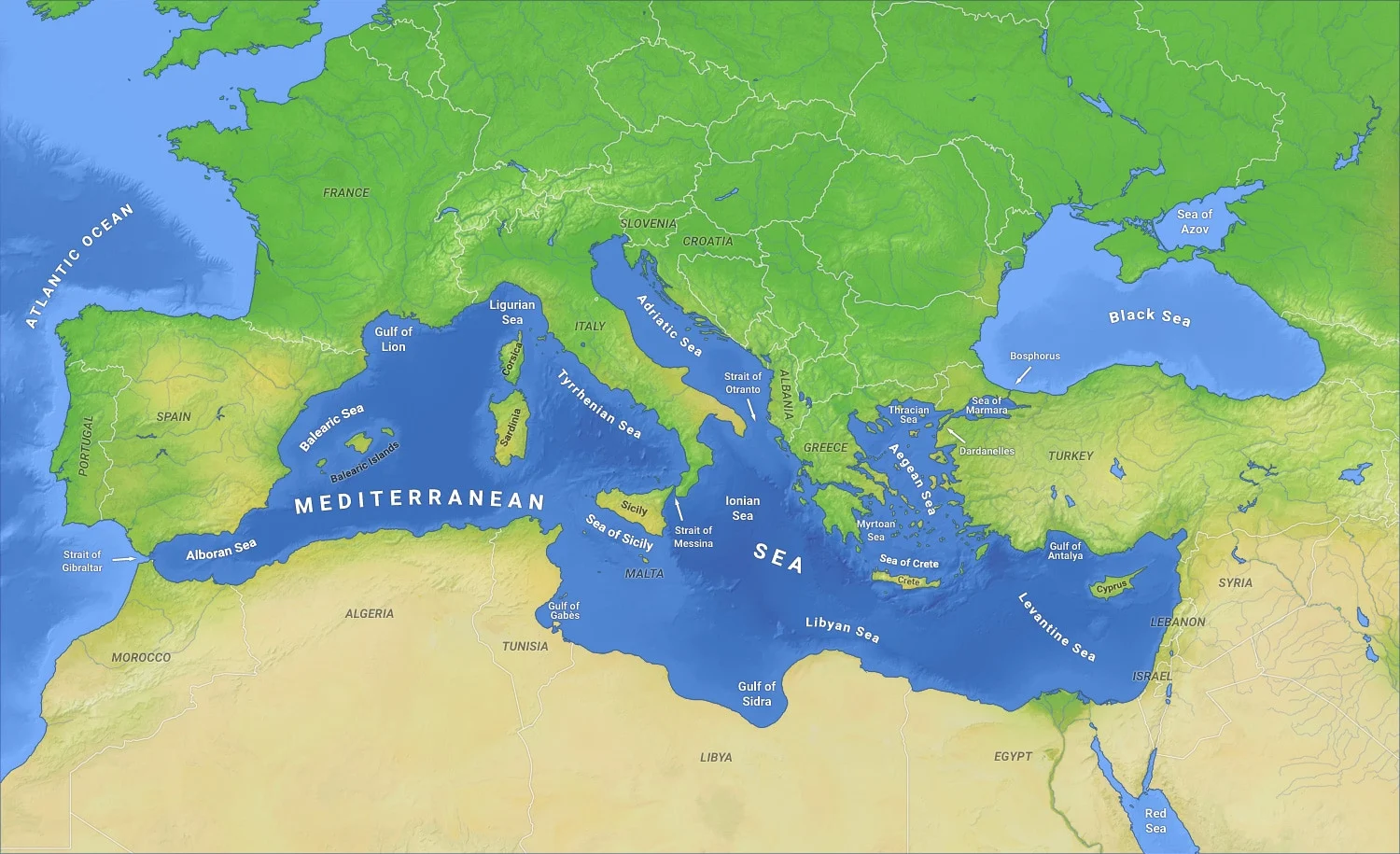
One of the most important clues lies in Plato’s geographical description. He places Atlantis “beyond the Pillars of Heracles.” In the ancient Greek world, this phrase referred to the narrow entrance between the Mediterranean Sea and the Atlantic Ocean—today’s Strait of Gibraltar. If Plato meant this literally, then Atlantis would have been located somewhere in the Atlantic, west of Spain and Morocco.
This geographical detail has inspired centuries of speculation. Some researchers have proposed that Atlantis might have been a mid-Atlantic island that sank due to tectonic activity. Others have pointed to the Azores, Madeira, or the Canary Islands as possible remnants of a larger landmass.
Modern geology, however, provides important constraints. The Atlantic Ocean basin is the result of plate tectonics. The seafloor spreads outward from the Mid-Atlantic Ridge as magma rises and solidifies. This process occurs over tens of millions of years. Entire continents do not suddenly sink into the ocean in a matter of days. Continental crust is buoyant and does not simply vanish beneath the sea without leaving massive geological evidence.
Oceanographic surveys using sonar mapping have revealed no sunken continent-sized landmass in the Atlantic that fits Plato’s description. The seafloor is well studied, and while underwater volcanoes and ridges exist, there is no trace of a recently submerged advanced civilization on the scale described in the dialogues.
This does not mean Atlantis cannot have been located in the Atlantic region, but it does suggest that if the story reflects reality, it was likely exaggerated. Perhaps Plato’s “larger than Libya and Asia Minor” was rhetorical rather than literal. Perhaps the location “beyond the Pillars” was symbolic, indicating remoteness rather than precise geography.
Science thus tempers imagination. The Atlantic clue remains intriguing, but geology limits what is physically plausible.
2. The Minoan Civilization and the Eruption of Thera
Another powerful clue comes from the Bronze Age civilization of Crete, known as the Minoans. The Minoan culture flourished between roughly 2000 and 1450 BCE, centered on the island of Crete in the eastern Mediterranean. They built elaborate palaces, developed advanced art, and maintained extensive trade networks.
In the 17th century BCE, a massive volcanic eruption occurred on the island of Thera, now called Santorini. The eruption was one of the largest in recorded human history. It blasted ash high into the atmosphere, triggered tsunamis across the Aegean Sea, and devastated nearby settlements. Archaeological excavations at Akrotiri on Santorini reveal a once-thriving city buried under volcanic ash, remarkably preserved but abruptly abandoned.
Some researchers propose that the memory of this catastrophic eruption may have inspired Plato’s story. The Minoans were a powerful maritime civilization. They lived on islands. They experienced a sudden, devastating natural disaster. These parallels are striking.
Archaeological evidence suggests that while the eruption severely disrupted Minoan society, it did not immediately destroy Crete itself. However, the long-term effects—tsunamis, ash fall, economic disruption—may have weakened the civilization, contributing to its decline.
From a scientific standpoint, the Thera eruption provides a realistic example of how an advanced society could suffer sudden destruction due to geological forces. Volcanic eruptions can generate tsunamis and earthquakes. They can reshape coastlines and alter climates. Oral traditions passed down over centuries could easily magnify such events into a story of divine punishment and total annihilation.
The Minoan hypothesis does not perfectly match Plato’s description. The location is inside the Mediterranean, not beyond Gibraltar. The scale differs. Yet it remains one of the most scientifically grounded explanations for the Atlantis legend—a case where myth may preserve memory of real natural disaster.
3. The Richat Structure in the Sahara
Far from the sea, in the Sahara Desert of Mauritania, lies a remarkable geological formation known as the Richat Structure. From space, it appears as a series of concentric rings—almost like a giant bullseye carved into the Earth. Some enthusiasts have proposed that this formation matches Plato’s description of Atlantis as a city built in concentric circles of land and water.
The Richat Structure is approximately 40 kilometers in diameter. Its ringed appearance is caused by erosion exposing different layers of rock in a domed geological formation. Scientific analysis shows that it is a natural feature formed over millions of years through geological processes, not the remains of an artificial city.
Importantly, the region is now deep in the desert, far from any ocean. However, during certain prehistoric periods, parts of the Sahara were wetter, with rivers and lakes. Still, there is no evidence that this region was an advanced maritime civilization that sank beneath the sea in historical times.
Geologists have carefully studied the Richat Structure. It lacks the hallmarks of human construction. There are no artifacts, no city walls, no harbor remains consistent with Plato’s narrative. While its circular pattern is visually suggestive, similarity in shape is not proof of historical connection.
This clue illustrates a broader lesson in scientific investigation. Human perception is drawn to patterns. When we see rings in the desert that resemble a story, we may feel a surge of excitement. But science requires more than resemblance. It requires evidence.
The Richat hypothesis remains popular in some circles, but geological and archaeological data strongly support its natural origin.
4. Submerged Settlements and Rising Sea Levels
At the end of the last Ice Age, approximately 20,000 years ago, global sea levels were far lower than they are today. Vast areas of land that are now underwater were once dry coastal plains inhabited by humans. As glaciers melted and sea levels rose, these settlements were submerged.
Underwater archaeology has uncovered ancient structures in various parts of the world, including submerged ruins near India’s coast and along the Mediterranean. These findings confirm that human communities have indeed been lost to rising seas.
However, the timing matters. Plato places Atlantis roughly 9,000 years before his own time, which would correspond to around 9600 BCE. This date is intriguing because it coincides with the end of the last Ice Age and significant climatic shifts.
Modern paleoenvironmental research shows that sea level rise during this period was real and substantial. Coastal communities would have experienced flooding, displacement, and dramatic environmental change. Oral traditions from around the world include flood myths, suggesting collective memory of rising waters.
Yet there is no archaeological evidence of a technologically advanced global superpower existing in 9600 BCE. At that time, human societies were primarily hunter-gatherers transitioning toward agriculture in some regions. Large urban civilizations did not emerge until several thousand years later.
This clue suggests that while real flooding events occurred and may have inspired myth, the level of sophistication described by Plato does not align with current archaeological knowledge of that era. Science supports the idea of lost coastal settlements—but not of a vast, advanced island empire from that period.
5. The Role of Plato’s Philosophy
Perhaps the most compelling clue is not geological but literary. Atlantis appears only in the works of Plato, specifically in Timaeus and Critias. No earlier Greek text mentions it. No Egyptian inscription clearly confirms it. Plato presents the story as having been passed down from Egyptian priests to the Athenian lawgiver Solon, and then through generations to him.
Scholars have long debated whether Plato intended Atlantis as historical fact or allegory. In his dialogues, Atlantis serves as a moral contrast to an idealized ancient Athens. Atlantis represents hubris, imperial ambition, and moral decline. Athens represents virtue and balance. The destruction of Atlantis reinforces a philosophical lesson about justice and divine order.
From a historical perspective, Plato frequently used myths and fictional narratives to illustrate philosophical ideas. The “Myth of the Cave” in The Republic is not meant to describe a literal cave. It is an allegory about knowledge and perception.
Many classicists argue that Atlantis functions similarly. It may incorporate fragments of real events, such as natural disasters, but it is structured primarily as a philosophical parable. If this interpretation is correct, then the search for a precise geographic location may misunderstand the text’s purpose.
Science does not dismiss myth outright. Instead, it examines sources critically. When a story has a single literary origin and lacks independent corroboration, historians exercise caution. The absence of corroborating evidence does not prove Atlantis never existed, but it weakens the case for its literal interpretation.
In this view, the “real location” of Atlantis may lie less in physical geography and more in the intellectual landscape of ancient Greece—a narrative tool used to explore political and ethical ideas.
The Emotional Power of a Lost World
Why does Atlantis continue to fascinate us? Perhaps because it represents more than a place. It embodies longing—for lost knowledge, for vanished greatness, for a golden age swallowed by time. It reflects our awareness that civilizations rise and fall, that nature can overwhelm human achievement, that memory can outlast stone.
Scientific investigation does not extinguish this fascination. On the contrary, it deepens it. When we study volcanic eruptions, plate tectonics, sea level rise, and ancient texts, we see how fragile societies can be. We see how stories preserve echoes of real trauma. We see how imagination fills gaps left by incomplete evidence.
The search for Atlantis is ultimately a dialogue between myth and method. It challenges us to balance wonder with skepticism, curiosity with discipline. It reminds us that not all mysteries yield simple answers—and that sometimes the journey of inquiry is more meaningful than the destination.
Conclusion: Between Legend and Evidence
The five clues explored here—the Atlantic location beyond the Pillars of Heracles, the Minoan eruption of Santorini, the Richat Structure’s concentric rings, post–Ice Age sea level rise, and the philosophical context of Plato’s writings—each offer pieces of a puzzle. None alone confirms the existence of Atlantis as described. Together, they paint a picture of how legends can arise from real events, natural disasters, and cultural memory.
Modern science finds no evidence of a sunken continent in the Atlantic. It does confirm catastrophic eruptions and rising seas. It reveals ancient civilizations lost to time. It highlights the power of storytelling in shaping human understanding.
Atlantis may never be found because it may never have existed as a literal empire. Or perhaps its true remnants lie undiscovered beneath sediment and sea. What is certain is that the legend continues to inspire exploration, debate, and imagination.
In that sense, Atlantis has never truly sunk. It survives in our questions, in our maps, in our telescopes and submersibles, in our desire to understand both the world that was and the world that is. And as long as humanity seeks to uncover hidden truths beneath waves and sands, the mystery of Atlantis will remain a powerful symbol of the fragile boundary between history and myth.