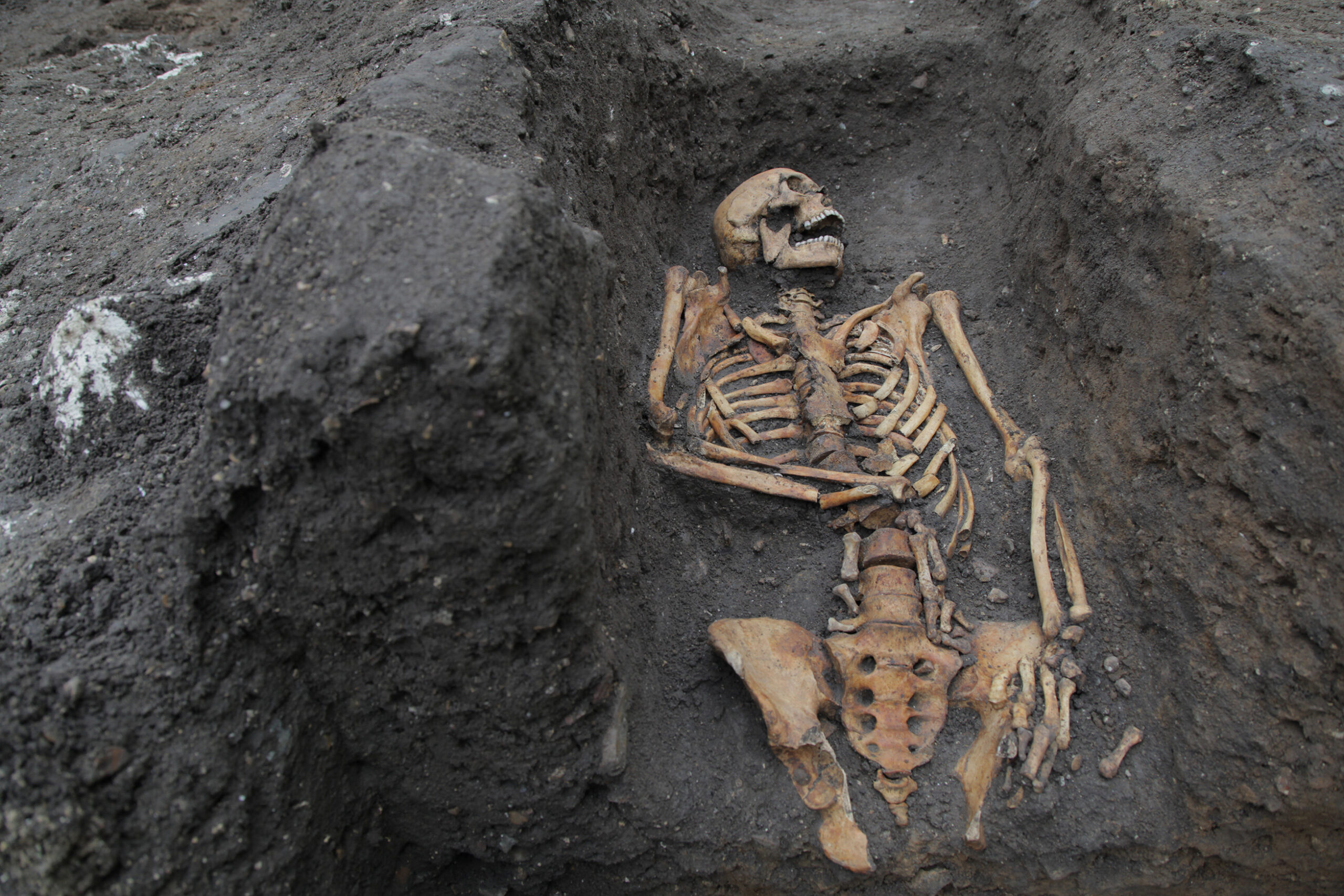
There is something almost poetic about the idea that inside a fragment of bone, buried for tens of thousands of years beneath layers of soil and stone, a story is waiting. Not written in ink. Not carved into rock. But encoded in molecules so small they cannot be seen by the naked eye. DNA, the double-helix blueprint of life, can endure far longer than anyone once imagined. In the right conditions, it survives in ancient bones and teeth, protected from heat, moisture, and contamination, waiting for the right tools and the right minds to read it.
The recovery of ancient DNA has transformed science. It has reshaped anthropology, archaeology, paleontology, and evolutionary biology. It has given voices to individuals who lived tens of thousands of years ago. It has corrected long-held assumptions and revealed unexpected connections. From extinct human relatives to Ice Age predators, from mysterious hybrid children to the hidden ancestry of modern populations, ancient DNA has turned bone fragments into biographies.
What follows are five scientifically grounded and extraordinary stories of DNA recovered from ancient bones. Each one reveals not only a breakthrough in technology, but also a shift in how we understand ourselves and the deep past.
1. The Neanderthal Genome and the Rediscovery of Our Lost Cousins
For more than a century after their discovery in the 19th century, Neanderthals were known only through their bones and stone tools. Their thick brow ridges and robust skeletons suggested a powerful, cold-adapted human relative who lived across Europe and parts of western Asia until about 40,000 years ago. But what kind of beings were they? Were they a separate species? Did they interbreed with modern humans? Fossils could not answer those questions fully.
Everything changed when scientists successfully extracted and sequenced DNA from Neanderthal bones. The breakthrough came after years of painstaking work in specialized clean laboratories designed to prevent contamination from modern human DNA. Ancient DNA is fragile. It breaks into short fragments over time, and chemical damage alters its structure. Recovering it requires meticulous techniques and powerful sequencing technologies.
In 2010, researchers published a draft sequence of the Neanderthal genome, based on DNA extracted from bones found in Vindija Cave in Croatia. For the first time, scientists could compare the Neanderthal genome directly to that of modern humans.
The results were astonishing. People of non-African ancestry today carry approximately one to two percent Neanderthal DNA in their genomes. This meant that when modern humans left Africa and encountered Neanderthals in Eurasia, they did not simply replace them. They interbred with them.
This discovery reshaped the human story. Neanderthals were not a completely separate branch cut off from us. They were close enough biologically to produce fertile offspring with early modern humans. Their DNA lives on in billions of people today.
Further analysis revealed that some Neanderthal-derived genetic variants influence traits in modern humans, including aspects of immune response and skin biology. Certain genes inherited from Neanderthals appear to have helped early modern humans adapt to new environments outside Africa. At the same time, other Neanderthal variants have been associated with increased susceptibility to certain diseases.
The Neanderthal genome did more than answer a question about interbreeding. It demonstrated that ancient DNA could be recovered from remains tens of thousands of years old. It opened the door to an entirely new field: paleogenomics. And it revealed that the boundary between “us” and “them” in human evolution is far blurrier than once believed.
2. The Denisovans: A Human Lineage Discovered by DNA Alone
In 2008, archaeologists excavating Denisova Cave in Siberia uncovered a small fragment of finger bone. It did not look extraordinary. There was no skull, no distinctive brow ridge, no obvious anatomical feature that marked it as belonging to a new kind of human. Without DNA analysis, it might have remained an unremarkable fossil.
When scientists extracted DNA from the bone, however, they encountered something entirely unexpected. The genetic sequence did not match that of modern humans. It did not match Neanderthals either. It represented a previously unknown human lineage.
This new group was named the Denisovans, after the cave in which the bone was found. The discovery was remarkable because it showed that a distinct population of archaic humans had lived in Asia, and yet no clear fossil record had identified them before. In this case, DNA did not confirm what bones had suggested. It revealed something the bones alone could not.
Subsequent genetic analysis revealed that Denisovans were related to Neanderthals but formed a separate branch of the human family tree. They diverged from Neanderthals hundreds of thousands of years ago. Even more surprising, modern human populations in parts of Asia and Oceania, particularly in Melanesia and Papua New Guinea, carry Denisovan DNA. In some of these populations, Denisovan ancestry can account for up to five percent of the genome.
One of the most striking findings involves a gene variant associated with adaptation to high altitude in Tibetan populations. This variant appears to have been inherited from Denisovans, helping modern humans survive in the low-oxygen environment of the Tibetan Plateau.
Later discoveries at Denisova Cave revealed even more complexity. Among the bones found was one belonging to a young girl whose DNA showed that her mother was Neanderthal and her father was Denisovan. This individual, sometimes called “Denny,” provided direct evidence that different archaic human groups interbred with one another.
The Denisovan story demonstrates the extraordinary power of ancient DNA. A small fragment of bone, barely recognizable to the eye, contained the genetic evidence of an entire human lineage previously unknown to science. Without DNA recovery, Denisovans might still be invisible in the human story.
3. The Clovis Child and the Peopling of the Americas
For decades, archaeologists debated how and when humans first entered the Americas. The dominant hypothesis held that people crossed from Siberia into Alaska via a land bridge known as Beringia during the last Ice Age. But questions remained about timing, migration routes, and the relationship between ancient and modern Native American populations.
In 1968, construction workers in Montana discovered the remains of a young child associated with Clovis artifacts, a distinctive type of stone tool. The burial, estimated to be about 12,600 years old, became known as the Anzick site. For years, the bones were studied archaeologically, but it was not until advances in ancient DNA techniques that scientists could attempt genomic analysis.
In 2014, researchers successfully sequenced the genome of the Anzick child. The results were deeply significant. The child’s DNA showed a close genetic relationship to modern Native American populations throughout North and South America. This provided strong evidence that the Clovis people were ancestral to many Indigenous groups in the Americas.
The genome also supported the idea that the ancestors of Native Americans originated in Asia and migrated into the Americas via Beringia. However, it clarified that the diversification of Native American populations occurred after the initial migration, within the Americas themselves.
Importantly, the study was conducted in consultation with Native American communities, marking a shift in how ancient DNA research engages with descendant populations. The story of the Clovis child was not merely about migration patterns. It was about identity, heritage, and the respectful integration of scientific research with living communities.
The recovery of DNA from the Anzick burial helped resolve a long-standing debate and demonstrated that ancient genomes can illuminate the deep ancestry of entire continents.
4. Ötzi the Iceman and the Genetic Portrait of an Individual
In 1991, hikers in the Alps near the border of Austria and Italy discovered a naturally mummified body emerging from melting ice. The individual, later named Ötzi the Iceman, had died around 5,300 years ago during the Copper Age. The cold, stable conditions of the glacier had preserved not only his bones but also soft tissues, clothing, and tools.
Because of this exceptional preservation, scientists were able to extract and sequence Ötzi’s DNA. Unlike fragmentary bones from deep prehistory, Ötzi’s remains allowed researchers to reconstruct a detailed genetic portrait of a single individual.
Analysis of his genome revealed that he had brown eyes and likely dark hair. He was genetically more closely related to early farmers from Anatolia than to contemporary European hunter-gatherers. This finding supported the idea that agriculture had spread into Europe through migration as well as cultural exchange.
Ötzi’s DNA also provided insights into his health. Genetic markers suggested he had a predisposition to cardiovascular disease. Evidence from his stomach contents and tissues revealed the presence of Helicobacter pylori bacteria, offering clues about ancient strains of this pathogen. He also carried genetic variants associated with lactose intolerance, consistent with the fact that widespread lactose tolerance evolved later in many European populations.
Perhaps most poignantly, DNA evidence helped clarify the circumstances of his death. Combined with forensic analysis, it showed that Ötzi had suffered a fatal arrow wound. His body, frozen in time, became one of the most detailed case studies of an ancient human life ever reconstructed.
The recovery of DNA from Ötzi did not merely inform broad evolutionary questions. It illuminated the life of one man: his ancestry, his health, his physical traits. It showed that ancient DNA can restore individuality to those long gone.
5. The Cave Bear and the Genetic Echo of Extinction
Ancient DNA research is not limited to humans. Some of its most powerful stories involve extinct animals whose bones have preserved genetic information about vanished ecosystems.
The cave bear, a massive species that roamed Europe during the Pleistocene, went extinct around 24,000 years ago. For years, scientists debated the reasons for its extinction. Was it climate change, human hunting, or a combination of factors?
By extracting DNA from cave bear bones, researchers were able to study the species’ genetic diversity over time. Analyses revealed that cave bear populations experienced a decline in genetic diversity before their extinction, suggesting long-term population stress. Some evidence indicated that they were highly specialized herbivores, which may have made them vulnerable to environmental changes during the last Ice Age.
Comparisons between cave bear DNA and that of modern brown bears provided insights into evolutionary relationships and divergence times. The genetic data helped reconstruct population histories that could not be inferred from bones alone.
The cave bear’s story highlights how ancient DNA can reveal the dynamics of extinction. It allows scientists to track changes in population size, genetic variation, and adaptation over thousands of years. In doing so, it offers lessons relevant to modern conservation biology.
By listening to the genetic echoes preserved in fossilized bones, researchers can better understand how species respond to environmental pressures—and how fragile biodiversity can be.
The Ongoing Revolution of Ancient DNA
The recovery of DNA from ancient bones has fundamentally altered our understanding of life’s history. It has revealed hidden lineages, confirmed migrations, uncovered interbreeding events, and reconstructed the genomes of extinct species. It has shown that the past is not silent. It speaks through molecules.
Technological advances continue to push the boundaries of what is possible. Improved sequencing methods, better contamination controls, and more sophisticated computational tools allow scientists to analyze ever older and more degraded samples. DNA has been recovered from remains hundreds of thousands of years old under favorable conditions.
Yet the field also faces ethical challenges. Questions about consent, cultural heritage, and the treatment of human remains require careful consideration. The power to read ancient genomes must be balanced with respect for descendant communities and cultural values.
Ancient DNA research reminds us that history is not fixed. It evolves as new evidence emerges. A small bone fragment can overturn long-standing assumptions. A molecule can rewrite a chapter of the human story.
In the end, these five incredible stories are not just about scientific achievement. They are about connection. They reveal that we are linked to Neanderththals and Denisovans, to Ice Age migrations and ancient farmers, to extinct bears and long-lost ecosystems. The boundaries of time blur when DNA bridges the gap between past and present.
Inside every ancient bone lies a whisper. Thanks to the science of ancient DNA, we are finally learning how to listen.