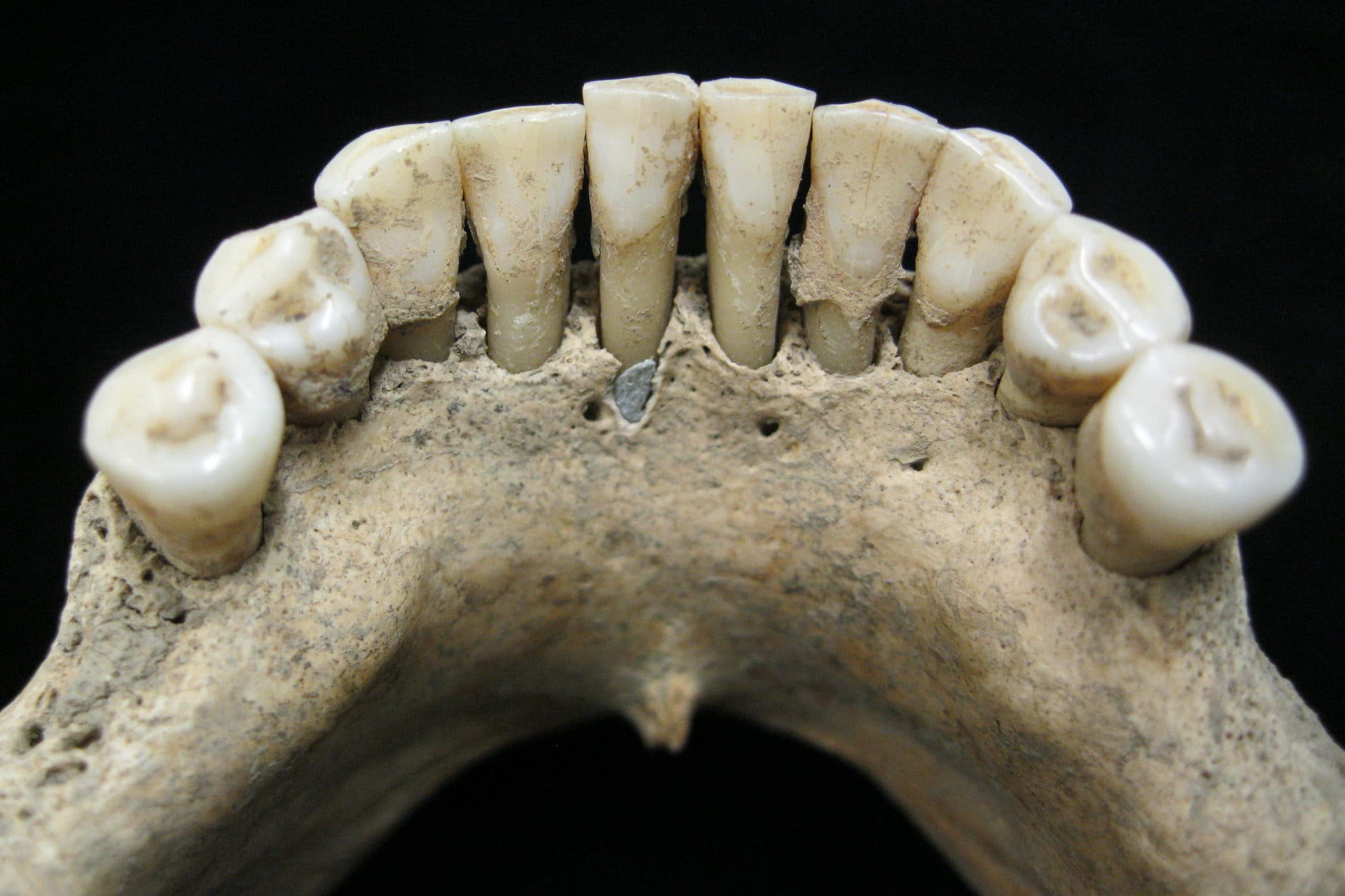
Long after flesh has vanished and clothing has turned to dust, teeth remain. They endure in the soil for thousands, sometimes hundreds of thousands, of years. Harder than bone, resilient against decay, teeth are among the most durable parts of the human body. To archaeologists, they are not just remnants of a face or fragments of a smile. They are archives—small, mineralized time capsules that record intimate details about a person’s life.
Every tooth holds layers of evidence. It remembers what a person ate, where they grew up, what illnesses they endured, and even the kinds of tasks they performed with their mouth. It can hint at ancestry, age, and social habits. In ancient cemeteries, long-forgotten settlements, and caves once occupied by early humans, archaeologists often begin their stories with teeth.
Below are ten remarkable things your teeth can reveal to archaeologists, each grounded in careful scientific study and decades of research.
1. What You Ate Throughout Your Life
Teeth are direct participants in eating, so it is no surprise they preserve clues about diet. The surfaces of teeth, especially the molars, record microscopic scratches and pits formed when food is chewed. This study, known as dental microwear analysis, allows archaeologists to distinguish between diets rich in tough plant fibers, hard seeds, or meat.
Populations that consumed coarse, gritty grains often show heavy wear on tooth enamel. Stone-ground flour, common in many early agricultural societies, contained tiny particles of grit from grinding stones. These particles acted like sandpaper, gradually flattening tooth surfaces. In contrast, groups relying more heavily on softer foods or cooked meats often display different wear patterns.
Beyond surface wear, chemical analysis provides even deeper insight. Tooth enamel forms in childhood and does not remodel over time, meaning it preserves chemical signatures from early life. By analyzing stable isotopes of carbon and nitrogen in teeth, archaeologists can reconstruct major components of a person’s diet. Different plants use different photosynthetic pathways, which leave distinct carbon isotope signatures. Similarly, nitrogen isotopes help distinguish between diets based on plants versus those rich in animal protein.
Together, microwear and isotope studies allow researchers to determine not only whether someone ate plants or meat, but sometimes even what kinds of plants they consumed. A single molar can reveal whether an ancient individual lived on wild grasses, domesticated cereals, or marine fish.
2. Where You Grew Up
Teeth can reveal geography. The enamel of teeth forms during childhood and locks in chemical signatures from the environment. Among the most informative of these signatures are strontium isotopes.
Strontium is a naturally occurring element found in rocks and soils. As rocks weather, strontium enters water and plants, and from there it enters the human body through food and drink. Different regions have distinct strontium isotope ratios depending on their underlying geology. When enamel forms, it incorporates strontium from the local environment.
By measuring strontium isotope ratios in ancient teeth and comparing them with regional geological maps, archaeologists can determine whether an individual grew up in the same area where they were buried. If the isotopic signature does not match the burial site, it suggests migration.
This technique has revealed patterns of movement in ancient populations, from small-scale mobility among hunter-gatherers to long-distance migration in early farming societies. In some burial sites, strontium analysis has shown that women were more likely than men to move between communities, shedding light on marriage patterns and social organization.
Teeth, therefore, serve as passports from childhood, preserving the geological fingerprint of a person’s early years.
3. How Old You Were When You Died
Determining age at death is one of the central tasks of bioarchaeology, and teeth are essential to this process. In children and adolescents, tooth development follows a well-documented sequence. The timing of tooth eruption and root formation is remarkably consistent across populations.
By examining which teeth have erupted and how far roots have developed, archaeologists can estimate a child’s age with considerable accuracy. For example, the first permanent molars typically erupt around age six, while third molars, often called wisdom teeth, usually emerge in late adolescence or early adulthood.
In adults, age estimation becomes more complex. Teeth gradually accumulate wear over time, though the rate depends on diet and lifestyle. Additionally, changes in the dental pulp cavity—the inner chamber containing nerves and blood vessels—can provide clues. With age, secondary dentin forms, reducing the size of the pulp cavity. Radiographic analysis can measure this change and offer age estimates.
Though not perfectly precise, dental evidence remains one of the most reliable indicators of age at death, especially in younger individuals.
4. Signs of Childhood Stress and Illness
Teeth grow incrementally, layer by layer, somewhat like tree rings. During enamel formation in childhood, disruptions such as malnutrition, severe illness, or physiological stress can interrupt normal development. These disruptions sometimes leave visible lines or grooves in the enamel, known as enamel hypoplasia.
Enamel hypoplasia appears as horizontal bands or pits on tooth surfaces. Each band corresponds to a period when enamel formation was temporarily halted or slowed. By analyzing the position of these defects and understanding the timing of tooth development, researchers can estimate the age at which stress occurred.
Such defects provide a window into childhood health. High frequencies of enamel hypoplasia in a population often suggest widespread nutritional deficiencies or repeated illness. In some archaeological contexts, these markers have revealed periods of famine, disease outbreaks, or the hardships associated with major social transitions, such as the shift from hunting and gathering to agriculture.
Teeth thus preserve a biological memory of adversity, recording moments when the body struggled to cope.
5. Evidence of Cultural Practices and Daily Habits
Teeth do not only reveal biological information; they also reflect culture. Many societies have modified teeth intentionally for aesthetic, social, or ritual reasons. Archaeologists have documented cases of deliberate tooth filing, drilling, inlaying with decorative materials, and even removal.
These modifications can indicate social identity, group affiliation, or rites of passage. In some cultures, particular patterns of tooth alteration distinguished members of certain communities or marked transitions into adulthood.
Teeth also reveal habitual behaviors. In some ancient populations, people used their teeth as tools. They may have gripped fibers while weaving, softened hides while processing leather, or held materials during crafting. Repeated non-dietary use leaves distinctive wear patterns, sometimes called “activity-related dental wear.”
For example, grooves on the front teeth can indicate repeated pulling of plant fibers. Such patterns provide intimate glimpses into daily life, showing how individuals interacted physically with their environment.
6. Genetic Ancestry and Population Relationships
The shape and structure of teeth are influenced by genetics. Certain dental traits, such as the number of cusps on molars or the presence of shovel-shaped incisors, occur at varying frequencies in different populations. These traits are known as non-metric dental traits.
By studying these features across skeletal remains, archaeologists and biological anthropologists can infer genetic relationships between populations. Similar patterns of dental traits suggest shared ancestry or historical connections.
In addition to morphological traits, advances in ancient DNA research have allowed scientists to extract genetic material from teeth. The inner pulp chamber and surrounding dentin can preserve DNA under favorable conditions. Through genetic analysis, researchers can identify familial relationships, trace population migrations, and study evolutionary history.
Teeth have thus become central to reconstructing the deep history of human movement and interaction.
7. Clues About Disease and Oral Health
Teeth are directly affected by oral health conditions, many of which leave visible traces in the archaeological record. Dental caries, commonly known as cavities, occur when bacteria in the mouth metabolize sugars and produce acids that erode enamel.
The prevalence of cavities in ancient populations provides insight into diet. Agricultural societies consuming carbohydrate-rich grains often show higher rates of caries compared to hunter-gatherer groups whose diets contained fewer fermentable sugars.
Periodontal disease, which affects the tissues supporting teeth, can lead to bone loss around tooth sockets. Evidence of such conditions in skeletal remains helps archaeologists assess general health and hygiene practices.
Teeth can also preserve evidence of systemic diseases. For example, certain infections can leave characteristic marks on developing enamel. In rare cases, dental pulp has yielded traces of ancient pathogens, offering clues about diseases that once afflicted populations.
Through careful study of dental pathology, archaeologists reconstruct patterns of health and disease in the past.
8. Social Inequality and Access to Resources
Teeth can reflect social differences within a community. In some archaeological sites, individuals buried with richer grave goods or in special locations exhibit better dental health than others. Differences in cavity rates, enamel defects, and tooth wear can suggest unequal access to food or varying childhood nutrition.
In hierarchical societies, elites may have consumed more refined foods, sometimes resulting in higher rates of cavities due to increased sugar intake. Conversely, lower-status individuals might display signs of nutritional stress, such as enamel hypoplasia, indicating food scarcity or poor diet quality during childhood.
By comparing dental evidence across social groups within the same site, archaeologists can explore how inequality shaped lived experiences. Teeth become indicators not only of biology but also of social structure.
9. The Timing of Weaning and Infant Care
Teeth can reveal when infants transitioned from breastfeeding to solid foods. During breastfeeding, infants consume nutrients derived from their mother’s body, which carries a specific isotopic signature. As they begin eating solid foods, especially those typical of the broader community diet, the isotopic composition in developing teeth shifts.
By analyzing nitrogen isotopes in incremental layers of dentin, researchers can track this dietary transition. Higher nitrogen isotope values often reflect breastfeeding, while lower values suggest weaning onto solid foods.
Understanding weaning practices is important because they affect infant health, fertility patterns, and population growth. Early or late weaning can influence survival rates and the spacing of births. Teeth thus provide insights into childcare practices and family life in ancient societies.
10. Evolutionary History and the Story of Our Species
Perhaps most profoundly, teeth have illuminated the story of human evolution. Fossil teeth are often the most common remains found in early hominin sites because of their durability. From subtle differences in tooth size and enamel thickness, paleoanthropologists have distinguished between species and traced evolutionary changes over millions of years.
For example, changes in molar size and jaw structure reflect shifts in diet and tool use. As early humans began processing food with tools and cooking, selective pressures on jaw strength and tooth size changed. Teeth chart this transformation.
Comparisons between fossil teeth of early hominins and modern humans reveal trends in dental reduction and shape modification. These changes reflect broader evolutionary patterns in skull structure, brain size, and diet.
Teeth, in their small and silent way, carry the imprint of evolutionary history. They connect modern humans to ancient ancestors and illuminate the adaptive pathways that shaped our species.
The Enduring Testimony of Teeth
Teeth are intimate. They once chewed meals, formed smiles, and spoke words. Yet in death, they become witnesses. They testify to childhood hardships and adult habits, to journeys across landscapes, to social structures and survival strategies. They preserve chemical traces of rivers and rocks, microscopic scratches from seeds and grains, and genetic whispers from ancestors long gone.
Archaeologists approach teeth with meticulous care, using microscopes, chemical assays, imaging technology, and genetic sequencing. Each method adds a layer of interpretation. Together, they transform simple fragments of enamel into narratives of human life.
In a world where so much of the past has vanished, teeth endure. They outlast flesh and memory. They carry within them stories of hunger and abundance, movement and belonging, resilience and adaptation. When archaeologists uncover a tooth from the soil, they are not merely finding a remnant of a body. They are uncovering a biography written in mineral and time.
And in that small, gleaming surface lies a reminder that even the hardest substances can hold the softest human truths.