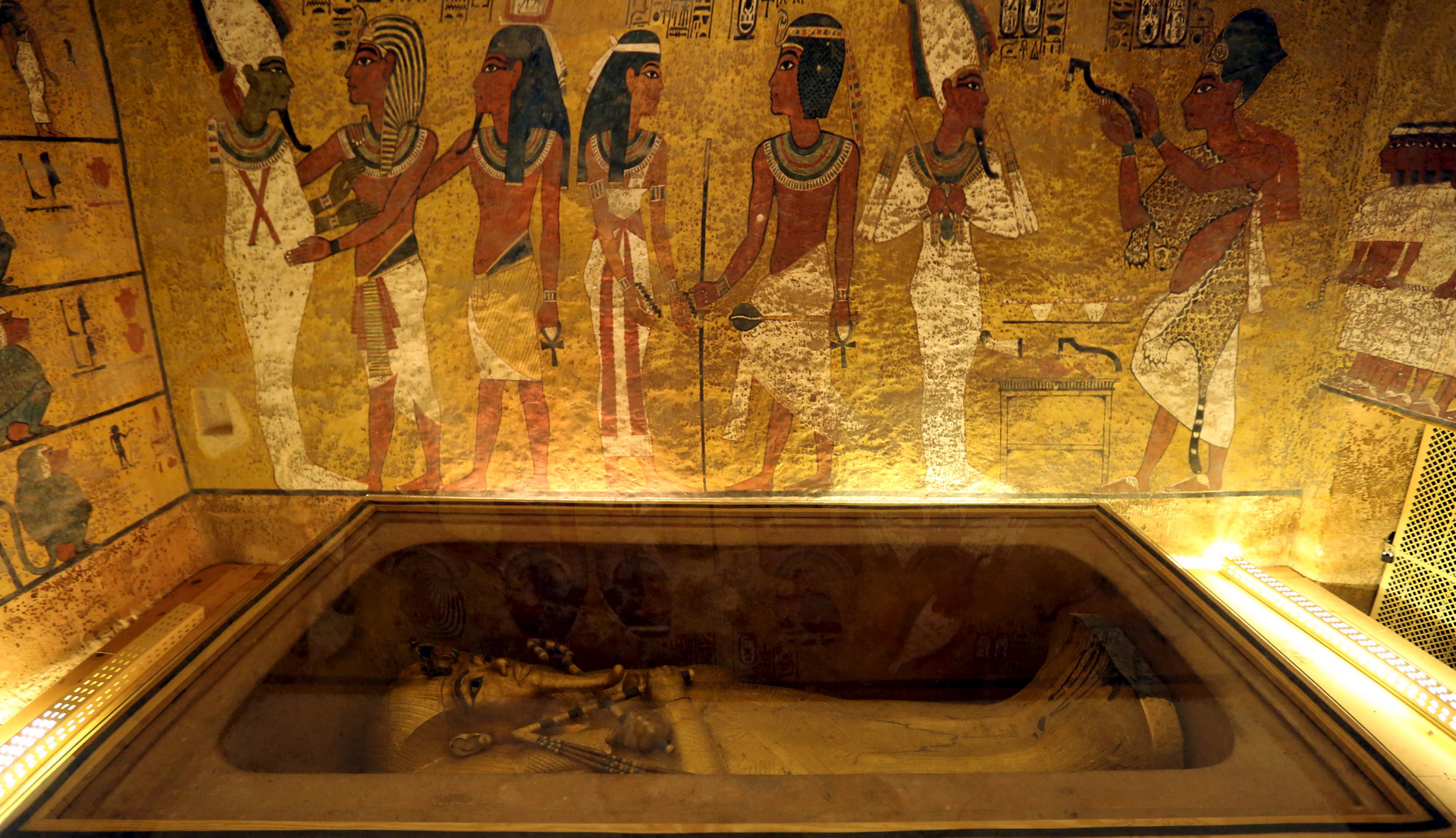
Few archaeological discoveries have captured the imagination of the world like the tomb of Tutankhamun. Hidden for more than three thousand years beneath the sands of Egypt’s Valley of the Kings, the tomb was uncovered in 1922 by the British archaeologist Howard Carter. What Carter and his team found inside stunned the world.
Unlike most royal tombs in ancient Egypt, which had been looted centuries earlier, Tutankhamun’s burial chamber remained largely intact. The small tomb contained thousands of treasures: golden chariots, ceremonial weapons, elaborate jewelry, statues, furniture, and the famous golden funerary mask that has become one of the most recognizable artifacts in human history.
Yet the discovery of the tomb did not bring simple answers. Instead, it opened the door to a series of puzzles that archaeologists, historians, and scientists continue to investigate today. Despite decades of research using modern technologies—from CT scans to DNA analysis—many questions surrounding Tutankhamun’s tomb remain unresolved.
Here are ten dark and enduring mysteries that still surround the boy king and his extraordinary tomb.
1. The Sudden and Mysterious Death of Tutankhamun
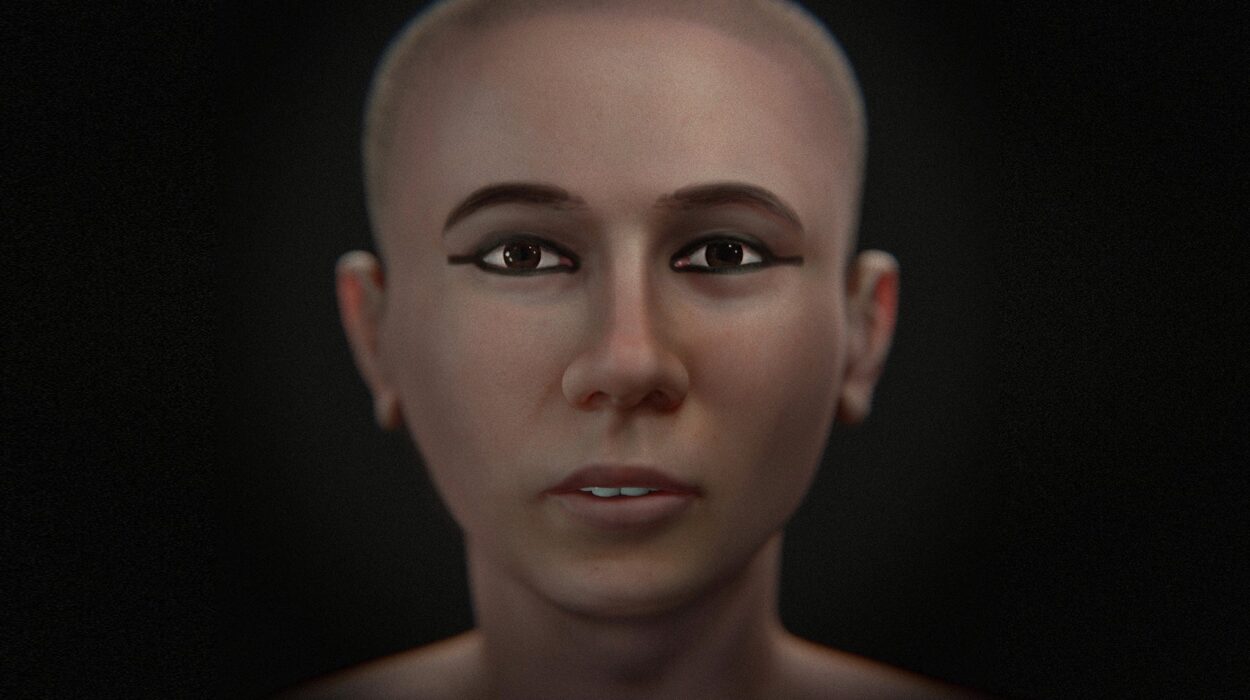
Tutankhamun became pharaoh around 1332 BCE when he was only about nine years old. His reign lasted less than a decade. Around 1323 BCE, he died suddenly at approximately eighteen or nineteen years of age.
For centuries, the cause of his death remained unknown.
Early speculation suggested assassination. Some researchers believed the young king may have been murdered in a political conspiracy. A 1968 X-ray revealed what appeared to be bone fragments inside his skull, leading some to propose that he had been struck on the head.
However, later CT scans conducted in 2005 revealed that the fragments were likely the result of damage that occurred during the mummification process or later examinations.
Modern genetic studies have provided additional clues. DNA analysis suggests that Tutankhamun suffered from several health problems, possibly related to royal inbreeding within the Egyptian royal family. He also appears to have been infected with malaria.
Another theory proposes that he died after a severe leg injury—possibly from a chariot accident—combined with infection or disease.
Despite these advances, no single explanation fully accounts for his death. Whether illness, injury, genetic weakness, or a combination of factors ended his life remains one of the most persistent mysteries of ancient Egypt.
2. Why Was His Tomb So Small?
Pharaohs of the New Kingdom were typically buried in large, elaborate tomb complexes in the Valley of the Kings. These tombs often contained long corridors, decorated halls, and multiple chambers.
Tutankhamun’s tomb, however, is unusually small.
Compared with the grand tombs of rulers such as Ramesses II or Seti I, Tutankhamun’s burial chamber appears modest. It consists of only a few rooms: an antechamber, burial chamber, treasury, and annex.
This has led historians to suspect that the tomb was not originally intended for him.
One widely discussed theory is that Tutankhamun died unexpectedly, forcing officials to bury him quickly in a tomb that had been prepared for someone else—possibly a high-ranking noble or even a royal woman.
Some Egyptologists suggest that the tomb may originally have been designed for Nefertiti or another member of the royal family connected to the controversial religious reforms of Akhenaten.
If this is true, Tutankhamun’s burial may have been an improvised solution during a politically turbulent period.
But definitive evidence remains elusive.
3. The Enigma of the Hidden Chambers
One of the most intriguing modern mysteries surrounding the tomb involves the possibility of hidden rooms behind its walls.
In 2015, British Egyptologist Nicholas Reeves proposed that high-resolution scans of the tomb’s walls revealed faint outlines of blocked doorways. According to his theory, Tutankhamun’s burial chamber might be only part of a larger tomb complex.
Reeves suggested that the hidden chambers could contain the burial of Queen Nefertiti, one of the most famous figures of ancient Egypt.
Ground-penetrating radar surveys were conducted to search for voids behind the walls. Initial results appeared promising, suggesting possible cavities. However, later scans produced conflicting data.
Some researchers believe there are no hidden chambers at all. Others argue that more advanced scanning methods are needed to confirm the presence or absence of concealed spaces.
If hidden rooms do exist, they could contain artifacts or even royal burials that would revolutionize our understanding of Egypt’s Amarna period.
For now, the walls of Tutankhamun’s tomb continue to guard their secrets.
4. The Mystery of the Damaged Mummy
When Howard Carter’s team examined Tutankhamun’s mummy, they found it in a surprisingly damaged state.
The mummy had been stuck to the bottom of its coffin by hardened resins used during the embalming process. In order to remove it, Carter’s team was forced to dismantle parts of the body, including separating the head from the torso.
This caused significant damage.
Later examinations revealed that the chest cavity had been altered, and the heart—traditionally left inside the body in Egyptian mummification—was missing.
Why was the heart removed? In ancient Egyptian belief, the heart played a crucial role in the afterlife. During the judgment of the dead, the heart was weighed against the feather of truth.
Some scholars believe the heart may have been destroyed during mummification. Others suggest it may have been deliberately removed because of unusual embalming practices during the Amarna period.
The missing heart remains one of the strange anomalies of Tutankhamun’s burial.
5. The Strange Burial Rituals
Tutankhamun’s burial contained several unusual elements that differ from standard royal funerary practices.
For example, dark resin was poured over the mummy in large quantities. This resin blackened the body and soaked the coffin and wrappings. The amount used appears far greater than in most other royal burials.
Some researchers believe the resin may have symbolized the regenerative power of the god Osiris, whose skin was often depicted as black, representing fertility and rebirth.
Another odd feature involves the placement of certain ritual objects and statues that appear hastily arranged.
These irregularities reinforce the idea that Tutankhamun’s funeral may have been conducted under unusual or rushed circumstances.
6. The Tomb Robberies That Almost Erased the Treasure
Although Tutankhamun’s tomb was largely intact when discovered in 1922, evidence shows that it was robbed at least twice in ancient times.
Broken seals and disturbed objects indicate that thieves entered the tomb shortly after the burial.
Fortunately, officials quickly resealed the tomb and restored order to many of the items. Because the tomb was later buried under debris from nearby tomb excavations, it remained hidden for millennia.
Had the robbers succeeded in removing the golden treasures, Tutankhamun might have remained a minor historical figure known only from inscriptions.
Instead, the survival of his tomb transformed him into the most famous pharaoh in the world.
7. The Curious Walking Sticks
Inside the tomb, archaeologists discovered more than 100 walking sticks and staffs.
This is an unusually large number for a young king who died before the age of twenty.
Medical studies of Tutankhamun’s skeleton reveal evidence of foot deformities and bone disease. Some scientists believe he suffered from a condition that made walking painful, requiring assistance from canes.
This challenges the image of the pharaoh as a strong warrior riding chariots into battle.
Instead, the boy king may have struggled with physical disabilities for much of his life.
8. The Political Chaos Surrounding His Reign
Tutankhamun ruled during one of the most turbulent periods in Egyptian history.
His father or predecessor, Akhenaten, had attempted to transform Egyptian religion by promoting the worship of a single deity, the sun disk Aten. This radical shift disrupted centuries of religious tradition centered on gods like Amun.
When Tutankhamun became king, the old religious system was restored.
He even changed his name from Tutankhaten to Tutankhamun to honor the god Amun.
However, the political figures guiding the young king—particularly powerful officials such as Ay and Horemheb—may have controlled much of the government.
After Tutankhamun’s death, these men rose to power, and records of the Amarna period were later suppressed.
This political turmoil raises questions about the circumstances of the king’s life and death.
9. The Legend of the “Curse of the Pharaoh”
Soon after the tomb’s discovery, sensational stories began circulating about a supposed curse.
When the expedition’s financial backer, George Herbert, 5th Earl of Carnarvon, died in 1923 from an infected mosquito bite, newspapers claimed that the pharaoh’s curse had struck.
Other deaths among individuals associated with the excavation fueled the legend.
However, statistical studies show that most members of the expedition lived long lives. Howard Carter himself died in 1939 at the age of 64.
The “curse” is widely regarded as a product of media exaggeration and public fascination with ancient Egypt.
Yet the myth persists, adding a layer of eerie intrigue to the story of the tomb.
10. The Secrets That May Still Be Hidden
Even after a century of research, Tutankhamun’s tomb continues to yield new discoveries.
Advanced imaging techniques, chemical analyses, and DNA studies are revealing details about the artifacts, the mummy, and the historical context of his reign.
Some scientists believe additional secrets remain hidden within the tomb’s walls or among the thousands of artifacts that were removed and stored in museums.
Others suspect that future technologies—perhaps involving more precise scanning methods or molecular analysis—may answer questions that today remain unresolved.
The story of Tutankhamun is far from finished.
The Enduring Enigma of the Boy King
Tutankhamun ruled for less than a decade. In life, he was likely overshadowed by powerful advisors and larger historical forces.
Yet in death, he achieved a kind of immortality that few rulers could have imagined.
The discovery of his tomb transformed archaeology, captivated the public imagination, and reshaped our understanding of ancient Egypt. At the same time, it revealed a series of mysteries that continue to challenge scholars.
The young king lies silent beneath centuries of history, surrounded by gold, ritual objects, and unanswered questions.
And perhaps that is part of his enduring power.
Even in the age of CT scans, genetic analysis, and digital archaeology, the tomb of Tutankhamun still whispers secrets that science has yet to fully understand.