Long before humans walked upright, long before mammals ruled land, and long before the continents took their modern shapes, Earth trembled under the footsteps of giants. These were not mythical creatures born of imagination. They were real animals—living, breathing organisms whose immense bodies reshaped landscapes, influenced ecosystems, and defined entire geological eras.
Dinosaurs are often imagined as terrifying predators, but the largest among them were not hunters. They were titanic herbivores—plant-eating giants whose bodies reached sizes unmatched by any land animals before or since. Their existence pushes the limits of biology. How could bones support such mass? How could hearts pump blood through necks longer than modern buses? How could ecosystems sustain creatures that weighed as much as entire herds of elephants?
The answers lie in evolutionary innovation. Lightweight yet strong bones filled with air spaces. Efficient respiratory systems resembling those of modern birds. Continuous tooth replacement. Enormous digestive chambers capable of processing vast quantities of vegetation. These animals were not simply oversized reptiles. They were highly specialized organisms perfectly adapted to their environment.
Fossils of these giants are scattered across continents—especially in regions like Argentina, United States, China, Spain, and Tanzania. Each discovery reveals another piece of a puzzle that spans more than 230 million years of evolutionary history.
The most massive dinosaurs belong primarily to a group called sauropods—long-necked, long-tailed herbivores that dominated terrestrial ecosystems during the Jurassic and Cretaceous periods. Their scale is almost beyond comprehension. Some stretched longer than a basketball court. Others weighed more than a dozen African elephants combined.
The following ten dinosaurs represent the greatest examples of terrestrial mass ever achieved. Each one is a biological monument to evolutionary possibility.
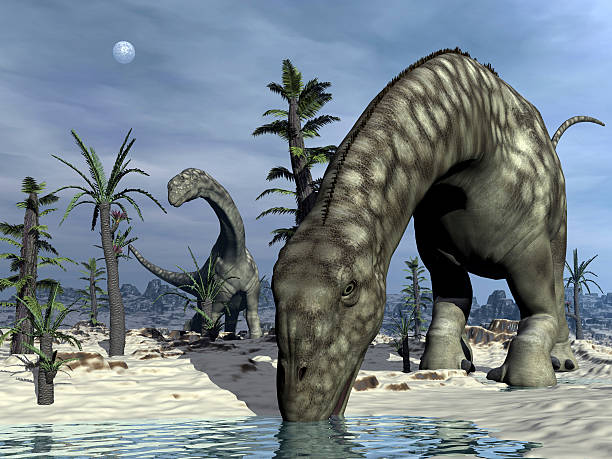
1. Argentinosaurus — The Colossus of the Cretaceous
Few names in paleontology inspire as much awe as Argentinosaurus. This enormous sauropod is widely considered one of the heaviest land animals that ever lived.
Its fossils were first uncovered in Patagonia and later studied by Argentine paleontologist Jose Bonaparte. Even the fragmentary remains—massive vertebrae, enormous limb bones—revealed an animal of extraordinary proportions.
Estimated length may have reached 30 to 35 meters, with body mass possibly exceeding 70 metric tons. To visualize such weight, imagine more than ten adult African elephants combined into a single organism.
Its spine alone was constructed from gigantic vertebrae reinforced by complex internal air chambers. These air spaces reduced weight while maintaining strength, an essential adaptation for such scale. Its long neck allowed access to high vegetation, enabling it to feed efficiently across large areas without moving constantly.
Environmental reconstruction suggests it lived in floodplain ecosystems rich in plant life. Such habitats would have been necessary to sustain the enormous daily food intake required—likely hundreds of kilograms of vegetation.
Argentinosaurus represents the outer limits of terrestrial body size. No known land animal has convincingly exceeded its mass.
2. Patagotitan — The Best-Known Giant
If Argentinosaurus represents mystery and magnitude, Patagotitan represents precision. Discovered in Patagonia by a ranch worker and later excavated by paleontologists from the Museo Paleontologico Egidio Feruglio, it is one of the most completely known giant sauropods ever found.
Multiple individuals were preserved together, allowing scientists to reconstruct its anatomy with remarkable accuracy. Unlike many giant dinosaurs known only from fragments, Patagotitan provides a detailed picture of how extreme body size functioned structurally.
It measured roughly 37 meters long and weighed around 60 to 70 metric tons. Its limb bones were incredibly thick, forming stable weight-bearing columns. Its tail likely acted as a counterbalance to its immense neck.
Detailed bone histology shows rapid growth rates, suggesting that these giants reached enormous size relatively quickly in evolutionary terms. This rapid growth may have helped protect juveniles from predators by reducing the time they remained vulnerable.
Because of its completeness and scale, Patagotitan is often regarded as the most scientifically informative of all giant dinosaurs.
3. Dreadnoughtus — The “Fear Nothing” Titan
The name Dreadnoughtus means “fears nothing,” and for good reason. With few predators capable of threatening an adult of such size, it likely moved through its environment with near invulnerability.
Discovered in southern South America and described by paleontologist Kenneth Lacovara, this dinosaur is known from one of the most complete skeletons ever found for a giant titanosaur.
It measured about 26 meters long and weighed roughly 50 to 60 metric tons. What makes Dreadnoughtus particularly valuable scientifically is the preservation of limb bones and body proportions that allow highly reliable mass estimates.
Its shoulder height alone rivaled that of multi-story buildings. Its muscular attachments suggest powerful locomotion despite immense weight. Computer modeling indicates that its respiratory system would have needed to be extremely efficient to support metabolic demands.
Growth rings in bone tissue show it was still growing at the time of death, meaning it never reached full size. This implies adults may have been even larger.
4. Supersaurus — The Longest of Giants
While some dinosaurs competed for weight, Supersaurus competed for length. This sauropod stretched to astonishing proportions, potentially exceeding 40 meters from head to tail.
Its fossils were discovered in the western United States and studied extensively by paleontologist James A. Jensen. Much of its extraordinary length came from an extremely elongated neck and tail.
Its neck alone may have contained dozens of vertebrae, each shaped to maximize flexibility while minimizing weight. Internal air chambers made these structures surprisingly light relative to their size.
Biomechanical studies suggest that such length allowed feeding across wide areas without movement, conserving energy. It may have swept its neck laterally through vegetation, harvesting leaves efficiently.
Despite its length, its body mass may have been somewhat lower than that of the heaviest titanosaurs, illustrating that size can manifest in different ways—massive bulk or extraordinary extension.
5. Barosaurus — The Towering Neck Specialist
Closely related to Diplodocus, Barosaurus is remarkable for its exceptionally long neck, proportionally longer than many other sauropods.
Its fossils were studied by pioneering paleontologist Othniel Charles Marsh during the intense fossil discoveries of the late nineteenth century.
Some specimens suggest neck lengths approaching 9 meters or more. This anatomical feature may have allowed feeding at extreme heights or over broad areas.
Biomechanical research indicates that maintaining blood flow to such elevated head positions required sophisticated cardiovascular adaptations, possibly including powerful hearts and specialized vascular structures.
Although lighter than some titanosaurs, Barosaurus still reached enormous size—over 25 meters long—making it one of the tallest animals ever to walk the Earth when its neck was fully raised.
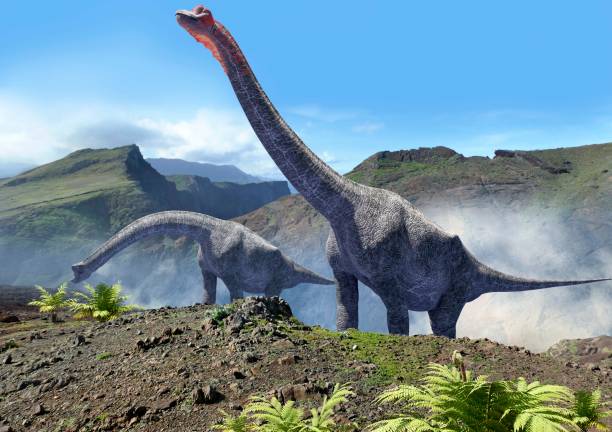
6. Brachiosaurus — The High-Browsing Giant
Unlike many sauropods whose bodies were more horizontally balanced, Brachiosaurus had a distinctive body plan. Its front limbs were longer than its hind limbs, creating a sloping posture that elevated its shoulders and head.
Its fossils were first identified in East Africa by German paleontologist Werner Janensch.
This anatomy made it uniquely adapted for high browsing. Its head could reach treetop vegetation inaccessible to other herbivores. Estimates suggest heights exceeding 12 meters when fully extended.
Its massive rib cage housed enormous lungs and digestive organs, necessary to sustain continuous feeding. Its elongated forelimbs functioned like vertical pillars supporting immense weight.
Brachiosaurus may not have been the heaviest sauropod, but it was among the tallest animals ever to exist on land.
7. Sauroposeidon — The Sky-Reaching Titan
For sheer vertical reach, few dinosaurs rival Sauroposeidon. Known primarily from massive neck vertebrae discovered in North America, this sauropod possessed one of the tallest neck structures ever identified.
Its fossils were analyzed by paleontologist Richard Cifelli and colleagues, revealing vertebrae more than a meter long.
When reconstructed, the animal may have stood over 17 meters tall at the head. That is comparable to a modern six-story building.
Its bones were extremely lightweight internally, filled with air spaces that reduced structural stress. Such engineering demonstrates evolutionary optimization at extreme scale.
Its height likely provided access to vegetation untouched by other herbivores, reducing competition.
8. Alamosaurus — The Last Giant of North America
Unlike many massive sauropods that lived earlier, Alamosaurus survived until the very end of the age of dinosaurs. It lived during the Late Cretaceous, shortly before the mass extinction that ended non-avian dinosaur dominance.
Its fossils were discovered in the southwestern United States and studied by paleontologist Charles Whitney Gilmore.
It reached lengths over 30 meters and masses estimated around 50 metric tons. Its survival into the final chapter of dinosaur history makes it especially important for understanding late-stage ecosystems.
Evidence suggests it lived alongside large predators such as Tyrannosaurus rex, yet adult individuals would have been extremely difficult to attack due to sheer size.
9. Turiasaurus — Europe’s Giant Sauropod
Europe produced its own giants, including Turiasaurus, one of the largest dinosaurs known from the continent.
Its fossils were discovered in eastern Spain and described by paleontologist Rafael Royo-Torres.
It measured around 30 meters long and weighed approximately 40 to 50 metric tons. Its teeth were distinctively spoon-shaped, suggesting a feeding strategy adapted to specific vegetation types.
Its discovery demonstrated that enormous sauropods were not limited to a few regions but evolved across multiple continents.
10. Puertasaurus — The Broad-Backed Giant
One of the most massive titanosaurs known from fragmentary remains, Puertasaurus possessed some of the widest vertebrae ever discovered.
Its fossils were uncovered in Patagonia and studied by Argentine paleontologist Fernando Novas.
The enormous width of its ribcage suggests a tremendously broad body, possibly rivaling or exceeding the mass of Argentinosaurus. Although only partial remains are known, their scale is staggering.
Even individual vertebrae rivaled the size of small automobiles.
The Biological Limits of Gigantism
These dinosaurs represent evolutionary experiments in extreme body size. Their existence required specific environmental conditions—abundant vegetation, stable climates, and long evolutionary periods.
Their physiology solved challenges of support, respiration, and circulation at unprecedented scale. Hollow bones, air-sac breathing, rapid growth, and efficient digestion made gigantism possible.
The End of the Giants
Around 66 million years ago, a catastrophic asteroid impact and environmental upheaval ended the age of non-avian dinosaurs. The largest land animals ever to exist vanished.
Yet their fossils remain, silent but monumental records of what life once achieved.
The Legacy of Earth’s Greatest Land Animals
These ten dinosaurs were more than large animals. They were ecological architects, evolutionary triumphs, and biological extremes.
They remind us that life on Earth has repeatedly explored possibilities far beyond modern imagination.
And somewhere beneath layers of rock and time, more giants may still wait to be discovered.