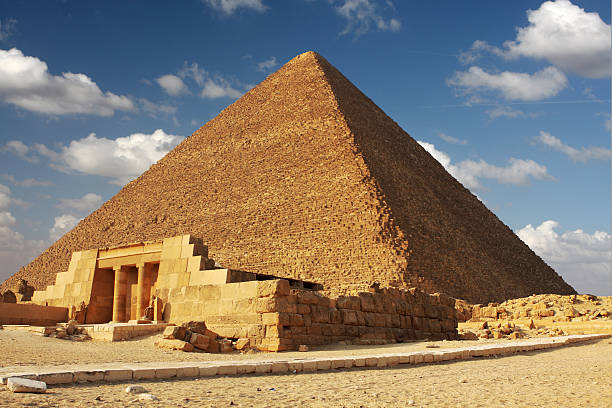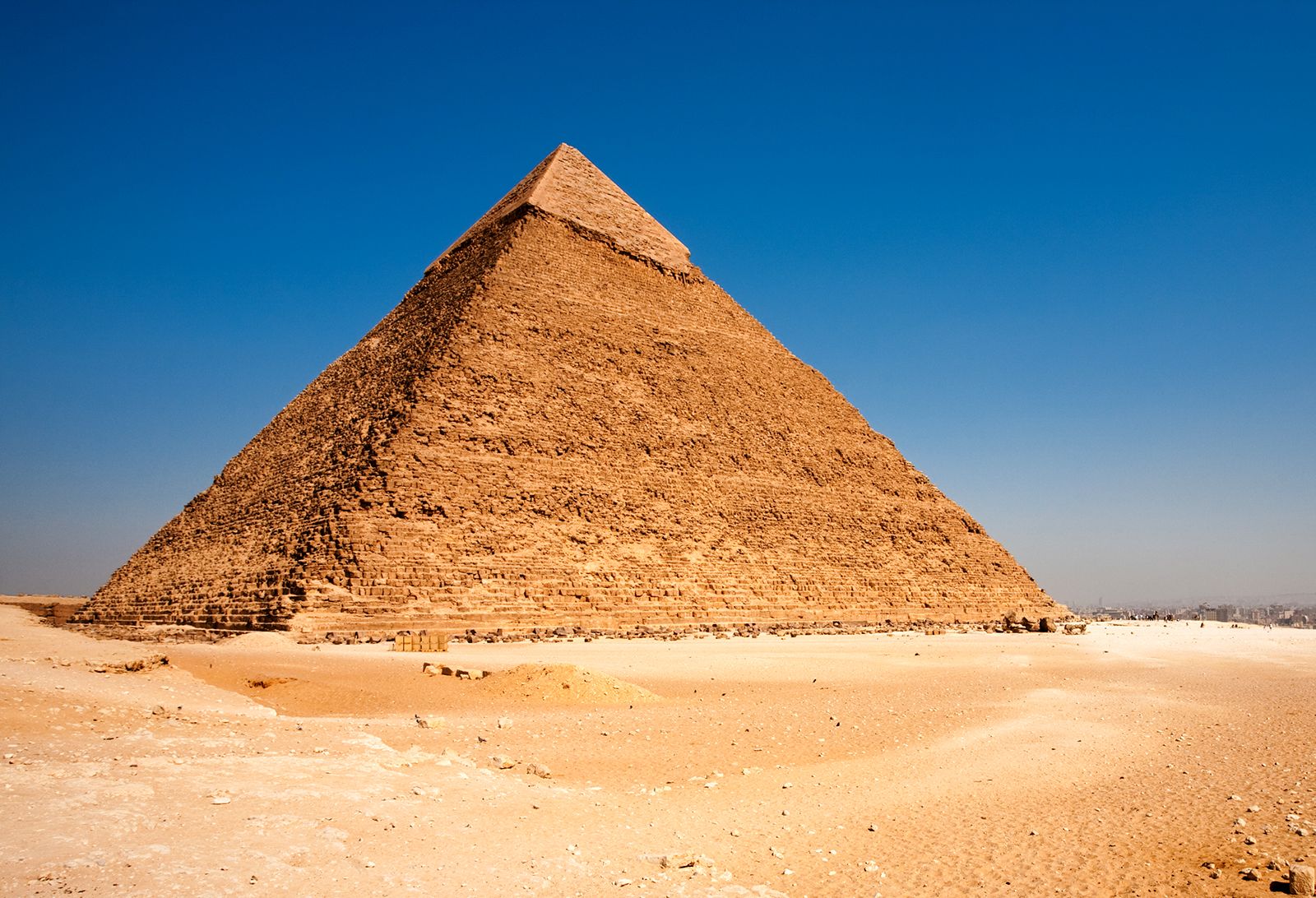
Few structures on Earth ignite the imagination like the pyramids rising from the sands of Giza. The Great Pyramid, built for the Pharaoh Khufu during Egypt’s Fourth Dynasty, stands as one of the most astonishing engineering achievements in human history. For more than 4,500 years, it has endured wind, heat, conquest, and curiosity. It has been measured, mapped, scanned, and studied. And yet, despite all that scholarship, a persistent question lingers in the public imagination: how were these colossal monuments built?
Archaeology offers strong, evidence-based explanations grounded in excavations, inscriptions, experimental reconstructions, and engineering analysis. Workers’ villages have been discovered. Quarry marks and tools have been found. Ramps have been tested. Papyrus records have even described the transport of limestone blocks. And still, alternative theories flourish.
The pyramids are so vast, so geometrically precise, so seemingly timeless, that they tempt the human mind toward the extraordinary. When something appears almost superhuman, some assume it must have required superhuman help. Across decades and centuries, people have proposed ideas ranging from misunderstood ingenuity to outright fantasy.
In this article, we will explore ten of the most bizarre theories about how the pyramids were built. Each theory will be examined carefully, with scientific reasoning applied to separate imagination from evidence. The goal is not to mock curiosity, but to understand why such ideas arise—and why archaeology and physics offer far more grounded answers.
1. Alien Architects from the Stars
Perhaps the most famous bizarre theory claims that extraterrestrials built the pyramids. This idea was popularized in the twentieth century by writers such as Erich von Daniken in his book Chariots of the Gods?. The argument is simple: the pyramids are so advanced that ancient Egyptians could not have constructed them without help from technologically superior beings.
Supporters often point to the size of the stone blocks, the alignment of the pyramids with cardinal directions, and the precision of construction. They argue that such achievements exceed the capabilities of Bronze Age tools.
However, this theory collapses under scientific scrutiny. Archaeologists have found extensive evidence of quarrying techniques, copper tools, dolerite pounding stones, and sledges used to transport blocks. Worker villages near Giza show that thousands of laborers were housed and fed. Papyrus records discovered at Wadi al-Jarf describe the transportation of limestone blocks via the Nile.
Moreover, the alien theory underestimates ancient Egyptian knowledge. Aligning structures with cardinal directions can be accomplished through careful astronomical observation of circumpolar stars. Large stones can be moved using sledges over lubricated sand, as experimental archaeology has demonstrated.
The alien hypothesis provides no physical evidence—no artifacts, no tools, no remains—only an appeal to mystery. Science demands evidence. Without it, the theory remains fiction.
2. Lost Advanced Civilization Before Egypt
Another strange theory proposes that an advanced civilization existed before ancient Egypt and passed down pyramid-building knowledge. Some link this imagined civilization to the mythical Atlantis described by Plato.
According to this idea, survivors of a technologically superior culture taught Egyptians sophisticated engineering techniques that later vanished from history.
Archaeology, however, reveals a gradual development of pyramid construction. Early step pyramids, such as the one built for Djoser at Saqqara, show experimentation in design. Later pyramids evolved through trial and error. Bent pyramids and collapsed attempts demonstrate learning processes rather than inherited perfection.
There is no archaeological layer in Egypt showing evidence of a prior advanced global civilization. Tools, settlements, and construction methods evolve continuously from earlier periods. The narrative of a lost super-civilization lacks material evidence and contradicts the documented progression of Egyptian architecture.
3. Sound Levitation and Acoustic Lifting
A particularly imaginative theory claims that the Egyptians used sound waves to levitate stones. Proponents suggest that chants, musical instruments, or advanced acoustic knowledge could have neutralized gravity.
Physics does allow acoustic levitation under specific conditions. High-intensity sound waves can suspend tiny particles or droplets in laboratory settings. However, scaling this phenomenon to lift multi-ton limestone blocks is physically implausible.
The energy required to counteract gravity on such masses would be enormous. There is no evidence of ancient machinery capable of generating such focused acoustic power. Furthermore, no archaeological traces suggest experimentation with acoustic levitation on this scale.
While the concept fascinates the imagination, it conflicts with fundamental physical principles regarding energy density and wave propagation.
4. Psychic or Telekinetic Powers
Some theories claim that ancient priests or mystics used telekinesis—mind-over-matter abilities—to move stones into place. This idea often appears in mystical literature rather than scientific discourse.
Telekinesis has never been demonstrated under controlled experimental conditions. Decades of scientific testing in parapsychology have failed to produce reliable, repeatable evidence of mind-induced motion without physical interaction.
Physics describes forces—gravitational, electromagnetic, strong, and weak nuclear—that govern interactions. None allow for mental manipulation of matter at a distance without an intermediary mechanism.
The telekinesis theory reflects a human tendency to project supernatural explanations onto extraordinary achievements. Yet no empirical evidence supports its feasibility.
5. Pyramids as Ancient Power Plants
Another bizarre proposal suggests that the Great Pyramid functioned as a power plant. Popularized by writers inspired by Nikola Tesla’s fascination with energy transmission, the theory claims the pyramid generated electricity using the Earth’s natural frequencies.
Some argue that the pyramid’s shape concentrated electromagnetic energy or harnessed vibrations from the planet.
Scientific examination finds no evidence of electrical infrastructure within the pyramid. No conductive materials, no wiring systems, and no residue indicating power generation have been found. The internal chambers show funerary design consistent with royal burial practices.
Additionally, the physics of electromagnetic energy transmission requires materials and technology far beyond what existed in ancient Egypt. The idea that limestone and granite alone could form a functional generator contradicts established electrical principles.
6. Water Elevators and Hydraulic Lifts
A more mechanically imaginative theory proposes that Egyptians used water-filled shafts to float stones upward inside the pyramid. According to this idea, internal canals allowed blocks to rise via buoyancy.
Hydraulic engineering did exist in ancient Egypt, particularly for irrigation. However, applying buoyancy to multi-ton stone blocks requires enormous sealed chambers and controlled water flow.
Excavations have revealed no internal water channels capable of supporting such a system. Furthermore, the structural integrity of the pyramid would have been compromised by large water-filled cavities.
While less fantastical than alien builders, the hydraulic lift theory lacks archaeological confirmation and engineering practicality.
7. Concrete Casting Instead of Stone Blocks
Some researchers have proposed that pyramid blocks were not quarried but cast in place using a form of ancient geopolymer concrete. The idea suggests that limestone rubble was dissolved and reconstituted into molds.
This theory is intriguing because it attempts a material explanation rather than a supernatural one. However, geological analysis of pyramid stones shows clear fossil structures and natural sedimentary layers consistent with quarried limestone.
Tool marks in quarries near Giza match the stone used in the pyramids. Transport records support quarrying rather than large-scale casting.
Although ancient civilizations used early forms of mortar and plaster, evidence overwhelmingly indicates that pyramid blocks were cut from natural limestone formations.
8. Magnetic Anti-Gravity Devices
A fringe theory claims that magnetic forces were used to lift stones. According to this idea, unknown magnetic technologies neutralized gravitational pull.
Magnetism can exert force on ferromagnetic materials such as iron. Limestone, however, is not strongly magnetic. Even if it were, generating magnetic fields powerful enough to lift multi-ton blocks would require immense energy and advanced materials.
No archaeological evidence of large-scale magnetic equipment exists from ancient Egypt. The physical properties of limestone alone make this theory scientifically untenable.
9. Giants or Superhuman Beings
Ancient myths often speak of giants. Some alternative theories suggest that physically enormous beings helped construct the pyramids.
Archaeological excavations of burial sites throughout Egypt reveal human remains consistent with typical ancient population heights. There is no skeletal evidence of a race of giants involved in pyramid construction.
The labor force that built the pyramids appears to have consisted of skilled workers organized into crews. Graffiti inside the Great Pyramid references work teams with names expressing pride and humor.
The giant theory reflects mythological storytelling rather than archaeological data.
10. Time Travelers from the Future
Perhaps the most imaginative theory suggests that time travelers from the future traveled back to ancient Egypt and built the pyramids using advanced technology.
While fascinating in science fiction, time travel into the past remains speculative in physics. Certain solutions to equations in general relativity allow for theoretical constructs such as closed timelike curves, but no empirical evidence suggests practical time travel has ever occurred.
There are no anomalous materials in the pyramids indicating futuristic manufacturing techniques. All evidence aligns with tools and materials available in the Old Kingdom period.
Time travel remains a captivating narrative device, but not a scientifically supported explanation.
The Real Story: Human Ingenuity
After exploring these bizarre theories, what remains is perhaps more inspiring than any fantasy. The pyramids were built by humans—organized, skilled, determined humans—using ingenuity, mathematics, teamwork, and perseverance.
Archaeological discoveries at workers’ settlements reveal structured labor systems. Experimental archaeology demonstrates that sledges, ramps, and coordinated manpower can move massive blocks. Recent findings of ramp systems near quarries show how stones could have been transported upward.
Physics supports these methods. Friction can be reduced by wetting sand. Mechanical advantage can be gained through inclined planes. With thousands of workers and careful planning, even immense stones become manageable.
The pyramids do not require aliens, lost civilizations, or supernatural forces. They require human intelligence applied systematically over decades.
Why Bizarre Theories Persist
Why do such unusual ideas endure? Part of the answer lies in wonder. The pyramids inspire awe. They appear timeless and almost impossible. When confronted with greatness, the human mind sometimes seeks extraordinary explanations.
There is also a psychological tendency to underestimate ancient peoples. Modern society often equates technological sophistication with intelligence. Yet intelligence has always been present in humanity.
Bizarre theories flourish where knowledge gaps exist. They thrive in the space between curiosity and evidence. But as archaeology advances, that space grows smaller.
A Monument to Human Curiosity
The pyramids stand not only as tombs of pharaohs but as monuments to human curiosity and ambition. They demonstrate that ancient civilizations possessed remarkable engineering skill and organizational capacity.
Understanding how they were built does not diminish their wonder. On the contrary, recognizing that human hands shaped those stones deepens our respect.
Physics, archaeology, and engineering converge to tell a powerful story. Gravity pulled downward. Friction resisted motion. Muscles strained. Ramps rose. Stones settled into place with astonishing precision.
In the end, the most extraordinary explanation is also the simplest: people built the pyramids. And that truth is more inspiring than any tale of aliens or magic.
The pyramids do not belong to myth. They belong to history. They belong to science. And above all, they belong to humanity.