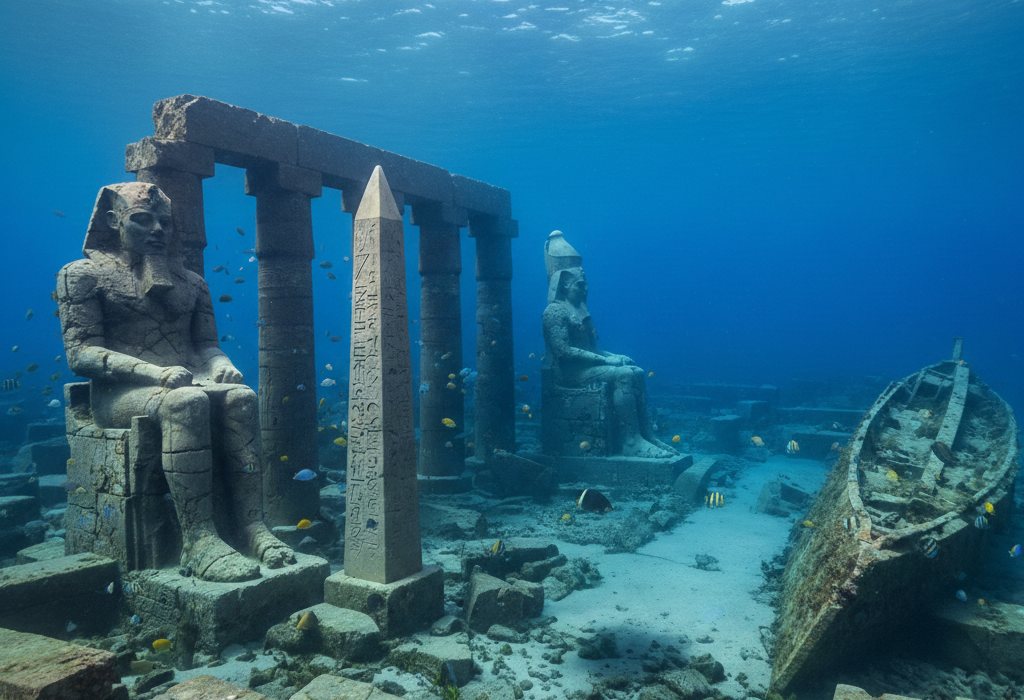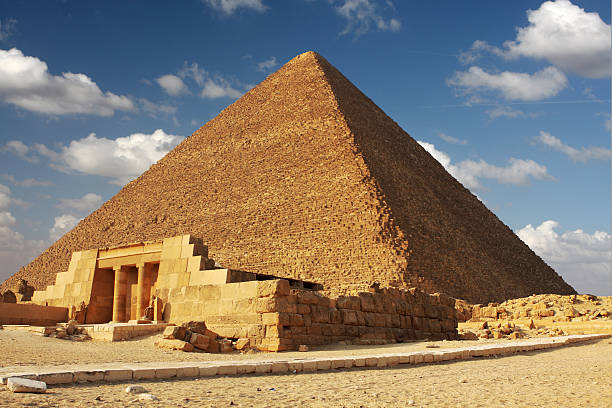
Few civilizations have captivated the human imagination as powerfully as Ancient Egypt. Rising along the fertile banks of the Nile River more than five thousand years ago, this civilization built colossal monuments, developed a sophisticated religion, mastered engineering, and left behind an artistic and cultural legacy that still resonates today. The pyramids of Giza stand as silent witnesses to a civilization whose achievements appear almost timeless. Hieroglyphs carved into stone walls tell stories of kings, gods, and journeys into the afterlife. Tombs filled with treasures and intricate carvings reveal a society obsessed with eternity.
And yet, despite centuries of research by archaeologists, historians, and scientists, many aspects of ancient Egypt remain shrouded in mystery. Excavations, carbon dating, satellite imaging, and advanced forensic analysis have solved countless puzzles about daily life, religion, politics, and architecture. But some questions remain stubbornly unanswered. Certain discoveries challenge our understanding of ancient technology, historical timelines, and cultural motivations.
These mysteries do not suggest supernatural forces or forgotten alien visitors, as popular myths sometimes claim. Instead, they reveal the complexity of a civilization that thrived for over three millennia and left behind layers of history that are still being uncovered. The true wonder lies not in fantastical explanations but in the remarkable ingenuity and cultural depth of the ancient Egyptians themselves.
Among the many enigmas of this ancient civilization, a handful stand out for their enduring mystery. These are questions that science continues to investigate but has not yet fully resolved.
1. The Construction Secrets of the Great Pyramid of Giza
Standing on the Giza Plateau just outside modern Cairo, the Great Pyramid of Giza is one of the most astonishing structures ever built by human hands. Constructed during the reign of Pharaoh Khufu around 2600 BCE, it originally stood about 146 meters tall and remained the tallest man-made structure in the world for more than 3,800 years.
The pyramid contains approximately 2.3 million limestone and granite blocks, each weighing between two and fifteen tons, with some granite beams weighing more than seventy tons. The precision of its construction is extraordinary. The base of the pyramid is aligned almost perfectly with the cardinal directions—north, south, east, and west—with an accuracy that rivals modern surveying.
For decades, scholars have debated how the ancient Egyptians managed to construct such a massive and geometrically precise structure using the tools available at the time. Archaeological evidence shows that copper tools, stone hammers, wooden sledges, and human labor were used extensively in quarrying and transporting stone. Workers’ villages discovered near Giza confirm that thousands of skilled laborers and craftsmen were involved in the construction process.
But the exact methods used to lift and place massive stones remain a subject of debate. Various ramp theories have been proposed. Some researchers suggest a straight ramp leading up the pyramid as it was built. Others propose spiral ramps wrapping around the structure or internal ramps hidden within the pyramid itself.
Recent discoveries have provided intriguing clues. In 2013, archaeologists discovered the diary of an ancient Egyptian official named Merer in the port of Wadi al-Jarf on the Red Sea coast. The papyrus describes transporting limestone blocks along the Nile to Giza for the construction of Khufu’s pyramid. This document confirms the complex logistical organization behind the project.
Even with these discoveries, the full construction process is not entirely understood. How exactly the Egyptians moved and positioned the heaviest stones at great heights remains one of the most fascinating engineering puzzles in ancient history.
The Great Pyramid stands not only as a tomb but as a symbol of human ambition, ingenuity, and the enduring mystery of ancient technology.
2. The True Purpose of the Great Sphinx
Near the pyramids of Giza lies another monument that has puzzled historians for centuries: the Great Sphinx. Carved from a single massive limestone outcrop, the Sphinx depicts a reclining lion with a human head, believed by most Egyptologists to represent Pharaoh Khafre.
Stretching roughly seventy-three meters long and twenty meters high, the Sphinx is one of the largest statues ever created in the ancient world. Its weathered face gazes eastward toward the rising sun, silently guarding the pyramids behind it.
The prevailing theory among scholars is that the Sphinx was constructed during the reign of Khafre around 2500 BCE as part of his pyramid complex. Nearby temples and causeways support this timeline, and stylistic similarities between the Sphinx’s face and statues of Khafre reinforce the association.
However, the true purpose of the Sphinx remains uncertain. Unlike pyramids, which served as royal tombs, the Sphinx does not contain burial chambers. It appears to have had a symbolic or religious function.
Many researchers believe the Sphinx represented a form of the sun god, possibly connected with the deity Ra or the god Harmakhis, a manifestation of the rising sun. Ancient inscriptions from the New Kingdom refer to the Sphinx as “Horus of the Horizon,” suggesting its role in solar worship.
Yet questions remain. The Sphinx has undergone extensive erosion over thousands of years, and some geologists have argued that certain weathering patterns resemble water erosion rather than wind erosion. This observation has led to controversial suggestions that the monument may be older than the surrounding pyramids.
Most Egyptologists dispute these claims, pointing to archaeological evidence linking the Sphinx to Khafre’s construction projects. However, the debate highlights how much remains unknown about the monument’s original meaning and symbolism.
The Sphinx continues to guard its secrets, silently watching the desert sunrise just as it did thousands of years ago.
3. The Mystery of the Pyramid Shafts
Inside the Great Pyramid are narrow shafts extending from the King’s Chamber and the Queen’s Chamber. These shafts are too small for human passage, measuring only about twenty centimeters wide, yet they run for dozens of meters through the pyramid’s interior.
For many years, scholars believed these shafts served as ventilation passages. However, the shafts from the Queen’s Chamber do not actually reach the outside of the pyramid, which raises questions about their true purpose.
Researchers using robotic probes have explored these shafts and discovered small stone doors with copper handles blocking their ends. Behind one of these doors, another sealed chamber was found, suggesting the shafts were deliberately constructed as symbolic pathways rather than simple ventilation ducts.
Some Egyptologists believe the shafts had a religious or astronomical function. In ancient Egyptian belief, the soul of the deceased pharaoh was thought to ascend to the heavens after death, joining the eternal stars. The shafts may have been aligned with specific stars associated with divine rebirth and immortality.
Studies have suggested that the southern shaft of the King’s Chamber points toward the constellation Orion, which the Egyptians associated with the god Osiris, ruler of the afterlife. The northern shaft may align with circumpolar stars, which never set below the horizon and were considered symbols of eternity.
Despite these theories, the exact purpose of the pyramid shafts remains uncertain. The discovery of sealed doors inside the shafts suggests that deeper symbolic meanings may still be hidden within the pyramid’s architecture.
Modern technology continues to explore these mysterious passages, offering the possibility that new chambers or inscriptions could one day reveal their true function.
4. The Lost Secrets of Egyptian Mummification
Ancient Egyptian mummification remains one of the most remarkable funerary practices in human history. The Egyptians believed that preserving the body was essential for survival in the afterlife. Through a complex embalming process, they transformed human remains into remarkably well-preserved mummies capable of lasting thousands of years.
The basic steps of mummification are known from ancient texts and archaeological evidence. Embalmers removed internal organs, dried the body with natron salts, and wrapped it carefully in linen bandages. Amulets and protective charms were placed within the wrappings, and elaborate rituals accompanied the process.
Yet despite this knowledge, certain aspects of mummification remain mysterious.
One puzzle concerns the precise chemical composition of the resins and oils used in embalming. Recent scientific studies using mass spectrometry have revealed that these substances included plant oils, tree resins, beeswax, and bitumen. Some ingredients appear to have been imported from distant regions, including the eastern Mediterranean and possibly Southeast Asia.
This suggests that ancient Egypt participated in long-distance trade networks far more extensive than once believed. However, the exact recipes used by embalmers varied widely and were closely guarded professional secrets.
Another mystery involves the remarkable preservation quality achieved in certain royal mummies. Some bodies show evidence of advanced techniques that allowed soft tissues and facial features to survive for millennia.
How embalmers refined these techniques over centuries—and why certain methods were abandoned or modified—remains an active area of research.
Mummification was not merely a technical process. It was deeply tied to religious beliefs about resurrection, divine transformation, and the eternal journey of the soul.
In many ways, the art of mummification represents a combination of science, ritual, and spiritual philosophy that modern scholars are still striving to fully understand.
5. The Sudden Disappearance of the Amarna Civilization
One of the most dramatic and puzzling chapters in Egyptian history occurred during the reign of Pharaoh Akhenaten in the fourteenth century BCE.
Akhenaten introduced a radical religious revolution. Rejecting the traditional pantheon of Egyptian gods, he promoted the worship of a single deity known as Aten, represented by the sun disk. This shift toward monotheism was unprecedented in Egyptian history.
To support this new religious vision, Akhenaten built a completely new capital city called Akhetaten, located at modern-day Amarna. The city was constructed rapidly and featured temples, palaces, administrative buildings, and residential neighborhoods.
For a brief period, Amarna flourished as the center of Egypt’s political and religious life. Art from this period adopted a distinctive style, depicting the royal family in unusually naturalistic poses.
Then, almost as suddenly as it had appeared, the Amarna civilization vanished.
After Akhenaten’s death, the traditional religious system was restored. His successors—including the young pharaoh Tutankhamun—abandoned Amarna and returned the capital to Thebes. Akhenaten’s monuments were dismantled, his name was removed from official records, and his religious reforms were condemned as heresy.
Archaeologists have uncovered many details about this period, yet the motivations behind the sudden rise and fall of the Amarna experiment remain mysterious. Why did Akhenaten attempt such a radical transformation of Egyptian religion? How widely accepted were his reforms among the population? And why did the entire system collapse so quickly after his death?
The ruins of Amarna offer a rare snapshot of a short-lived cultural revolution that shook one of the world’s most stable civilizations.
Even today, historians continue to debate whether Akhenaten was a visionary religious reformer, a political strategist, or a ruler whose ideas were simply too radical for his time.
The Endless Fascination of Ancient Egypt
Ancient Egypt continues to fascinate the modern world not because it is unknowable, but because it is endlessly rich in complexity. Every discovery adds new layers to our understanding while raising new questions.
The mysteries surrounding the pyramids, the Sphinx, hidden architectural features, funerary practices, and historical revolutions remind us that ancient civilizations were far more sophisticated than we sometimes imagine.
Science has solved many puzzles of the ancient world, yet the past still holds secrets waiting to be uncovered beneath desert sands and buried temples. Archaeologists armed with modern technologies—from ground-penetrating radar to DNA analysis—are steadily revealing new pieces of the ancient Egyptian story.
But perhaps part of the allure of Egypt lies in the fact that not everything can be explained immediately. The monuments, tombs, and inscriptions invite us to explore, question, and imagine the lives of people who lived thousands of years ago.
The ancient Egyptians believed that memory was a form of immortality. As long as a name was remembered, a person’s spirit endured.
In that sense, the civilization of the Nile has achieved the greatest immortality of all. Its mysteries continue to live in the curiosity of every generation that seeks to understand the past.