Long before human civilization appeared on Earth, a vast and extraordinary world existed across the landscapes of North America. During the Mesozoic Era, which stretched from about 252 million to 66 million years ago, this continent was home to some of the most remarkable animals that ever lived. Towering predators, armored herbivores, horned giants, and duck-billed grazers roamed ancient forests, river plains, and coastal environments. Their bones lay hidden in sedimentary rock for tens of millions of years until scientific curiosity and careful excavation revealed their stories.
The discovery of dinosaurs in North America played a crucial role in shaping modern paleontology. During the nineteenth century, fossil hunters explored the badlands and deserts of the United States and Canada, uncovering enormous skeletons that transformed scientific understanding of prehistoric life. These discoveries were not simply exciting curiosities; they provided evidence for evolution, extinction, and the deep history of life on Earth.
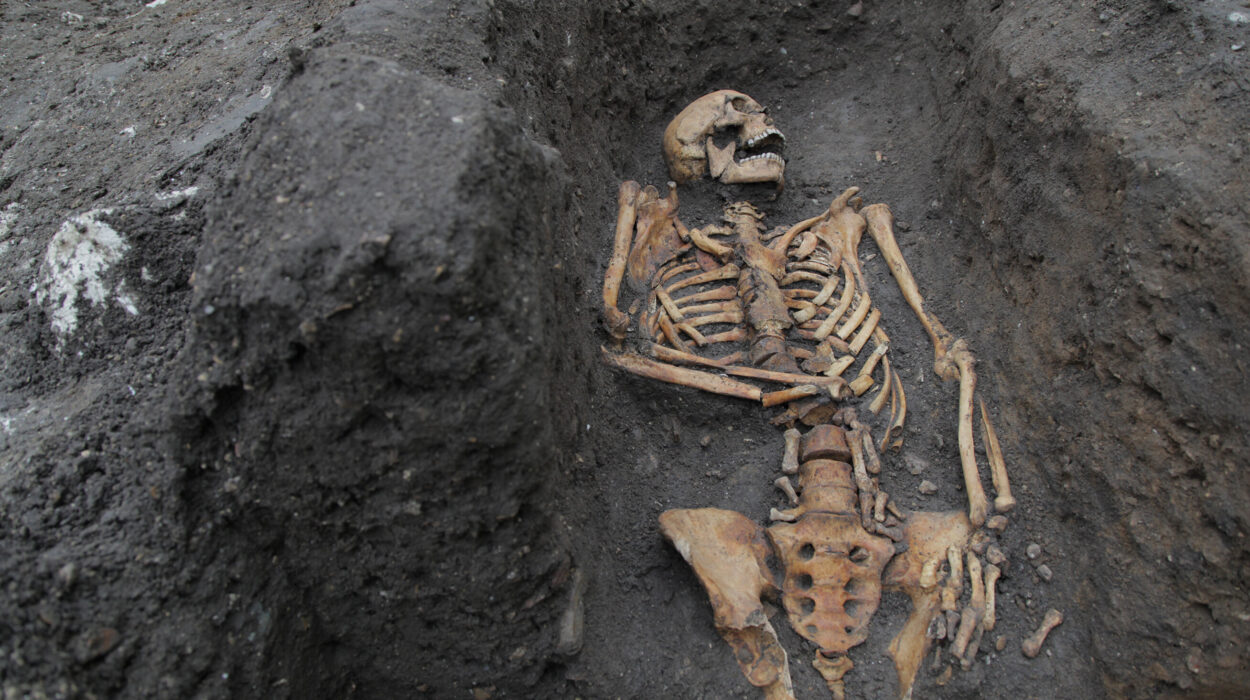
Fossils are more than bones turned to stone. They are records of ecosystems long vanished. Sediment layers, mineral composition, fossilized footprints, and preserved skeletons allow scientists to reconstruct how dinosaurs moved, what they ate, how they grew, and how they interacted with their environment. Through geology, anatomy, and comparative biology, paleontologists can piece together entire ancient worlds.
Among the many species discovered in North America, some have become especially famous because of their size, unique anatomy, scientific importance, or cultural impact. These dinosaurs not only advanced scientific research but also captured the imagination of people across the world.
The following ten dinosaurs represent some of the most well-known species ever discovered on the North American continent. Each one tells a different story about evolution, adaptation, and the dynamic environments of the ancient past.
1. Tyrannosaurus rex
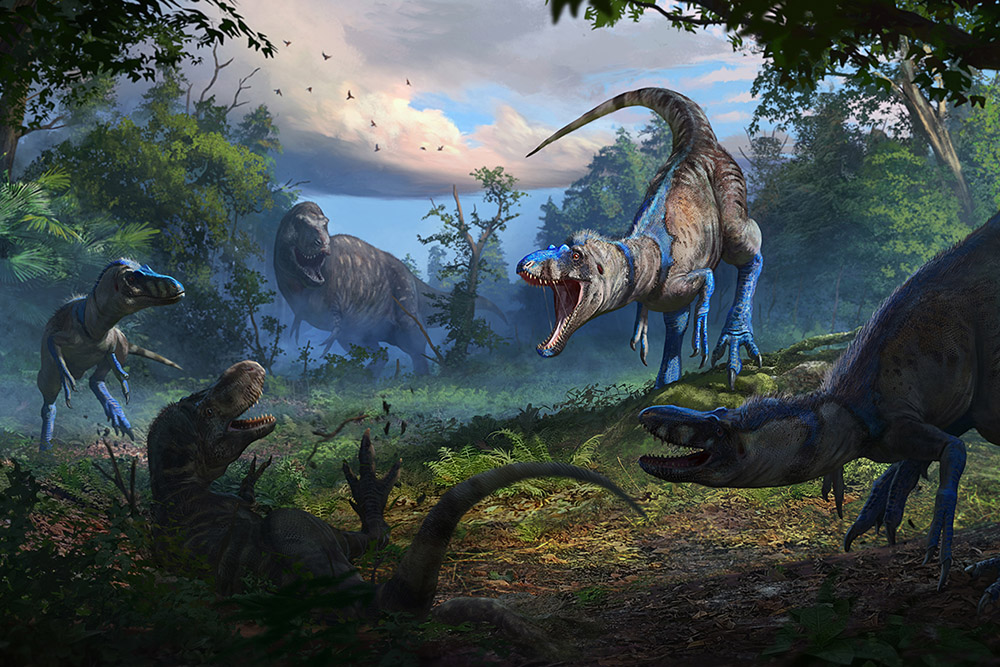
Few prehistoric animals command as much attention as Tyrannosaurus rex. Often called the “king of the tyrant lizards,” this massive carnivorous dinosaur lived during the Late Cretaceous period around 68 to 66 million years ago in what is now western North America.
Tyrannosaurus rex was among the largest land predators ever to exist. Adult individuals could reach lengths of about 12 meters and weigh more than 8 metric tons. Its massive skull, sometimes exceeding 1.5 meters in length, housed some of the strongest bite forces known in the animal kingdom.
The teeth of Tyrannosaurus were thick, serrated, and shaped like curved spikes designed to crush bone. Fossilized bite marks on other dinosaur bones confirm that it could fracture skeletons with tremendous force. Some paleontologists believe this allowed Tyrannosaurus to consume nearly entire carcasses, including bones and cartilage.
Despite its enormous size, the animal possessed relatively small forelimbs with only two fingers. The function of these arms remains debated, though they were surprisingly powerful for their size.
The first fossils of Tyrannosaurus rex were discovered in 1902 in Montana by fossil hunter Barnum Brown. Since then, numerous skeletons have been uncovered, including exceptionally preserved specimens that provide insights into growth rates, pathology, and behavior.
Studies of bone growth rings show that Tyrannosaurus experienced rapid growth during adolescence. Juveniles were more lightly built and likely filled different ecological roles before reaching adult size.
Today, Tyrannosaurus rex stands as one of the most extensively studied dinosaurs in the world and remains a symbol of prehistoric power.
2. Triceratops
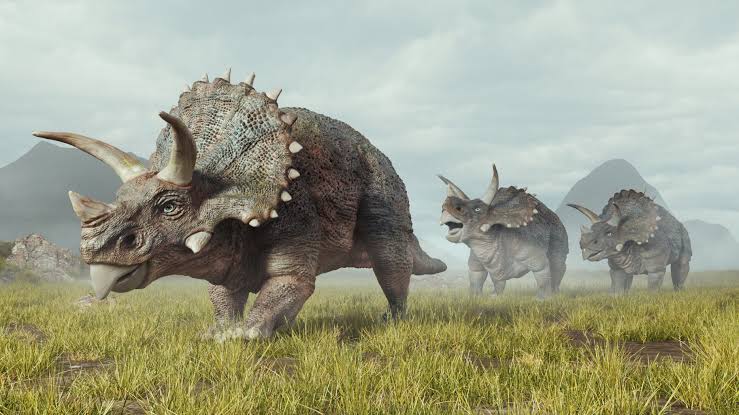
Among herbivorous dinosaurs, Triceratops is perhaps the most recognizable. This massive plant-eater lived at the end of the Cretaceous period, sharing its environment with Tyrannosaurus rex.
Triceratops belonged to a group known as ceratopsians, or horned dinosaurs. Its name means “three-horned face,” referring to the two long horns above the eyes and a shorter horn on the nose. Behind the skull extended a large bony frill that protected the neck and may have played roles in display or species recognition.
Adult Triceratops could reach lengths of nearly 9 meters and weigh several tons. Its body was supported by four sturdy legs, and its head alone could measure over two meters long.
The beak of Triceratops resembled that of a modern parrot and was used to clip vegetation. Behind the beak were rows of specialized teeth arranged in dental batteries capable of slicing tough plant material.
Fossils of Triceratops are extremely abundant in Late Cretaceous rock formations of North America. This abundance has allowed scientists to study variation among individuals, revealing how the skull and horns changed as animals matured.
The horns may have served defensive purposes against predators, but they also likely played roles in competition and social display. Evidence of healed injuries on skulls suggests that individuals sometimes engaged in horn-to-horn combat.
Triceratops represents the diversity and evolutionary success of herbivorous dinosaurs during the final chapter of the Age of Dinosaurs.
3. Stegosaurus
Stegosaurus lived much earlier than Tyrannosaurus or Triceratops, inhabiting North America during the Late Jurassic period around 155 to 150 million years ago. It is instantly recognizable for the two rows of large plates running along its back and the spiked tail known as a thagomizer.
This dinosaur had a small head, a bulky body, and powerful hind legs. Its forelimbs were shorter, giving the body a distinctive sloping posture. Although it could grow about 9 meters long, its brain was relatively small compared to its body size.
The plates along the back of Stegosaurus were not armor in the traditional sense. Instead, they were thin bony structures covered by skin. Scientists believe these plates may have been used for display, species recognition, or temperature regulation.
At the end of its tail were four long spikes capable of delivering powerful defensive strikes. Fossil evidence shows that these spikes could injure predators. Some fossils of large carnivorous dinosaurs contain puncture wounds consistent with Stegosaurus tail spikes.
Stegosaurus fossils were first discovered in Colorado in the late nineteenth century. The unusual anatomy of this dinosaur fascinated early paleontologists and continues to intrigue researchers today.
Its combination of plates, spikes, and unusual body proportions makes Stegosaurus one of the most iconic dinosaurs ever discovered.
4. Allosaurus
Before Tyrannosaurus rex dominated Late Cretaceous ecosystems, another large predator ruled North America during the Late Jurassic: Allosaurus.
Allosaurus lived around 155 million years ago and was one of the most abundant carnivorous dinosaurs of its time. Fossils are particularly common in the Morrison Formation, a rock unit famous for preserving Jurassic dinosaurs across the western United States.
Adult Allosaurus measured about 8 to 10 meters in length. Its skull contained dozens of sharp, serrated teeth designed for slicing flesh. Unlike the crushing bite of Tyrannosaurus, Allosaurus likely relied on slashing attacks.
The skeleton of Allosaurus reveals powerful hind legs and relatively long arms equipped with three large claws. These arms may have helped grasp prey.
Some paleontologists propose that Allosaurus hunted large herbivores such as sauropods, possibly using ambush strategies. Bite marks on dinosaur bones support the idea that these predators fed on large animals.
Hundreds of Allosaurus fossils have been discovered, including bonebeds containing multiple individuals. These sites have provided valuable information about growth, injury, and population dynamics.
Allosaurus represents one of the most successful carnivorous dinosaurs of the Jurassic world.
5. Ankylosaurus
Ankylosaurus was among the most heavily armored animals ever to walk the Earth. This herbivorous dinosaur lived during the Late Cretaceous period and evolved an extraordinary defense system.
Its body was covered in thick bony plates embedded within the skin. These plates formed protective armor across the back and sides. Even the eyelids contained bony elements for protection.
The most striking feature of Ankylosaurus was its tail club. At the end of the tail, several fused vertebrae formed a massive bony knob capable of delivering powerful blows.
Biomechanical studies suggest that this club could generate enough force to break bones. It may have been used to defend against predators or in contests between individuals.
Ankylosaurus had a low, broad body and walked on four short legs. Its skull was wide and heavily armored, with small openings for eyes and nostrils.
The discovery of Ankylosaurus fossils revealed how evolution can produce extreme defensive adaptations. Rather than relying on speed or size, this dinosaur survived through armor and powerful tail strikes.
6. Diplodocus
Diplodocus was one of the longest dinosaurs ever discovered. This enormous herbivore lived during the Late Jurassic period and belonged to the group known as sauropods, characterized by long necks, long tails, and massive bodies.
Some individuals may have reached lengths exceeding 25 meters. Despite this immense size, Diplodocus had a relatively slender build compared to other giant sauropods.
Its long neck allowed it to reach vegetation across a wide area without moving its body frequently. The tail was equally long and flexible, possibly used for balance or communication.
Diplodocus possessed peg-like teeth located at the front of its jaws, suggesting it stripped leaves from branches rather than chewing extensively.
The first complete skeletons of Diplodocus were discovered in the American West during the late nineteenth century. These discoveries captured global attention and led to casts being displayed in museums across Europe.
Diplodocus became one of the earliest dinosaurs widely recognized by the public and remains a classic example of sauropod gigantism.
7. Spinosaurus
Spinosaurus is often associated with North Africa, where the first fossils were discovered. However, remains attributed to this unusual dinosaur have also been found in North American deposits, making it relevant to discussions of the continent’s prehistoric fauna.
Spinosaurus lived during the Cretaceous period and possessed a distinctive sail-like structure along its back formed by elongated neural spines. This structure may have served for display, thermoregulation, or species recognition.
Unlike most large theropods, Spinosaurus had a long, narrow snout filled with conical teeth adapted for catching fish. Fossil evidence suggests that it spent significant time in aquatic environments.
Recent research indicates that Spinosaurus may have had adaptations for swimming, including dense bones and possibly a paddle-like tail.
The unusual anatomy of Spinosaurus has reshaped understanding of dinosaur ecology, demonstrating that some large predators exploited aquatic habitats.
8. Parasaurolophus
Parasaurolophus was a duck-billed herbivore famous for the long, backward-curving crest extending from its skull. This dinosaur lived during the Late Cretaceous period and inhabited regions of western North America.
The crest contained complex internal air passages connected to the nasal cavity. Scientists believe it functioned as a resonating chamber capable of producing deep, trumpet-like sounds.
Computer modeling of the crest’s structure suggests that Parasaurolophus could produce low-frequency calls used for communication across long distances.
The body of Parasaurolophus resembled that of other hadrosaurs: a large herbivore capable of walking on both two and four legs. Its jaws contained hundreds of teeth arranged in grinding batteries ideal for processing plant material.
The discovery of Parasaurolophus fossils provided key insights into dinosaur communication and social behavior.
9. Velociraptor
Velociraptor is one of the most famous small predatory dinosaurs. Although many fossils come from Asia, closely related species and evidence of similar animals have been found in North America, revealing a broader distribution of this group.
Velociraptor belonged to the dromaeosaurids, a family of agile predators characterized by a large sickle-shaped claw on each hind foot. This claw was likely used to grasp or pin prey.
The skeleton of Velociraptor indicates a lightweight body, long arms, and a stiff tail that aided balance during rapid movement.
Fossil discoveries have shown that many dromaeosaurids possessed feathers, strengthening the evolutionary connection between dinosaurs and modern birds.
Velociraptor represents a different style of predation compared to massive theropods. Instead of overwhelming size, it relied on speed, agility, and specialized claws.
10. Apatosaurus
Apatosaurus was another giant sauropod that lived during the Late Jurassic period. It was once mistakenly called Brontosaurus in early scientific literature, a name that became famous in popular culture.
This enormous herbivore could reach lengths of more than 20 meters and weighed many tons. Its long neck allowed it to feed on vegetation high above the ground or across wide areas.
The body of Apatosaurus was massive and supported by column-like legs similar to those of elephants. Its tail was long and powerful, possibly used for defense or communication.
Studies of bone structure indicate that sauropods like Apatosaurus grew rapidly and required enormous quantities of plant material to sustain their bodies.
The discovery of Apatosaurus played a major role in revealing the existence of truly gigantic land animals in Earth’s history.
The Scientific Importance of North American Dinosaur Discoveries
The discovery of dinosaurs in North America fundamentally shaped paleontology. During the late nineteenth century, intense fossil hunting—sometimes called the “Bone Wars”—led to the discovery of many iconic species.
These discoveries helped scientists understand the diversity of dinosaur groups, their evolutionary relationships, and the ecosystems in which they lived.
Sedimentary rock formations across the continent preserve fossils from different periods of the Mesozoic Era. By studying these layers, scientists can reconstruct changes in climate, geography, and biodiversity over tens of millions of years.
Modern research uses advanced techniques including CT scanning, isotopic analysis, and computer modeling. These methods allow paleontologists to investigate dinosaur physiology, growth patterns, and even aspects of behavior.
Dinosaurs and the Story of Evolution
Dinosaurs are not merely extinct curiosities. They represent a major chapter in the evolutionary history of life. Birds are now recognized as direct descendants of small feathered theropod dinosaurs.
This realization has transformed our understanding of dinosaurs. Instead of slow, reptile-like creatures, many are now interpreted as active, dynamic animals with complex behaviors.
The fossils discovered across North America continue to contribute to this evolving scientific picture.
The Continuing Search Beneath Stone
Even after more than a century of discovery, many dinosaurs remain unknown. New species are still being described every year from rock formations across North America.
Each fossil discovery adds another piece to the puzzle of ancient ecosystems. Bones buried millions of years ago still hold information waiting to be revealed.
The famous dinosaurs described here are not only symbols of prehistoric life—they are reminders that the Earth beneath our feet contains an immense archive of natural history.
And somewhere, beneath layers of stone and time, new discoveries are still waiting.