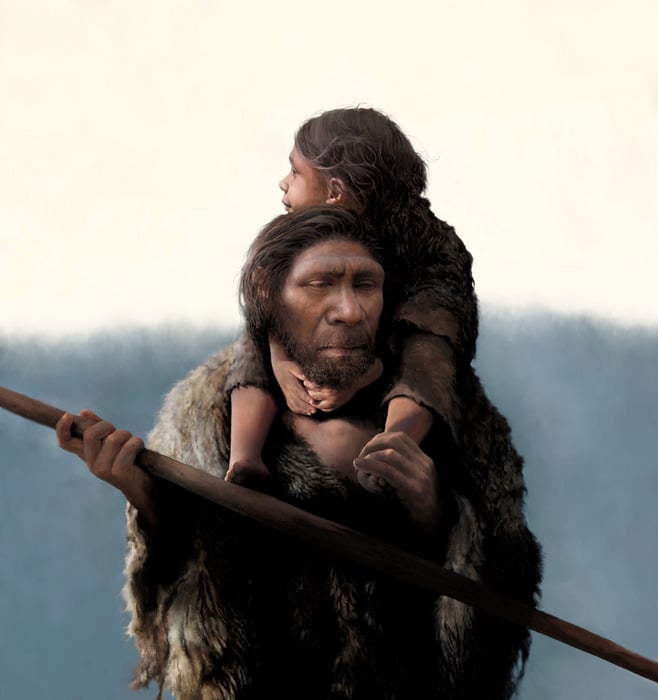
For more than a century, the word “Neanderthal” was used as an insult. It conjured images of hunched, brutish figures dragging clubs through frozen landscapes, incapable of thought beyond survival. They were cast as evolutionary failures—side branches on the human family tree that flickered briefly and disappeared.
But science has rewritten that story.
The Neanderthals, known formally as Homo neanderthalensis, were not crude caricatures of humanity. They were human—different from us, yes, but astonishingly similar in ways that grow more profound with every fossil, every artifact, and every strand of ancient DNA recovered from caves across Europe and western Asia.
They lived for hundreds of thousands of years in Ice Age climates that would challenge even modern humans. They hunted, crafted tools, cared for their injured, and left traces of symbolic thought. Most astonishing of all, they did not entirely vanish. Many people alive today carry small fragments of Neanderthal DNA within their own genomes, a quiet testament to ancient encounters between their kind and ours.
The story of the Neanderthals is no longer a story of inferiority. It is a story of kinship. It is about how close we came to sharing the Earth with another kind of human. It is about how deeply intertwined our histories truly are.
Here are seven ways the Neanderthals were remarkably like us.
1. They Walked the Earth as Humans, Not Beasts
The first Neanderthal fossils were discovered in 1856 in Germany’s Neander Valley, and early interpretations were shaped by limited evidence and cultural bias. Reconstructed skeletons were sometimes posed in stooped positions, reinforcing the myth that Neanderthals were half-ape creatures.
Modern paleoanthropology has corrected that image.
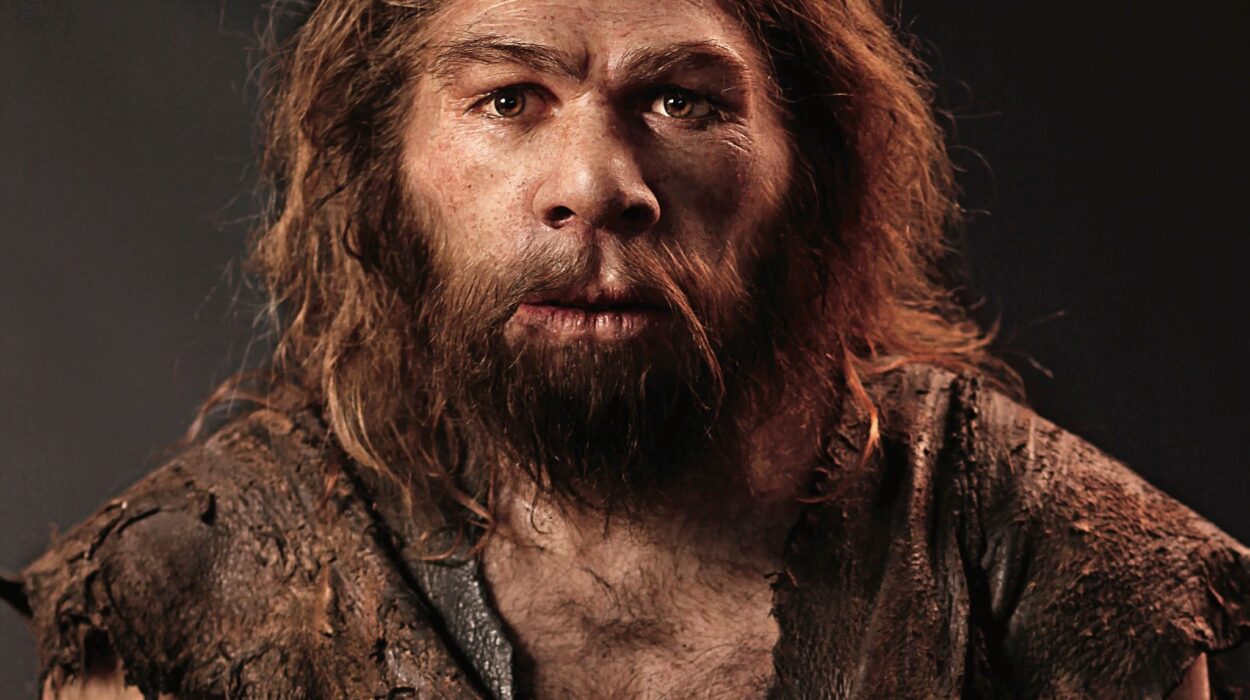
Neanderthals stood upright, just as we do. They had strong, muscular bodies, broad chests, and powerful limbs—adaptations well suited for survival in cold Ice Age environments. Their shorter, stockier builds helped conserve heat in frigid climates. Their skulls were long and low, with prominent brow ridges and large noses, features likely linked to warming and humidifying cold air before it reached their lungs.
Yet despite these physical differences, they were unmistakably human. Their brains were, on average, as large as or even slightly larger than those of modern humans. Brain size alone does not determine intelligence, but it makes clear that Neanderthals possessed complex neural capacities.
They were not evolutionary throwbacks. They were a distinct human lineage, closely related to Homo sapiens. Genetic evidence suggests that our lineages split from a common ancestor hundreds of thousands of years ago, evolving separately but in parallel.
When we look at a Neanderthal skull today, we are not looking at something alien. We are looking at a cousin.
2. They Used Sophisticated Tools and Technology
For decades, Neanderthal toolkits were considered crude compared to those of modern humans. But archaeological discoveries have shown that their technologies were both refined and purposeful.
Neanderthals produced stone tools associated with what archaeologists call the Mousterian industry. These tools were not random shards of rock. They were carefully shaped using prepared-core techniques that required planning and skill. Neanderthals selected specific types of stone, struck flakes at precise angles, and produced scrapers, points, and cutting implements tailored for specific tasks.
They used these tools to butcher large game animals such as mammoths, bison, and deer. They processed hides, worked wood, and likely constructed shelters. Evidence also suggests they used adhesives—such as birch bark tar—to attach stone points to wooden shafts, creating composite tools.
Fire was central to their survival. They controlled it for warmth, cooking, and protection. Cooking, in particular, changes food chemically, making it easier to digest and more energy-efficient. The ability to cook is a transformative human trait, and Neanderthals possessed it.
Their technological world was not static. It evolved over time, adapting to environmental shifts and available resources. Like us, they were innovators responding to challenges.
3. They Cared for the Sick and Injured
Perhaps one of the most moving pieces of evidence about Neanderthals comes from their skeletons.
Some fossilized remains show individuals who lived for years with severe injuries or disabilities—conditions that would have made independent survival nearly impossible. Healed fractures, signs of arthritis, and even cases of tooth loss suggest that these individuals were supported by others in their group.
One famous skeleton discovered in Iraq showed evidence of significant injury, including damage to an arm that likely left it useless. Yet this individual survived long after the injury occurred.
Care for the vulnerable is not trivial. It requires empathy, cooperation, and social bonds strong enough to justify investing time and resources in those who cannot immediately contribute. It suggests that Neanderthals lived in tight-knit communities where individuals mattered.
This capacity for compassion narrows the emotional distance between them and us. We are not alone in valuing our wounded and elderly. They did too.
4. They Had Language and Complex Communication
Did Neanderthals speak?
The full nature of their communication remains uncertain, but mounting evidence strongly suggests that they possessed some form of spoken language. Anatomical studies of the hyoid bone, a small bone in the throat associated with speech, show similarities between Neanderthals and modern humans. Genetic evidence also points to shared variants of the FOXP2 gene, which is linked to language abilities in humans.
Language is more than sound; it is structured communication, capable of expressing abstract ideas. The complexity of Neanderthal tool production, cooperative hunting, and social care would have been enormously facilitated by some system of communication.
Coordinating hunts of large animals requires planning. Teaching younger members how to knap stone tools requires demonstration and explanation. Maintaining social cohesion in small groups requires negotiation and shared understanding.
While we cannot hear their voices, the archaeological record suggests they were not silent.
Language may not have belonged exclusively to our species. It may have been shared, in some form, with our closest relatives.
5. They Created Art and Symbolic Objects
For a long time, symbolic behavior—such as art and ornamentation—was thought to be uniquely human. That belief has been steadily challenged.
Archaeological findings in Europe have revealed evidence that Neanderthals used pigments, collected shells, and possibly created simple ornaments. In some caves, engravings and markings appear to predate the arrival of modern humans, suggesting Neanderthal authorship.
Symbolic behavior implies abstract thought. It suggests that objects could represent ideas, identities, or beliefs. The use of pigments may have involved body decoration or marking objects for cultural reasons rather than purely practical ones.
If Neanderthals adorned themselves or created markings on cave walls, they were engaging in acts that transcend survival. They were expressing something—identity, belonging, perhaps even spirituality.
This capacity for symbolism blurs the boundary once thought to separate “us” from “them.” It reveals minds capable of imagination.
6. They Interbred with Modern Humans
One of the most profound discoveries in recent science came from the study of ancient DNA. Genetic analyses have shown that Neanderthals and modern humans did not merely encounter each other—they interbred.
When modern humans migrated out of Africa tens of thousands of years ago, they encountered Neanderthals in Europe and western Asia. These meetings were not always hostile or distant. They resulted in offspring.
Today, many people of non-African ancestry carry small percentages of Neanderthal DNA in their genomes. These genetic fragments influence aspects of our biology, from immune system responses to skin characteristics.
The existence of this shared DNA changes the narrative dramatically. Neanderthals are not an entirely separate, vanished branch of humanity. They are part of our genetic heritage.
In a very real sense, they survive in us.
This interbreeding also tells us something about how similar the two groups were. They were close enough biologically to produce fertile offspring. They recognized one another as potential mates, as social beings within shared landscapes.
The boundary between species, in this case, was permeable.
7. They Faced Extinction, Just as We Face Uncertainty
Around 40,000 years ago, Neanderthals disappeared from the fossil record. The reasons remain debated. Climate fluctuations during the last Ice Age likely played a role. Competition with expanding modern human populations may have contributed. Small population sizes could have made them vulnerable to environmental shocks.
Their extinction was not a simple story of inferiority. Neanderthals had survived harsh climates for hundreds of thousands of years. They were adaptable and resilient. But survival is never guaranteed.
Their disappearance reminds us that being human does not mean being invincible. Entire human lineages have vanished before. The Earth has hosted multiple kinds of humans, and now only one remains.
Or perhaps not only one.
Because through shared DNA, through archaeological echoes, through the bones and tools left behind in caves and river valleys, Neanderthals endure as part of the human story.
The Emotional Mirror
What makes the Neanderthals so compelling is not merely their anatomy or technology. It is the emotional mirror they hold up to us.
When we see evidence of them caring for the injured, we see empathy. When we see their tools, we see ingenuity. When we see possible art, we see imagination. When we examine our own DNA and find traces of them, we see connection.
They were not the caricatures once imagined. They were a different expression of humanity. Their lives were filled with challenges, relationships, learning, and loss. They raised children, mourned the dead, and adapted to changing worlds.
To study Neanderthals is to confront a deeper truth about ourselves. Humanity has never been a single, isolated thread. It has been a braided rope of lineages, branching and intertwining across time.
The story of Homo neanderthalensis is not a story of failure. It is a story of kinship, resilience, and shared destiny. It is a reminder that what we call “human” is broader and more diverse than we once believed.
And perhaps the greatest secret of the Neanderthals is this: they were never as different from us as we imagined. They were, in so many ways, us.