Across deserts, mountains, peat bogs, frozen valleys, and ancient tombs, the preserved bodies of the dead have endured long after their civilizations faded. Mummies are not merely relics of the past. They are biological time capsules. Their skin, bones, hair, clothing, and even the contents of their stomachs hold stories—about health, diet, violence, belief, climate, migration, and power. Modern science, using tools such as CT scanning, DNA analysis, radiocarbon dating, and chemical testing, has learned to read these stories with extraordinary detail.
Mummification sometimes occurred deliberately, as in ancient Egypt, where elaborate rituals were designed to prepare the body for the afterlife. In other cases, it happened naturally. Cold, dryness, salt, peat, or ice created conditions that halted decay. Each mummy is a frozen moment in time, a human presence that bridges centuries or millennia.
Here are ten famous mummies and the secrets they reveal—about their own lives and about the worlds they once inhabited.
1. Tutankhamun
When the nearly intact tomb of Tutankhamun was discovered in 1922 in Egypt’s Valley of the Kings, it stunned the world. Unlike many royal burials that had been looted, his resting place remained largely untouched. Inside were thousands of objects—chariots, jewelry, statues, weapons, and the now-iconic golden funerary mask. Yet the most important discovery was the mummy itself.
Tutankhamun ruled during the 18th Dynasty of ancient Egypt and died around the age of nineteen. For decades, his sudden death fueled speculation. Was he murdered? Did he suffer an accident? Modern medical imaging provided clearer answers. CT scans revealed that he had several health problems, including a clubfoot and evidence of bone disorders. Genetic studies suggest that his parents were closely related, likely siblings, a common practice in royal lineages that may have contributed to inherited health issues.
Earlier theories proposed that he died from a blow to the head, but more recent analyses suggest that a leg fracture, possibly sustained in an accident, became infected. DNA evidence has also indicated the presence of malaria parasites. The young king may have been weakened by disease and injury simultaneously.
Tutankhamun’s mummy has revealed more than the fate of a single pharaoh. It has illuminated the health consequences of royal inbreeding, the prevalence of infectious diseases in ancient Egypt, and the sophisticated embalming techniques used to preserve elite bodies for the afterlife. His preserved remains have transformed a golden mask into a deeply human story.
2. Ötzi
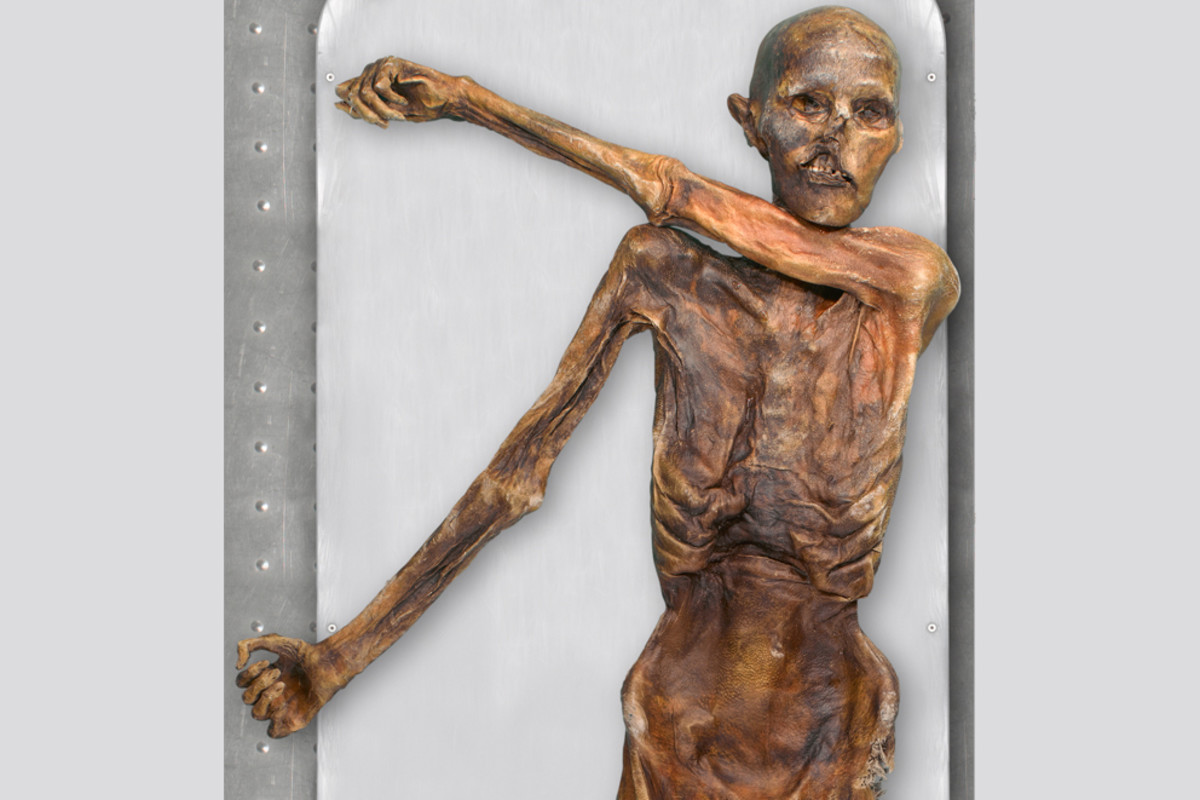
High in the Ötztal Alps, near the border of modern-day Italy and Austria, hikers stumbled upon a body emerging from melting ice in 1991. At first, it was thought to be a recent mountaineering accident. It soon became clear that this was a man who had died more than 5,000 years ago.
Ötzi, often called the Iceman, lived during the Copper Age. The cold, icy environment preserved his body, clothing, and tools with astonishing detail. He wore garments made from animal skins and carried a copper-bladed axe, a bow, arrows, and a small kit containing tools and fire-starting materials.
Scientific examination revealed that Ötzi was about 45 years old when he died. He suffered from arthritis and had hardened arteries, suggesting that heart disease existed long before modern lifestyles. Analysis of his stomach contents showed that he had recently eaten a meal of meat and grains. Even more dramatically, CT scans revealed an arrowhead lodged in his shoulder. The wound likely caused severe bleeding. A blow to the head may also have contributed to his death.
Ötzi’s body contains tattoos—simple lines and crosses—positioned on areas of the body that correspond to acupuncture points used to relieve pain. This suggests that early forms of therapeutic practices may have existed in prehistoric Europe.
The Iceman’s preserved DNA has provided insights into ancient European populations and genetic traits, including lactose intolerance and predisposition to certain diseases. From diet to violence to early medicine, Ötzi offers a vivid portrait of life in prehistoric alpine communities.
3. Ramesses II
Ramesses II, often called Ramesses the Great, ruled Egypt for more than six decades in the 13th century BCE. He was a powerful military leader and prolific builder, leaving monuments across the Nile valley. His mummy, discovered in 1881 in a royal cache, has provided valuable medical information about ancient royalty.
Examinations show that Ramesses II lived into his 80s, an impressive age for the time. His remains indicate that he suffered from severe dental problems. Abscesses and tooth decay likely caused chronic pain. He also had arthritis, which would have made movement increasingly difficult in his later years.
Studies of his mummy have revealed that embalmers used sophisticated techniques, removing internal organs and treating the body with resins and natron to prevent decay. His hair, which appears reddish, has been carefully examined to distinguish between natural pigmentation and post-mortem changes.
The longevity of Ramesses II suggests that elite status afforded better nutrition and medical care. His preserved body offers a window into aging in the ancient world and the resilience of a ruler who shaped Egyptian history.
4. Hatshepsut
Hatshepsut was one of the few women to rule ancient Egypt as pharaoh. For centuries after her death, her legacy was partially erased, possibly by political rivals. Identifying her mummy became a major historical puzzle.
In 2007, researchers announced that a previously unidentified mummy discovered in the Valley of the Kings was likely Hatshepsut. The identification relied in part on dental evidence. A tooth found in a canopic box bearing her name matched a missing tooth socket in the mummy’s jaw. DNA analysis supported the identification.
The mummy revealed that Hatshepsut may have suffered from obesity and possibly diabetes. Evidence suggests she had cancer, which may have contributed to her death. These findings have shifted our perception of her from a distant icon to a woman with complex health challenges.
Her preserved body bridges political history and medical science, restoring both her identity and her humanity.
5. Lady Dai
Discovered in 1971 in a tomb in Changsha, China, the mummy known as Lady Dai is one of the best-preserved ancient bodies ever found. She lived during the Han Dynasty and died around 168 BCE.
Her body was found in an airtight tomb filled with layers of charcoal and clay that helped prevent decay. Her skin remained soft, her joints flexible, and even her internal organs largely intact. Scientists were able to perform detailed autopsies.
Lady Dai was in her 50s at the time of death. She was overweight and suffered from cardiovascular disease. Evidence of gallstones and liver disease suggests a rich diet. The contents of her stomach indicated that she had eaten melon shortly before dying.
Her preservation has allowed researchers to study ancient Chinese medicine, burial practices, and elite lifestyles. The textiles and artifacts found with her also provide insight into Han Dynasty craftsmanship and belief systems.
Lady Dai’s body demonstrates how burial environments can preserve biological tissues for millennia, offering rare opportunities for medical investigation.
6. Rosalia Lombardo
In the Capuchin Catacombs of Palermo, Sicily, the preserved body of a young girl rests in a small coffin. Rosalia Lombardo died in 1920 at the age of two, likely from pneumonia. Her father, devastated by grief, sought out a skilled embalmer to preserve her body.
The embalming formula used on Rosalia included chemicals such as formalin, alcohol, and glycerin. The result is extraordinary preservation. Her eyelashes, hair, and facial features appear almost lifelike.
Rosalia’s case reveals how modern embalming chemistry can halt decomposition. It also illustrates the emotional motivations behind preservation. Unlike ancient ritual mummification, her preservation was driven by personal loss.
Scientific studies of her body have contributed to understanding the effects of embalming substances and the conditions required for long-term preservation.
7. Juanita
High atop Mount Ampato in Peru, archaeologists discovered the frozen body of a young Inca girl in 1995. Known as Juanita, she was likely sacrificed during a capacocha ritual, a religious ceremony performed by the Inca civilization.
The cold mountain environment preserved her body remarkably well. Analysis revealed that she was about 12 to 15 years old at death. CT scans showed evidence of a severe blow to the head, likely the cause of death.
Her hair and fingernails have provided information about her diet in the months leading up to the sacrifice. Chemical analysis indicates that she consumed increased amounts of maize and coca, substances associated with ritual preparation.
Juanita’s mummy reveals the spiritual beliefs and ceremonial practices of the Inca. It also underscores the emotional complexity of ritual sacrifice, showing that children were carefully selected and treated with reverence before being offered to the gods.
8. Tollund Man
In a peat bog in Denmark, the body of a man was discovered in 1950. The acidic, oxygen-poor conditions of the bog preserved his skin and facial features with haunting clarity. He lived during the Iron Age, around the 4th century BCE.
Tollund Man’s face appears peaceful, almost asleep. Yet evidence suggests he was executed by hanging. A leather noose was found around his neck. The bog preserved not only his body but also the last meal he ate—porridge made of grains and seeds.
The preservation of bog bodies reveals how chemical environments can halt decay while tanning skin. Tollund Man’s case has contributed to debates about ritual sacrifice in Iron Age Europe.
His expression, frozen in time, connects modern viewers to a distant past with unsettling intimacy.
9. Ginger
Long before the elaborate embalming of later dynasties, natural desert conditions in Egypt produced mummies. One of the earliest known examples is a predynastic individual nicknamed Ginger, displayed in the British Museum.
Buried in hot, dry sand around 3400 BCE, his body desiccated naturally. His reddish hair gave him his nickname. Modern CT scanning has revealed that he may have died from a violent attack, with evidence of stab wounds.
Ginger’s mummy shows that even before formal mummification practices developed, environmental conditions in Egypt could preserve bodies. His remains provide insight into early Egyptian society, violence, and burial customs.
10. Vladimir Lenin
Not all famous mummies are ancient. After his death in 1924, the body of Vladimir Lenin was embalmed and placed on public display in Moscow. Scientists developed specialized preservation techniques involving periodic chemical treatments to maintain his appearance.
Lenin’s preserved body represents a political and scientific project rather than a religious one. The techniques used to maintain his remains require ongoing maintenance, illustrating the difference between natural mummification and artificial preservation.
His mummy reveals how science can intersect with ideology, creating a physical symbol of power and continuity.
What Mummies Teach Us About Ourselves
These ten mummies span continents and millennia. Some were kings; others were children, farmers, or unnamed individuals. Their preserved bodies have revealed genetic lineages, diseases, diets, violence, rituals, technologies, and environmental conditions.
Mummies teach us that ancient people were biologically similar to us. They suffered from infections, arthritis, heart disease, and injuries. They loved, feared, worshipped, fought, and hoped. They lived within social systems that shaped their health and fate.
Modern imaging technologies allow scientists to examine mummies without unwrapping them. DNA analysis can trace ancestry and disease patterns. Isotope studies can reconstruct diets and migrations. Each advancement deepens the dialogue between past and present.
The study of mummies is not about sensationalism. It is about listening to the quiet testimony of human remains. These preserved bodies are not merely curiosities. They are individuals whose tissues have endured long enough to speak across time.
Through them, we learn not only about ancient civilizations but about the continuity of human experience. Beneath the wrappings, the ice, the peat, or the resin lies something familiar: the fragile, resilient human form. And in studying it, we come closer to understanding our shared story.