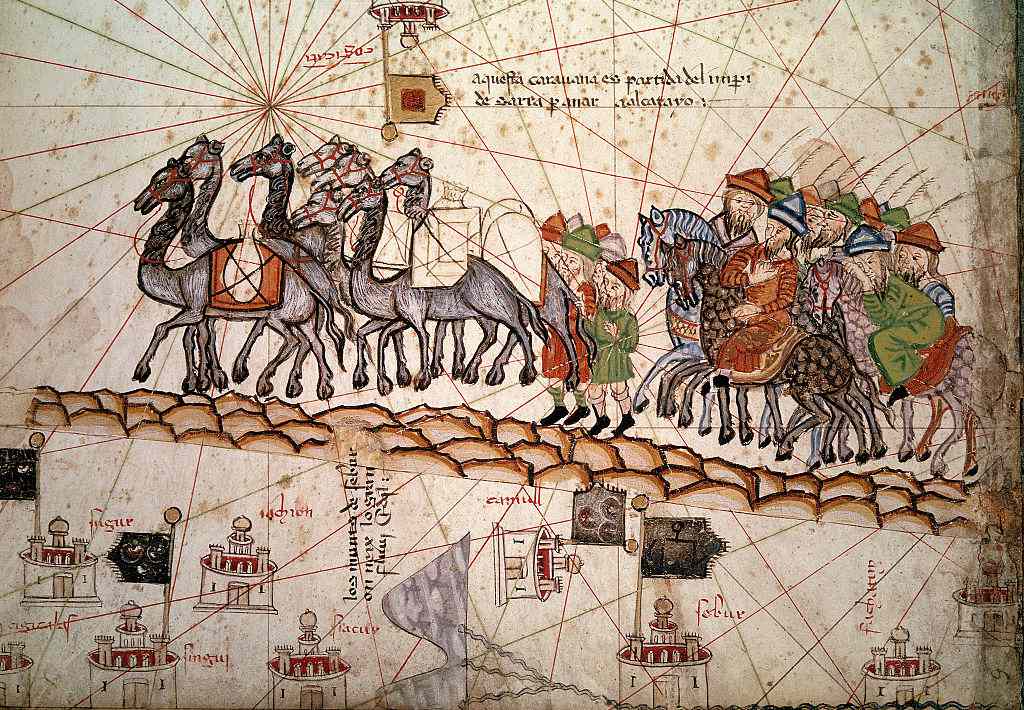
Across deserts, mountains, and vast grasslands once stretched one of the most influential trade networks in human history. The Silk Road was never a single road, nor was it merely a route for commerce. It was a vast web of cultural exchange, migration, diplomacy, religion, technology, and transformation connecting East Asia, Central Asia, the Middle East, and Europe for more than a thousand years.
Through these routes flowed silk, spices, precious metals, manuscripts, ideas, diseases, and beliefs. Entire civilizations rose in its shadow. Cities flourished in places that would otherwise have remained empty wilderness. Empires competed to control its passageways. Travelers crossed landscapes so extreme that survival itself became an achievement.
Yet for all its historical importance, the Silk Road remains filled with unanswered questions. Archaeological discoveries continue to reveal hidden settlements, unexpected cultural mixing, and unexplained disappearances. Environmental science uncovers climate shifts that reshaped trade. Linguistics reveals forgotten languages. Genetics uncovers patterns of migration that challenge traditional narratives.
The Silk Road is not simply history—it is an unfolding puzzle.
The following ten mysteries represent some of the most compelling scientific and historical questions still surrounding this ancient network. Each reflects not only what we know, but also how much remains uncertain.
1. The Vanishing Civilization of Loulan
On the eastern edge of the Tarim Basin once stood a thriving oasis kingdom that controlled a critical crossroads of trade. Ancient records describe Loulan as prosperous and strategically powerful. Yet at some point, it simply disappeared.
Archaeologists discovered the ruins in the early twentieth century through expeditions led by Aurel Stein. What they found was astonishing: abandoned structures, preserved wooden objects, and written documents that revealed a cosmopolitan society influenced by multiple cultures.
Scientific analysis suggests environmental collapse may have played a decisive role. Geological surveys show that the Tarim River, which sustained the oasis, gradually changed course. Without reliable water, agriculture failed. Desertification advanced. Sand swallowed fields and roads.
However, environmental decline alone may not explain the speed of abandonment. Some evidence suggests political instability, shifting trade routes, or conflict may have accelerated collapse. The written records found at the site provide clues but not a complete explanation.
Loulan remains one of the clearest examples of how fragile Silk Road cities could be—entire urban societies dependent on delicate ecological balance.
2. The Enigmatic Mummies of the Tarim Basin
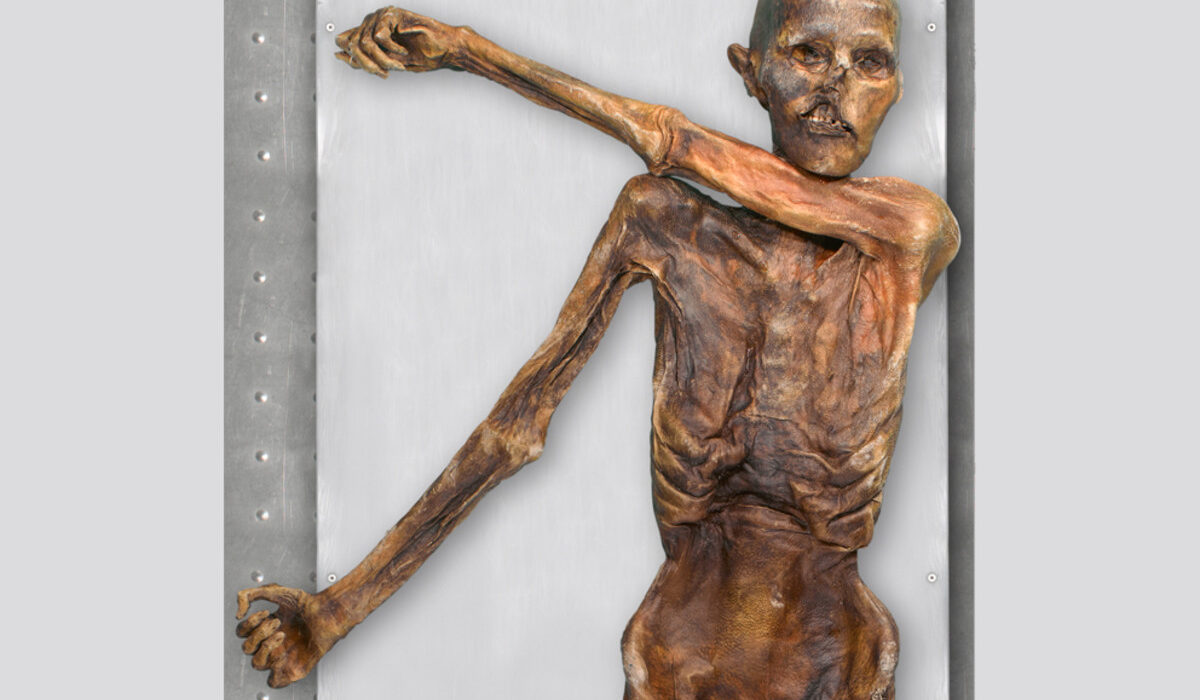
Among the most scientifically intriguing discoveries associated with Silk Road regions are the remarkably preserved human remains found in desert cemeteries of the Tarim Basin.
These mummies, dating back thousands of years, were naturally preserved by extreme aridity and saline soil conditions. Their clothing, hair, and even facial features remain intact.
What makes them mysterious is not their preservation, but their biological identity. Early genetic and physical analyses revealed features that did not match expectations for ancient East Asian populations. Instead, some individuals showed affinities with populations from distant western regions of Eurasia.
Genomic research has refined this picture, suggesting complex patterns of migration and interaction long before the Silk Road became an established trade network. These findings indicate that Central Asia was already a zone of human movement and mixing thousands of years earlier than previously believed.
The mummies raise profound questions. Who were these people? What routes did they travel? What languages did they speak? How did they interact with later Silk Road cultures?
They reveal that cultural exchange along these corridors may have roots far deeper than historical records suggest.
3. The Hidden Library of the Mogao Caves
In a desert cliff face near Dunhuang lies one of the greatest archaeological discoveries ever made: a sealed chamber containing tens of thousands of manuscripts, paintings, and documents.
This “Library Cave” remained hidden for centuries before being opened in 1900. Inside were texts written in multiple languages, reflecting extraordinary cultural diversity. Buddhist scriptures, administrative records, personal letters, and religious commentaries all coexisted in a single archive.
One of the most intriguing questions concerns why the chamber was sealed. Scholars have proposed several explanations. Some suggest it was a sacred repository for worn manuscripts. Others propose that monks sealed the library during political unrest to protect its contents. Still others suggest ritual or symbolic motivations.
The documents themselves reveal complex networks of communication stretching across Asia. They also show how religions evolved as they traveled, adapting to local traditions and artistic styles.
Despite extensive study, the reason for the library’s closure—and why it was never reopened—remains unresolved.
4. The True Extent of the City Beneath Samarkand
For centuries, Samarkand stood as one of the most important Silk Road cities—a center of trade, scholarship, and artistic production. But modern archaeology suggests the visible ruins represent only part of its historical scale.
Subsurface surveys using geophysical techniques have revealed buried structures extending far beyond previously known boundaries. These findings suggest that ancient Samarkand was significantly larger and more complex than traditional historical accounts indicate.
Researchers are now investigating how the city expanded, contracted, and reorganized across different political periods. The role of Sogdian merchants, who dominated Silk Road commerce for centuries, appears central to its development.
Yet many questions remain unanswered. How large was Samarkand at its peak? How were its districts organized? What infrastructure supported its massive trading operations?
The ground beneath the modern landscape still conceals large portions of its past.
5. The Lost Trade Routes of the Taklamakan Desert
One of the most dangerous landscapes along the Silk Road was the Taklamakan Desert—an immense expanse of shifting dunes and extreme temperatures. Despite its hostility, numerous caravan routes once crossed its margins.
Archaeological surveys have uncovered traces of ancient pathways, waystations, and settlements. Yet mapping the full network of routes remains difficult because sand constantly reshapes the terrain.
Satellite imaging and remote sensing have revealed buried river channels and former oasis locations, suggesting that routes changed repeatedly over time. Some trade paths may have existed only briefly before being abandoned due to environmental change.
Researchers continue to search for lost caravan stations that once provided water and shelter. Many may lie completely buried beneath dunes.
The mystery lies not only in where these routes were, but how travelers navigated such a constantly transforming environment with limited technology.
6. The Secret of Silk in Ancient China
Silk was the most famous commodity of the Silk Road, yet for centuries its method of production remained a closely guarded secret. The process of cultivating silkworms and extracting fine fibers was known only within China for much of early history.
Historical accounts describe strict protection of this knowledge. The technology was economically and politically valuable, giving Chinese states immense trade advantage.
Yet silk production eventually spread westward. Archaeological and textual evidence suggests that the knowledge traveled gradually through multiple channels rather than a single dramatic transfer.
How exactly this technological diffusion occurred remains debated. Was it smuggled intentionally? Did migrants carry expertise with them? Did independent experimentation occur elsewhere?
The spread of silk production represents one of the earliest examples of controlled technological knowledge becoming global.
7. The Journey of Xuanzang and the Transmission of Belief
Religions traveled the Silk Road just as goods did. Among the most influential figures in this exchange was the Buddhist monk Xuanzang, who journeyed from China to India in the seventh century seeking sacred texts.
His travel records provide detailed geographic and cultural descriptions of Central Asian regions. Yet scholars continue to debate aspects of his route. Some locations he described remain uncertain or unidentified.
His journey also raises broader questions about how religious ideas spread across linguistic and cultural boundaries. Archaeological evidence shows Buddhism transforming as it moved—adapting artistic forms, rituals, and philosophical interpretations.
The Silk Road was not merely a path of movement but a laboratory of religious evolution.
8. The Cosmopolitan Identity of Kashgar
Kashgar stood at a critical junction where routes from multiple directions converged. Travelers from East Asia, South Asia, Persia, and the Mediterranean passed through its markets.
Archaeological and historical evidence shows extraordinary cultural diversity—languages, clothing styles, religious practices, and artistic traditions blending within one urban environment.
Yet reconstructing daily life in such a cosmopolitan setting remains challenging. Written records are fragmentary. Material culture reflects multiple influences that are difficult to distinguish.
Was Kashgar a melting pot where identities merged, or a mosaic where communities remained distinct? The answer remains uncertain.
9. The Rise and Disappearance of Kushan Empire
The Kushan Empire once controlled vast stretches of Silk Road territory and played a major role in facilitating long-distance trade and cultural exchange.
Archaeological remains show strong economic networks, artistic innovation, and religious patronage—especially the spread of Buddhism into Central Asia and beyond.
Yet the mechanisms behind the empire’s rapid rise and eventual fragmentation remain incompletely understood. Climate change, political conflict, shifting trade routes, and economic strain may all have contributed.
Its disappearance reshaped Silk Road dynamics, but many details of its decline remain uncertain.
10. The Journey of Marco Polo and the Question of Accuracy
Few travelers shaped global imagination of the Silk Road more than Marco Polo. His accounts described distant lands, unfamiliar customs, and immense wealth.
Yet historians continue to debate the accuracy of his descriptions. Some details match archaeological evidence. Others remain ambiguous or unverified.
Did he travel exactly where he claimed? Did he rely on secondhand information for some regions? How much of his narrative reflects observation versus storytelling?
His writings remain both historical resource and enduring mystery.
The Scientific Pursuit of Answers
Modern research continues to illuminate Silk Road mysteries through interdisciplinary methods. Archaeologists analyze settlement patterns and artifacts. Climate scientists reconstruct environmental conditions. Geneticists trace population movement. Linguists study evolving languages. Remote sensing technologies reveal buried structures invisible at ground level.
Each new discovery reshapes understanding of how people moved, traded, adapted, and interacted across immense distances.
The Silk Road as an Unfinished Story
The Silk Road was not a static system. It evolved constantly. Routes shifted. Cities rose and fell. Cultures blended and diverged. Technologies spread and transformed.
Many mysteries remain unresolved because the evidence is incomplete. Desert sands conceal ruins. Written records decay. Oral traditions change across generations.
Yet these uncertainties are precisely what make the Silk Road scientifically and historically compelling.
The Enduring Human Journey
At its heart, the Silk Road represents movement—of goods, ideas, and people across environments that tested endurance and imagination. Its mysteries remind us that history is not fixed but continually reconstructed through evidence and inquiry.
Every buried settlement, undeciphered text, and unexplained migration invites further exploration.
The Silk Road endures not only as a network of ancient trade routes but as one of humanity’s greatest historical puzzles—vast, complex, and still revealing its secrets to those who search patiently across deserts, mountains, and time itself.