When we look into a mirror, we see the face of Homo sapiens, the only surviving human species on Earth. It is easy to assume that our story was always solitary, that we emerged alone from the ancient wilderness and gradually conquered the globe. But the truth is far more dramatic and far more humbling. For most of our evolutionary history, we were not alone. The world was once shared by multiple kinds of humans—beings who walked upright, crafted tools, cared for their young, and adapted to environments as varied as African savannas and icy Eurasian plains.
These were not mythical creatures or primitive caricatures. They were real, complex, intelligent hominins—members of the human family tree who were not Homo sapiens. Some were our direct ancestors. Others were cousins, branching off and pursuing their own evolutionary experiments. Some coexisted with us. A few even interbred with our species, leaving traces of themselves in our DNA.
The story of ancient humans is not a straight line but a branching, tangled forest. It is a saga of survival, adaptation, climate change, migration, innovation, and extinction. Fossils pulled from caves and sediments, stone tools scattered across landscapes, and fragments of ancient DNA extracted from bones have revealed a lost world populated by diverse human forms.
Here are eight ancient humans that were not Homo sapiens—eight chapters in the larger story of what it meant, and still means, to be human.
1. Homo neanderthalensis
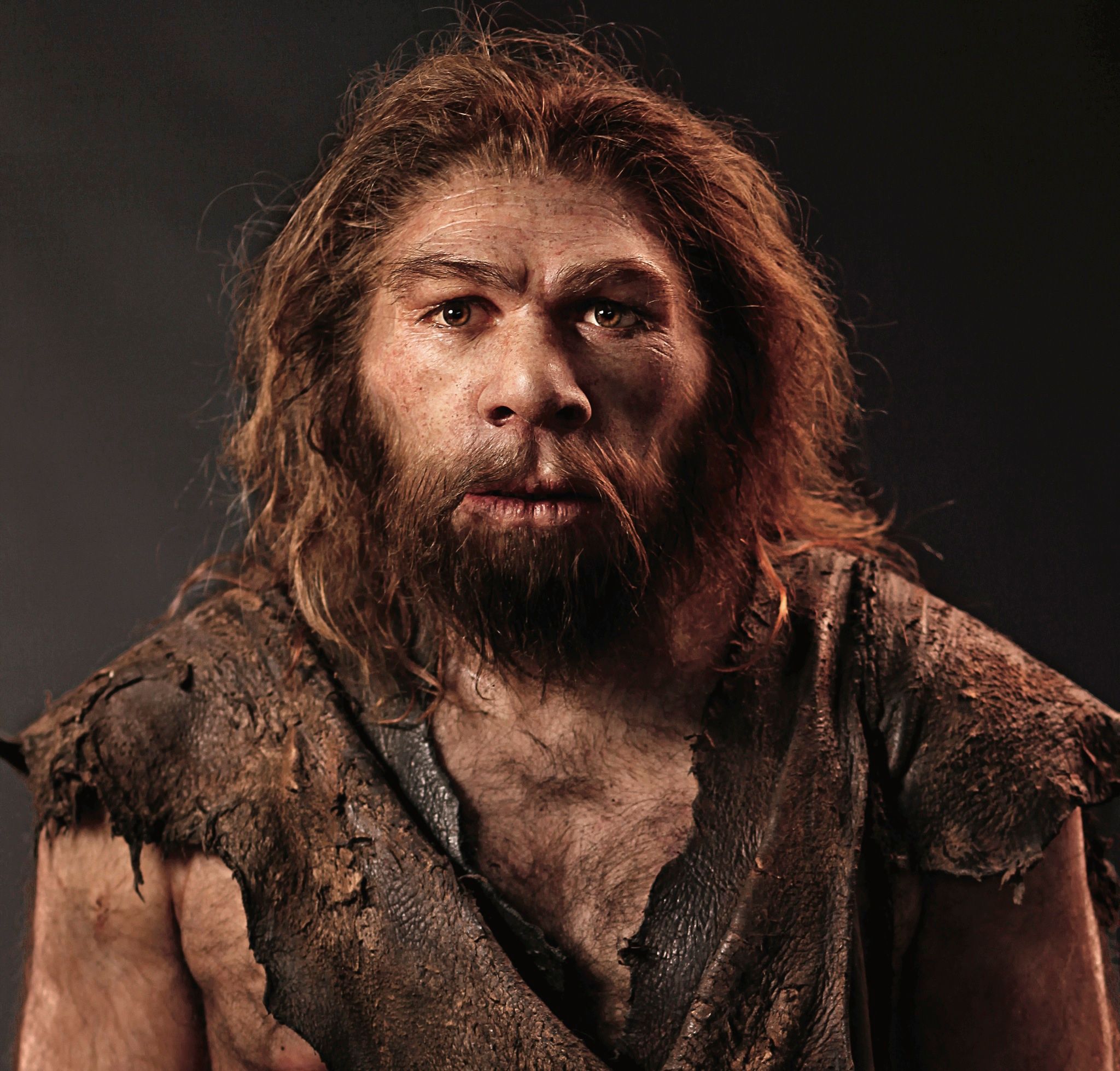
For more than a century, Neanderthals were misunderstood. Discovered in 1856 in the Neander Valley of Germany, their bones were first imagined as belonging to brutish, stooped cavemen. But modern research has rewritten that narrative. Homo neanderthalensis were not clumsy relics of a primitive past. They were powerful, intelligent humans adapted to the harsh climates of Ice Age Eurasia.
Neanderthals lived across Europe and parts of western Asia from roughly 400,000 years ago until about 40,000 years ago. Their bodies were stocky and muscular, with broad chests and short limbs—adaptations that helped conserve heat in cold environments. Their faces were distinctive, with prominent brow ridges and large nasal openings, possibly linked to warming frigid air before it entered their lungs.
Their brains were as large as, and in some cases slightly larger than, those of modern humans. Archaeological evidence shows they crafted sophisticated stone tools, hunted large animals such as mammoths and bison, controlled fire, and likely wore clothing. They built shelters and used adhesives to attach stone points to wooden shafts.
Neanderthals also showed signs of symbolic behavior. Some sites suggest they buried their dead. Pigments and ornaments hint at possible body decoration. They cared for injured and elderly individuals, indicating social bonds and empathy.
Perhaps most strikingly, genetic studies reveal that Neanderthals interbred with Homo sapiens. Today, people of non-African descent carry small percentages of Neanderthal DNA. They are not entirely gone. A fragment of them lives on in many of us.
2. Homo erectus
If there is a true pioneer in human evolution, it is Homo erectus. Emerging around 1.9 million years ago in Africa, this species became the first human to expand far beyond the continent of its origin. Fossils have been found in Africa, Asia, and possibly parts of Europe, indicating a remarkable capacity for adaptation.
Homo erectus had a more modern body shape than earlier hominins, with longer legs suited for efficient walking and running. This species likely mastered endurance walking across vast distances, enabling migration into new territories. Their skulls show a long, low braincase and pronounced brow ridges, with brain sizes significantly larger than earlier species but smaller than ours.
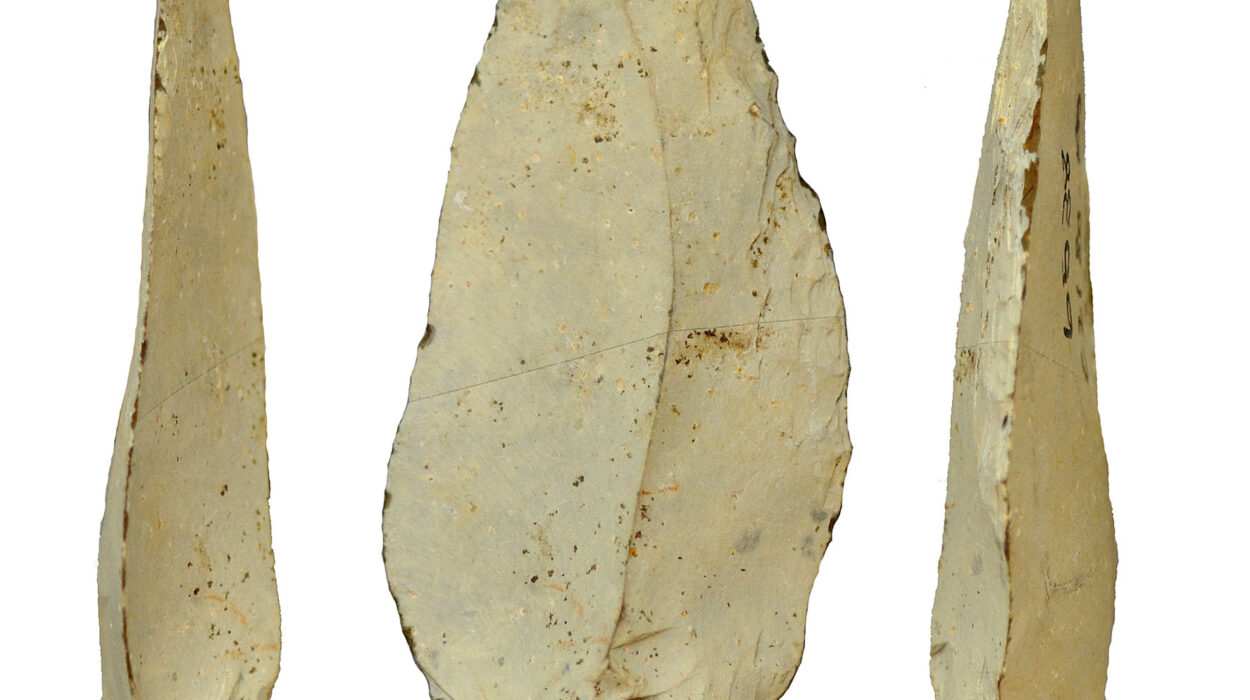
One of the defining features of Homo erectus was its technological innovation. They are strongly associated with Acheulean hand axes—symmetrical, teardrop-shaped stone tools that required planning and skill to produce. These tools remained in use for over a million years, a testament to their effectiveness.
Evidence suggests Homo erectus controlled fire, though the timing and consistency of this behavior remain topics of research. Fire would have transformed their lives, offering warmth, protection, and the ability to cook food, which increases its caloric value and digestibility.
Homo erectus survived for an astonishingly long time—over a million years. Some populations persisted in parts of Asia until perhaps 100,000 years ago. Their success and endurance make them one of the most important species in our evolutionary history.
3. Homo heidelbergensis
Homo heidelbergensis lived roughly between 700,000 and 200,000 years ago and is often considered a likely common ancestor of both Neanderthals and modern humans. Fossils have been discovered in Africa and Europe, suggesting a widespread and adaptable species.
This species had a robust build and a larger brain than Homo erectus. Their faces retained heavy brow ridges, but their cranial capacity approached the range of both Neanderthals and Homo sapiens. They appear to represent a transitional form in the evolutionary narrative.
Archaeological sites associated with Homo heidelbergensis reveal evidence of organized hunting. Wooden spears discovered in Germany suggest coordinated group hunts of large animals. This implies planning, communication, and social cooperation.
Some researchers propose that Homo heidelbergensis populations in Africa eventually gave rise to Homo sapiens, while those in Europe evolved into Neanderthals. If so, this species stands near a crucial branching point in the human family tree—a shared ancestor linking multiple later lineages.
4. Homo habilis
Known as “handy man,” Homo habilis lived in Africa approximately 2.4 to 1.4 million years ago. This species represents one of the earliest members of the genus Homo. Compared to earlier australopithecines, Homo habilis had a larger brain and smaller teeth, suggesting shifts in diet and behavior.
Stone tools found alongside Homo habilis fossils belong to the Oldowan tradition—simple flakes and cores used for cutting and scraping. These tools mark some of the earliest known examples of stone tool technology. They likely allowed access to new food sources, including meat scavenged from animal carcasses.
Homo habilis still retained some primitive traits, including relatively long arms, hinting at partial adaptation to tree climbing. Yet the expansion of brain size and tool use marks a critical turning point. With Homo habilis, we see the beginnings of a trend that would define later humans: increasing reliance on culture and technology.
5. Homo floresiensis
In 2003, archaeologists working on the Indonesian island of Flores uncovered something extraordinary. In a cave called Liang Bua, they discovered the remains of a small-bodied human species now known as Homo floresiensis. Sometimes nicknamed “the Hobbit” due to its diminutive stature, this species stood about one meter tall.
Homo floresiensis lived as recently as 50,000 years ago, overlapping in time with Homo sapiens. Despite their small brains—comparable in size to those of much earlier hominins—they produced stone tools and hunted small elephants known as Stegodon.
The leading explanation for their unusual anatomy is island dwarfism, an evolutionary process in which large-bodied species become smaller over generations due to limited resources in isolated environments. Flores, being an island, provided such conditions.
The discovery of Homo floresiensis shattered assumptions that large brains were necessary for complex tool use. It revealed that human evolution was not a simple progression toward bigger bodies and brains, but a dynamic process shaped by environment and isolation.
6. Homo naledi
In 2013, a cave system in South Africa yielded one of the most surprising hominin discoveries in recent history: Homo naledi. The remains of multiple individuals were found deep within a difficult-to-access chamber, raising intriguing questions about their behavior.
Homo naledi had a mosaic of features. Their brains were relatively small, yet their hands, wrists, and feet showed similarities to modern humans. This combination suggests a species with both primitive and advanced traits.
The age of the fossils, later determined to be between about 335,000 and 236,000 years old, means Homo naledi lived at roughly the same time as early Homo sapiens in Africa. This overlap underscores how diverse the human landscape once was.
Some researchers have suggested that the placement of bodies deep in the cave may indicate intentional deposition, possibly a form of mortuary behavior. If confirmed, this would imply complex social or symbolic behavior in a species with a small brain, challenging assumptions about cognitive evolution.
7. Denisovans
Unlike most ancient humans, Denisovans were first identified not from a nearly complete skeleton but from fragments—a finger bone and teeth found in Denisova Cave in Siberia. Genetic analysis revealed that these remains belonged to a previously unknown human group distinct from both Neanderthals and modern humans.
Denisovans lived in Asia and interbred with both Neanderthals and Homo sapiens. Today, populations in parts of Asia and Oceania carry Denisovan DNA. Some of these genetic contributions are linked to adaptations, such as high-altitude tolerance in Tibetan populations.
Because fossil evidence is sparse, much of what we know about Denisovans comes from ancient DNA. Their story highlights the power of genetics to uncover hidden chapters of human evolution. It also reinforces the idea that interbreeding among different human groups was not rare but part of our shared history.
8. Australopithecus afarensis
Though not a member of the genus Homo, Australopithecus afarensis deserves recognition as a crucial ancestor in our lineage. Living between about 3.9 and 2.9 million years ago in East Africa, this species includes the famous fossil known as Lucy.
Australopithecus afarensis walked upright, as evidenced by skeletal anatomy and fossilized footprints preserved at Laetoli in Tanzania. Yet they retained small brains and some adaptations for climbing trees.
Their upright posture freed the hands for carrying and manipulating objects, setting the stage for later technological advances. They lived in varied environments and represent a key step in the transition from ape-like ancestors to early humans.
In their bones, we see the dawn of bipedalism—a defining trait of humanity.
The Web of Our Origins
These eight ancient humans were not isolated curiosities. They were part of a vast and interconnected evolutionary tapestry. They lived, adapted, loved, struggled, and in most cases, eventually disappeared. Climate shifts, competition, limited resources, and perhaps encounters with other human groups shaped their destinies.
Their extinctions were not failures but natural outcomes of a branching evolutionary process. Evolution does not aim for a final product. It experiments, diversifies, and responds to changing conditions. Homo sapiens are the only surviving human species today, but we are not the inevitable endpoint of evolution. We are one surviving branch among many that once flourished.
The fossils of these ancient humans remind us that our story is shared. We carry traces of Neanderthals and Denisovans in our genes. We inherit upright walking from earlier ancestors. We stand on a foundation built by countless generations who shaped and reshaped what it meant to be human.
To understand these ancient humans is to understand ourselves more deeply. It is to realize that humanity was never a single, solitary path but a vibrant, diverse family. Their bones whisper from caves and sediments, telling us that we were once many—and that our existence is part of a far older and more intricate story than we ever imagined.