Archaeology is often imagined as a discipline of careful brushes, dusty trenches, and patient cataloguing. In truth, it is something far more dramatic. It is a dialogue with the dead, a slow unearthing of human memory written in stone, bone, clay, and metal. Most discoveries fit, eventually, into patterns. Pottery styles align with known cultures. Burial practices match established traditions. Carbon dating narrows time into manageable centuries.
But every so often, something emerges from the ground that resists easy explanation. An artifact whose craftsmanship seems out of place. A monument whose purpose remains uncertain. A structure so massive or so precise that it challenges assumptions about ancient capabilities. These finds do not overturn science. They do not demand supernatural answers. Instead, they remind us that the past is more complex than we imagined.
What follows are ten extraordinary archaeological discoveries that continue to puzzle researchers. Each has been studied seriously, debated rigorously, and examined through the lens of scientific method. And yet, despite decades—or in some cases centuries—of research, key questions remain unanswered.
1. Göbekli Tepe
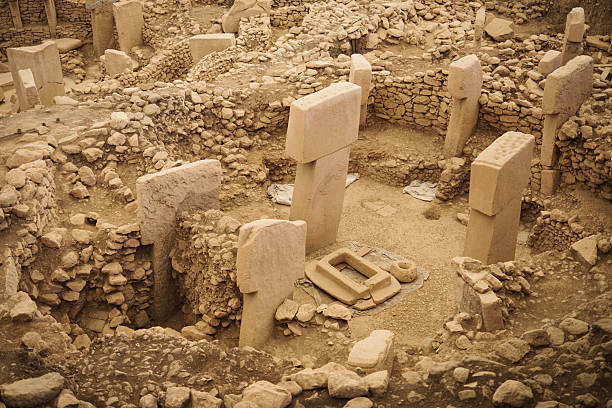
In southeastern Turkey, near the modern city of Şanlıurfa, stands one of the most astonishing archaeological sites ever uncovered: Göbekli Tepe. Dating back to around 9600 BCE, it predates Stonehenge by thousands of years and the pyramids of Egypt by even more.
Göbekli Tepe consists of massive circular enclosures made of towering T-shaped limestone pillars, some weighing up to 20 tons. Many are intricately carved with reliefs of animals—foxes, snakes, wild boars, birds—rendered with remarkable skill. The site was constructed by hunter-gatherers, long before the advent of agriculture in the region.
This is what makes it so astonishing. Conventional understanding once held that large-scale monumental architecture arose only after humans settled into agricultural societies. Farming, the theory went, produced surplus food, which enabled specialization and organized labor. Göbekli Tepe challenges that narrative. It suggests that complex social organization and ritual activity may have preceded agriculture, perhaps even encouraged it.
Yet its purpose remains uncertain. Was it a temple complex? A ceremonial gathering place? A site of ancestral veneration? Even more intriguingly, the site was deliberately buried around 8000 BCE. The reason for this intentional burial is still debated. Was it a ritual act? A practical measure? Or something else entirely?
Göbekli Tepe has not rewritten prehistory, but it has certainly complicated it. It stands as a reminder that the origins of civilization may be older—and stranger—than we once believed.
2. The Antikythera Mechanism
In 1901, sponge divers exploring a shipwreck off the Greek island of Antikythera discovered corroded bronze fragments that would eventually be recognized as one of the most remarkable artifacts of the ancient world: the Antikythera Mechanism.
Dating to around the 2nd century BCE, this device is often described as the world’s first known analog computer. It consists of a complex arrangement of interlocking bronze gears designed to predict astronomical positions and eclipses. Modern imaging techniques have revealed inscriptions and gear systems of extraordinary sophistication.
The mechanism could model the motions of the Sun and Moon, track lunar phases, and possibly even predict planetary positions. Its craftsmanship suggests advanced knowledge of mathematics and astronomy.
The mystery lies not in what it did—we now understand much of its function—but in how it fits into the broader technological landscape of its time. No other device of comparable complexity has been found from ancient Greece. How widespread was this technology? Was it unique, or have others simply not survived?
The Antikythera Mechanism does not imply lost civilizations or forgotten super-science. It reveals instead that ancient technological achievement may have been more advanced—and perhaps more fragile—than we assumed.
3. The Nazca Lines
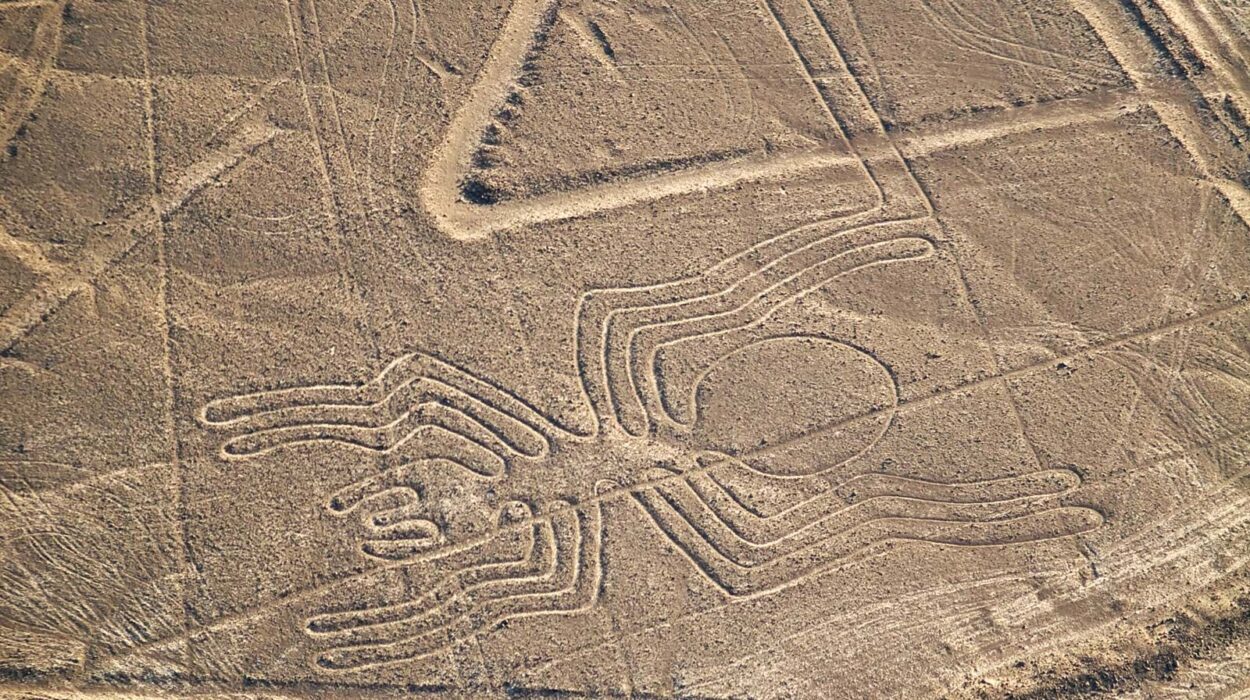
Stretching across the arid plains of southern Peru are enormous geoglyphs etched into the desert surface: the Nazca Lines. Created between roughly 500 BCE and 500 CE by the Nazca culture, these designs include animals, plants, geometric shapes, and long straight lines that extend for kilometers.
The figures are so large that they are best appreciated from the air. A hummingbird spans nearly 100 meters. A monkey coils across the desert in sweeping curves. The lines were made by removing the dark surface stones to reveal lighter soil beneath, creating high-contrast designs visible from above.
The purpose of the Nazca Lines remains debated. Some scholars argue they were part of ritual practices connected to water and fertility. Others suggest astronomical alignments, though evidence for precise celestial mapping is mixed. The desert’s stable climate has preserved them for centuries.
The mystery is not how they were made—that process is relatively straightforward—but why such enormous effort was devoted to designs that could not be fully seen from ground level. Whether ritual pathways, symbolic messages, or expressions of communal identity, the Nazca Lines remain one of archaeology’s most evocative enigmas.
4. Stonehenge
On the Salisbury Plain in England stands one of the world’s most iconic prehistoric monuments: Stonehenge. Constructed in phases between about 3000 BCE and 2000 BCE, Stonehenge consists of massive standing stones arranged in concentric circles and horseshoe patterns.
Some of the stones, known as bluestones, were transported from Wales, over 200 kilometers away. The larger sarsen stones weigh up to 25 tons. The monument aligns with the solstices, marking the longest and shortest days of the year.
Archaeological research suggests Stonehenge functioned as a ceremonial site, possibly connected to burial practices and seasonal gatherings. Yet its precise role remains debated. Was it primarily a calendar? A sacred space? A site of healing? A symbol of social cohesion?
Excavations have revealed nearby settlements and evidence of feasting, indicating large gatherings. Advances in isotopic analysis have shown that people traveled considerable distances to reach the site.
Stonehenge is not inexplicable in a supernatural sense. Its construction methods are increasingly understood. But its layered meanings, evolving functions, and enduring cultural significance continue to provoke questions about the social and spiritual lives of its builders.
5. The Pyramids of Giza
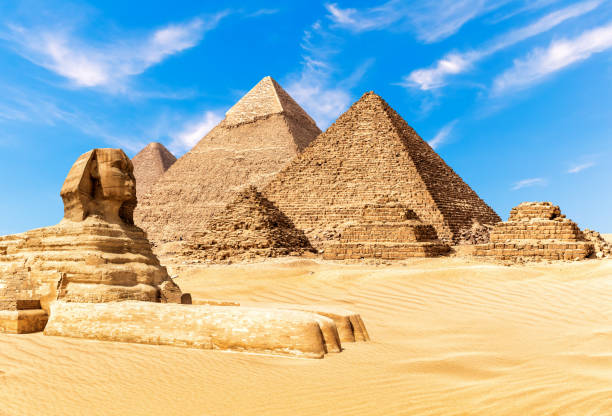
Rising from the Egyptian desert, the Great Pyramid of Giza and its neighboring pyramids remain architectural marvels. Built during the Fourth Dynasty around 2600 BCE, the Great Pyramid was constructed for Pharaoh Khufu and originally stood about 146 meters tall.
Composed of millions of limestone blocks, some weighing several tons, the pyramid’s construction required extraordinary logistical coordination. Evidence suggests skilled laborers—not enslaved masses—worked in rotating crews, supported by organized food supplies and medical care.
The mystery lies not in whether humans built them—they clearly did—but in the exact techniques used to transport and lift such massive stones with the tools available at the time. Numerous theories exist involving ramps, levers, and sledges, and ongoing research continues to refine these ideas.
Recent discoveries of internal voids using muon scanning have added new dimensions to our understanding, though their purpose remains unclear.
The pyramids are testaments to human ambition and state organization. They reflect not alien intervention or lost civilizations, but a society capable of mobilizing immense resources for monumental goals. Yet their construction details and symbolic intricacies still inspire investigation.
6. The Terracotta Army
In 1974, farmers digging a well near Xi’an in China uncovered one of the most extraordinary burial complexes in history: the Terracotta Army. Thousands of life-sized clay soldiers, each with distinct facial features, were buried to guard the tomb of China’s first emperor, Qin Shi Huang, who died in 210 BCE.
The scale is staggering. The figures include infantry, archers, cavalry, chariots, and horses. Originally painted in vibrant colors, they were arranged in battle formation.
The central tomb itself remains largely unexcavated due to preservation concerns. Ancient texts describe rivers of mercury flowing within, and modern soil analysis has detected elevated mercury levels.
The mystery lies partly in what remains untouched. What secrets might the unopened tomb chamber hold? How were such vast numbers of individualized figures produced with remarkable consistency?
The Terracotta Army illustrates both the power of imperial ambition and the sophistication of ancient craftsmanship. Yet the full extent of the mausoleum’s design and symbolism remains uncertain.
7. The Indus Script
The civilization of the Indus Valley, flourishing around 2600–1900 BCE in what is now Pakistan and northwest India, left behind cities of impressive planning, including Mohenjo-daro and Harappa. These urban centers featured grid layouts, drainage systems, and standardized bricks.
Among the artifacts discovered are thousands of small seals bearing short inscriptions in what is known as the Indus script. Despite decades of study, this script has not been definitively deciphered.
The inscriptions are brief, typically only a few symbols long. Without bilingual texts or longer records, linguists have struggled to identify the underlying language. Some researchers debate whether it encodes language at all, though many argue that it does.
The inability to read the script limits our understanding of Indus political organization, religion, and daily life. The cities themselves speak through architecture, but their voices remain silent.
The Indus script represents a tantalizing gap in human history—a reminder that literacy once flourished in forms we can no longer interpret.
8. The Voynich Manuscript
Housed at Yale University, the Voynich Manuscript is a medieval book written in an unknown script and filled with enigmatic illustrations. Radiocarbon dating places the parchment in the early 15th century.
The manuscript includes drawings of plants, astronomical diagrams, and nude female figures bathing in green fluid. The text, written left to right, has resisted all attempts at decipherment. Linguists, cryptographers, and computer scientists have analyzed its patterns extensively.
Some argue it represents an elaborate hoax. Others believe it encodes a natural language or cipher. Statistical analysis suggests structured text rather than random scribbles.
Despite modern computational tools, the manuscript’s meaning remains elusive. It sits at the intersection of linguistics, art history, and cryptography, inviting speculation while defying resolution.
9. The Moai of Easter Island
On the remote Pacific island known as Rapa Nui stand nearly 900 monumental stone statues called moai. The site is commonly referred to as Easter Island. Carved between approximately 1250 and 1500 CE, these statues were created by the island’s Polynesian inhabitants.
Some moai weigh more than 80 tons and were transported from quarries to coastal platforms. The methods used to move them across the island have been debated for decades. Experimental archaeology suggests they may have been “walked” upright using ropes and coordinated labor.
The statues likely represented ancestral figures, serving religious and social functions. Their placement and orientation suggest complex ritual significance.
The mystery is not mystical but logistical and cultural. How did a relatively small, isolated population mobilize resources to create and transport such enormous sculptures? What social dynamics drove their production?
The moai stand as silent witnesses to human creativity—and to the ecological challenges that later affected the island’s society.
10. The Baghdad Battery
Discovered near Baghdad in the 1930s, a small clay jar containing a copper cylinder and iron rod has been dubbed the Baghdad Battery. Dating to the Parthian period (around 250 BCE to 250 CE), the object resembles a simple galvanic cell.
When filled with an acidic liquid, such a configuration can produce a small electric current. This has led to speculation that ancient peoples may have experimented with electricity, perhaps for electroplating.
However, there is no definitive evidence that the jar functioned as a battery. It may have served another purpose entirely. The absence of wires or clear contextual clues leaves its function uncertain.
The Baghdad Battery exemplifies how interpretation must be cautious. Not every puzzling object is proof of advanced lost technology. Sometimes the mystery lies in the limits of available evidence.
The Enduring Mystery of the Past
Archaeology is not about proving that the past was magical or alien. It is about uncovering human stories through material remains. The finds described here are not inexplicable in the sense that they defy science. Rather, they highlight the complexity of human history and the incomplete nature of our knowledge.
Each discovery expands our understanding while leaving room for further inquiry. Göbekli Tepe reshapes ideas about early social organization. The Antikythera Mechanism challenges assumptions about ancient technology. The Indus script reminds us that entire literate cultures can fall silent.
The unanswered questions are not failures. They are invitations. They call for better methods, new excavations, improved dating techniques, and interdisciplinary collaboration. They remind us that history is not static. It is a dynamic field, constantly revised as new evidence emerges.
In the end, what makes these archaeological finds so compelling is not that they cannot be explained at all. It is that they resist simple explanation. They require patience, humility, and imagination grounded in evidence.
The Earth still holds countless secrets beneath its surface. With every careful excavation, we peel back another layer of the human story. And in those moments when the soil yields something unexpected—something that does not fit neatly into established categories—we are reminded that the past is vast, intricate, and endlessly fascinating.
Archaeology teaches us that we are part of a long continuum of curiosity and creativity. The mysteries of ancient monuments and undeciphered scripts do not diminish human achievement. They deepen it. They show that our ancestors were capable of complexity, ingenuity, and vision beyond what we once assumed.
And perhaps that is the most incredible discovery of all.