When most people hear the words “Ice Age,” they imagine towering glaciers, woolly mammoths trudging across snowy plains, and perhaps a certain animated mammoth and sloth cracking jokes on the big screen. But the real Ice Age is far more complex, far more dramatic, and far more surprising than popular culture suggests. It is not a single frozen moment in time. It is a sweeping chapter of Earth’s story that reshaped continents, sculpted landscapes, and even influenced the fate of our own species.
The Ice Age was not merely about cold. It was about change. It was about cycles, survival, extinction, migration, and adaptation. It was about oceans rising and falling, forests retreating and advancing, and humans learning to endure in a world that could turn hostile in the span of centuries.
Here are fifteen scientifically grounded, surprising facts about the Ice Age that reveal just how astonishing this frozen era truly was.
1. We Are Still Living in an Ice Age
One of the most surprising truths is that the Ice Age has not ended. In geological terms, we are still living within it.
An ice age is defined as a long period during which permanent ice sheets exist on Earth. Today, massive ice sheets still blanket Greenland and Antarctica. This means that the current geological epoch falls within what scientists call the Quaternary Ice Age, which began about 2.6 million years ago.
What most people think of as “the Ice Age” is actually the most recent glacial period within this larger ice age. That glacial peak, known as the Last Glacial Maximum, occurred about 20,000 years ago. Since then, Earth has been in a warmer interval called an interglacial period. The current interglacial, known as the Holocene, began roughly 11,700 years ago.
So when you step outside on a warm summer day, you are technically living in a relatively mild chapter of an ongoing ice age.
2. Ice Ages Come and Go in Cycles
Ice ages are not random accidents. They are influenced by predictable patterns in Earth’s orbit and tilt.
These cycles, known as Milankovitch cycles, describe subtle variations in Earth’s orbit around the Sun, the tilt of its axis, and the wobble of that axis over tens of thousands of years. These changes alter how sunlight is distributed across the planet, particularly at high latitudes.
When summer sunlight in the Northern Hemisphere decreases, winter snow is less likely to melt completely. Over thousands of years, this allows ice sheets to grow. When summer sunlight increases, ice retreats.
These orbital rhythms act like a slow, cosmic heartbeat, pacing the advance and retreat of massive ice sheets over geological time.
3. Ice Sheets Once Covered Much of North America and Europe
During the Last Glacial Maximum, enormous ice sheets spread across vast regions of the Northern Hemisphere.
In North America, the Laurentide Ice Sheet covered most of Canada and extended deep into what is now the northern United States. In Europe, the Scandinavian Ice Sheet spread across northern Europe and into parts of the British Isles and Germany.
In some places, these ice sheets were several kilometers thick. Imagine a wall of ice taller than mountains, slowly grinding forward, reshaping everything in its path. Entire landscapes were carved, flattened, or buried beneath this frozen weight.
The Great Lakes of North America, for example, owe their existence to glacial erosion. The ice sculpted basins that later filled with meltwater.
4. Sea Levels Were Dramatically Lower
When so much water is locked up in massive ice sheets, global sea levels drop.
At the height of the last glacial period, sea levels were about 120 meters lower than they are today. Vast stretches of continental shelf were exposed as dry land. Coastlines were dramatically different.
One of the most significant consequences of this lower sea level was the formation of land bridges. The most famous of these was Beringia, the land bridge that connected Siberia and Alaska. It allowed humans and animals to migrate between Asia and North America.
The Ice Age quite literally changed the shape of the world’s map.
5. The Ice Age Was Not Constantly Freezing Everywhere
It is easy to imagine the Ice Age as a uniformly frozen planet, but this is not accurate.
While large ice sheets dominated high latitudes, many regions remained ice-free. Some areas were cold and dry rather than buried in ice. Grasslands, known as steppe-tundra, stretched across vast areas of Eurasia and North America.
Even during glacial peaks, tropical regions remained relatively warm, though often drier. Climate zones shifted rather than simply becoming universally frozen.
The Ice Age was a patchwork of environments, not a single endless winter.
6. Woolly Mammoths Were Not the Only Ice Age Giants
The Ice Age was home to a remarkable array of megafauna, or large animals.
Woolly mammoths roamed the tundra, but they shared the landscape with woolly rhinoceroses, giant ground sloths, saber-toothed cats, dire wolves, and enormous short-faced bears. In Australia, giant marsupials once thrived. In South America, massive armored glyptodonts lumbered across plains.
These animals were adapted to cold climates, often with thick fur, large bodies, and specialized feeding habits.
Many of these species went extinct near the end of the last glacial period. The causes likely included a combination of climate change and human activity, though the precise balance remains debated.
7. Humans Survived and Adapted During the Ice Age
The Ice Age was not just a story of animals. It was also a critical chapter in human evolution and migration.
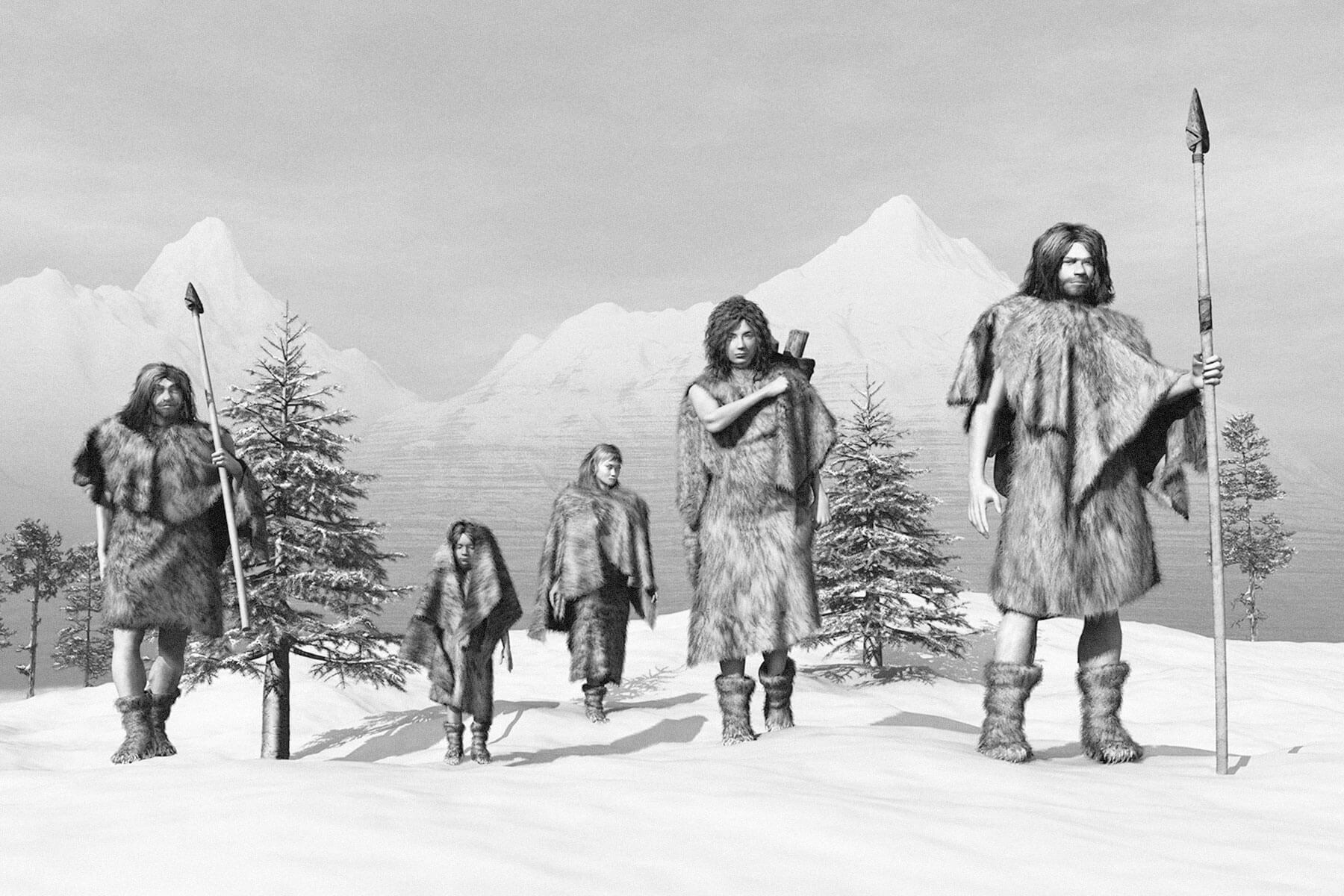
Homo sapiens emerged in Africa during the Ice Age and later spread across the globe. They endured fluctuating climates, harsh winters, and shifting ecosystems. They developed clothing, shelter, tools, and social cooperation to survive.
Cave art, such as the stunning paintings found in parts of Europe, was created during this time. These works reveal a deep cultural and symbolic life, even in harsh environments.
The Ice Age was not merely endured by humans. It shaped us.
8. Rapid Climate Shifts Occurred
Although ice ages unfold over thousands of years, they also include surprisingly rapid climate changes.
Ice core records from Greenland show that temperatures sometimes shifted dramatically within decades. These abrupt events, known as Dansgaard–Oeschger events, reveal that Earth’s climate system can change much faster than once believed.
These sudden changes likely altered ecosystems quickly, forcing both animals and humans to adapt or migrate.
The Ice Age was not a slow, steady freeze. It was dynamic and sometimes volatile.
9. Ice Shaped the Landscape in Lasting Ways
Many of today’s landscapes bear the marks of ancient ice.
Glaciers carved U-shaped valleys, fjords, and deep basins. They left behind ridges of debris called moraines. They scattered large boulders, known as glacial erratics, far from their original sources.
Regions like Scandinavia, Canada, and parts of the northern United States display terrain that is unmistakably glacial in origin.
When we hike through certain valleys or stand beside a clear northern lake, we are witnessing the artistry of moving ice.
10. The End of the Last Glacial Period Was Dramatic
The transition from the last glacial period to the current interglacial was not smooth.
As ice sheets melted, enormous volumes of freshwater poured into the oceans. This likely disrupted ocean circulation patterns. One notable event, the Younger Dryas, brought a sudden return to near-glacial conditions in parts of the Northern Hemisphere around 12,900 years ago.
After about 1,200 years, temperatures rose again, ushering in the relatively stable climate of the Holocene.
The end of the Ice Age was marked by instability and surprise.
11. Carbon Dioxide Played a Key Role
Ice core samples from Antarctica reveal a close link between temperature and atmospheric carbon dioxide levels during glacial cycles.
When temperatures fell, carbon dioxide levels decreased. When temperatures rose, carbon dioxide increased. These changes amplified the effects of orbital cycles, acting as feedback mechanisms within the climate system.
The Ice Age provides powerful evidence that greenhouse gases are closely tied to global temperatures, reinforcing what modern climate science demonstrates today.
12. Not All Ice Ages Are the Same
Earth has experienced multiple ice ages throughout its history.
There were ice ages hundreds of millions of years ago, long before humans existed. Some were even more extreme than the current one. During certain periods, evidence suggests that glaciers may have reached near the equator in what is sometimes called “Snowball Earth.”
The Ice Age of mammoths and humans is only the most recent chapter in a much longer story of planetary climate shifts.
13. The Ice Age Influenced Human Agriculture
As the last glacial period ended and climates stabilized, conditions became more favorable for agriculture.
The relatively stable temperatures of the Holocene allowed early human societies to domesticate plants and animals. Farming began independently in several regions around the world.
Without the end of the last glacial period and the onset of a stable interglacial climate, the development of large-scale agriculture might have been delayed or taken a different path.
The Ice Age indirectly shaped civilization.
14. Some Ice Age Species Survived Longer Than We Thought
Woolly mammoths did not vanish immediately at the end of the last glacial period.
Small populations survived on isolated Arctic islands for thousands of years after mainland populations disappeared. These final mammoths lived in shrinking habitats, long after glaciers had retreated.
Their delayed extinction reminds us that the story of the Ice Age did not end everywhere at the same time.
15. The Ice Age Teaches Us About Earth’s Future
Perhaps the most important lesson of the Ice Age is that Earth’s climate system is powerful and sensitive.
It responds to changes in sunlight, greenhouse gases, ocean circulation, and more. It can shift gradually, but it can also change abruptly. It reshapes landscapes, ecosystems, and species distributions.
By studying the Ice Age, scientists gain insight into how climate works over long timescales. Ice cores, sediment layers, fossils, and glacial landforms act as archives of past conditions.
The frozen past is not just a story of mammoths and glaciers. It is a guidebook for understanding the planet we inhabit today and the changes it may undergo in the future.
A Frozen Mirror of Ourselves
The Ice Age is more than a prehistoric curiosity. It is a mirror reflecting the resilience and vulnerability of life on Earth. It reminds us that climates shift, continents transform, and species rise and fall. It shows that humans are both shaped by nature and capable of shaping it in return.
When we imagine towering glaciers grinding across continents or mammoths silhouetted against icy horizons, we are glimpsing not just a lost world but a dynamic Earth in motion.
The Ice Age was not simply a time of cold. It was a time of transformation. And in understanding it, we come closer to understanding our planet—and ourselves.