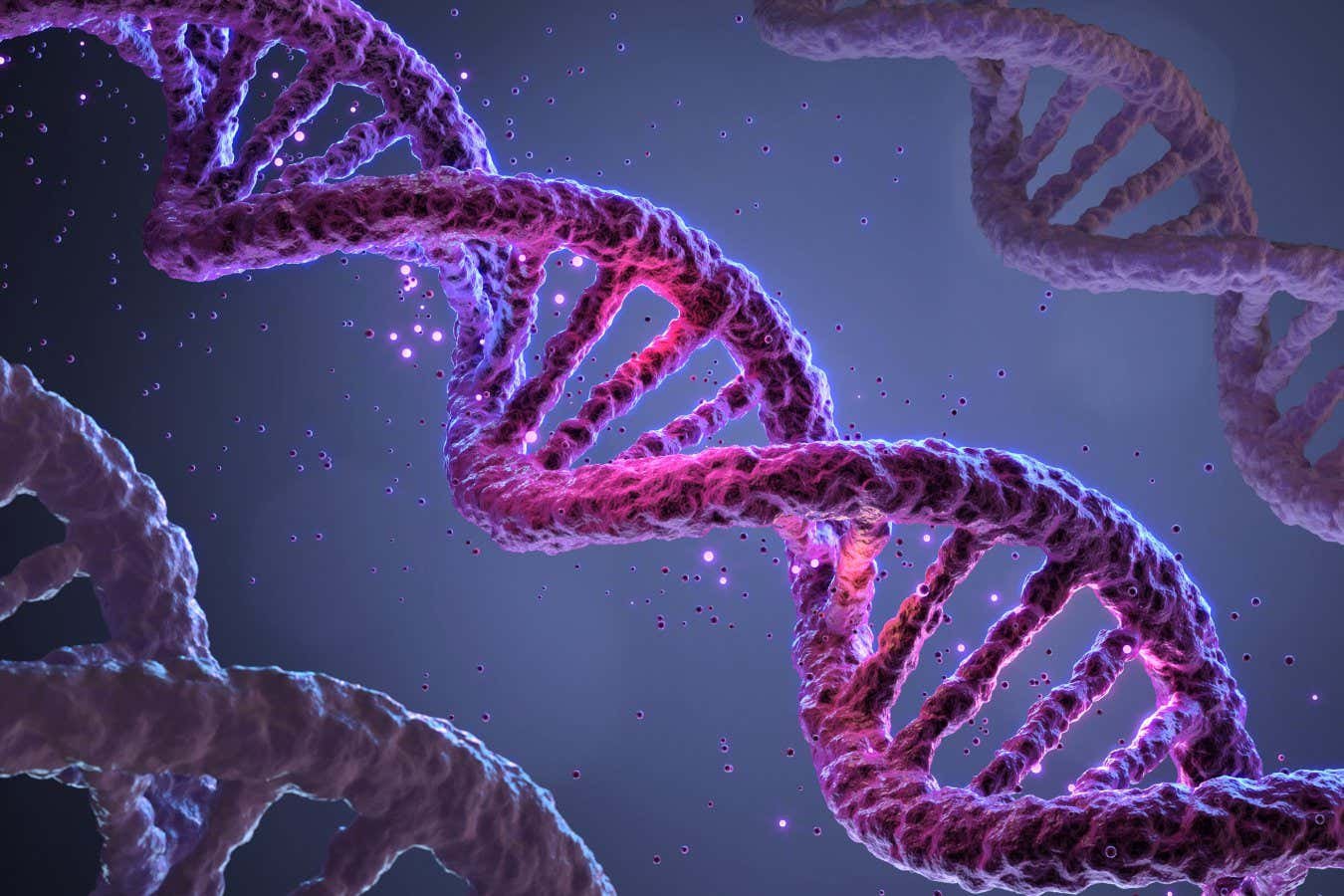
For decades, a quiet insult has lingered at the heart of human biology. Buried deep within our cells, coiled inside the nucleus of nearly every one of our trillions of cells, lies DNA that scientists once dismissed with a casually cruel name: junk. According to this view, only about 2 percent of the human genome truly mattered, because only that small fraction directly coded for proteins. The remaining 98 percent was labeled “junk DNA,” evolutionary debris, genetic clutter left behind by a messy past.
It is difficult to overstate how unsettling this idea was. Could it really be true that almost everything written in our genetic book was meaningless? That the vast majority of our biological inheritance was nothing more than useless noise? Over time, this notion hardened into a popular narrative, repeated in textbooks, documentaries, and casual conversations alike.
Yet science rarely stays still. As tools improved and understanding deepened, that tidy story began to crack. The more researchers explored the so-called junk, the more signals they detected—subtle, complex, and sometimes startling. What once looked like emptiness began to resemble a crowded, dynamic landscape. Today, the question is no longer whether junk DNA is useless, but what it actually does, why it exists, and what it reveals about evolution, health, and human identity itself.
The Birth of the “Junk DNA” Idea
To understand why junk DNA earned its name, we must return to the early days of molecular genetics. When scientists first deciphered the structure of DNA and cracked the genetic code, the central dogma of biology took shape. DNA makes RNA, and RNA makes proteins. Proteins, in turn, perform most of the work in cells, from building structures to catalyzing chemical reactions.
It was natural, then, to assume that the most important parts of DNA were the regions that directly encoded proteins. These segments, called genes, could be identified by their clear instructions for assembling amino acids. When researchers began mapping genomes, however, they encountered an unexpected surprise. In humans and many other organisms, protein-coding genes occupied only a tiny fraction of the total DNA.
The rest did not contain obvious instructions for making proteins. Large stretches consisted of repetitive sequences, fragments of ancient viruses, duplicated regions, and sequences with no apparent function. With limited tools to probe their activity, scientists struggled to assign meaning to this vast genetic territory. In an era focused on efficiency and direct causation, DNA without an obvious role seemed expendable.
Thus, the term “junk DNA” emerged—not as a carefully defined scientific category, but as a convenient shorthand. It reflected a working assumption: if a sequence does not code for a protein and does not appear to affect survival when altered, then it probably does nothing. For a time, this assumption seemed reasonable.
Protein-Coding Genes and the 2 Percent Myth
The idea that only 2 percent of our genome matters rests on a misunderstanding that still echoes today. It is true that only about 1 to 2 percent of human DNA directly codes for proteins. But importance in biology is not limited to protein-coding instructions. A cell is not just a factory churning out proteins; it is a finely tuned system that depends on timing, location, quantity, and coordination.
Genes must be turned on and off at the right moments. Some proteins must be produced in abundance, others only briefly, and some only in specific cell types. These regulatory decisions are written into DNA as well. When researchers equated “useful” with “protein-coding,” they overlooked the complexity of gene control.
The early focus on proteins also reflected technological limitations. Scientists could easily detect protein-coding regions because they followed recognizable patterns. Regulatory sequences, structural elements, and non-coding RNAs were far harder to identify. What could not be seen was often assumed not to exist.
In this sense, junk DNA was not proven useless. It was simply unexplored.
Evolutionary Baggage or Hidden Design?
One powerful argument for junk DNA came from evolutionary theory. Mutations constantly arise in DNA, and natural selection removes those that cause harm. If large regions of DNA could mutate freely without consequences, then they were likely not doing anything important. Over millions of years, such sequences could accumulate errors and expand without penalty.
This view painted junk DNA as a kind of evolutionary landfill, filled with broken genes, viral insertions, and duplicated sequences that once had a purpose but no longer did. Transposable elements, often described as “jumping genes,” were seen as selfish parasites that copied themselves throughout the genome without benefiting the host.
From this perspective, the genome was not a masterpiece of elegant design but a historical record, shaped by accidents, compromises, and leftovers. Junk DNA told a story not of perfection, but of survival—messy, contingent, and inefficient.
Yet even this narrative carried a hidden assumption: that evolution produces only what is immediately useful. In reality, evolution is subtle. Features that seem neutral or redundant can later acquire new functions. Sequences that appear silent may act only under specific conditions, in particular tissues, or at certain stages of development.
The possibility that junk DNA might be more than debris remained open, waiting for evidence.
The Genome as a Dynamic System
As molecular biology advanced, scientists gained tools to look beyond static sequences and observe how DNA behaves in living cells. They began to see the genome not as a simple string of instructions, but as a dynamic, three-dimensional structure. DNA folds, loops, and interacts with proteins in ways that influence gene activity.
In this emerging view, non-coding DNA plays a crucial architectural role. It provides spacing between genes, allowing regulatory elements to interact without interference. It contributes to the physical organization of chromosomes, helping them fit within the nucleus and respond to cellular signals.
Some non-coding regions act as switches, enhancers, or silencers, controlling when and where genes are expressed. Others serve as binding sites for proteins that regulate transcription. Still others are transcribed into RNA molecules that never become proteins but instead regulate gene expression directly.
The genome, it turns out, is not simply a list of recipes. It is a complex operating system, and much of its code does not look like traditional instructions.
The Rise of Non-Coding RNA
One of the most dramatic shifts in our understanding of junk DNA came with the discovery of non-coding RNAs. For a long time, RNA was viewed mainly as a messenger, carrying information from DNA to the protein-making machinery. But researchers soon uncovered entire classes of RNA molecules that never produce proteins at all.
Some non-coding RNAs are short and precise, fine-tuning gene expression by targeting specific messenger RNAs for degradation or suppression. Others are long and enigmatic, stretching across thousands of nucleotides with roles that are still being unraveled. These long non-coding RNAs can influence chromatin structure, guide regulatory proteins, and coordinate gene networks.
Crucially, many of these RNAs are transcribed from regions once labeled as junk. Their existence alone undermines the idea that non-coding DNA is inactive. Transcription is an energetically costly process. Cells do not invest resources lightly. If a sequence is transcribed consistently and in a regulated manner, it strongly suggests function.
The genome, once thought to be mostly silent, hums with activity.
Regulatory DNA and the Symphony of Gene Control
Perhaps the most compelling evidence against the junk DNA label comes from the study of gene regulation. Protein-coding genes do not act in isolation. They are controlled by a vast network of regulatory elements scattered throughout the genome, often far from the genes they influence.
These regulatory sequences act like dimmer switches rather than simple on-off buttons. They adjust the level of gene expression in response to developmental cues, environmental signals, and cellular states. A single gene may be regulated by dozens of such elements, each contributing a subtle influence.
Remarkably, small changes in regulatory DNA can have profound effects on form and behavior without altering the proteins themselves. Many differences between species, and even between individuals, appear to arise not from changes in protein-coding genes but from changes in how those genes are regulated.
This insight reshapes our understanding of evolution. It suggests that complexity and diversity often emerge not from new genes, but from new ways of using existing ones. In this light, the non-coding majority of the genome becomes a powerful engine of innovation rather than a repository of waste.
Transposable Elements: Parasites or Partners?
Transposable elements occupy a large fraction of the human genome and were once the strongest evidence for junk DNA. These sequences can copy and insert themselves into new genomic locations, sometimes disrupting genes and causing disease. Their selfish behavior earned them a reputation as genetic parasites.
Yet this story, too, has grown more complicated. Over evolutionary time, many transposable elements lose their ability to jump and become fixed in the genome. Far from being inert, some of these sequences are repurposed by the host organism. They acquire regulatory functions, serving as promoters, enhancers, or binding sites for transcription factors.
In some cases, entire regulatory networks appear to have been shaped by ancient transposable elements. What began as parasitic invasions were eventually domesticated, transformed into useful components of gene control. The genome, rather than rejecting these intruders entirely, integrated them into its own logic.
This pattern reveals something profound about biology. Evolution does not waste opportunities. Even sequences that arise through selfish or accidental processes can be co-opted for new purposes. Junk, in this sense, becomes raw material.
Development, Complexity, and the Non-Coding Genome
One of the strongest arguments against the uselessness of junk DNA comes from development. The journey from a single fertilized egg to a complex organism requires exquisitely precise control of gene expression. Cells must know when to divide, when to specialize, and when to stop.
Protein-coding genes alone cannot explain this choreography. The instructions for building a body are not simply a list of parts, but a program that unfolds over time. Non-coding DNA provides much of this program, embedding regulatory logic that guides development step by step.
Interestingly, organismal complexity does not correlate well with the number of protein-coding genes. Humans have roughly the same number of genes as some much simpler organisms. What sets us apart is not how many genes we have, but how they are regulated. The expanded non-coding regions of our genome may be one reason for our cognitive, behavioral, and physiological complexity.
Disease, Mutations, and the Cost of Misregulation
If non-coding DNA were truly useless, mutations in these regions would be harmless. Yet medical genetics tells a different story. Many diseases are now known to involve mutations in non-coding regions that disrupt gene regulation rather than protein structure.
Changes in regulatory DNA can cause genes to be expressed at the wrong time, in the wrong place, or at the wrong level. Such misregulation can lead to developmental disorders, cancer, and a wide range of complex diseases. Genome-wide association studies repeatedly find disease-linked variants in non-coding regions, highlighting their functional importance.
This does not mean that every non-coding sequence has a crucial role. The genome is vast, and some regions likely tolerate change without consequence. But the growing evidence shows that dismissing the entire 98 percent as junk is scientifically untenable.
The ENCODE Debate and the Meaning of Function
One of the most public controversies surrounding junk DNA erupted with large-scale projects aimed at cataloging genome activity. Researchers reported that a surprisingly large fraction of the genome shows biochemical activity, such as transcription or protein binding. Headlines proclaimed that junk DNA was dead.
Yet this claim sparked intense debate. Critics argued that biochemical activity does not necessarily imply biological function. Just because a sequence is transcribed or bound by proteins does not mean it plays a meaningful role shaped by natural selection. Some activity could be incidental or tolerated rather than beneficial.
This debate revealed a deeper philosophical issue: what does it mean for DNA to have a function? Is function defined by evolutionary history, by current biochemical activity, or by observable effects on fitness? Different definitions yield different answers.
What emerged was a more nuanced view. Some non-coding DNA has clear, essential functions. Some has subtle or context-dependent roles. Some may truly be evolutionary baggage. The genome is not neatly divided into useful and useless parts. It is a complex mosaic shaped by history, chance, and necessity.
Why the Junk DNA Idea Persisted
The persistence of the junk DNA label says as much about human thinking as it does about biology. We are drawn to simple narratives, especially when confronting overwhelming complexity. The idea that most of the genome is useless offers a comforting reduction, a way to focus on what seems immediately important.
Science, however, often advances by questioning such simplifications. As methods improve, what once looked like noise reveals structure. What once seemed empty becomes crowded with signals. Junk DNA is a reminder that absence of evidence is not evidence of absence.
It also reflects the humility required in science. Labels like “junk” are provisional, shaped by current knowledge and subject to revision. Biology has repeatedly taught us that life is more intricate than we imagine.
A New Metaphor for the Genome
Today, many scientists prefer new metaphors for the genome. Rather than a book filled with meaningless filler, it is seen as a layered system, rich with annotations, footnotes, and formatting cues. Protein-coding genes are like the main text, but the margins, spacing, and punctuation are essential for proper interpretation.
Another metaphor likens the genome to a city. Genes are the buildings, but non-coding DNA forms the roads, infrastructure, zoning laws, and communication networks that allow the city to function. Remove those elements, and the buildings alone are useless.
These metaphors capture a growing appreciation for the genome’s complexity. They also reflect a shift in mindset, from asking whether non-coding DNA is useful to asking how it contributes to the whole.
What Junk DNA Teaches Us About Ourselves
Beyond its scientific implications, the story of junk DNA carries a deeper emotional resonance. It challenges our assumptions about value and purpose. Something dismissed as useless turns out to be intricate, active, and meaningful. This pattern echoes in many human stories, reminding us of the dangers of premature judgment.
The genome also reflects our evolutionary history, written not as a clean narrative but as a layered palimpsest. Ancient viruses, duplicated genes, and regulatory innovations coexist in our DNA, telling a story of survival, adaptation, and chance. We are not the product of a perfect plan, but of a long, winding process that made use of whatever materials were available.
In this sense, junk DNA is profoundly human. It embodies imperfection, reuse, and creativity under constraint.
The Question Revisited: Is the 98 Percent Really Useless?
So, is 98 percent of our genome really useless? The most honest answer is no—but also not entirely no. Much of the genome does not code for proteins, and not every non-coding sequence has a critical function. Some regions may indeed be evolutionary leftovers with minimal impact.
But a substantial portion of what was once dismissed as junk plays essential roles in regulation, structure, development, and adaptation. The non-coding genome is not a passive backdrop. It is an active participant in the drama of life.
The real mistake was not in recognizing that protein-coding genes are special, but in assuming that everything else was worthless. Biology, it turns out, does not waste space without reason. Even apparent excess can harbor potential.
The Ongoing Journey of Discovery
The story of junk DNA is still unfolding. New technologies continue to reveal layers of genome function we could not previously detect. As we learn more, some sequences will gain clear roles, others will remain mysterious, and some may genuinely fade into the background as neutral relics.
What matters most is the lesson this story teaches about science itself. Knowledge evolves. Ideas that once seemed solid can dissolve under new evidence. Curiosity, patience, and humility are essential companions on the path to understanding.
Junk DNA, once a symbol of genetic emptiness, has become a symbol of scientific awakening. It reminds us that the universe, from the vastness of space to the intimacy of our own cells, is richer than our first explanations. And it invites us to keep asking questions, even about the parts we once thought did not matter at all.