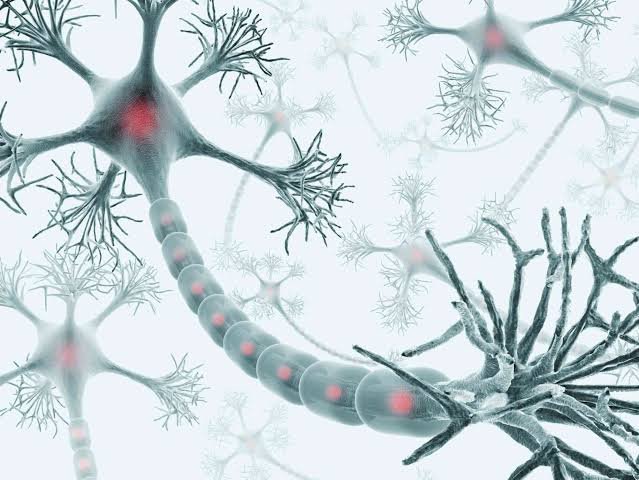
For most of human history, the brain has been imagined as a dark, silent organ hidden inside the skull, working in secrecy while giving rise to thought, memory, emotion, and consciousness. Even as neuroscience advanced, the brain remained metaphorically dim: a place of electrical sparks and chemical whispers that could only be inferred indirectly. Yet today, a striking idea is reshaping how scientists think about neural control and observation. What if the brain could be influenced by light generated from within itself? What if neurons could glow, and that glow could be harnessed to control their activity?
Bioluminescence in the brain is not science fiction, nor is it a poetic metaphor. It is a real, experimentally explored concept that sits at the intersection of neuroscience, genetics, physics, and bioengineering. By combining naturally light-producing biological systems with light-sensitive neural machinery, researchers are exploring whether it is possible to control neurons from the inside out, without external light sources or invasive hardware. This idea has profound implications, not only for neuroscience research but also for medicine, ethics, and our understanding of what it means to interact with the brain.
To understand the promise and the limits of this approach, we must first understand how light works in biology, how neurons communicate, and how modern neuroscience learned to speak the language of light.
Light as a Biological Signal
Light has always been more than illumination in the natural world. Long before humans learned to harness fire or electricity, organisms evolved to sense light, respond to it, and in some cases, produce it. Light carries information. It signals the time of day, the change of seasons, and the presence of other living beings. In biology, light is a messenger.
Vision is the most familiar example of light as a biological signal. Photoreceptor cells in the retina convert photons into electrical signals that the brain interprets as images. But light sensitivity extends far beyond vision. Many organisms use light-sensitive proteins to regulate internal clocks, developmental processes, and behavioral responses. These proteins change shape when they absorb light, triggering cascades of molecular events.
The idea that light can directly influence cellular activity laid the groundwork for one of the most transformative techniques in modern neuroscience: optogenetics. Optogenetics showed that neurons could be genetically modified to respond to light, allowing scientists to turn specific neural circuits on or off with extraordinary precision. This was a revolution, but it depended on delivering light from outside the brain, often through optical fibers implanted deep into neural tissue.
Bioluminescence in the brain proposes something even more radical. Instead of shining light into the brain, what if the brain could generate its own light, precisely where and when it is needed?
The Natural Phenomenon of Bioluminescence
Bioluminescence is the ability of living organisms to produce light through chemical reactions. It is most familiar in fireflies blinking in summer fields, deep-sea creatures glowing in the abyss, and certain fungi emitting eerie light in forests at night. At the molecular level, bioluminescence typically involves a light-emitting molecule, known as luciferin, and an enzyme, known as luciferase. When luciferase catalyzes a reaction involving luciferin, energy is released in the form of visible light.
This process is remarkably efficient. Unlike incandescent light bulbs, which waste most energy as heat, bioluminescent reactions convert chemical energy into light with minimal heat loss. That efficiency is one reason bioluminescence has evolved multiple times independently in nature.
In its natural contexts, bioluminescence serves many functions. It can attract mates, lure prey, confuse predators, or facilitate communication. Importantly, the light produced is biologically compatible. It does not damage tissues or generate harmful heat, making it an attractive candidate for use inside living organisms, including the brain.
The question facing neuroscientists was not whether bioluminescence could exist in the brain, but whether it could be made useful.
Neurons and the Language of Electrical Signals
To understand how light might control neurons, it is essential to understand how neurons normally function. Neurons communicate primarily through electrical signals called action potentials. These signals arise from the movement of ions across the neuronal membrane through specialized proteins known as ion channels.
When a neuron becomes sufficiently excited, voltage-gated ion channels open, allowing charged particles to flow in and out. This generates a rapid change in electrical potential that travels along the neuron’s axon. At synapses, the electrical signal is converted into a chemical one, releasing neurotransmitters that influence neighboring cells.
This electrochemical language is fast, precise, and highly regulated. Even small changes in ion channel activity can profoundly alter neural firing patterns. Because of this sensitivity, neurons are exquisitely responsive to interventions that affect ion channels, whether those interventions are chemical, electrical, or, as optogenetics demonstrated, optical.
Light-sensitive ion channels, when expressed in neurons, can open or close in response to specific wavelengths of light. This allows researchers to control neural activity with temporal precision measured in milliseconds. However, the reliance on external light sources introduces limitations, including tissue damage, scattering of light, and physical constraints imposed by implanted devices.
Bioluminescence offers a potential solution by placing the light source inside the neuron itself.
The Birth of Bioluminescent Neural Control
The idea of using bioluminescence to control neurons emerged from a convergence of technologies. On one side was optogenetics, which had proven that light-sensitive proteins could be used to control neural activity. On the other side was synthetic biology, which had developed tools to express foreign genes, including luciferases, in specific cell types.
If neurons could be engineered to produce light internally, and if that light could activate light-sensitive proteins embedded in the same or nearby neurons, then neural activity could be controlled without external illumination. This concept is often referred to as bioluminescent optogenetics, though it represents a distinct approach from traditional optogenetics.
The earliest experiments focused on demonstrating feasibility. Scientists introduced genes encoding luciferase into neurons and provided the necessary chemical substrate, luciferin. When the reaction occurred, neurons emitted faint light. On its own, this light did nothing. But when neurons were also engineered to express light-sensitive ion channels tuned to the emitted wavelength, something remarkable happened: the neurons responded to their own light.
This was a closed-loop system at the molecular level. Chemical energy was converted into light, and light was converted into electrical activity. For the first time, neurons could be controlled from within, using biological components alone.
Precision, Timing, and Control
One of the most powerful features of light-based neural control is precision. Traditional methods, such as electrical stimulation or pharmacological intervention, often affect large populations of neurons indiscriminately. Light-based methods, by contrast, can target specific cell types or even individual neurons, depending on how the genetic components are delivered.
Bioluminescent approaches add another layer of control. Because the light source is genetically encoded, it can be restricted to particular cells or circuits. Because the light-producing reaction depends on chemical substrates, neural activation can be modulated by controlling when and where those substrates are available.
Timing is crucial in the brain. Neural circuits operate on precise temporal patterns, and even slight disruptions can alter behavior or perception. Bioluminescent systems tend to produce light more slowly and less intensely than external lasers or LEDs. This slower timescale can be a limitation for certain applications, but it can also be an advantage when studying processes that unfold over longer periods, such as mood regulation, learning, or developmental changes.
The subtlety of bioluminescent activation aligns well with the brain’s own rhythms. Rather than overwhelming neurons with intense light, bioluminescence offers a gentle, biologically integrated signal.
Seeing the Brain Glow
Beyond control, bioluminescence also offers a new way to observe neural activity. Bioluminescent markers can be designed to emit light in response to specific cellular events, such as changes in calcium concentration or gene expression. When neurons activate, they can literally light up, revealing patterns of activity in real time.
This approach avoids some of the drawbacks of fluorescent imaging, which requires external illumination and can cause phototoxicity or bleaching. Bioluminescent imaging produces less background noise and can penetrate deeper into tissue, making it particularly useful for studying intact brains in living organisms.
The emotional impact of this idea should not be underestimated. The thought of a living brain softly glowing as it thinks, remembers, or feels is both scientifically profound and deeply poetic. It transforms abstract neural activity into something visible, almost tangible, bridging the gap between mind and matter.
Applications in Neuroscience Research
In research settings, bioluminescent neural control opens new possibilities for studying brain function. It allows scientists to manipulate neural circuits over extended periods without tethering animals to optical fibers or bulky equipment. This makes it easier to study natural behaviors, social interactions, and long-term changes in brain activity.
Bioluminescent systems can also be combined with genetic targeting strategies to focus on specific cell types, such as inhibitory neurons, excitatory neurons, or glial cells. By selectively activating or silencing these populations, researchers can dissect their roles in complex behaviors and neurological disorders.
Importantly, bioluminescent approaches reduce physical invasiveness. Fewer implants mean less tissue damage and inflammation, leading to more reliable and humane experiments. This aligns with broader efforts in neuroscience to develop minimally invasive techniques that respect the integrity of living systems.
Medical Potential and Therapeutic Visions
Beyond the laboratory, the idea of using light to control neurons carries enormous medical potential. Many neurological and psychiatric disorders arise from dysfunctional neural circuits. Conditions such as epilepsy, Parkinson’s disease, depression, and chronic pain involve abnormal patterns of neural activity.
Current treatments often rely on drugs that affect the entire brain or on electrical stimulation devices that require surgical implantation. Both approaches have limitations and side effects. Bioluminescent neural control suggests an alternative: targeted, genetically programmed modulation of specific circuits, activated by harmless chemical triggers.
In principle, neurons involved in pathological activity could be engineered to produce light that activates inhibitory channels, dampening excessive firing. Conversely, underactive circuits could be gently stimulated. Because the system is biologically integrated, it could adapt to the brain’s own dynamics, offering a more natural form of intervention.
However, these applications remain speculative. Significant challenges must be overcome before bioluminescent approaches can be used in humans, including safe gene delivery, precise regulation of light production, and long-term stability.
Challenges and Limitations
Despite its promise, bioluminescence in the brain is not a magic solution. The amount of light produced by biological reactions is extremely small. While sufficient to activate highly sensitive light-responsive proteins, it cannot match the intensity or speed of external light sources. This limits the range of neural responses that can be reliably controlled.
Another challenge is the need for chemical substrates. Luciferin must be supplied to the cells, either through systemic administration or localized delivery. Controlling the distribution and timing of these substrates adds complexity and potential variability.
There are also metabolic considerations. Although bioluminescent reactions are efficient, they still consume cellular resources. Long-term or widespread use could place metabolic stress on neurons, which are already among the most energy-demanding cells in the body.
Finally, translating these techniques to large brains presents additional difficulties. Light scattering, genetic targeting, and immune responses all become more complex as scale increases.
Ethical Reflections on Light and Control
Any technology that allows direct control of neural activity raises ethical questions, and bioluminescent approaches are no exception. The idea of controlling the brain from within, using genetically encoded systems, touches on concerns about autonomy, consent, and identity.
Even in research settings, careful consideration is required to ensure that interventions are justified, reversible, and transparent. In potential clinical applications, the ethical stakes are even higher. Who decides which circuits should be modified? How are risks communicated? What safeguards prevent misuse?
At the same time, it is important to recognize that neuroscience has always involved interventions in the brain, from medication to surgery. Bioluminescent techniques do not introduce entirely new ethical categories but rather intensify existing ones. Their development provides an opportunity to rethink how society governs emerging neurotechnologies.
A New Relationship Between Physics and Biology
The exploration of bioluminescence in the brain highlights a deeper trend in modern science: the merging of disciplines. Physics provides the understanding of light, energy, and signal transmission. Biology provides the molecular machinery and evolutionary context. Neuroscience provides the questions about mind and behavior.
This convergence reflects a broader realization that complex phenomena cannot be fully understood within isolated fields. The brain is not just a biological organ; it is a physical system governed by energy flows, information processing, and dynamic interactions. Light, once considered an external probe, becomes an internal participant in neural function.
This shift challenges traditional boundaries and invites new ways of thinking about life and consciousness.
The Future: Glowing Minds and Open Questions
As research continues, the future of bioluminescent neural control remains open. Advances in protein engineering may produce brighter, faster, and more controllable light-producing systems. New light-sensitive proteins may respond to even weaker signals, expanding the range of possible applications.
At the same time, fundamental questions remain. How does introducing artificial light sources into neurons affect long-term brain development and function? Can these systems be precisely regulated over years or decades? How does the brain adapt to new modes of internal signaling?
There is also a philosophical dimension. If neural activity can be guided by light generated from within, does that change how we think about agency and causation in the brain? Does it blur the line between natural and engineered processes, or does it simply reveal that the brain has always been a system open to influence?
Why Bioluminescence in the Brain Matters
Bioluminescence in the brain matters not because it promises instant cures or dramatic control, but because it represents a new way of engaging with one of the most complex systems in the universe. It shows that even in the darkness of the skull, light can play a role, not as an intrusive force, but as a subtle, integrated signal.
This idea resonates on an emotional level. Light has always symbolized knowledge, awareness, and life. To imagine the brain using light to shape its own activity is to imagine understanding emerging from within, guided by the same principles that govern stars and fireflies.
In the end, bioluminescence in the brain is not just about controlling neurons. It is about learning to listen to the brain in its own language, to work with its natural dynamics rather than against them. It is about humility as much as innovation, recognizing that the most powerful technologies often arise not from imposing our will on nature, but from learning how to collaborate with it.
The brain may never glow brightly enough to see with the naked eye, but the ideas illuminated by bioluminescent neuroscience are already shining a light on the future of how we understand and interact with the mind.