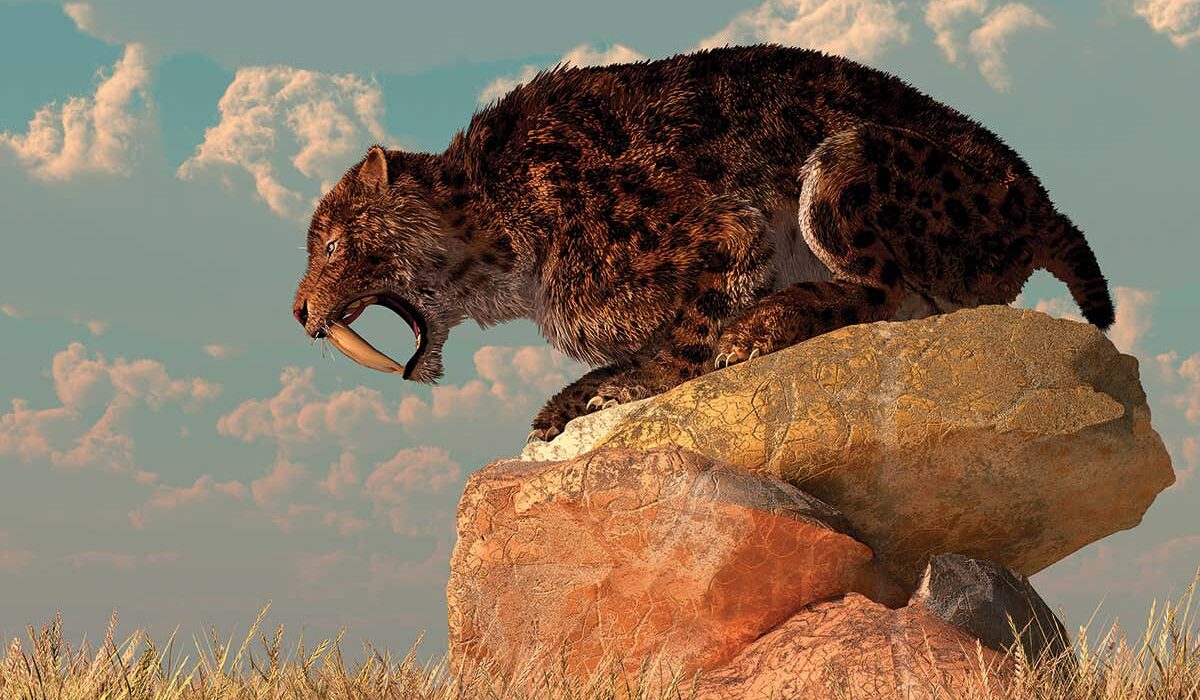
On a quiet day 66 million years ago, Earth looked very different from the world we know today. Dense forests stretched across continents. Vast inland seas divided landmasses. Towering dinosaurs roamed the plains, hunted in the forests, and soared through prehistoric skies. For more than 160 million years, these creatures had dominated life on Earth.
Then, in a moment of cosmic violence, everything changed.
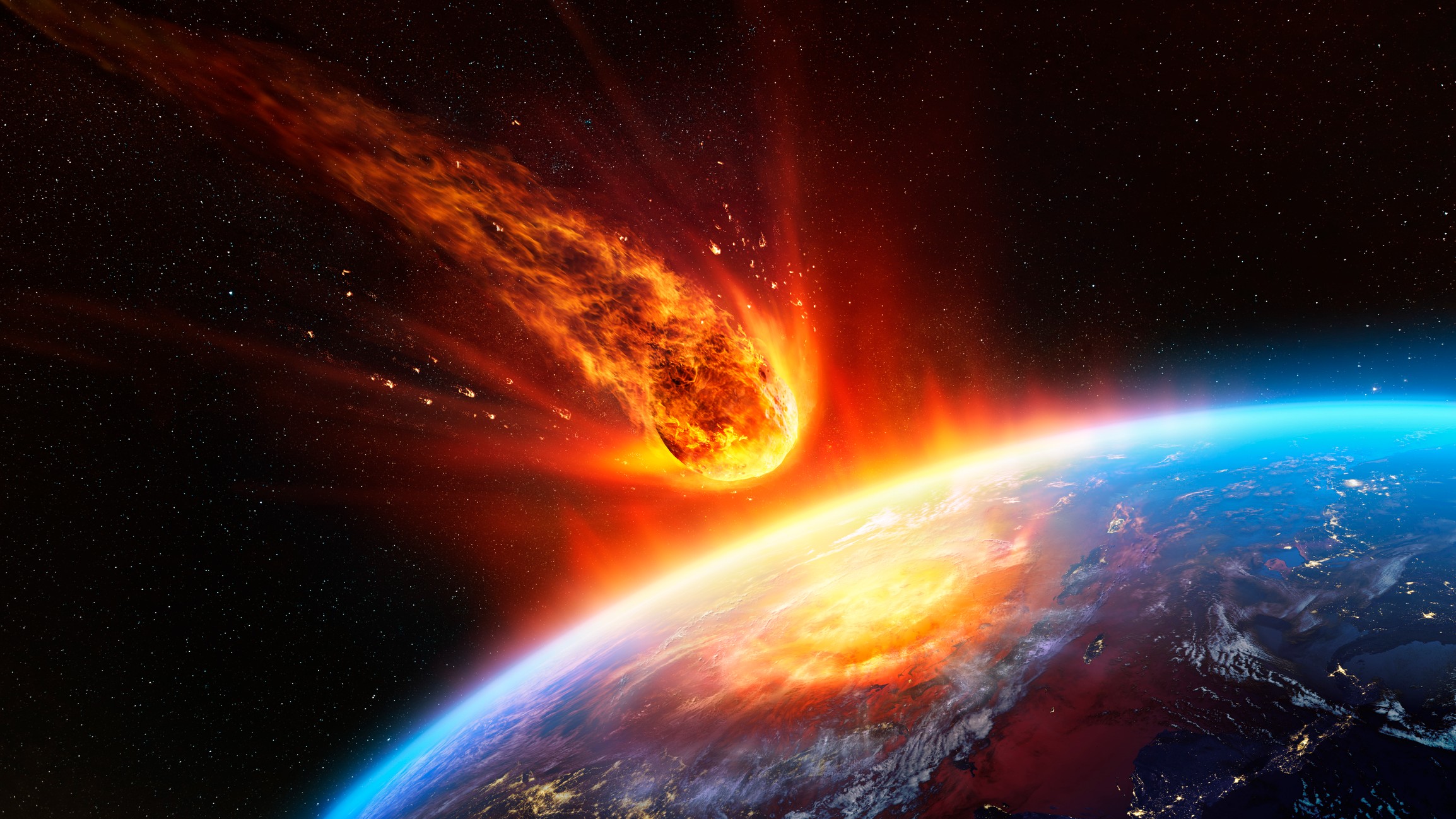
A mountain-sized asteroid slammed into the planet with unimaginable force. Within hours, fires raged across continents, shockwaves rippled through the atmosphere, and oceans surged outward in towering waves. Dust and debris rose high into the sky, blocking sunlight for months or even years. Ecosystems collapsed. Food chains disintegrated.
By the end of that catastrophe, about three quarters of all species on Earth had vanished. The age of dinosaurs ended, and a new evolutionary chapter began.
The story of that ancient disaster is not just a tale about the past. It is also a warning. Paleontology—the science that studies ancient life through fossils—has revealed that Earth has experienced multiple mass extinctions, some triggered by cosmic impacts. These discoveries force us to confront a profound question.
Could an asteroid strike Earth again?
The answer is yes. But understanding how likely it is, how dangerous it might be, and what humanity can do about it requires a journey through geology, astronomy, and the deep history of life itself.
The Evidence Hidden in Stone
For centuries, scientists believed that Earth’s history unfolded slowly and gradually. Mountains rose, oceans shifted, species evolved and disappeared—but these processes seemed to take place over immense spans of time.
This idea began to change in the late twentieth century when paleontologists noticed something peculiar in the fossil record. At certain layers of rock, large numbers of species disappeared abruptly. One of the most dramatic examples occurred at the boundary between the Cretaceous and Paleogene periods.
This boundary marks the moment when non-avian dinosaurs vanished.
In 1980, a team led by Luis Walter Alvarez and his son Walter Alvarez discovered an unusual layer of clay at this boundary that contained unusually high concentrations of iridium, a rare metal on Earth but common in asteroids.
Their discovery suggested something extraordinary: the extinction might have been caused by a massive asteroid impact.
Soon after, researchers identified the enormous Chicxulub Crater buried beneath sediments in the Yucatán Peninsula. This crater, roughly 180 kilometers wide, matched the timing of the extinction event almost perfectly.
The evidence was overwhelming. The extinction that wiped out the dinosaurs was triggered by a cosmic collision.
Paleontology had uncovered a terrifying truth. Life on Earth can be profoundly shaped—and sometimes devastated—by events originating far beyond our planet.
The Day the Dinosaurs Died
Reconstructing what happened when the Chicxulub asteroid struck Earth is like piecing together a planetary crime scene. Fossils, rock layers, and modern simulations help scientists understand how the catastrophe unfolded.
The asteroid was likely about 10 to 12 kilometers wide. Traveling at tens of thousands of kilometers per hour, it slammed into shallow ocean waters near what is now Mexico.
The energy released was equivalent to billions of nuclear bombs.
The impact blasted a crater deep into Earth’s crust and vaporized vast quantities of rock and seawater. Molten debris rained down across the planet. Shockwaves traveled through the atmosphere and ground, triggering earthquakes and volcanic activity.
Massive tsunamis surged through oceans, flooding coastal regions thousands of kilometers away.
But the most devastating effect came afterward.
Dust, soot, and sulfur compounds filled the atmosphere, blocking sunlight and plunging the planet into darkness. Temperatures dropped dramatically. Photosynthesis slowed or stopped entirely. Plants died, followed by herbivores, then predators.
Entire ecosystems collapsed.
Only a small fraction of species survived the global catastrophe.
Paleontology and the Record of Mass Extinctions
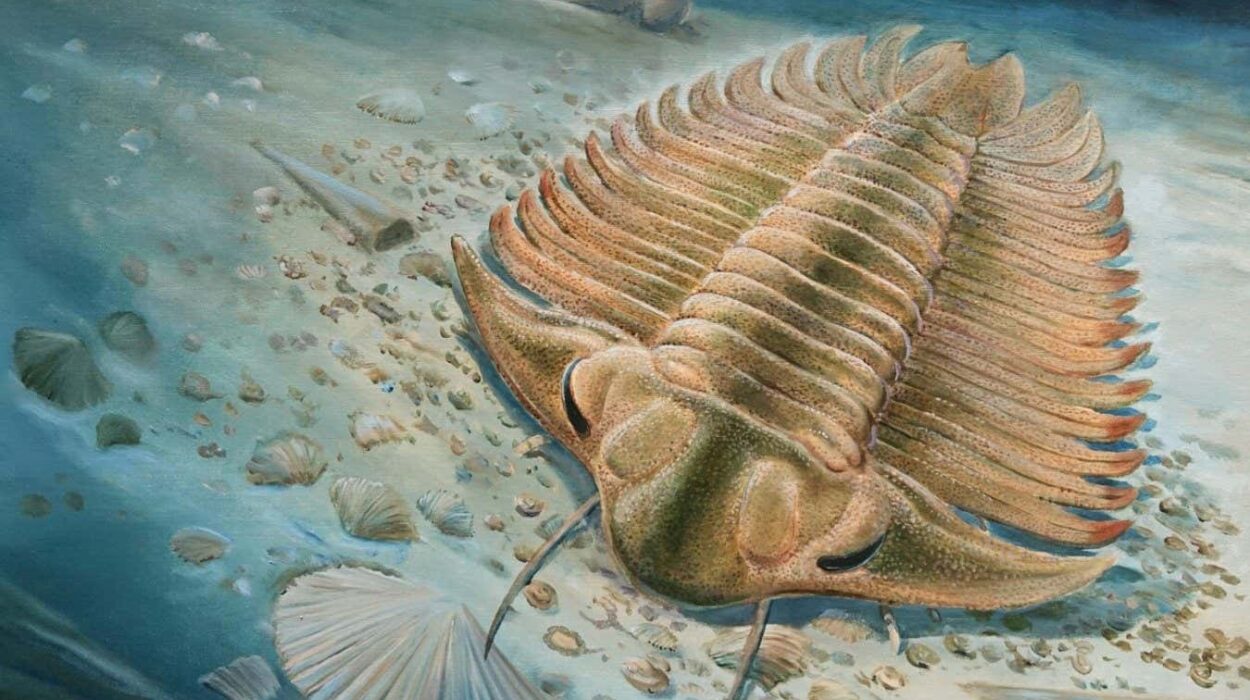
The dinosaur extinction was not the only mass extinction in Earth’s history. Paleontology has revealed at least five major extinction events in which a large percentage of species disappeared in relatively short geological periods.
These events reshaped life on Earth.
One of the most devastating occurred about 252 million years ago during the Permian–Triassic extinction, when roughly 90 percent of marine species vanished. Another major event took place around 444 million years ago at the end of the Ordovician period.
Each extinction has its own causes, including volcanic eruptions, climate shifts, ocean chemistry changes, and asteroid impacts.
The key lesson from paleontology is that Earth’s biosphere is not invincible. Life can flourish for millions of years, but under extreme conditions, it can collapse suddenly.
Cosmic impacts represent one of the most dramatic of these threats.
Asteroids: Remnants of Solar System Formation
To understand the risk of another impact, scientists study asteroids themselves. These rocky bodies are remnants from the early formation of the solar system about 4.6 billion years ago.
During that time, dust and gas surrounding the young Sun gradually clumped together to form planets. Not all material became part of these worlds. Some remained as smaller bodies—asteroids and comets.
Most asteroids reside in a region between Mars and Jupiter known as the Asteroid Belt.
However, gravitational interactions can send some of these objects into new orbits that cross Earth’s path.
These objects are known as near-Earth asteroids.
While most are relatively small, even a modest asteroid can cause significant damage if it strikes the planet.
Near-Earth Objects and Planetary Risk
Astronomers monitor thousands of objects known collectively as near-Earth objects, or NEOs. These include both asteroids and comets whose orbits bring them relatively close to Earth.
Space agencies such as NASA and European Space Agency operate monitoring programs that track these bodies.
Many telescopes scan the sky nightly, searching for faint moving points of light. When an asteroid is detected, scientists calculate its orbit and determine whether it poses any potential danger.
So far, no known asteroid large enough to cause global catastrophe is on a collision course with Earth in the foreseeable future.
Yet new objects continue to be discovered.
The solar system is vast, and many asteroids remain undetected.
How Often Do Large Impacts Occur?
Large asteroid impacts are rare on human timescales but inevitable on geological timescales.
Impacts the size of the Chicxulub event are estimated to occur roughly once every 100 million years.
Smaller impacts happen more frequently.
An asteroid about one kilometer in diameter could cause global climate disruption if it struck Earth. Events of this size may occur every several hundred thousand years.
Even smaller objects can still be dangerous.
In 2013, a roughly 20-meter asteroid exploded in the atmosphere above the Russian city of Chelyabinsk, producing a powerful shockwave that shattered windows and injured over a thousand people.
This event demonstrated that cosmic hazards are not merely theoretical.
What Paleontology Teaches About Impact Consequences
Paleontology provides crucial insight into what happens after major impacts.
Fossils reveal how ecosystems respond to sudden environmental collapse. After the dinosaur extinction, the fossil record shows a dramatic reduction in biodiversity.
Entire groups disappeared.
Yet life also proved resilient. Surviving species adapted to new conditions, and over millions of years, ecosystems recovered.
Mammals, once small and relatively insignificant creatures during the age of dinosaurs, diversified rapidly after the extinction. Eventually, this evolutionary expansion produced primates and, much later, humans.
The same catastrophe that destroyed dinosaurs opened ecological space for new forms of life.
From a paleontological perspective, extinction events are both destructive and transformative.
Could Humanity Survive a Large Impact?
The question naturally arises: if an asteroid similar to the Chicxulub object struck Earth today, what would happen?
Modern civilization depends on interconnected systems—agriculture, electricity, transportation, and global communication.
A major impact could disrupt these systems on a global scale.
If dust and aerosols blocked sunlight for extended periods, crop failures could occur worldwide. Supply chains might collapse. Climate shifts could trigger cascading ecological crises.
Humanity might survive, but civilization as we know it could face severe disruption.
The fossil record suggests that recovery from mass extinctions takes millions of years.
Modern Planetary Defense Efforts
Unlike dinosaurs, humans possess something extraordinary: the ability to detect and potentially prevent cosmic impacts.
Planetary defense has become a growing area of scientific research.
Astronomers track near-Earth objects, while engineers develop strategies to deflect dangerous asteroids.
One promising technique involves altering an asteroid’s trajectory slightly so that it misses Earth.
In 2022, NASA conducted a groundbreaking experiment known as the Double Asteroid Redirection Test.
A spacecraft deliberately collided with a small asteroid moonlet, successfully changing its orbit.
This experiment demonstrated that humanity may be capable of defending the planet against certain impact threats.
The Limits of Prediction
Despite advances in technology, predicting asteroid impacts remains challenging.
Small asteroids can approach from directions difficult to observe, such as near the Sun’s glare. Others may be discovered only weeks or days before passing close to Earth.
Astronomers continue expanding search programs to detect more objects earlier.
Space-based telescopes may soon improve detection capabilities dramatically, allowing scientists to identify most potentially hazardous asteroids decades before they could threaten Earth.
Early detection is the key to prevention.
The Cosmic Perspective
Asteroid impacts remind us that Earth exists within a dynamic and sometimes dangerous cosmic environment.
Our planet travels through space alongside countless other bodies—asteroids, comets, and fragments left over from the solar system’s formation.
Over billions of years, these objects have collided with planets repeatedly.
Earth’s surface bears scars of these collisions, though erosion and tectonic activity have erased many ancient craters.
On the Moon and Mars, where geological processes are slower, the evidence remains strikingly visible.
These cratered landscapes testify to the violent history of the solar system.
Paleontology’s Deeper Warning
Paleontology offers more than historical knowledge. It provides perspective on the fragility and resilience of life.
The fossil record shows that no species lasts forever. Even dominant groups—like dinosaurs—can vanish suddenly under extraordinary circumstances.
Human civilization has existed for only a tiny fraction of Earth’s history. Our technology is powerful, but our species remains vulnerable to natural forces far beyond our control.
Asteroid impacts are one of those forces.
Yet paleontology also shows that life adapts, evolves, and persists through unimaginable hardships.
The history of life is a story of survival against overwhelming odds.
Humanity’s Role in the Future
For the first time in Earth’s history, a species possesses the knowledge and technology to potentially prevent a natural mass extinction caused by cosmic impact.
This possibility places humanity in a unique position.
Monitoring the skies, developing deflection strategies, and understanding planetary risks are not merely scientific endeavors. They are acts of planetary stewardship.
The same curiosity that led scientists to study fossils and discover the Chicxulub crater now drives efforts to protect Earth from similar events.
In a sense, paleontology has given humanity a warning message written in stone.
Looking Upward
On clear nights, when we look up at the stars, the sky appears calm and timeless. The constellations move slowly across the heavens, and the vastness of space feels distant and serene.
But the universe is not static.
Asteroids drift silently through the darkness. Comets sweep inward from distant regions of the solar system. Planetary orbits shift under the pull of gravity.
Occasionally, one of these wandering bodies crosses paths with Earth.
Millions of years ago, such an encounter reshaped life on this planet.
Could it happen again?
Yes.
But unlike the dinosaurs, we have the ability to see the danger coming.
And perhaps, if we remain vigilant, the knowledge uncovered by paleontology will not only tell us how worlds change—it may help ensure that the next great extinction never happens at all.