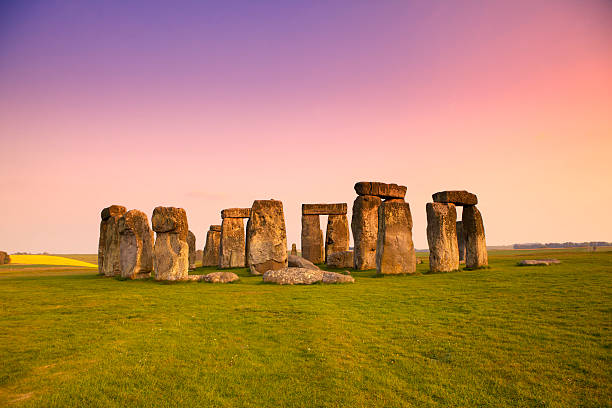
Long before skyscrapers pierced the clouds and steel bridges stitched continents together, human beings were already moving mountains. With stone tools, ropes, wooden rollers, and collective determination, ancient societies across the globe raised enormous blocks of rock into monuments that still defy easy explanation. These are megaliths—literally “great stones”—and they stand as silent witnesses to human ingenuity, belief, and ambition.
Megalithic structures were built in different eras and for different purposes. Some served as tombs. Others appear to have been ceremonial centers, astronomical observatories, defensive walls, or symbols of power. Many were constructed without mortar, their massive stones carefully shaped and fitted together with astonishing precision. Some align with the rising sun on solstices. Others are carved with mysterious symbols. A few were abandoned mid-construction, leaving behind clues but no clear answers.
What makes them mysterious is not magic or fantasy, but the gaps in our knowledge. We know they were built by human hands. Archaeology, geology, and engineering have demonstrated plausible techniques for quarrying, transporting, and raising these stones. Yet questions remain about the social organization, spiritual motivations, and technical knowledge of the people who created them.
Here are twelve of the world’s most enigmatic megalithic structures, each one a chapter in humanity’s ancient story.
1. Stonehenge
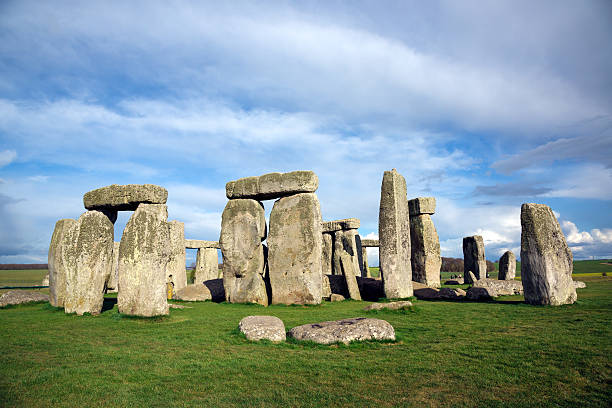
Rising from the rolling plains of southern England, Stonehenge is perhaps the most famous megalithic monument on Earth. Its massive sarsen stones, arranged in circles and horseshoe shapes, were erected in stages between roughly 3000 and 2000 BCE.
Archaeological research shows that the bluestones at Stonehenge were transported from the Preseli Hills in Wales, more than 200 kilometers away. Whether they were dragged over land, floated along rivers, or moved through a combination of methods remains debated, but experimental archaeology demonstrates that human labor and simple tools could accomplish such feats.
Stonehenge’s alignment with the sunrise on the summer solstice and the sunset on the winter solstice suggests astronomical significance. Excavations have uncovered cremated remains, indicating it also functioned as a burial site. It may have been a ceremonial gathering place, a symbol of unity among distant communities, or a monument to ancestors.
Despite centuries of study, Stonehenge continues to invite interpretation. It stands as a testament to prehistoric engineering and shared belief.
2. Göbekli Tepe
Far older than Stonehenge, Göbekli Tepe in southeastern Turkey dates back to around 9600 BCE. This extraordinary site predates agriculture in the region, challenging long-held assumptions about the relationship between farming and monumental construction.
At Göbekli Tepe, massive T-shaped limestone pillars, some weighing up to 20 tons, were arranged in circular enclosures. The pillars are carved with intricate reliefs of animals—foxes, snakes, vultures, and wild boars—suggesting symbolic or ritual meaning.
The builders were hunter-gatherers, not settled farmers. This discovery revolutionized our understanding of early human societies. It suggests that complex religious or social gatherings may have preceded and perhaps even encouraged the development of agriculture.
The site was intentionally buried in antiquity, preserving it for millennia. Why it was covered remains unknown, adding another layer to its mystery.
3. Great Pyramid of Giza
Constructed around 2560 BCE during the reign of Pharaoh Khufu, the Great Pyramid of Giza is the largest of Egypt’s pyramids and the only surviving wonder of the ancient world.
Built from an estimated 2.3 million limestone and granite blocks, some weighing several tons, the pyramid was originally encased in polished white limestone that reflected sunlight brilliantly. Its alignment with the cardinal directions is remarkably precise.
Archaeological evidence, including workers’ villages and inscriptions, shows that the pyramid was built by a large, organized labor force rather than enslaved people as once believed. Ramps, levers, and coordinated manpower likely played key roles in its construction.
The pyramid served as a tomb, part of a larger complex intended to ensure the pharaoh’s journey into the afterlife. Yet debates continue about specific construction methods and the symbolic meaning of its internal chambers and passages.
4. Carnac Stones
In the coastal region of Brittany, thousands of standing stones stretch across the landscape in parallel rows. The Carnac Stones, erected between 4500 and 3300 BCE, form one of the largest megalithic complexes in the world.
Some stones stand alone; others form circles or alignments that extend for kilometers. Their purpose remains uncertain. Hypotheses include astronomical observation, territorial markers, ritual pathways, or memorials to the dead.
Excavations have revealed nearby tombs and artifacts, linking the stones to Neolithic communities. The scale of coordination required to erect such vast alignments suggests strong social organization and shared cultural meaning.
The silence of Carnac is haunting. Each stone stands like a sentinel, guarding secrets buried beneath centuries of soil and myth.
5. Moai of Easter Island
On the remote Pacific island of Rapa Nui, nearly 900 massive stone statues known as moai gaze across the land. Carved between the 13th and 16th centuries by the Rapa Nui people, these figures represent ancestral chiefs or important individuals.
Most moai were carved from volcanic tuff at a quarry called Rano Raraku. Some stand over 10 meters tall and weigh more than 70 tons. Archaeologists have demonstrated that the statues could be “walked” upright using ropes and coordinated rocking motions, a method supported by oral traditions.
The moai were placed on stone platforms called ahu and often faced inland, watching over villages. Their construction reflects complex social and spiritual systems. Environmental challenges and societal changes eventually led to the cessation of moai building.
The statues remain powerful symbols of human creativity and resilience in isolation.
6. Machu Picchu
Perched high in the Andes Mountains, Machu Picchu was built in the 15th century by the Inca civilization. Although not prehistoric in the same sense as other megaliths, its precisely fitted stonework exemplifies advanced megalithic engineering.
The Incas shaped granite blocks so precisely that they fit together without mortar, resisting earthquakes that frequently strike the region. The city includes temples, terraces, and astronomical features aligned with celestial events.
Machu Picchu was likely a royal estate or ceremonial center rather than a city of thousands. Its remote location helped preserve it after the Spanish conquest.
The site demonstrates how megalithic traditions continued into more recent historical periods, blending architecture with astronomy and landscape.
7. Newgrange
Older than both Stonehenge and the Great Pyramid, Newgrange dates to around 3200 BCE. This large passage tomb consists of a circular mound with a stone-lined corridor leading to a central chamber.
On the winter solstice, sunlight enters through a specially constructed roof box and illuminates the inner chamber for about 17 minutes. This precise alignment suggests sophisticated astronomical knowledge.
The stones of Newgrange are decorated with spirals and geometric carvings whose meanings remain uncertain. The monument was rediscovered in the 17th century and later excavated and restored.
Newgrange reveals how deeply Neolithic communities connected architecture with cosmic cycles.
8. Nan Madol
Built atop coral reefs in the Pacific Ocean, Nan Madol consists of nearly 100 artificial islets constructed from basalt columns. It served as a ceremonial and political center for the Saudeleur dynasty between the 13th and 17th centuries.
The basalt logs, some weighing several tons, were transported from distant quarries. How they were moved across water remains a subject of investigation, though rafts and coordinated labor are considered plausible.
Nan Madol’s canals and stone walls create an otherworldly atmosphere. Local legends speak of supernatural assistance, but archaeology confirms human ingenuity and organization.
The city’s remote location and unusual design make it one of the world’s most intriguing megalithic sites.
9. Baalbek
In the Roman temple complex at Baalbek lie some of the largest stone blocks ever used in construction. The so-called Trilithon stones weigh up to 800 tons each.
Although the visible temples date to Roman times, the massive foundation stones may incorporate earlier construction phases. Quarrying and transporting such enormous blocks would have required advanced engineering techniques, including rollers, sledges, and coordinated manpower.
Baalbek illustrates how megalithic traditions were adopted and expanded by classical civilizations. The sheer scale of its stones continues to inspire awe.
10. Yonaguni Monument
Off the coast of Yonaguni Island lies a submerged rock formation with terraces and sharp angles. Some researchers argue it is a natural formation shaped by geological processes, while others propose it may include human modification dating back thousands of years.
Marine geology studies show that sandstone can fracture along straight lines, creating step-like structures. No definitive artifacts have confirmed large-scale human construction underwater.
The debate itself is part of the monument’s mystery. Yonaguni challenges scientists to distinguish between natural and human-made patterns in ancient landscapes.
11. Sacsayhuamán
Near Cusco stands Sacsayhuamán, a fortress complex built by the Inca in the 15th century. Its zigzagging walls are composed of enormous limestone blocks fitted together without mortar.
Some stones weigh more than 100 tons and are shaped with multiple angles to interlock tightly. The precision of the stonework allowed the walls to withstand earthquakes.
Sacsayhuamán was both a military and ceremonial site. Its design reflects Inca cosmology and state power.
The site demonstrates how megalithic construction can combine practicality with symbolism.
12. Rujm el-Hiri
Rujm el-Hiri, also known as Gilgal Refaim, consists of concentric circles of basalt stones surrounding a central tumulus. Built around the 3rd millennium BCE, it spans more than 150 meters in diameter.
Its purpose remains debated. Some researchers suggest astronomical alignments with solstices and equinoxes. Others propose it functioned as a burial or ritual site.
The remote location and lack of extensive artifacts leave many questions unanswered. Yet its scale indicates significant communal effort.
The Enduring Mystery of Megaliths
What unites these twelve structures is not a single culture or time period, but a shared human impulse: to shape the landscape with enduring stone. These monuments required planning, cooperation, and belief. They reveal societies capable of organizing labor, mastering tools, and expressing complex ideas through architecture.
Modern archaeology, geology, and engineering have demystified many aspects of megalithic construction. We understand quarrying techniques, transport methods, and structural stability far better than in the past. Yet the emotional and symbolic worlds of their builders remain partly hidden.
Megaliths are reminders that ancient people were neither primitive nor simplistic. They were thinkers, observers of the sky, organizers of communities, and storytellers in stone. Their monuments continue to challenge us—not because they are beyond human capability, but because they invite us to imagine the minds and hearts that conceived them.
In standing before these great stones, we confront both mystery and continuity. The same curiosity that drives modern science once drove hands to lift, carve, and align these massive blocks. Across millennia, the human desire to understand and shape the world remains unbroken.
The stones endure. And in their enduring presence, they whisper that history is deeper, richer, and more astonishing than we ever fully grasp.