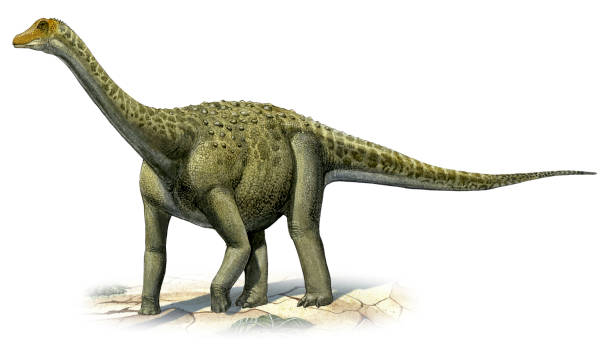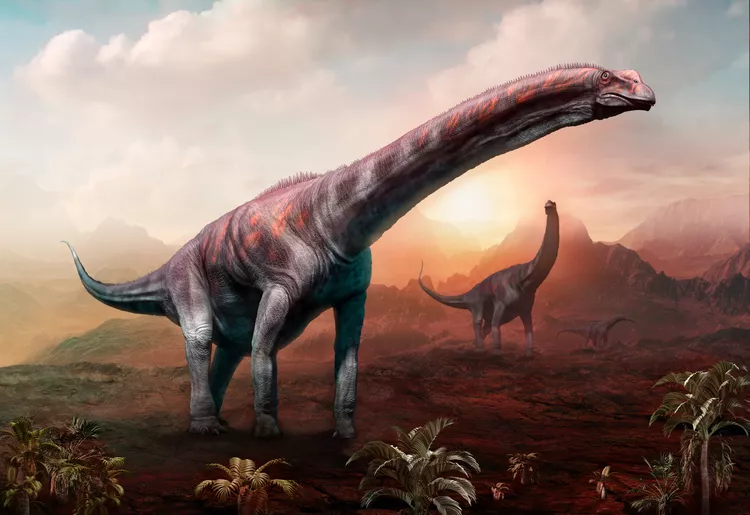
For more than a century, Tyrannosaurus rex has dominated the public imagination as the ultimate giant of the dinosaur world. Its immense skull, bone-crushing bite, and towering height have made it a symbol of prehistoric power. Yet in the vast sweep of Earth’s evolutionary history, T. rex was not the largest dinosaur to walk the planet—not even close.
The idea of “bigger” in paleontology requires careful scientific definition. Size can mean body mass, total length, height at the shoulder, or even volume of specific anatomical structures. A dinosaur longer than T. rex might not necessarily outweigh it. Another might weigh far more but have a shorter body. Fossil evidence is often incomplete, meaning size estimates are derived from comparisons with related species and mathematical modeling of bone structure.
Even with these uncertainties, paleontologists agree that numerous dinosaurs surpassed T. rex in sheer scale. Most belonged to a group known as sauropods—long-necked herbivores whose bodies were built for extraordinary size. Their evolutionary strategy favored massive torsos, elongated necks, and pillar-like limbs capable of supporting immense weight.
These giants reshaped landscapes as they moved. They consumed enormous quantities of vegetation. Their presence defined entire ecosystems.
The following ten dinosaurs did not merely rival T. rex—they exceeded it dramatically, in length, mass, or both. Each represents a different pathway through which evolution achieved extreme size.
1. Argentinosaurus — The Titan of Patagonia
Among all known dinosaurs, Argentinosaurus stands as one of the most massive terrestrial animals ever to exist. Discovered in Patagonia, Argentina, this enormous sauropod lived during the Late Cretaceous period, roughly 95 million years ago.
Although only partial skeletal remains have been found, scaling analyses suggest a body length approaching 30 to 35 meters and a weight possibly exceeding 70 tonnes. That is more than ten times heavier than T. rex. Its vertebrae alone were enormous—each the size of a large suitcase.
Argentinosaurus belonged to the titanosaur group, known for their colossal proportions and wide geographic distribution. Its size likely served multiple evolutionary purposes. A gigantic body discourages predation, allows efficient digestion of large volumes of plant matter, and provides thermal stability in fluctuating climates.
The biomechanics of such mass required specialized structural adaptations. Limb bones were thick and column-like, distributing weight vertically rather than laterally. Vertebrae contained air-filled cavities, reducing mass without sacrificing strength—an evolutionary innovation also seen in birds.
Despite its size, Argentinosaurus probably moved slowly but steadily across vast floodplains, feeding continuously. Its neck allowed it to browse wide areas without repositioning its body, conserving energy.
The true upper limit of its mass remains debated, but no credible reconstruction places it anywhere near the scale of T. rex. It was simply on another level of magnitude.
2. Patagotitan — The Best-Known Giant
Patagotitan may be the most thoroughly studied super-giant dinosaur ever discovered. Unearthed in Argentina in the early twenty-first century, this titanosaur is known from remarkably complete skeletal remains, allowing unusually precise size estimates.
Measurements suggest a length of about 37 meters and a mass approaching or exceeding 65 tonnes. Its bones reveal powerful musculature, particularly in the limbs and shoulders, indicating a highly stable, weight-bearing body plan.
Unlike many fragmentary giant dinosaurs, Patagotitan provides detailed insight into how massive sauropods functioned biomechanically. Its limb joints were structured to withstand immense compressive forces. The pelvis was broad, supporting a massive digestive system necessary for processing enormous quantities of plant material.
Growth ring analysis in bones suggests rapid early development followed by prolonged maturation. These animals likely required decades to reach full size.
Patagotitan demonstrates that extreme gigantism was not an isolated evolutionary experiment. It was a successful, repeatable strategy among titanosaurs.
Compared to T. rex, Patagotitan’s scale is staggering. The predator would barely reach the height of this herbivore’s hips.
3. Dreadnoughtus — Built for Immensity
Dreadnoughtus earned its name from the notion that an adult individual would have had little to fear from predators. Its skeletal structure suggests a body designed to maximize mass while maintaining mobility.
Discovered in southern South America, this titanosaur lived around 77 million years ago. Scientists recovered a large portion of its skeleton, making it one of the best-preserved giant dinosaurs.
Estimated mass exceeds 60 tonnes, with a body length of roughly 26 meters. What makes Dreadnoughtus particularly remarkable is evidence that the individual discovered may not have been fully grown. If true, adults may have been even larger.
Muscle attachment points indicate tremendous strength in the limbs and tail. The tail likely functioned as a counterbalance for the long neck, stabilizing the body during movement.
Dreadnoughtus illustrates that enormous size did not necessarily reduce structural complexity. Its anatomy reflects careful evolutionary engineering, balancing weight, stability, and locomotion.
In comparison, T. rex—though formidable—would have been dwarfed by the sheer mass of this herbivorous giant.
4. Supersaurus — The Elongated Colossus
Supersaurus was not necessarily the heaviest dinosaur, but it may have been among the longest. This Late Jurassic sauropod possessed an extraordinarily extended neck and tail, creating a body length that may have exceeded 34 meters.
Length alone changes how an animal interacts with its environment. A longer neck allows access to vegetation across a vast vertical and horizontal range. A long tail aids in balance and may also have served defensive or communicative functions.
Supersaurus belonged to the diplodocid lineage, known for slender bodies relative to titanosaurs. Although lighter than some later giants, its immense length gave it a dramatic physical presence.
The vertebrae of Supersaurus were elongated and highly pneumatic, containing air spaces that reduced weight while maintaining structural integrity. This adaptation allowed extreme extension without excessive mass.
Standing beside a T. rex, Supersaurus would have seemed like an enormous living bridge of muscle and bone stretching across the landscape.
5. Sauroposeidon — The Sky-Reaching Giant
Sauroposeidon is often described as one of the tallest dinosaurs ever discovered. Its neck alone may have reached over 11 meters in height when fully extended.
This Early Cretaceous sauropod lived in what is now North America. Its cervical vertebrae are extraordinarily long and lightweight, filled with air chambers that reduced structural load.
Estimates place total height above 17 meters—comparable to a multi-story building. Although its body mass may have been somewhat lower than the largest titanosaurs, its vertical reach made it one of the most imposing animals ever to exist.
The ecological advantage of such height is clear. Sauroposeidon could access vegetation unavailable to other herbivores, reducing competition.
T. rex, despite its towering reputation, would not even approach the head height of this giant when fully extended.
6. Futalognkosaurus — The River Valley Giant
Futalognkosaurus inhabited river floodplains in what is now South America approximately 87 million years ago. Its environment was rich in vegetation, supporting the growth of massive herbivores.
Length estimates exceed 30 meters, with body mass potentially surpassing 50 tonnes. Its skeleton reveals strong limb bones and a robust torso, indicating a heavily built animal capable of supporting immense internal organ systems.
The site where Futalognkosaurus was discovered contained remains of multiple individuals along with fossilized plant material, suggesting a thriving ecosystem capable of sustaining enormous biomass.
Its name reflects the indigenous language of the region, emphasizing the cultural importance of its discovery.
In sheer body volume, Futalognkosaurus would have overshadowed T. rex completely.
7. Puertasaurus — The Broad-Bodied Giant
Puertasaurus is known from limited remains, but those remains are extraordinary. Its dorsal vertebrae are among the widest ever discovered in a dinosaur, indicating a massive torso.
This Late Cretaceous titanosaur lived around 70 million years ago. Although precise measurements remain uncertain, estimates suggest a length exceeding 30 meters and immense body width.
A broad body implies large digestive capacity. Processing tough plant material at such scale required extensive internal volume for fermentation.
Puertasaurus demonstrates that gigantism is not only about length or height but also body breadth and mass distribution.
Compared to T. rex’s relatively narrow predator’s build, Puertasaurus would have been a vast moving bulk of muscle and internal capacity.
8. Giraffatitan — The Towering Browser
Giraffatitan lived during the Late Jurassic period and is closely related to the well-known Brachiosaurus lineage. Its defining feature was its long forelimbs, which raised the front of the body and elevated the neck to extraordinary heights.
This anatomical arrangement produced a steeply sloping back and towering browsing posture. Height estimates reach around 13 meters at the head.
Giraffatitan’s skeletal structure suggests a body mass significantly exceeding that of T. rex, likely in the range of 35 to 40 tonnes.
Its feeding strategy likely resembled that of modern giraffes but on a vastly larger scale, accessing high vegetation beyond the reach of most other herbivores.
Its presence would have transformed forest structure by selectively feeding on upper canopy vegetation.
9. Spinosaurus — The Longest Giant Predator
Not all dinosaurs larger than T. rex were herbivores. Spinosaurus was a carnivore that rivaled and likely exceeded T. rex in total body length, reaching perhaps 15 to 18 meters.
Unlike T. rex, Spinosaurus was semi-aquatic. Its elongated snout, conical teeth, dense bones, and paddle-like tail indicate adaptation to life in river systems.
Its most striking feature was the enormous sail along its back, formed by elongated neural spines. The function of this structure remains debated—possibly thermoregulation, display, or energy storage.
While T. rex may have outweighed some Spinosaurus individuals, the latter’s length clearly surpassed it. This demonstrates that giant size evolved independently in multiple ecological roles.
Spinosaurus represents a different evolutionary pathway to gigantism—one shaped by aquatic hunting rather than terrestrial dominance.
10. Bruhathkayosaurus — The Controversial Colossus
Bruhathkayosaurus may represent one of the largest dinosaurs ever discovered, though its status remains debated due to fragmentary evidence and lost original specimens.
Initial descriptions suggest enormous limb bones indicating a body mass potentially exceeding even Argentinosaurus. Some estimates proposed weights over 100 tonnes, though these remain controversial.
If these measurements are accurate, Bruhathkayosaurus would redefine the upper limits of terrestrial animal size.
Scientific caution remains essential. Without well-preserved fossils, size reconstructions remain provisional. Yet even conservative interpretations place it among the largest dinosaurs known.
If confirmed at its greatest estimated scale, T. rex would seem comparatively modest beside this enormous herbivore.
The Evolutionary Drive Toward Gigantism
Why did so many dinosaurs grow to such extraordinary size? Multiple biological and environmental factors contributed.
Large bodies deter predators. Greater size allows more efficient digestion of low-nutrient plant matter. Gigantism may also stabilize internal temperature through thermal inertia. Long necks allow efficient feeding across wide areas.
Additionally, Earth’s Mesozoic ecosystems supported vast vegetation growth under warm climates and high atmospheric carbon dioxide levels. These conditions allowed herbivores to sustain enormous energy demands.
The Limits of Size
Physics imposes constraints on biological scale. Bone strength must support weight. Circulatory systems must deliver blood across great distances. Metabolism must supply energy efficiently.
Sauropods evolved specialized solutions: air-filled bones, columnar limbs, long but lightweight necks, and efficient respiratory systems.
Even so, there was a limit. No land animal today approaches the mass of the largest sauropods. Their existence represents one of evolution’s most extreme experiments.
A World Beyond Familiar Scale
Dinosaurs larger than T. rex remind us that prehistoric Earth operated on a scale almost unimaginable today. Landscapes were shaped by animals as massive as buildings. Forests were pruned by necks reaching skyward. Rivers were shared with predators longer than buses.
These giants were not anomalies. They were integral parts of functioning ecosystems.
Their fossils allow us to reconstruct a world where biological possibility extended far beyond modern experience.
The True Measure of Greatness
T. rex remains extraordinary—a masterpiece of predatory evolution. But size alone does not define dominance. The dinosaurs that surpassed it in scale reveal something deeper about life’s potential.
Evolution does not follow a single path. It explores many solutions to survival. Sometimes those solutions become immense beyond expectation.
And in the silent stone of fossils, those colossal forms still speak—reminding us that Earth has hosted life far larger, stranger, and more magnificent than anything alive today.