More than sixty-six million years ago, when dinosaurs still ruled the continents and the air trembled with the calls of ancient reptiles, a remarkable creature moved slowly through the forests of what is now North America. It was not the fastest dinosaur, nor the tallest, nor the most terrifying predator. Yet it possessed a form of defense so extraordinary that even the fiercest hunters of its time would have thought twice before attacking it. This animal was Ankylosaurus, a dinosaur so heavily armored that paleontologists often describe it as the “living tank” of the Cretaceous Period.
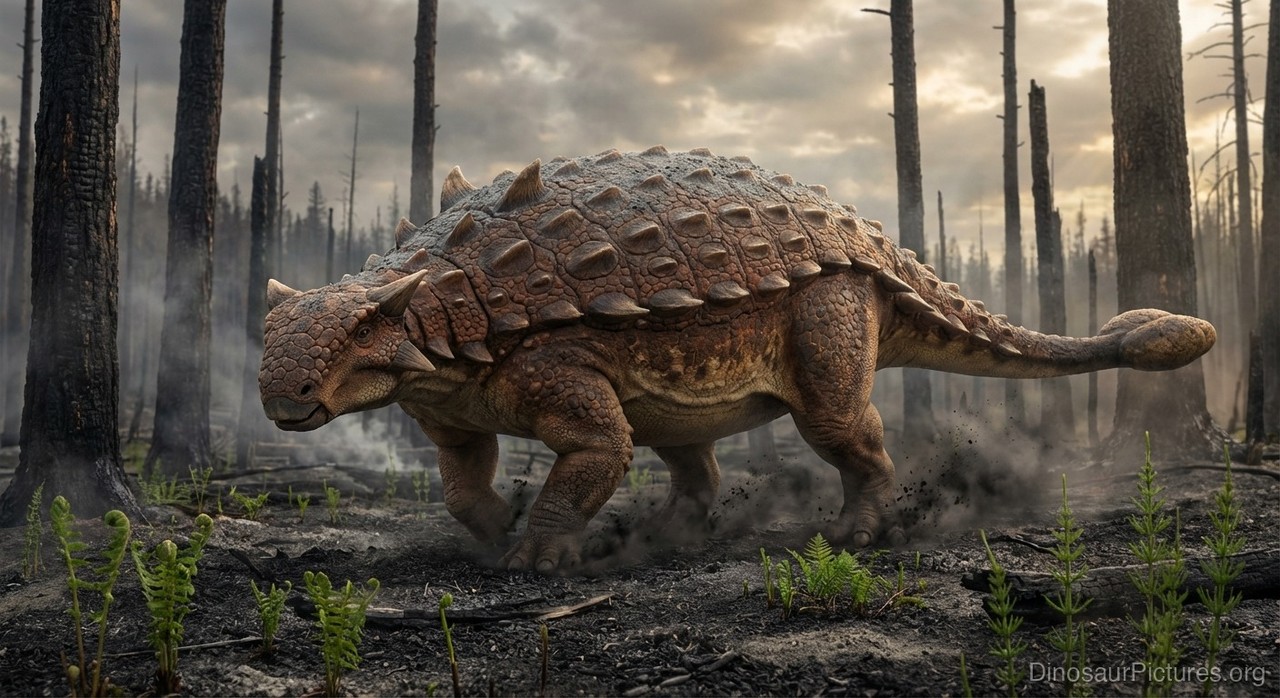
Ankylosaurus did not rely on speed or sharp teeth. Instead, it carried its protection everywhere it went. Its body was covered in thick plates of bone embedded in the skin, forming a natural suit of armor. At the end of its tail swung a massive bony club capable of delivering devastating blows. Together, these features turned Ankylosaurus into one of the most formidable defensive dinosaurs that ever lived.
To imagine Ankylosaurus is to imagine a creature shaped by millions of years of evolutionary pressure. The late Cretaceous world was filled with predators such as Tyrannosaurus rex and other large theropods. Survival required more than simple strength. It required innovation. Ankylosaurus was nature’s answer to the constant danger of predation—a dinosaur designed not to chase enemies but to outlast them.
Understanding Ankylosaurus is not simply about describing bones or reconstructing skeletons. It is about reconstructing a life that unfolded in an ancient world, a world of towering conifers, flowering plants, shallow inland seas, and giant reptiles roaming the land. Through fossils and careful scientific analysis, paleontologists have slowly pieced together the story of this extraordinary dinosaur.
The Meaning Behind the Name Ankylosaurus
The name Ankylosaurus comes from Greek words meaning “fused lizard” or “stiff lizard.” The name reflects a distinctive feature of its skeleton. Many of the bones in its body were tightly fused together, creating a rigid and powerful structure. This rigidity helped support the heavy armor that covered its back and sides.
When paleontologists first examined the fossil remains of Ankylosaurus, they noticed how different it was from many other dinosaurs. The bones of its spine, hips, and armor formed a complex protective system that appeared almost engineered. It looked less like a typical reptile and more like a biological fortress.
The name also hints at how Ankylosaurus moved. Its body was not designed for speed or agility. Instead, it was built for stability and endurance. The fused bones created a strong framework capable of supporting massive armor plates while keeping the animal balanced as it walked.
Naming a dinosaur is more than labeling a fossil. It reflects how scientists interpret the creature’s biology and behavior. In the case of Ankylosaurus, the name captures the essence of an animal whose body had become a shield against the dangers of its environment.
Discovery of Ankylosaurus Fossils
The story of Ankylosaurus began in the early twentieth century, during a time when dinosaur discoveries were transforming scientific understanding of prehistoric life. Fossils were uncovered in rock formations dating to the Late Cretaceous Period, particularly in regions that are now part of the United States and Canada.
The first recognized fossils of Ankylosaurus were described in 1908 by American paleontologist Barnum Brown. Brown was already famous for his work in discovering Tyrannosaurus rex, and his identification of Ankylosaurus added another remarkable dinosaur to the scientific record.
The fossils were found in what is known as the Hell Creek Formation, a geological formation rich with the remains of Late Cretaceous animals and plants. This formation preserves one of the most detailed pictures of the ecosystem that existed shortly before the mass extinction that ended the age of dinosaurs.
Unfortunately, complete skeletons of Ankylosaurus are rare. Most fossils consist of partial remains, including skull fragments, armor plates, and pieces of the tail club. Reconstructing the full appearance of the dinosaur has required careful comparison with related ankylosaur species whose fossils are more complete.
Even with limited fossils, scientists have learned a remarkable amount about Ankylosaurus. Each discovery adds new clues about its anatomy, behavior, and evolutionary history. In paleontology, even a single bone can reshape our understanding of an entire species.
The Late Cretaceous World
To understand Ankylosaurus, one must step back into the Late Cretaceous Period, roughly seventy to sixty-six million years ago. This was a time when Earth’s climate was warmer than today, with lush forests covering large portions of the continents.
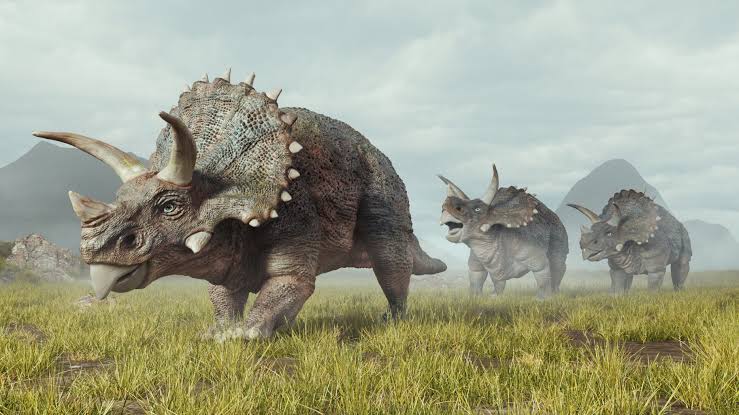
North America was partially divided by a shallow inland sea known as the Western Interior Seaway. On the western side of this sea stretched a landmass called Laramidia, where many famous dinosaurs lived. Ankylosaurus roamed these landscapes alongside creatures such as Triceratops, Edmontosaurus, and Tyrannosaurus rex.
The environment included river plains, swamps, and dense vegetation. Flowering plants were becoming increasingly common, adding new sources of food for herbivorous dinosaurs. Ferns, cycads, and conifers still dominated many areas, creating thick undergrowth and tall forest canopies.
This environment was both rich and dangerous. Herbivorous dinosaurs had access to abundant plant life, but they also faced constant threats from predators. Survival depended on a combination of physical defenses, behavior, and environmental awareness.
Ankylosaurus thrived in this world by adopting a defensive strategy that few predators could overcome. Its armored body allowed it to feed and move through the landscape with a level of protection unmatched by most other dinosaurs.
The Physical Appearance of Ankylosaurus
Ankylosaurus was a large dinosaur, though not among the giants of its time. Adults likely measured around eight meters in length and weighed several tons. Its body was low to the ground, supported by four strong legs that gave it a wide, stable stance.
The head of Ankylosaurus was broad and triangular, with a beak-like mouth adapted for cutting vegetation. Its teeth were small and leaf-shaped, suitable for grinding plant material. Unlike carnivorous dinosaurs with sharp serrated teeth, Ankylosaurus possessed a mouth designed for herbivory.
The skull itself was heavily armored, with thick bones and protective structures covering the top and sides. Even the eyelids may have been reinforced with bony plates, providing additional defense against attacks.
Perhaps the most striking feature of Ankylosaurus was its armor. Its back and sides were covered in osteoderms, which are bony plates embedded in the skin. These plates varied in size and shape, forming a complex mosaic of protection across the body.
Some osteoderms formed large, triangular spikes along the sides of the dinosaur. Others were flatter and broader, creating a shield-like surface that covered the animal’s back. Together, they created a defensive barrier that could absorb or deflect attacks from predators.
At the end of the tail was the iconic tail club. This structure consisted of several fused vertebrae surrounded by large bony knobs. The result was a massive weapon capable of delivering powerful blows.
The combination of armor and weaponry made Ankylosaurus one of the most well-defended animals in the history of life on Earth.
The Evolution of Armor
The armor of Ankylosaurus did not appear suddenly. It evolved gradually over millions of years within the group of dinosaurs known as ankylosaurs. These dinosaurs belonged to a larger category called thyreophorans, which also includes stegosaurs.
Early thyreophorans had relatively simple body armor, consisting of small plates and spikes along the back. Over time, evolutionary pressures from predators likely favored individuals with stronger and more extensive protection.
As ankylosaurs evolved, their armor became more elaborate. Plates grew larger, spikes became more prominent, and the skeletal structure adapted to support the increasing weight of these defensive features.
Ankylosaurus represents one of the most advanced forms of this evolutionary trend. Its armor was not only extensive but also highly specialized. The arrangement of osteoderms created overlapping layers that distributed force across the body.
This evolutionary strategy shows how natural selection can shape organisms in response to environmental challenges. Predators become stronger and more efficient, and prey evolve new ways to survive.
In the case of Ankylosaurus, the result was a dinosaur that resembled a walking fortress.
The Tail Club: Nature’s Defensive Weapon
The tail club of Ankylosaurus is one of the most famous structures in dinosaur anatomy. It served as both a defensive weapon and a powerful deterrent against predators.
The tail itself was supported by stiffened vertebrae and tendons that limited flexibility. This rigidity allowed Ankylosaurus to swing the tail with controlled force, focusing energy at the heavy club at the end.
Biomechanical studies suggest that the tail club could deliver extremely powerful impacts. A well-placed strike might have been strong enough to break the leg bones of a large predator.
Imagine a Tyrannosaurus approaching an Ankylosaurus. The predator might circle, searching for a vulnerable angle. But the armored dinosaur could pivot its body, keeping the tail ready. One powerful swing could discourage even the most determined attacker.
The tail club may also have been used in interactions between Ankylosaurus individuals. Some scientists speculate that males might have used tail strikes in competition for territory or mates, though evidence for this behavior remains limited.
Regardless of its exact uses, the tail club represents one of the most sophisticated defensive adaptations ever evolved by a dinosaur.
Diet and Feeding Behavior
Ankylosaurus was a herbivore, meaning its diet consisted entirely of plants. Its low body position suggests that it fed primarily on vegetation close to the ground.
This likely included ferns, shrubs, low-growing flowering plants, and possibly fallen leaves from taller trees. The beak-like mouth allowed the dinosaur to clip vegetation efficiently.
Unlike some herbivorous dinosaurs with complex chewing mechanisms, Ankylosaurus had relatively simple teeth. It probably relied on a digestive system capable of breaking down tough plant material with the help of gut microbes.
Some paleontologists believe Ankylosaurus may have swallowed stones, known as gastroliths, which helped grind food in the stomach. This behavior is seen in some modern birds and reptiles.
Feeding would have been a slow and steady process. Ankylosaurus likely spent much of its day grazing across the landscape, using its strong legs to move between patches of vegetation.
Its armor allowed it to feed without constantly fleeing from predators. Instead of relying on speed, Ankylosaurus relied on protection and patience.
Movement and Behavior
Although Ankylosaurus was heavily armored, it was not immobile. Its legs were strong and muscular, capable of supporting its weight and allowing it to move across varied terrain.
However, it was likely a slow walker. Its body design prioritized stability over speed. The wide stance and low center of gravity helped prevent the animal from being toppled by predators or environmental obstacles.
Ankylosaurus probably lived a relatively calm life compared to more agile dinosaurs. Its main activities would have included feeding, moving between food sources, and maintaining awareness of its surroundings.
Because its armor provided excellent protection, it may not have needed to flee immediately when predators appeared. Instead, it could stand its ground and prepare to defend itself.
Whether Ankylosaurus lived in groups or mostly alone remains uncertain. Fossil evidence does not clearly indicate social behavior, though some related ankylosaurs may have formed loose associations.
Regardless of its social structure, Ankylosaurus was clearly adapted to survive in a world filled with powerful predators.
Predators and Survival
The greatest threat to Ankylosaurus likely came from large carnivorous dinosaurs, especially Tyrannosaurus rex. These predators possessed enormous jaws and teeth capable of crushing bone.
Yet attacking an Ankylosaurus would have been risky. Its armor protected most of its body, leaving few vulnerable areas. Attempting to bite through the armor could damage a predator’s teeth or waste valuable energy.
If the predator approached from behind, it risked a powerful strike from the tail club. Even a single successful hit could cause serious injury.
Because of these defenses, Ankylosaurus may have been one of the most difficult dinosaurs for predators to kill. It represents an evolutionary strategy based on resilience rather than escape.
This balance between predator and prey shaped the ecosystems of the Late Cretaceous. Each species evolved new strategies to survive, creating a dynamic and ever-changing biological landscape.
The Extinction of Ankylosaurus
Ankylosaurus lived until the very end of the dinosaur era. Its fossils appear in rock layers that date almost exactly to the boundary between the Cretaceous and Paleogene periods.
Around sixty-six million years ago, a catastrophic event changed life on Earth forever. A massive asteroid struck the planet near what is now the Yucatán Peninsula in Mexico. The impact triggered global fires, earthquakes, and a dramatic shift in climate.
Dust and debris filled the atmosphere, blocking sunlight and disrupting ecosystems. Plants died, herbivores starved, and carnivores lost their prey.
Even the heavily armored Ankylosaurus could not survive such a global disaster. Along with all non-avian dinosaurs, it disappeared from the fossil record.
Yet its story did not end entirely. The descendants of some dinosaurs survived in the form of birds, which continue to thrive across the world today.
Ankylosaurus in Modern Science and Culture
Today, Ankylosaurus remains one of the most recognizable dinosaurs. Its unique combination of armor and tail club captures the imagination of scientists and the public alike.
Paleontologists continue to study ankylosaur fossils to understand how these animals evolved and lived. New technologies, such as computer modeling and CT scanning, allow researchers to examine fossil structures in unprecedented detail.
Ankylosaurus also appears frequently in museums, books, films, and documentaries. Its image as a “living tank” resonates with people because it represents strength, resilience, and survival.
But beyond its dramatic appearance, Ankylosaurus teaches us something deeper about evolution. It shows how life adapts to challenges, how organisms develop remarkable solutions to survive in dangerous environments.
Through fossils buried for millions of years, this ancient dinosaur still tells a story of adaptation, endurance, and the extraordinary creativity of natural selection.
The Legacy of the Living Tank
Ankylosaurus was not the fastest dinosaur, nor the smartest, nor the most aggressive. Yet it achieved something remarkable. It became one of the most perfectly defended animals ever to walk the Earth.
Its armor tells a story written in bone, a story of countless generations adapting to the threats of their environment. Every plate, every spike, and every fused bone is evidence of evolution at work.
When paleontologists uncover a fragment of ankylosaur armor from ancient rock, they are not just discovering a fossil. They are touching the remains of a creature that once walked through prehistoric forests, grazing quietly while giants roamed nearby.
Ankylosaurus reminds us that survival in nature does not always depend on speed or ferocity. Sometimes the greatest strength lies in patience, resilience, and the ability to endure.
In the distant past of the Cretaceous world, beneath towering trees and under the watchful eyes of predators, the living tank moved steadily across the land—an armored giant whose story still echoes through the fossil record today.