There are books that speak across centuries with astonishing clarity. We can still read the epics of Homer, the philosophy of Plato, the poetry of ancient China, and the inscriptions of emperors long gone. Yet scattered across museums, libraries, and archaeological sites around the world are manuscripts that refuse to surrender their meaning. They are written in scripts no one can decipher or in languages that have vanished without descendants. Their symbols sit on parchment, clay, metal, and bark like sealed doors. We can see them. We can touch them. But we cannot understand them.
These manuscripts are not simply puzzles. They are fragments of lost worlds. They may contain histories, prayers, scientific observations, myths, trade records, or personal reflections. They might describe kingdoms that flourished and fell without leaving other traces. They might preserve ideas that could transform our understanding of human civilization. Yet for now, they remain silent.
Decipherment is one of the greatest intellectual achievements in human history. When scholars unlocked Egyptian hieroglyphs using the Rosetta Stone, they revived the voices of pharaohs. When cuneiform was decoded, entire libraries of Mesopotamia came back to life. But some scripts resist every effort. Without bilingual inscriptions, without known linguistic relatives, without contextual clues, scholars face an almost impenetrable barrier.
The following eight ancient manuscripts and writing systems stand among the most enduring mysteries. Each is scientifically documented. Each has been studied for decades or even centuries. And each continues to defy translation.
1. The Voynich Manuscript
Few books have inspired as much fascination as the Voynich Manuscript. Carbon dating places its parchment in the early 15th century. It is filled with elaborate illustrations of plants, astronomical diagrams, strange bathing figures, and pages upon pages of text written in an unknown script.
The manuscript is named after Wilfrid Voynich, a rare book dealer who acquired it in 1912. Since then, cryptographers, linguists, historians, and even codebreakers from wartime intelligence agencies have attempted to decipher it. The text flows smoothly across pages, with consistent patterns that suggest it is not random scribbling. Statistical analyses show that the script behaves in ways similar to natural languages. Certain words appear frequently. Some combinations follow predictable structures.
And yet, no one can read it.
The illustrations deepen the mystery. The botanical drawings depict plants that do not clearly correspond to known species. The astronomical charts resemble zodiac symbols but include unfamiliar constellations. Sections showing nude female figures immersed in green liquid have been interpreted as medical or alchemical imagery.
Some researchers argue that the manuscript encodes a real language using an unknown cipher. Others propose that it represents a constructed language. A minority suggest it may be an elaborate hoax, though its linguistic structure makes that unlikely. Without a key, its meaning remains locked.
The Voynich Manuscript reminds us that even in relatively recent history, entire systems of communication can vanish without explanation.
2. The Rohonc Codex
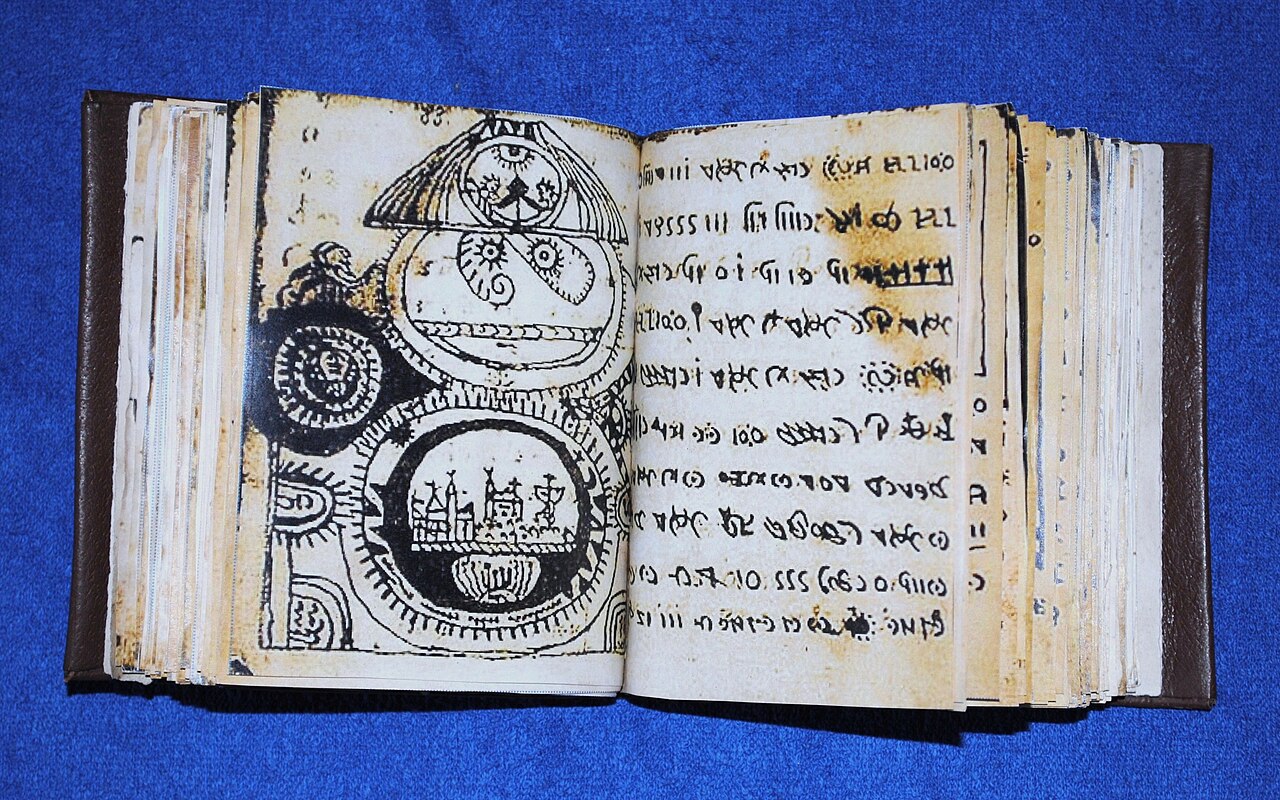
Another perplexing book is the Rohonc Codex, held in Hungary. The manuscript contains hundreds of pages written in a script that includes more than 200 distinct characters, far more than typical alphabets. It also features religious illustrations, including scenes resembling Christian iconography.
The direction of the text appears unusual. Some scholars believe it is written from right to left, others from left to right. Attempts to link the script to known languages such as Hungarian, Romanian, or even ancient Indian scripts have not produced convincing results.
Carbon dating has been inconclusive due to limited testing. Some historians suspect it could be a 19th-century forgery. Others argue that the complexity and consistency of the script suggest a genuine, though lost, linguistic system.
The Rohonc Codex stands as a reminder that even in regions with well-documented histories, unknown scripts can surface and challenge established narratives.
3. The Indus Script
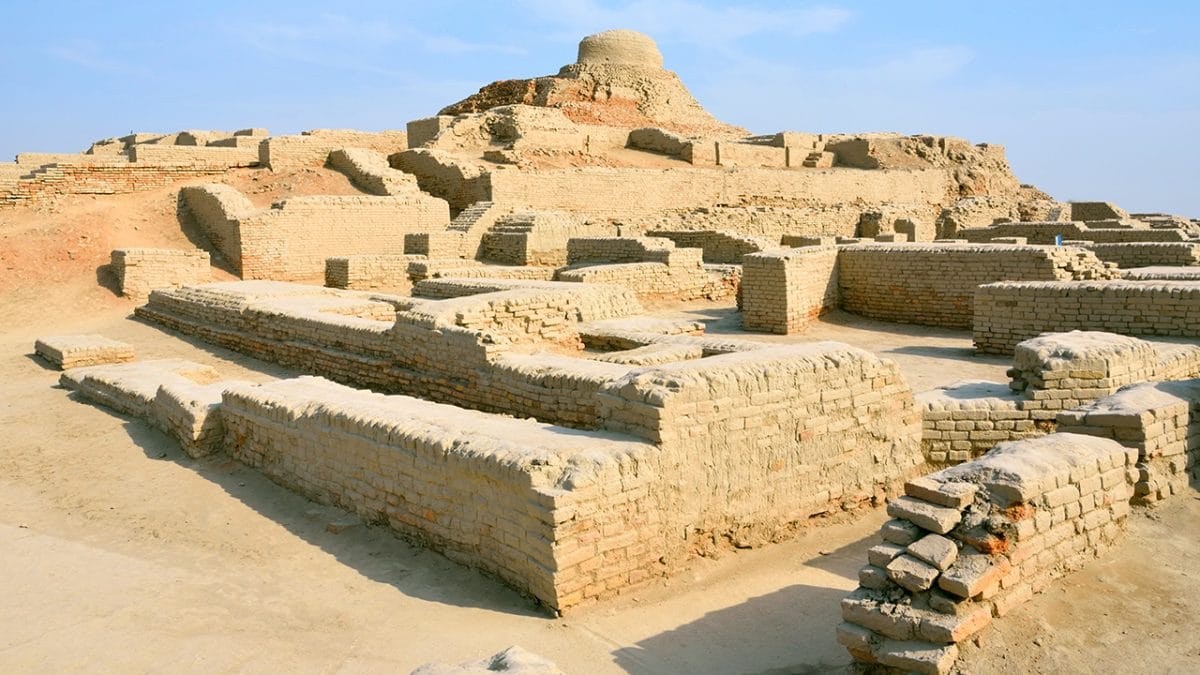
Among the most significant undeciphered writing systems is the Indus script. It appears on thousands of seals, tablets, and pottery fragments from the Indus Valley Civilization, which flourished around 2600 to 1900 BCE in what is now Pakistan and northwestern India.
The script consists of short sequences of symbols, often fewer than ten characters long. The brevity of the inscriptions complicates decipherment. There are no long texts, no bilingual inscriptions comparable to the Rosetta Stone, and no clear descendant language to guide interpretation.
Scholars debate whether the script encodes a language at all. Some argue it represents a logo-syllabic system similar to Sumerian cuneiform. Others suggest it may be non-linguistic symbols used for trade or religious purposes. Statistical studies indicate structured patterns consistent with language, but without longer texts, certainty remains elusive.
If deciphered, the Indus script could reveal insights into one of the world’s earliest urban civilizations—its governance, beliefs, and daily life. For now, its seals whisper silently from museum cases.
4. Linear A
Before the rise of classical Greek civilization, the island of Crete was home to the Minoan culture. Archaeologists uncovered tablets inscribed with two scripts: Linear A and Linear B. Linear B was eventually deciphered in the 1950s and found to encode an early form of Greek. But Linear A remains undeciphered.
Linear A predates Linear B and appears on clay tablets, religious objects, and administrative records. Some symbols resemble those in Linear B, leading scholars to tentatively assign phonetic values. However, when these values are applied, the resulting words do not match any known language.
Most researchers believe Linear A represents the language of the Minoans, a language unrelated to Greek and without known descendants. Without a bilingual inscription or substantial contextual clues, decipherment remains stalled.
Linear A embodies the fragility of linguistic heritage. An entire language once spoken by thousands can disappear so completely that even its written traces become unreadable.
5. The Phaistos Disc
Discovered in 1908 on Crete, the Phaistos Disc is a fired clay disc stamped with spiral arrangements of symbols. Unlike most ancient texts, its characters were impressed using individual stamps, suggesting a form of early printing.
The disc contains 241 symbols composed of 45 distinct signs. Scholars have proposed connections to Linear A or other Aegean scripts, but no consensus exists. Some believe it encodes a hymn, a legal text, or even a game board. Others question its authenticity, though most experts accept it as genuine.
The uniqueness of the Phaistos Disc complicates analysis. With only a single example and no related texts, there is no corpus to compare. If it represents a language, that language is otherwise unknown.
The disc’s spiral design evokes both beauty and frustration. It appears so deliberate, so meaningful, yet its message remains beyond our reach.
6. Rongorongo of Easter Island
On the remote Pacific island of Rapa Nui, also known as Easter Island, wooden tablets bearing carved glyphs were discovered in the 19th century. The script is called Rongorongo.
Rongorongo is the only known indigenous writing system of Oceania. The glyphs depict stylized human figures, animals, plants, and geometric shapes. The texts are written in a reverse boustrophedon pattern, meaning the direction alternates with each line.
Unfortunately, much of the island’s cultural knowledge was lost following European contact, disease, and enslavement. By the time scholars began studying the tablets, no living tradition could explain them. Attempts to correlate the glyphs with the Rapa Nui language have not yielded definitive results.
Some researchers suggest Rongorongo may record genealogies or ritual chants. Others propose it may not represent full writing but a mnemonic device. Without a key or surviving oral explanation, its carvings remain mute.
7. The Codex Seraphinianus
Though far more recent than the others, the Codex Seraphinianus deserves mention as a deliberate exploration of unreadability. Created in the late 20th century by Italian artist Luigi Serafini, it mimics the style of medieval manuscripts with intricate illustrations and an invented script.
Unlike ancient undeciphered texts, the Codex Seraphinianus is known to be intentionally meaningless in linguistic terms. Its script does not encode a real language. Instead, it creates the sensation of confronting an unknown system, evoking the experience of encountering a lost civilization’s book.
Its inclusion highlights an important point. The human mind instinctively seeks patterns and meaning. When faced with undeciphered scripts, we project possibilities, imagine narratives, and feel both frustration and wonder. The Codex plays with that instinct, reminding us how deeply we yearn to understand.
8. The Etruscan Liber Linteus
The longest surviving text in the Etruscan language is preserved in an unexpected form. The Liber Linteus survives because it was reused as mummy wrappings in Egypt. The linen strips bear columns of Etruscan writing.
Etruscan itself is partially understood, as shorter inscriptions and bilingual texts have provided some clues. However, the language is not fully deciphered, and many words remain obscure. The Liber Linteus appears to contain a ritual calendar or religious text, but much of its content remains uncertain.
Because Etruscan is not clearly related to major known language families, translation is challenging. Scholars can identify grammatical structures and some vocabulary, yet the deeper meaning of many passages eludes interpretation.
The Liber Linteus stands at the border between understanding and mystery. It shows how partial knowledge can illuminate fragments of a lost culture while leaving vast areas in shadow.
Why Some Manuscripts Remain Unreadable
Decipherment requires certain conditions. A large body of text helps identify patterns. A bilingual inscription can provide direct comparisons. Knowledge of related languages offers clues to vocabulary and grammar. Without these, progress becomes extremely difficult.
Many undeciphered manuscripts suffer from limited material. The Phaistos Disc is unique. Indus inscriptions are short. Rongorongo tablets are few. Linear A lacks a bilingual counterpart. The Rohonc Codex may lack reliable historical context.
Linguistic isolation is another barrier. If a language has no known relatives, scholars cannot compare roots or structures. Statistical analysis can suggest whether a script represents language, but it cannot easily reveal meaning without external reference points.
Forgery and hoax theories also complicate matters. Scholars must determine authenticity before attempting translation. Even when authenticity is established, the absence of cultural continuity can leave gaps impossible to bridge.
The Science of Decipherment
Decipherment is not guesswork. It involves systematic analysis, pattern recognition, and comparative linguistics. Scholars examine symbol frequency, positional patterns, and recurring sequences. They test hypotheses against archaeological context and known cultural practices.
The successful decoding of Egyptian hieroglyphs required the Rosetta Stone’s trilingual inscription. Linear B was deciphered through careful statistical study and the recognition that it encoded Greek. Each breakthrough combined linguistic insight with archaeological evidence.
Modern technology offers new tools. Digital imaging reveals faded inscriptions. Computational models analyze patterns at scales impossible for manual study. Machine learning algorithms attempt to detect structural similarities between scripts. Yet even advanced tools cannot replace missing historical context.
The Emotional Weight of Silence
There is something profoundly moving about an unreadable manuscript. It is a voice without sound. A message without a listener. It represents human effort—someone once carved those symbols with intention. Someone believed they were recording something worth preserving.
The silence is not emptiness. It is potential. Within those undeciphered lines may lie poetry, scientific observation, mythic imagination, or mundane record keeping. Each possibility is equally human.
These manuscripts remind us that history is incomplete. Entire cultures have vanished with their languages. Knowledge can be lost. Memory can fade. The continuity we take for granted is fragile.
The Hope of Future Discovery
History shows that decipherment can take centuries. Cuneiform resisted understanding for generations. Maya glyphs were long misunderstood before breakthroughs in the 20th century revealed their phonetic nature. Patience and new evidence can transform impossibility into clarity.
Future archaeological discoveries may uncover bilingual inscriptions for Linear A or the Indus script. New tablets might expand the Rongorongo corpus. Advanced computational analysis may reveal hidden structures in the Voynich Manuscript.
Each undeciphered manuscript represents not only a mystery but an invitation. It challenges scholars to think creatively, to collaborate across disciplines, to combine linguistics, archaeology, mathematics, and history.
The Enduring Mystery
What makes these eight manuscripts so compelling is not merely that we cannot read them. It is that they remind us of the limits of human knowledge. In an age where information travels instantly and languages can be translated with algorithms, these silent texts stand as humbling monuments.
They whisper that the past is deeper than we imagine. They suggest that entire intellectual worlds once thrived beyond the reach of our understanding. They ask us to remain curious, patient, and open to wonder.
Perhaps one day a key will be found—a bilingual tablet buried in sand, a forgotten reference in another archive, a breakthrough in computational linguistics. And when that moment comes, the silence will break. Words dormant for centuries will speak again.
Until then, these manuscripts wait. Inked on parchment, carved in clay, etched in wood, they remain among humanity’s most haunting reminders that not every story has yet been told.