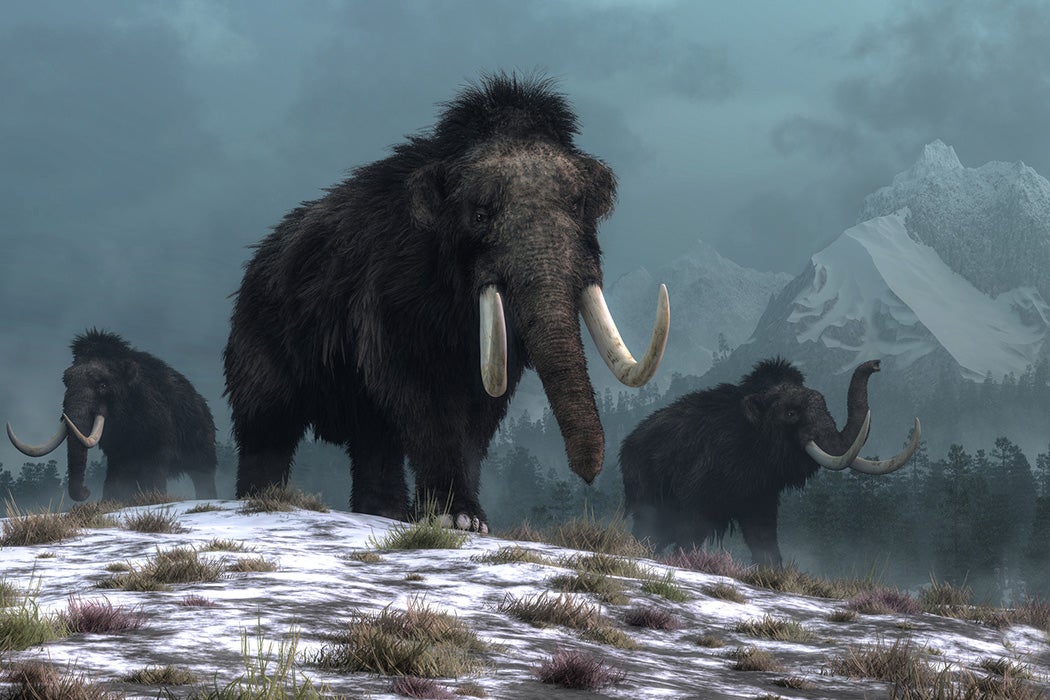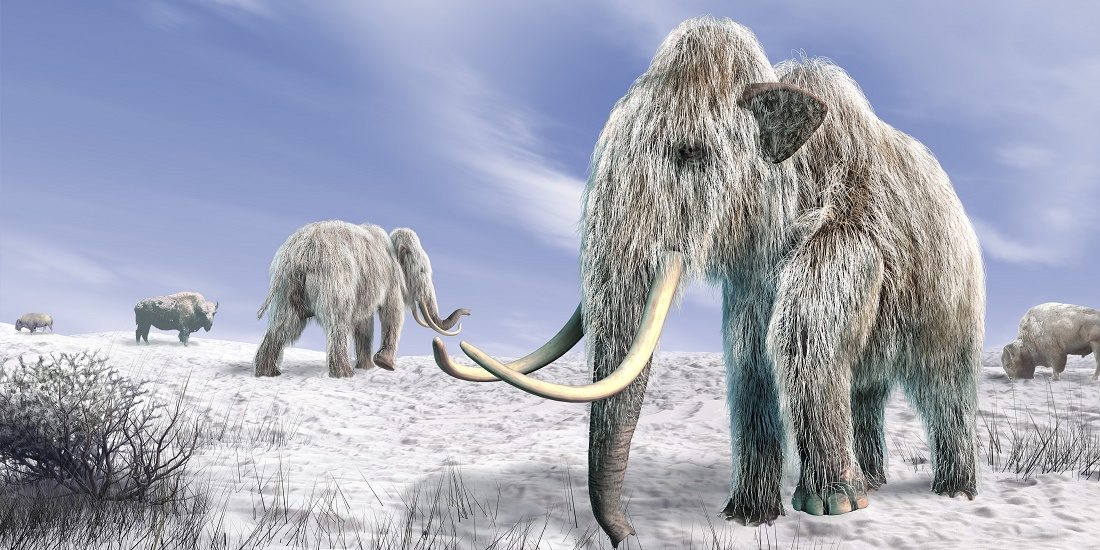
Across the frozen plains of the last Ice Age, enormous shapes once moved slowly through the snow. Their long, curved tusks arced forward like ivory crescents, their bodies draped in thick fur that protected them from relentless Arctic winds. These animals were the woolly mammoths—one of the most iconic creatures ever to walk the Earth.
The species most people imagine when they think of mammoths is the Woolly Mammoth, scientifically known as Mammuthus primigenius. Closely related to modern elephants, this massive herbivore roamed vast areas of the Northern Hemisphere during the Pleistocene epoch. For tens of thousands of years, mammoths dominated a unique ecosystem that stretched from Europe across Siberia and into North America.
The story of the woolly mammoth is both magnificent and tragic. It is a tale of evolutionary triumph, environmental transformation, and eventual extinction. Yet today, with advances in genetics and biotechnology, the mammoth’s story has taken an unexpected turn. Scientists are seriously asking a question that once belonged only to science fiction: could mammoths be brought back?
To understand why this question matters, we must first journey into the deep past—to a time when mammoths were not fossils or museum skeletons, but living giants of a frozen world.
The Evolution of a Cold-Adapted Giant
The woolly mammoth did not appear suddenly. Its lineage stretches back millions of years through the evolutionary history of elephant-like animals known as proboscideans.
One important ancestor was the Steppe Mammoth, a massive species that lived across Eurasia roughly one million years ago. Steppe mammoths were among the largest land mammals ever to exist, standing taller and heavier than their later woolly descendants. Over time, as climates cooled and grasslands expanded during the Ice Age, populations of these mammoths gradually evolved adaptations suited to colder environments.
Natural selection favored individuals capable of surviving extreme cold. Over many generations, a new species emerged—the woolly mammoth. Compared with their ancestors, these animals had smaller ears to reduce heat loss, thick layers of insulating fat, and dense fur that could reach nearly a meter in length.
Genetic studies show that mammoths were remarkably well adapted to the Arctic steppe environment. Their blood contained specialized proteins that functioned efficiently in low temperatures. Even their fat metabolism and hair growth were influenced by genes fine-tuned for life in freezing conditions.
Evolution had sculpted an animal perfectly suited to one of the harshest climates on Earth.
The Mammoth Steppe: A Lost Ecosystem
The world the mammoths inhabited was unlike any ecosystem that exists today. During the Ice Age, enormous regions of the Northern Hemisphere formed what scientists call the mammoth steppe.
This landscape stretched across what are now Siberia, Alaska, Canada, and parts of Europe. Despite the cold, it was not covered entirely by glaciers. Instead, it consisted of vast dry grasslands interspersed with herbs, shrubs, and hardy flowering plants.
The mammoth steppe supported an extraordinary diversity of large animals. Among them were the Woolly Rhinoceros, the Steppe Bison, and the formidable predator known as the Saber-Toothed Cat.
Mammoths played a crucial ecological role within this environment. As massive herbivores, they consumed large quantities of grasses and plants. Their feeding habits helped maintain open grassland by preventing forests from spreading. When mammoths knocked down trees or trampled shrubs, they shaped the vegetation patterns across entire landscapes.
In this way, mammoths were ecological engineers—animals whose behavior significantly influenced their ecosystems. Their presence helped sustain the grassland environment that supported many other species.
The mammoth steppe flourished for tens of thousands of years. But eventually, forces of climate and human expansion would push this ancient ecosystem toward collapse.
Anatomy of an Ice Age Survivor
The physical structure of the woolly mammoth reveals just how specialized it was for life in the cold.
Adult mammoths could reach heights of around four meters at the shoulder and weigh up to six tons. Their bodies were covered in layers of insulation that included dense underfur, longer guard hairs, and thick subcutaneous fat.
One of their most distinctive features was their enormous spiraling tusks. These elongated incisors could grow several meters long and were used for multiple purposes. Mammoths used their tusks to sweep snow away from buried vegetation, to dig through frozen ground, and likely in social interactions or mating displays.
Their trunk—similar to that of modern elephants—was a versatile tool capable of grasping plants, manipulating objects, and sensing the environment. Combined with powerful molar teeth adapted for grinding tough grasses, the trunk allowed mammoths to feed efficiently across the open steppe.
Even their skulls and backs showed unique adaptations. Many mammoths had a high dome-shaped head and a hump of fat above their shoulders, somewhat resembling the fat reserves of modern camels. This stored energy may have helped them survive harsh winters when food was scarce.
Every aspect of the mammoth’s anatomy reflected a life spent enduring the brutal conditions of Ice Age northern climates.
Mammoths and Early Humans
When mammoths roamed the Earth, humans were also expanding across the continents. Ancient populations encountered these massive animals, and the relationship between humans and mammoths became deeply intertwined.
Archaeological evidence shows that early human societies hunted mammoths for meat, fat, bones, and ivory. A single mammoth could provide enormous quantities of food, making it an attractive target despite the danger.
Sites discovered across Europe and Siberia reveal sophisticated hunting strategies. Hunters may have driven mammoths into traps, bogs, or narrow valleys where they could be killed with spears.
Remains of mammoths have also been found in ancient human settlements, where their bones were used to construct shelters. In some Ice Age villages, entire houses were built from mammoth tusks and ribs.
The cultural significance of mammoths is also preserved in prehistoric art. In the famous cave paintings of Chauvet Cave and other Paleolithic sites, mammoths appear among the animals depicted by early artists.
These images reveal that mammoths were not merely prey animals—they were powerful presences in the human imagination.
The Long Decline
For most of their history, mammoths thrived across the northern continents. But around 12,000 years ago, their populations began to decline.
The end of the last Ice Age brought dramatic environmental changes. As global temperatures rose, glaciers retreated and forests began spreading into areas that had once been open grassland. The mammoth steppe ecosystem gradually disappeared.
Mammoths, specialized for grazing on grasses, found their habitats shrinking. Their food sources diminished as forests replaced the vast steppe.
At the same time, human populations were expanding into many of these regions. Increased hunting pressure likely compounded the stresses already caused by environmental change.
Scientists continue to debate the relative importance of climate change and human hunting in mammoth extinction. Most evidence suggests that both factors played significant roles.
What is clear is that by around 10,000 years ago, mammoths had vanished from most of their former range.
The Last Mammoths
Although mammoths disappeared from mainland regions, small isolated populations survived for thousands of additional years.
One of the most remarkable refuges was Wrangel Island in the Arctic Ocean. Cut off from mainland Siberia by rising sea levels, this remote island became the last stronghold of the woolly mammoth.
Here, a small population persisted until about 4,000 years ago—long after the pyramids were built in Egypt.
Genetic evidence suggests that these final mammoths suffered from reduced genetic diversity due to their small population size. Over time, harmful mutations accumulated, weakening the species’ long-term survival.
Eventually, even this last refuge could not sustain them. The woolly mammoth vanished from Earth.
For centuries afterward, mammoths existed only in fossil remains frozen in Arctic permafrost.
But modern science has reopened a door once thought permanently closed.
Frozen Time Capsules in the Arctic
One reason mammoths capture the imagination of scientists is the extraordinary preservation of their remains.
In Siberia and Alaska, permafrost sometimes preserves mammoth carcasses with astonishing completeness. Skin, hair, muscles, and even internal organs have been discovered frozen for tens of thousands of years.
Some specimens have been so well preserved that their stomach contents reveal the plants they last consumed.
These frozen remains also contain something even more valuable: ancient DNA.
Advances in genetic technology allow scientists to extract fragments of DNA from these tissues. By sequencing these fragments, researchers can reconstruct large portions of the mammoth genome.
This genetic information provides insights into mammoth biology, evolution, and adaptation. It also forms the foundation for an idea that has captured global attention—the possibility of resurrecting the species.
The Science of De-Extinction
The concept of bringing extinct species back to life is known as de-extinction. In the case of mammoths, the goal is not necessarily to recreate a perfect copy of the original animal. Instead, scientists aim to engineer a living organism that possesses key mammoth traits.
The closest living relative of the woolly mammoth is the Asian Elephant. The two species share a common ancestor and have very similar genetic structures.
Researchers propose editing the DNA of Asian elephants to introduce mammoth genes responsible for cold adaptations—traits such as thick fur, fat storage, and cold-resistant blood proteins.
Modern gene-editing technologies, particularly CRISPR Gene Editing, make it theoretically possible to insert these genes into elephant cells.
If successful, scientists could create embryos carrying mammoth-like characteristics. These embryos might then develop into animals capable of surviving in cold environments similar to the ancient mammoth steppe.
Although the process is extraordinarily complex, it is no longer purely hypothetical.
The Vision of Mammoth Restoration
One of the most ambitious proposals involving mammoth revival involves restoring Arctic grasslands.
Some scientists believe that reintroducing mammoth-like animals could help recreate the ancient steppe ecosystem. By knocking down trees, trampling snow, and grazing heavily, these animals might promote grassland growth and reduce forest expansion.
This idea has been explored in experimental projects such as Pleistocene Park in northeastern Siberia. The park is an ecological research site where scientists study how large herbivores influence Arctic landscapes.
Researchers there argue that restoring grassland ecosystems could even help slow climate change. Grasslands reflect more sunlight than forests and may help preserve permafrost by preventing insulating snow accumulation.
If mammoth-like animals contributed to these effects, they might become unexpected allies in climate mitigation.
Scientific and Ethical Challenges
Despite exciting possibilities, the path to mammoth revival is filled with challenges.
Technically, the process remains extremely difficult. Ancient DNA is fragmented and damaged, making full genome reconstruction complex. Even with modern editing tools, modifying large numbers of genes accurately is a daunting task.
Another challenge involves reproduction. Elephants have long gestation periods and complex social structures. Using elephants as surrogate mothers raises ethical concerns about animal welfare.
Some scientists propose developing artificial wombs to avoid these issues, but such technology is still experimental.
Ethical questions extend beyond the laboratory. Should humans resurrect species that natural processes eliminated? What responsibilities would come with creating new populations of genetically engineered animals?
These questions are central to the debate surrounding de-extinction.
Lessons from the Mammoth
Regardless of whether mammoths are ever revived, their story carries powerful lessons.
The extinction of the woolly mammoth reminds us that ecosystems are fragile. Environmental change and human activity can transform entire landscapes and eliminate even the most dominant species.
At the same time, the scientific effort to understand and potentially revive mammoths demonstrates the remarkable capabilities of modern biology. The ability to read ancient genomes and manipulate DNA represents a technological revolution.
But knowledge also carries responsibility. Decisions about de-extinction must consider ecological consequences, ethical principles, and long-term sustainability.
The mammoth’s past and potential future invite humanity to reflect on its relationship with nature.
A Future Shaped by Ancient Giants
Today, the woolly mammoth remains one of the most recognizable symbols of the Ice Age. Its image appears in museums, documentaries, and scientific research worldwide.
Whether or not mammoths ever walk the Earth again, they continue to influence science in profound ways. Their frozen remains have helped advance paleogenetics, climate research, and evolutionary biology.
Perhaps one day, a mammoth-like animal will once again roam Arctic grasslands, its shaggy fur moving in the wind as its ancestors did thousands of years ago.
If that moment ever arrives, it will represent something extraordinary: a bridge between ancient extinction and modern science, between the deep past and the uncertain future.
The rise and fall of the woolly mammoth is more than a chapter in Earth’s history. It is a reminder that life evolves, environments change, and humanity now possesses the power to reshape the biological story of our planet.
Whether we choose to use that power—and how wisely we do so—may determine the next chapter in the long, frozen legacy of the mammoth.