Along the middle reaches of the Nile River, south of ancient Egypt, there once flourished a civilization of remarkable power, sophistication, and resilience. For centuries, this civilization stood at the crossroads of Africa’s cultural, economic, and political networks. It commanded trade routes, developed monumental architecture, forged iron on an industrial scale, and even ruled Egypt itself for a time. Yet for generations, its history remained overshadowed by the more widely studied civilizations of the Mediterranean world.
The Kingdom of Kush emerged in the region historically known as Nubia, an area rich in gold deposits, fertile floodplains, and strategic access to transcontinental trade routes. Its story unfolded across shifting capitals, evolving religious traditions, and changing ecological landscapes. Archaeological discoveries over the past two centuries have revealed that Kush was not merely a peripheral neighbor to Egypt but a powerful civilization with its own distinct identity and influence.
Modern scholarship continues to reshape our understanding of this ancient African kingdom. The more researchers study its inscriptions, burial sites, metallurgy, and urban planning, the more surprising its achievements appear. Beneath the sands and stone ruins lies a civilization that challenges long-standing assumptions about ancient power, technology, and cultural exchange.
The following six facts reveal some of the most remarkable and often unexpected aspects of this extraordinary kingdom.
1. Kush Once Ruled Egypt as a Foreign Dynasty
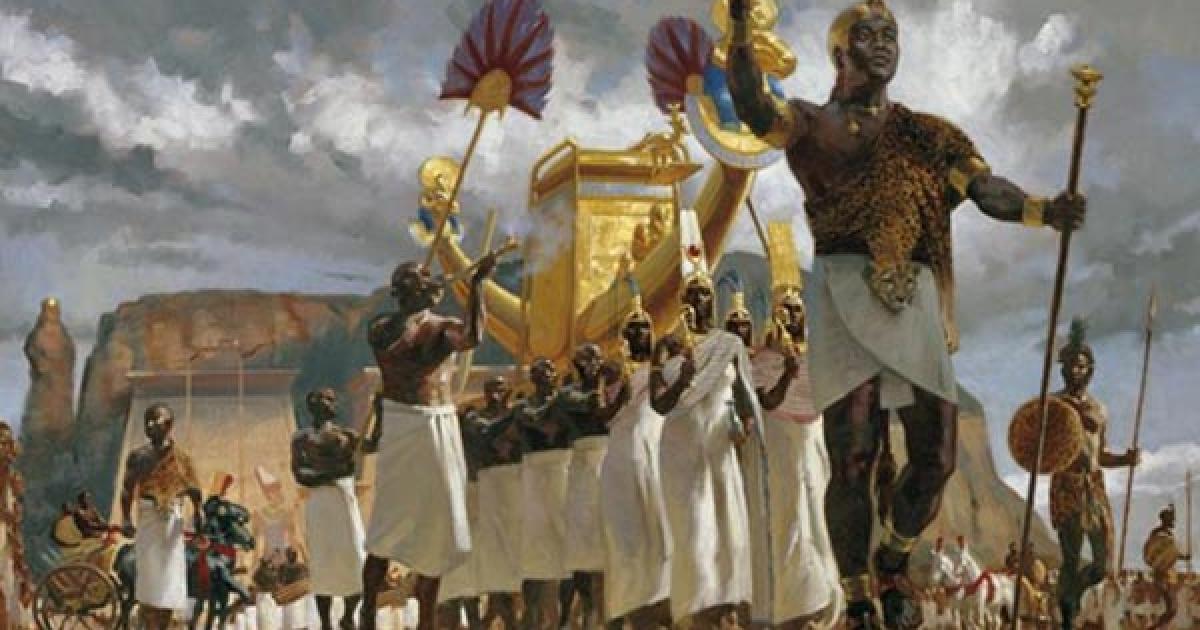
One of the most astonishing realities of Kushite history is that the kingdom did not simply coexist with Egypt—it conquered and governed it. During the eighth century BCE, Kushite rulers expanded northward along the Nile and established control over Egypt, founding what historians call the Twenty-fifth Dynasty of Egypt.
This political transformation was not a brief raid or temporary occupation. It was a sustained period of rule during which Kushite kings governed the entire Nile Valley from Nubia to the Mediterranean coast. Their authority extended over one of the most historically influential civilizations in the ancient world.
Among these rulers, Piye stands as a pivotal figure. He led the initial campaign that unified Egypt under Kushite leadership. His victory inscription, preserved on a monumental stela, describes a military campaign framed not merely as conquest but as religious restoration. He portrayed himself as a restorer of proper worship and moral order, claiming divine approval for his expansion.
Later rulers such as Taharqa became deeply involved in Egyptian political and military affairs. Taharqa commissioned temples, maintained monumental construction programs, and defended the realm against external threats. Archaeological evidence from temple inscriptions and relief carvings shows that Kushite rulers adopted traditional Egyptian royal iconography while preserving aspects of their own cultural identity.
This period demonstrates that cultural influence in the Nile Valley moved in multiple directions. For centuries, Egypt had exerted power southward. During the Twenty-fifth Dynasty, the flow reversed. Kush became the dominant political force, illustrating a dynamic history of regional interaction rather than a one-sided narrative of influence.
2. Kush Built More Pyramids Than Egypt
When most people imagine ancient pyramids, they think immediately of Egypt. Yet archaeological evidence shows that Kushite rulers constructed a greater number of pyramids than their northern neighbors.
Many of these structures are concentrated near the ancient city of Meroe, where royal cemeteries contain dozens of steep-sided pyramids rising from desert plains. Collectively known as the Pyramids of Meroe, these monuments reflect a distinctive architectural tradition that differs from Egyptian pyramid design.
Kushite pyramids are typically narrower and steeper, with small bases and sharply angled sides. They served primarily as royal tomb markers rather than massive internal burial complexes. Beneath them lay underground chambers containing funerary goods, inscriptions, and sometimes elaborate wall decorations.
Archaeological excavation has revealed that these pyramids were not merely imitations of Egyptian forms. They represented an independent adaptation shaped by local aesthetic preferences, construction techniques, and symbolic meanings. Their uniform alignment and organization indicate centralized planning and strong state authority.
The sheer number of pyramids demonstrates both the longevity of Kushite royal traditions and the importance of monumental burial architecture in expressing political legitimacy. These structures also reveal the kingdom’s ability to mobilize labor, manage resources, and sustain large-scale construction over centuries.
Their existence challenges the common perception that pyramid building was uniquely Egyptian. Instead, pyramid construction was a broader Nile Valley tradition that Kush developed in its own distinctive way.
3. Kush Became One of the Ancient World’s Major Iron Producers
Another remarkable feature of Kushite civilization lies in its technological achievements—particularly in metallurgy. During its later period, centered at Meroe, the kingdom became one of the ancient world’s most significant centers of iron production.
Archaeologists have discovered vast slag heaps—remnants of iron smelting—surrounding the city. These deposits provide direct physical evidence of large-scale industrial activity. Radiocarbon dating and metallurgical analysis indicate that ironworking in this region reached an advanced and sustained level of production.
The availability of iron tools and weapons had profound economic and military implications. Iron implements improved agricultural productivity by enabling more effective land clearing and cultivation. Iron weaponry strengthened military capabilities. Trade networks expanded as iron goods circulated across regions.
Environmental archaeology has revealed that iron production also affected surrounding landscapes. Smelting required large quantities of charcoal, which in turn required timber. Evidence suggests that extensive deforestation may have occurred near industrial centers, illustrating how technological growth can reshape ecosystems.
The scale and sophistication of Kushite ironworking demonstrate that advanced metallurgy was not confined to the Mediterranean or Near East. Sub-Saharan Africa played a crucial role in the development and distribution of iron technology.
4. Kush Had Its Own Writing System
For many centuries, Kushite inscriptions appeared mysterious to scholars. Although early rulers used Egyptian hieroglyphs, later periods saw the development of an independent script now known as Meroitic writing.
This script represents one of the earliest known indigenous writing systems of sub-Saharan Africa. It existed in both hieroglyphic and cursive forms and was used for religious texts, royal inscriptions, and administrative records.
Linguistic analysis has allowed partial decipherment of the script, but much of the language remains only partly understood. Researchers continue to compare inscription patterns, grammatical structures, and recurring symbols in efforts to reconstruct vocabulary and meaning.
The existence of an independent writing system demonstrates cultural autonomy and intellectual development. Writing was not simply borrowed—it was transformed and adapted to express local linguistic and symbolic traditions.
This development reflects a broader pattern in Kushite civilization: engagement with external influences combined with strong internal innovation.
5. Religion Centered on a Sacred Mountain
Religious life in Kush was deeply connected to landscape, particularly a dramatic sandstone formation known as Jebel Barkal. Rising prominently from the surrounding plain, this mountain became one of the most important spiritual centers of the kingdom.
Ancient temples built at its base were dedicated to Amun, a major deity shared with Egyptian religious tradition but interpreted within Kushite cosmology. The mountain itself was believed to embody divine presence and royal legitimacy.
Archaeological excavations have uncovered temple complexes, inscriptions, and statues associated with royal ceremonies. Kushite rulers sought religious validation through association with this sacred landscape, reinforcing political authority through spiritual symbolism.
The site illustrates how geography can shape religious meaning. Natural formations became centers of ritual life, linking cosmic order, political power, and environmental features into a unified worldview.
6. Kush Was a Hub of Long-Distance Trade Networks
Geographic position played a crucial role in Kushite prosperity. Located along the Nile and connected to routes extending across Africa and beyond, the kingdom functioned as a major trading hub linking interior regions with Mediterranean and Red Sea markets.
Archaeological discoveries include imported ceramics, luxury goods, and materials originating from distant regions. Gold mining in Nubia contributed significantly to economic strength, while agricultural production supported population growth and urban development.
Trade was not limited to material exchange. Cultural interaction accompanied economic activity. Artistic styles, religious symbols, and technological knowledge moved along the same routes as commodities.
The kingdom’s capital shifted from Napata to Meroe in part because of changing trade patterns and environmental conditions. This relocation reflects strategic adaptation to economic realities—a hallmark of resilient civilizations.
The Scientific Rediscovery of Kush
Modern knowledge of Kush has emerged through systematic archaeological research, epigraphy, geology, and environmental analysis. Excavations have uncovered temples, burial sites, industrial remains, and settlement patterns. Radiocarbon dating establishes timelines. Isotopic analysis reveals diet and migration. Landscape surveys reconstruct ancient ecological conditions.
Each discovery contributes to a growing picture of a complex, technologically advanced, and culturally dynamic civilization.
The Living Legacy of an Ancient Power
The history of Kush reveals a civilization that shaped regional politics, mastered large-scale engineering, developed independent cultural forms, and participated in global exchange networks. Its achievements challenge narrow historical narratives and expand understanding of Africa’s ancient past.
The story of this kingdom is not merely a record of monuments and rulers. It is a record of human adaptability—of societies responding to environmental pressures, technological opportunities, and cultural encounters across centuries.
Today, the remnants of Kush stand not only as archaeological sites but as evidence of Africa’s deep and sophisticated historical legacy. Through ongoing research, the voices once carved in stone and buried beneath sand continue to speak—revealing a civilization whose influence extended far beyond what earlier generations ever imagined.