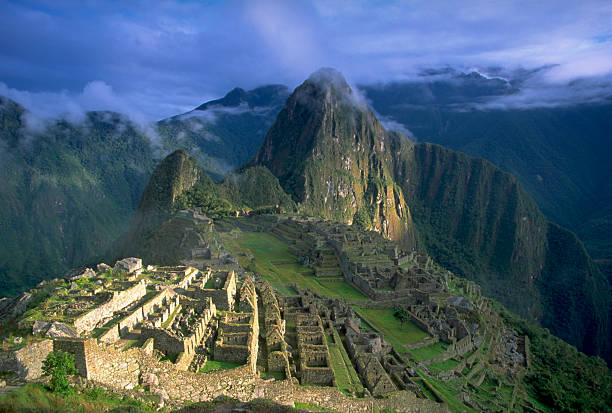
High in the mist-laden Andes, where clouds curl like whispered secrets around jagged peaks, stands Machu Picchu—a place often described as magical, mysterious, and almost otherworldly. Perched between the towering mountains of Huayna Picchu and Machu Picchu Mountain, this ancient Inca city has captured the imagination of millions. Tourists arrive expecting wonder, beauty, and history—and they find all of it. But beneath the breathtaking scenery lies a more complex, often misunderstood story.
The “dark side” of Machu Picchu is not a tale of curses or supernatural terror, as popular myths sometimes suggest. Instead, it is a layered narrative of hardship, power, environmental challenge, colonial erasure, and modern pressure. The shadows that linger here are not ghosts in the conventional sense, but echoes of human struggle, imperial ambition, and the fragile relationship between people and nature.
To understand Machu Picchu fully, one must look beyond the postcard image and step into the deeper story—one that includes myths, legends, and the realities that science and history reveal.
The Lost City That Was Never Truly Lost
One of the most persistent myths surrounding Machu Picchu is that it was a “lost city” discovered by the outside world in 1911 by Hiram Bingham III. This narrative, repeated in countless books and documentaries, creates a sense of dramatic rediscovery—as if the city had vanished from human memory entirely.
But this is only partially true.
Local Indigenous communities in the region always knew about the ruins. Farmers lived nearby, and some even guided Bingham to the site. What was “lost” was not the city itself, but its recognition within Western historical knowledge. This distinction matters, because it reflects a broader pattern in which Indigenous knowledge was often overlooked or dismissed.
The myth of discovery has a darker implication. It reinforces the idea that history begins when it is recorded by outsiders, ignoring the continuity of local memory. In this sense, Machu Picchu’s “rediscovery” is also a story of cultural erasure—one that modern historians are working to correct.
A Royal Estate or a Sacred Sanctuary?
Another enduring mystery concerns the purpose of Machu Picchu itself. Was it a royal retreat, a religious center, or something else entirely?
Most scholars now believe that Machu Picchu was built during the reign of the Inca emperor Pachacuti in the 15th century. It likely served as a royal estate—a place where the emperor and his court could retreat from the political center of Cusco.
Yet the site is also filled with temples, ceremonial spaces, and astronomical alignments. Structures such as the Temple of the Sun and the Intihuatana suggest a deep spiritual significance.
This dual identity—both political and sacred—reveals a darker truth about the Inca world. Power and religion were inseparable. The emperor was not just a ruler but a divine figure, believed to be connected to the sun god. Machu Picchu, therefore, was not merely a place of leisure. It was a stage where authority, belief, and control were expressed through architecture and ritual.
The Labor Behind the Beauty
Visitors often marvel at the precision of Machu Picchu’s stonework. Massive blocks fit together so tightly that even a knife blade cannot pass between them. The terraces cascade down the mountainside with geometric elegance. It is easy to admire this achievement without considering the human cost behind it.
The construction of Machu Picchu required immense labor. The Inca did not use wheels or iron tools, yet they transported heavy stones across steep terrain and shaped them with remarkable skill. This work was likely carried out through a system of labor taxation known as mit’a, in which subjects of the empire were required to contribute labor to state projects.
While this system was not slavery in the traditional sense, it was still a form of obligation imposed by imperial authority. Workers faced harsh conditions, high altitudes, and physical strain. The beauty of Machu Picchu, therefore, is intertwined with the realities of human effort and endurance.
This is one of the quieter, often overlooked aspects of the site’s history—the understanding that greatness is rarely achieved without cost.
Myths of Human Sacrifice
Among the more sensational stories associated with Machu Picchu are claims of human sacrifice. Some legends suggest that the site was a place where ritual killings occurred, particularly involving young women known as the “Virgins of the Sun.”
Archaeological evidence does show that the Inca practiced ritual sacrifice in certain contexts, particularly in high-altitude ceremonies known as capacocha. These rituals were deeply symbolic and often involved offerings to the gods, including children chosen for their perceived purity.
However, there is no strong evidence that Machu Picchu was a major center for such practices. The remains found at the site do not indicate large-scale sacrificial activity. Many early interpretations were influenced by misunderstandings and sensationalism.
The reality is more nuanced. Inca rituals, including sacrifice, were part of a complex belief system tied to cosmology, agriculture, and political power. To label them simply as “dark” is to impose a modern moral framework on a different cultural context.
Still, these practices remind us that the spiritual life of the Inca world included elements that can feel unsettling to modern observers.
The Abandonment of Machu Picchu
One of the most haunting questions about Machu Picchu is why it was abandoned.
The site was likely deserted in the 16th century during the Spanish conquest of the Inca Empire. Yet, unlike many other Inca cities, Machu Picchu was never discovered or destroyed by the Spanish.
This raises intriguing possibilities. Did the inhabitants flee due to disease brought by Europeans? Did political upheaval render the site obsolete? Or was it deliberately abandoned for strategic reasons?
The absence of clear answers adds to the mystique of Machu Picchu. It is a place frozen in time, where life seems to have stopped suddenly. The empty structures, silent terraces, and overgrown paths evoke a sense of loss.
There is something profoundly human in this silence—the reminder that even the most advanced societies can fade, leaving only traces behind.
Nature as Both Protector and Threat
Machu Picchu owes its survival in part to its isolation. Hidden among mountains and cloaked in vegetation, it escaped the destruction that befell many other Inca sites.
But this same environment also poses constant threats.
The Andes are geologically active, and the region is prone to landslides and earthquakes. Heavy rainfall can destabilize slopes, while erosion slowly wears away the terraces and structures.
The Inca engineers who built Machu Picchu were acutely aware of these challenges. They designed sophisticated drainage systems and carefully planned the layout to manage water flow and reduce the risk of collapse.
Modern scientific studies have shown that much of the site’s stability depends on these hidden systems. Beneath the visible beauty lies an intricate network of foundations and channels that keep the city from sliding down the mountain.
Nature, in this sense, is both the guardian and the potential destroyer of Machu Picchu.
The Impact of Modern Tourism
Today, Machu Picchu faces a different kind of threat—one created by its own popularity.
Millions of visitors travel to the site each year, drawn by its beauty and historical significance. While tourism provides economic benefits, it also places enormous pressure on the fragile environment.
Foot traffic erodes paths and terraces. Infrastructure development alters the surrounding landscape. Waste management and resource use become increasingly challenging.
Organizations such as UNESCO have expressed concern about the long-term sustainability of tourism at Machu Picchu. Efforts have been made to limit visitor numbers and implement conservation measures, but balancing access and preservation remains a complex issue.
This modern “dark side” is not rooted in ancient myths but in contemporary reality. It reflects the global challenge of protecting cultural heritage in an age of mass travel.
The Spiritual Aura and Modern Interpretations
Many visitors describe Machu Picchu as a place of spiritual energy. Some believe it sits on a “ley line” or acts as a portal of cosmic power. These ideas, while not supported by scientific evidence, contribute to the site’s mystique.
The Inca did indeed align certain structures with astronomical events, such as solstices and equinoxes. These alignments reflect a deep understanding of the sky and its connection to agricultural cycles.
However, modern interpretations often blend historical facts with New Age beliefs, creating a narrative that is more imaginative than accurate.
The true spiritual significance of Machu Picchu lies in its integration with the natural landscape. The Incas saw mountains, rivers, and celestial bodies as sacred. Their architecture reflects a worldview in which humans are part of a larger cosmic system.
This perspective, grounded in observation and reverence for nature, offers a more authentic understanding of the site’s meaning.
Scientific Insights into an Ancient Marvel
In recent decades, scientific research has shed new light on Machu Picchu.
Archaeologists have used advanced techniques to study the site’s construction, layout, and environmental context. Geological analyses reveal how the Incas selected a location that balanced accessibility, defense, and resource availability.
Bioarchaeological studies of human remains provide insights into the lives of the people who lived there. Evidence suggests a diverse population, possibly drawn from different regions of the empire.
These findings challenge earlier assumptions and highlight the complexity of Inca society.
Science does not diminish the mystery of Machu Picchu. Instead, it deepens it by revealing the ingenuity and adaptability of its builders.
The Enduring Mystery
Despite decades of research, Machu Picchu still holds secrets.
There are aspects of its design, purpose, and history that remain unclear. Why was this particular location chosen? What rituals took place within its walls? How did daily life unfold in such a remote setting?
These unanswered questions are part of what makes Machu Picchu so compelling. It is not just a historical site but a living mystery.
The “dark side” of Machu Picchu is not a single story but a tapestry of intertwined themes—myth and reality, beauty and hardship, preservation and loss.
A Place of Light and Shadow
To stand at Machu Picchu is to feel both awe and reflection. The sunlight illuminates the stone terraces, while shadows gather in the corners of ancient structures.
This interplay of light and shadow mirrors the site’s history. It is a place of extraordinary achievement, but also of unanswered questions and hidden complexities.
Machu Picchu reminds us that history is never simple. Behind every monument lies a human story, shaped by ambition, belief, and the forces of nature.
The myths may capture our imagination, but the realities give the site its true depth.
And perhaps that is the most powerful aspect of Machu Picchu—not just what it reveals, but what it invites us to wonder.