Roughly seventy million years ago, during the closing chapters of the Age of Dinosaurs, the landscapes of what is now South America were home to a predator unlike any other. It had a sleek body built for speed, arms so tiny they were almost useless, and a skull crowned with a pair of thick horns that gave it the appearance of a prehistoric bull. Its name reflects this strange combination. Carnotaurus means “meat-eating bull,” and the creature lived up to the dramatic title.
Among the many dinosaurs discovered by paleontologists, Carnotaurus stands out as one of the most distinctive theropods ever found. Its unusual anatomy, particularly the horns above its eyes and the extraordinarily reduced forelimbs, has fascinated scientists for decades. Unlike many dinosaurs known from scattered bones, Carnotaurus is represented by one of the most complete skeletons of any large predatory dinosaur. This remarkable preservation has allowed researchers to reconstruct its body in impressive detail, revealing clues about how it moved, hunted, and lived.
Carnotaurus belonged to a group of predatory dinosaurs known as abelisaurids, which dominated the southern continents during the Late Cretaceous Period. While North America had famous hunters like Tyrannosaurus rex, the southern hemisphere had its own lineage of fierce predators. Carnotaurus was among the most specialized and visually striking members of that lineage.
Understanding this dinosaur is not just about describing an ancient predator. It is about reconstructing a vanished ecosystem, exploring the evolutionary pathways that shaped unusual body designs, and imagining the daily life of a creature that once ruled its environment.
Below are seven scientifically grounded and fascinating facts that reveal why Carnotaurus remains one of the most intriguing dinosaurs ever discovered.
1. Carnotaurus Was Discovered from One of the Best-Preserved Theropod Fossils Ever Found
The story of Carnotaurus begins in 1984 in the windswept deserts of Patagonia, Argentina. The fossil was discovered by Argentine paleontologist José Bonaparte, one of the most important figures in South American dinosaur research. What he found was extraordinary.
Unlike many dinosaur fossils that consist of isolated bones, the Carnotaurus specimen was remarkably complete. It included a nearly intact skull, much of the skeleton, and even impressions of the skin surrounding parts of the body. This level of preservation is rare for large theropod dinosaurs.
The species was officially named Carnotaurus sastrei in 1985. The name Carnotaurus combines the Latin words for “meat” and “bull,” referencing the dinosaur’s carnivorous diet and distinctive horns. The species name sastrei honors Ángel Sastre, the ranch owner on whose land the fossil was discovered.
Because the skeleton was so complete, scientists could analyze aspects of Carnotaurus anatomy that are often impossible to study in other dinosaurs. The skull structure, vertebrae, limb proportions, and even skin texture provided valuable information about how the animal lived.
The fossil revealed that Carnotaurus measured about 7.5 to 9 meters in length, roughly the size of a large bus. It likely weighed between 1.3 and 2 metric tons, making it a formidable predator within its ecosystem.
What made the fossil even more exciting was the preservation of skin impressions. These impressions showed that Carnotaurus had small, non-overlapping scales covering most of its body, with larger bumps called osteoderms scattered across the skin. This texture created a rough, pebbled appearance that would have made the dinosaur look even more intimidating.
The discovery of Carnotaurus provided paleontologists with a rare opportunity: a nearly complete snapshot of a predator that lived tens of millions of years ago.
2. Its Horns Were Unique Among Large Predatory Dinosaurs
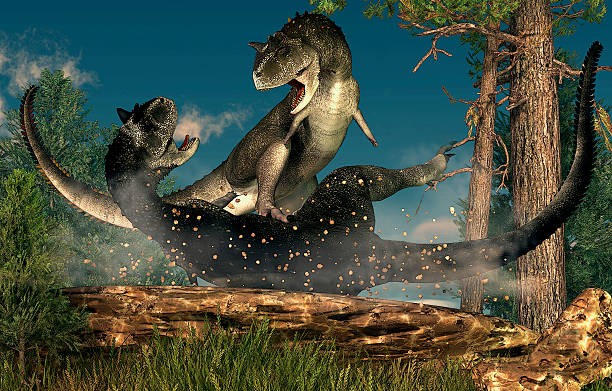
Perhaps the most iconic feature of Carnotaurus is the pair of thick horns located above its eyes. These horns project upward from the skull and give the dinosaur its bull-like appearance.
No other large theropod dinosaur possesses horns quite like these. Some predatory dinosaurs had ridges, crests, or small bumps on their skulls, but Carnotaurus had true horns formed from solid bone.
These horns have sparked considerable debate among paleontologists. What purpose did they serve?
One possibility is that the horns were used in combat between individuals of the same species. Many modern animals with horns or antlers use them during contests for dominance or mating rights. If Carnotaurus behaved similarly, males may have used their horns to push against rivals during ritualized battles.
Another possibility is that the horns were used for display. Brightly colored skin or keratin coverings could have made them highly visible signals for attracting mates or intimidating competitors.
Some researchers have also suggested that the horns may have played a role in hunting. However, the structure of the skull suggests that Carnotaurus was not well adapted for powerful head-butting strikes against prey. Its skull was relatively lightweight compared to the thick skulls of some other predatory dinosaurs.
Instead, the horns may have been multifunctional structures used primarily for display and intraspecific interaction rather than for killing prey.
Regardless of their exact function, the horns made Carnotaurus instantly recognizable. In a world filled with strange dinosaurs, it was one of the most visually distinctive predators ever to evolve.
3. Carnotaurus Had the Smallest Arms of Any Large Theropod
When people think of dinosaurs with tiny arms, the first example that often comes to mind is Tyrannosaurus rex. Yet Carnotaurus took arm reduction to an even greater extreme.
The forelimbs of Carnotaurus were astonishingly small—much smaller relative to body size than those of almost any other predatory dinosaur. The arms were so short that they could barely extend forward from the body, and the bones suggest they had very limited mobility.
Each hand possessed four fingers, but the structure of the wrist and joints indicates that the arms were weak and probably incapable of grasping prey. In fact, they may have been functionally useless for hunting.
This raises an obvious question: why would evolution produce such tiny arms in a powerful predator?
One explanation is that Carnotaurus relied almost entirely on its jaws and speed to capture prey. If the arms were not necessary for hunting, natural selection may have favored reducing them to lighten the body and improve balance.
Another possibility is that the reduction of the arms was linked to the evolution of stronger neck muscles and skull structures used in feeding.
Abelisaurid dinosaurs, the group to which Carnotaurus belonged, generally had reduced forelimbs compared to other theropods. Carnotaurus represents the extreme end of this trend.
Its tiny arms remain one of the most puzzling and fascinating aspects of its anatomy, illustrating how evolution sometimes produces solutions that seem strange to human observers.
4. Carnotaurus Was Likely One of the Fastest Large Predatory Dinosaurs
Despite its intimidating horns and massive head, Carnotaurus appears to have been built for speed.
The structure of its legs suggests that it was a highly capable runner. Its hind limbs were long and slender, with strong muscles that would have generated powerful strides. The tail was stiffened by specialized vertebrae, helping stabilize the body during rapid movement.
Biomechanical studies of Carnotaurus skeletons indicate that it may have been one of the fastest large theropod dinosaurs ever discovered. Some estimates suggest it could reach speeds of 48 to 56 kilometers per hour, though exact speeds remain uncertain.
This running ability would have been a major advantage when hunting prey across open landscapes.
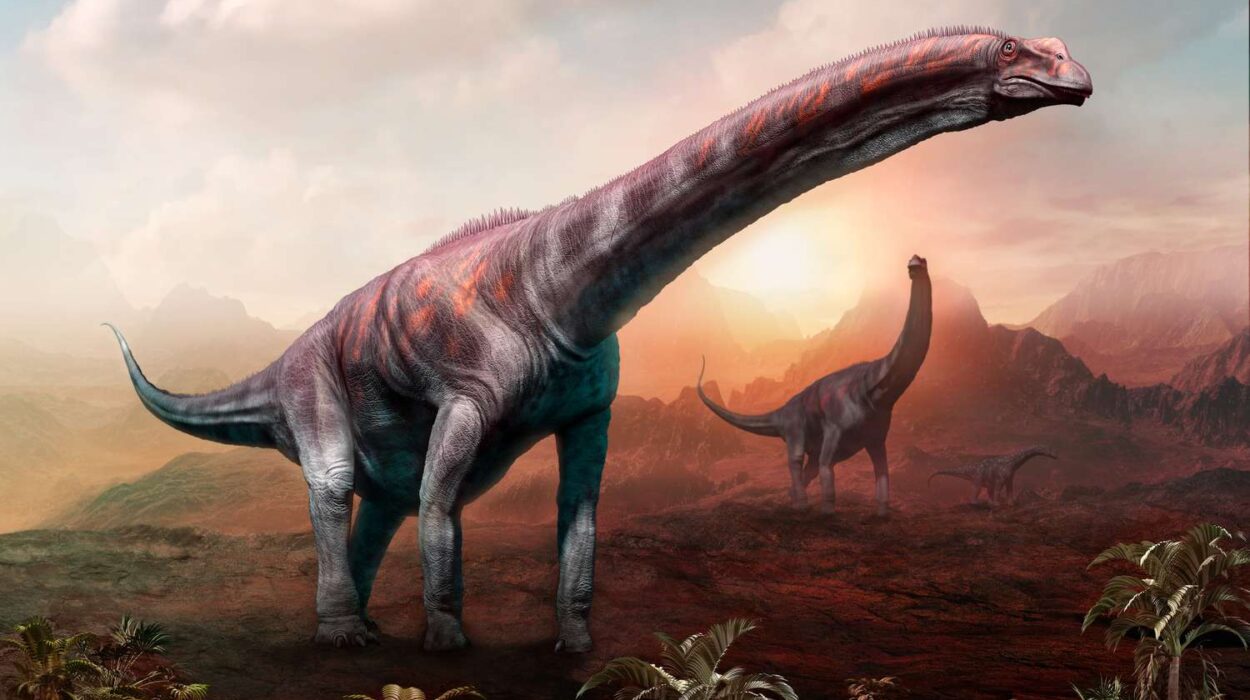
The Late Cretaceous environments of Patagonia likely included semi-arid plains and forested areas populated by herbivorous dinosaurs such as titanosaurs. These massive long-necked dinosaurs were too large for Carnotaurus to attack as adults, but juveniles or smaller herbivores may have been viable prey.
Speed would have allowed Carnotaurus to chase down animals that relied on agility for escape. Unlike heavily built predators that depended on ambush tactics, Carnotaurus may have been more of a pursuit hunter.
Its long legs, lightweight skull, and streamlined body suggest an animal adapted for rapid movement rather than brute strength.
5. Carnotaurus Had an Extremely Flexible Neck and Powerful Bite
Although Carnotaurus had a relatively narrow skull compared to some other theropods, its neck was incredibly strong and flexible.
The vertebrae in the neck were specially adapted to allow rapid side-to-side movement. This flexibility may have allowed Carnotaurus to slash at prey with quick bites, rather than relying on crushing force.
Some paleontologists believe Carnotaurus may have used a hunting strategy similar to that of modern predatory reptiles such as monitor lizards or Komodo dragons. Instead of delivering a single killing bite, it may have attacked repeatedly, inflicting wounds that weakened the prey.
The skull structure also suggests that Carnotaurus could open its jaws very wide. This would have allowed it to seize large chunks of flesh or grip struggling animals effectively.
While its bite force was probably weaker than that of Tyrannosaurus rex, it was still powerful enough to tear through muscle and bone.
Combined with speed and agility, this flexible neck and effective bite made Carnotaurus a dangerous predator within its environment.
6. Its Skin Was Covered in Unique Scales and Bumps
One of the most exciting aspects of the Carnotaurus fossil discovery was the preservation of skin impressions.
These impressions revealed that the dinosaur’s skin was covered with small polygonal scales arranged in a tight pattern. Scattered among these scales were larger bumps known as osteoderms, which may have provided some protection or structural support.
Unlike many dinosaurs that may have had feathers, Carnotaurus appears to have been entirely scaly. This fits with what scientists know about most abelisaurids, which were likely adapted to warmer climates where feather insulation would not have been necessary.
The texture of the skin suggests that Carnotaurus would have had a rough, rugged appearance. The pattern of scales and bumps may also have created visual effects when the animal moved in sunlight.
Although the exact coloration of Carnotaurus is unknown, scientists often speculate that it may have had camouflage patterns similar to those of modern predators.
The preserved skin impressions provide an unusually detailed glimpse into the appearance of a large dinosaur, helping scientists reconstruct what Carnotaurus might have looked like in life.
7. Carnotaurus Ruled the Southern Continents During the Late Cretaceous
Carnotaurus lived around 72 to 69 million years ago during the Late Cretaceous Period, a time when dinosaurs dominated the Earth.
At that time, the continents were arranged differently than today. South America had separated from Africa and developed its own unique ecosystems. In these environments, abelisaurid dinosaurs became the top predators.
Carnotaurus was among the most specialized members of this group. Its unusual skull, tiny arms, and running adaptations set it apart from predators on other continents.
The Late Cretaceous ecosystems of South America included a wide range of herbivorous dinosaurs, including titanosaurs and other plant-eating species. Carnotaurus would have played a crucial role as a predator, helping maintain ecological balance.
Like all non-avian dinosaurs, Carnotaurus disappeared during the mass extinction event that occurred about 66 million years ago. The impact of a massive asteroid, combined with volcanic activity and climate changes, ended the age of dinosaurs.
Yet the legacy of Carnotaurus remains preserved in the fossil record. Its bones tell a story of evolution, adaptation, and survival in a world very different from our own.
The Last Roar of the Meat-Eating Bull
Carnotaurus was more than just another predator in the long history of dinosaurs. It was an evolutionary experiment—a creature with horns like a bull, arms almost too small to use, and a body built for speed.
In the ancient landscapes of Patagonia, it would have been an unmistakable presence. A flash of movement across the plains. A powerful head crowned with horns. A predator perfectly adapted to its environment.
Today, the fossil of Carnotaurus allows scientists to reconstruct that lost world with increasing detail. Each bone, each scale impression, and each anatomical feature offers clues about how life evolved on Earth millions of years ago.
The story of Carnotaurus reminds us that evolution does not follow predictable paths. It produces forms that are strange, unexpected, and sometimes astonishingly beautiful in their complexity.
And somewhere in the windswept rocks of Patagonia, beneath layers of ancient sediment, more secrets from that distant age may still be waiting to be discovered.