More than 150 million years ago, during the Late Jurassic period, a giant walked the ancient landscapes of what is now North America. Its footsteps shook the ground, its long neck swept gracefully across forests of ferns and conifers, and its astonishingly long tail stretched behind it like a living whip. This creature was Diplodocus, one of the most iconic dinosaurs ever discovered and one of the longest animals to have walked the Earth.
Diplodocus belongs to a group of dinosaurs known as sauropods—massive, long-necked, plant-eating giants that dominated the land during the Jurassic and Cretaceous periods. Among these enormous creatures, Diplodocus stands out not just because of its size but because of its elegant body design. Its long, slender form, delicate skull, and extraordinary tail gave it a distinctive silhouette unlike any other dinosaur.
The story of Diplodocus is not simply about a giant reptile from the distant past. It is a story about scientific discovery, changing ideas about dinosaur life, and humanity’s enduring fascination with creatures that once ruled the Earth. Through fossils preserved in stone, scientists have reconstructed the life of this remarkable animal, revealing how it moved, fed, and lived in a world utterly different from our own.
Diplodocus is often called the “whip-tailed titan,” a fitting title for an animal whose tail may have stretched nearly half the length of its entire body. Yet its size alone does not capture the wonder of this dinosaur. Diplodocus represents a key chapter in the history of life, a creature that evolved extraordinary adaptations to survive in the lush ecosystems of the Jurassic world.
To understand Diplodocus is to step back in time to an era when dinosaurs were the undisputed rulers of the land and when North America looked nothing like it does today.
The Meaning Behind the Name
The name Diplodocus carries an intriguing story rooted in scientific discovery. It comes from two Greek words: “diplo,” meaning double, and “dokos,” meaning beam. The name refers to a unique feature found in the dinosaur’s tail bones—paired structures on the underside of the vertebrae that early paleontologists thought resembled double beams.
When the dinosaur was first studied in the nineteenth century, these unusual bones caught the attention of scientists, who recognized that they were unlike those of any other dinosaur known at the time. The name Diplodocus therefore literally means “double-beamed,” a reference to the distinctive shape of the tail vertebrae.
Although later research showed that similar structures appear in several related sauropods, the name remained. Today it is one of the most recognizable dinosaur names in the world, evoking images of enormous skeletons stretching across museum halls.
Diplodocus was first described scientifically in 1878 by the American paleontologist Othniel Charles Marsh during a period of intense fossil hunting known as the Bone Wars. These discoveries revealed a dinosaur of staggering proportions, with a body length that could exceed 25 meters and possibly approach 30 meters in some individuals.
The name soon became synonymous with the grandeur of prehistoric life.
The Age of Diplodocus
Diplodocus lived during the Late Jurassic period, roughly between 154 and 150 million years ago. At that time, the Earth was a warm and dynamic planet filled with strange and magnificent life forms.
The continents were arranged very differently from today. North America was part of the supercontinent Laurasia, and much of the interior was covered by vast floodplains and shallow seas. The region that would one day become the Rocky Mountains was dominated by a vast ecosystem known today as the Morrison Formation.
The Morrison Formation is one of the richest fossil deposits in the world. Stretching across several western U.S. states, it preserves the remains of numerous dinosaurs and other prehistoric animals that lived in this ancient landscape.
Diplodocus shared this world with other famous dinosaurs such as Allosaurus, Stegosaurus, Camarasaurus, and Apatosaurus. Rivers meandered across wide plains filled with conifer forests, cycads, tree ferns, and ginkgo trees. Seasonal droughts alternated with periods of heavy rainfall, shaping the lives of the animals that inhabited the region.
In this vibrant ecosystem, Diplodocus was among the most dominant herbivores. Its immense size allowed it to browse vegetation across wide areas, shaping the plant communities around it.
The Late Jurassic was a golden age for sauropods, and Diplodocus was one of its most successful giants.
The Discovery of a Giant
The discovery of Diplodocus came during a remarkable period in the history of paleontology. In the late nineteenth century, American scientists raced across the western frontier in search of dinosaur fossils buried within ancient rock layers.
Two of the most famous paleontologists of the era, Othniel Charles Marsh and Edward Drinker Cope, competed fiercely in what became known as the Bone Wars. Their rivalry drove an explosion of fossil discoveries, including many of the dinosaurs that have become household names.
Diplodocus was first discovered in Colorado, where fragments of its skeleton emerged from Jurassic rocks. Marsh recognized that the fossils represented a new kind of sauropod dinosaur, distinct from others known at the time.
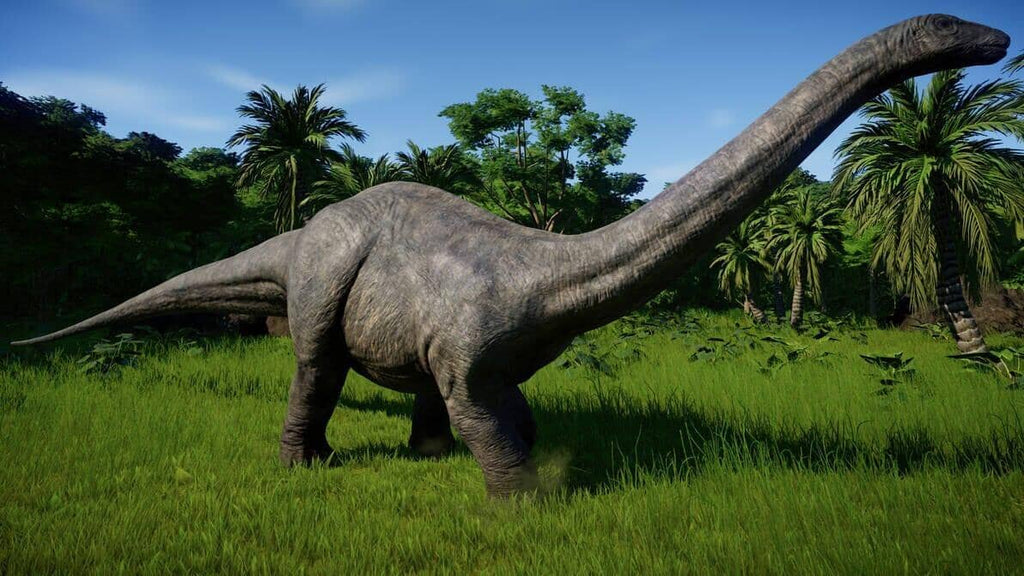
As additional specimens were unearthed, scientists realized that Diplodocus possessed a remarkably long and slender body compared with many other sauropods. Its tail alone could exceed 14 meters in length, making it one of the longest tails of any known animal.
Perhaps the most famous specimen of Diplodocus was discovered in Wyoming and later mounted in museums around the world. Replicas of the skeleton were sent to major cities in Europe during the early twentieth century, introducing the public to the awe-inspiring scale of dinosaur life.
For many people, seeing a Diplodocus skeleton for the first time was a life-changing experience. Its immense size and elegant proportions challenged the imagination, transforming dinosaurs from obscure fossils into icons of natural history.
The Remarkable Body of Diplodocus
Diplodocus was a masterpiece of evolutionary engineering. Every part of its body was shaped by millions of years of adaptation to a life as a gigantic herbivore.
Its neck was extraordinarily long, composed of elongated vertebrae that allowed the dinosaur to reach vegetation over a wide area without moving its entire body. Unlike some other sauropods that held their necks upright, Diplodocus likely carried its neck more horizontally, sweeping it through vegetation like a living crane.
The skull of Diplodocus was surprisingly small and delicate compared with the enormous body it supported. Its jaws were filled with narrow, peg-like teeth positioned toward the front of the mouth. These teeth were perfectly suited for stripping leaves from branches but not for chewing them.
Behind the neck stretched the massive torso, supported by four sturdy legs. Despite its size, the limbs of Diplodocus were relatively slender compared with those of other sauropods. This suggests that the animal may have been somewhat more agile than its heavier relatives.
The tail was perhaps the most extraordinary feature of all. It began thick at the base and gradually tapered into an extremely long, thin extension resembling a whip. Computer models suggest that the tail could have moved with astonishing speed, possibly producing a sonic crack similar to that of a bullwhip.
Whether used for defense, communication, or display, the tail of Diplodocus remains one of the most fascinating structures in dinosaur anatomy.
Feeding in a Jurassic Forest
As a herbivore, Diplodocus depended entirely on plants for nourishment. Yet feeding a creature weighing perhaps 12 to 16 tons posed a tremendous challenge. To survive, the dinosaur needed to consume enormous quantities of vegetation every day.
Its peg-shaped teeth were ideal for stripping leaves from branches. Instead of chewing its food thoroughly, Diplodocus likely swallowed plant material relatively quickly. Like many herbivores, it may have relied on fermentation within its digestive system to break down tough plant fibers.
Scientists believe that Diplodocus fed on low-growing vegetation such as ferns and horsetails, as well as the leaves of shrubs and small trees. Its long neck allowed it to reach a broad feeding area without moving its massive body, conserving energy while gathering food.
Another possibility is that Diplodocus sometimes fed along riverbanks or in swampy environments where softer vegetation was abundant. Fossil evidence from the Morrison Formation suggests that such habitats were common during the Late Jurassic.
Feeding behavior likely shaped the daily life of Diplodocus. Herds may have moved slowly across floodplains, browsing continuously as they traveled in search of fresh vegetation.
Life in a Dangerous World
Despite its enormous size, Diplodocus did not live in a peaceful paradise. The Jurassic world was filled with predators, including large theropod dinosaurs such as Allosaurus.
A fully grown Diplodocus was probably too large for most predators to attack easily. Its immense body and powerful tail would have made it a formidable opponent. However, younger individuals would have been more vulnerable.
Juvenile Diplodocus may have faced constant danger from carnivorous dinosaurs. Rapid growth could have been an important survival strategy, allowing young animals to reach safer sizes as quickly as possible.
Herd behavior may also have played a role in defense. Living in groups could help protect young animals while providing early warning of approaching predators.
The tail of Diplodocus may have served as a powerful defensive weapon. If swung with sufficient force, it could have deterred attackers or delivered painful strikes.
The Jurassic ecosystem was a dynamic and sometimes brutal place, and survival required strength, adaptability, and cooperation.
Growth and Reproduction
Like other dinosaurs, Diplodocus reproduced by laying eggs. Although direct fossil evidence of Diplodocus nests is rare, discoveries of sauropod nesting sites suggest that these dinosaurs laid multiple eggs in shallow nests dug into the ground.
After hatching, young Diplodocus would have been small compared with the massive adults but still large by modern animal standards. They likely grew rapidly, fueled by abundant vegetation.
Growth rings preserved in dinosaur bones indicate that many sauropods experienced fast growth during their early years. This rapid development may have helped juveniles escape the most dangerous stage of life.
As they matured, Diplodocus individuals gradually developed the immense size that made them giants of the Jurassic landscape.
Diplodocus in the Fossil Record
The fossils of Diplodocus have been found primarily in the western United States, particularly in Colorado, Wyoming, Utah, and Montana. These discoveries come mainly from the Morrison Formation, a geological layer famous for its rich dinosaur remains.
Skeletons of Diplodocus are among the most complete sauropod fossils ever discovered. Some specimens preserve nearly the entire skeleton, allowing scientists to study the dinosaur’s anatomy in extraordinary detail.
One species, Diplodocus carnegii, became especially famous when industrialist Andrew Carnegie funded the creation of casts of its skeleton. These replicas were sent to museums in Europe and around the world, making Diplodocus one of the most widely displayed dinosaurs in history.
Another species, Diplodocus hallorum, may have reached even greater lengths, potentially making it one of the longest dinosaurs known.
These fossils continue to provide valuable insights into the biology and evolution of sauropods.
The Legacy of a Whip-Tailed Titan
Diplodocus occupies a special place in the story of paleontology. Its discovery helped transform dinosaurs from poorly understood fossils into vividly reconstructed creatures that once roamed ancient landscapes.
In museums around the world, the towering skeletons of Diplodocus inspire awe and curiosity. Children gaze upward at the sweeping arc of its neck and tail, imagining the Jurassic forests where this giant once lived.
For scientists, Diplodocus remains a subject of ongoing research. New technologies, including computer modeling and detailed fossil analysis, continue to reveal secrets about its movement, growth, and behavior.
More than a century after its discovery, the whip-tailed titan of North America still captures the imagination. It reminds us that the history of life on Earth is filled with extraordinary creatures and that the planet we inhabit today is only the latest chapter in a story stretching back hundreds of millions of years.
Diplodocus stands as a symbol of that ancient world—a graceful giant whose long shadow still reaches into the present, inviting us to explore the deep past and the wonders hidden within the rocks beneath our feet.