Across continents and cultures, a hauntingly familiar story echoes through ancient texts and oral traditions. It is the story of a world consumed by water, of civilizations overwhelmed by a rising sea, and of a few survivors who carried the memory of catastrophe into the future. From the valleys of Mesopotamia to the mountains of Asia, from the Americas to the islands of the Pacific, humanity has preserved tales of a devastating flood that reshaped the world.
For centuries these stories were treated purely as mythology—symbolic narratives meant to teach moral lessons or explain natural forces. Yet as geology, archaeology, and climate science advanced, researchers began noticing something intriguing. Many of these legends might preserve distant memories of real environmental disasters that occurred thousands of years ago.
Today, scientists do not claim that a single flood covered the entire planet exactly as described in ancient myths. However, they increasingly recognize that massive regional floods did occur in human prehistory and early civilization. Some were triggered by melting glaciers at the end of the last Ice Age. Others were caused by sudden changes in sea level or the collapse of natural dams.
The scientific investigation into these events reveals a remarkable possibility: that ancient flood myths may contain echoes of real catastrophes experienced by early societies. The legends are not literal historical records, but they may preserve fragments of genuine environmental history.
Flood Stories Around the World
Flood legends appear in an astonishing number of cultures. These stories often share striking similarities, despite emerging in regions separated by oceans and mountains.
One of the most famous accounts comes from the ancient Mesopotamian epic known as the Epic of Gilgamesh. In this story, the gods decide to destroy humanity with a massive flood, but a man named Utnapishtim is warned in advance and builds a great boat to save his family and animals. After the flood subsides, he releases birds to search for dry land.
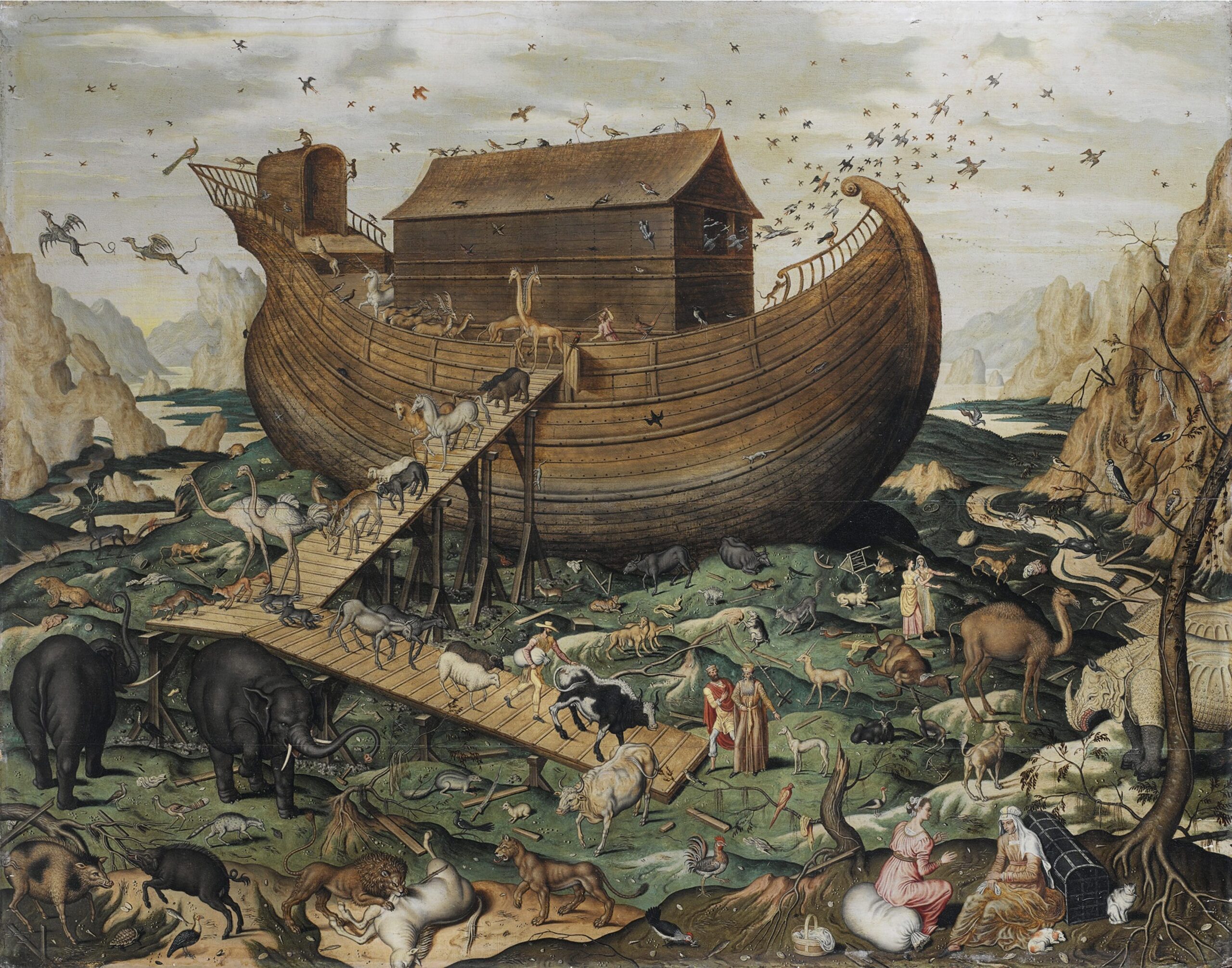
A very similar narrative appears in the biblical account of Noah in the Book of Genesis. In that story, a divine warning leads Noah to construct an ark to survive a catastrophic flood that wipes out much of life on Earth.
Ancient Greek mythology tells of Deucalion and his wife Pyrrha, who survive a world-destroying flood sent by the gods. In Hindu tradition, a similar story describes Manu being warned by a divine fish that a great flood will soon destroy humanity.
Flood narratives also appear in Indigenous traditions in North America, Australia, and South America. The consistency of these stories has long puzzled scholars. How could societies separated by thousands of kilometers develop such similar myths?
For many years, the dominant explanation was that floods are common natural disasters. Because rivers overflow and storms cause coastal flooding, it was natural for cultures to imagine larger, cosmic versions of these events.
But as scientists learned more about Earth’s climate history, another explanation began to emerge.
The End of the Ice Age
To understand the scientific roots behind flood legends, we must travel back roughly twenty thousand years, to the end of the last major glacial period known as the Last Glacial Maximum.
At that time, enormous ice sheets covered large portions of North America, northern Europe, and Asia. These glaciers were several kilometers thick in some regions. Because so much water was locked inside ice, global sea levels were dramatically lower than today—by more than one hundred meters.
As Earth’s climate gradually warmed, the glaciers began to melt. Vast quantities of water flowed back into the oceans. Over thousands of years, sea levels rose steadily.
This process reshaped coastlines around the world. Areas that had once been dry land slowly disappeared beneath the sea. Ancient river valleys flooded, plains became shallow seas, and coastal settlements vanished.
For early human societies living near these coastlines, the encroaching water must have been dramatic and terrifying. Land that had been inhabited for generations was gradually swallowed by the rising ocean.
Scientists estimate that between fifteen thousand and eight thousand years ago, sea levels rose rapidly enough to flood huge areas of land across the globe. Some researchers believe these experiences could have inspired stories of great floods passed down through generations.
Geological Evidence of Massive Flooding
Beyond gradual sea level rise, Earth’s geological record also reveals evidence of sudden, catastrophic floods.
One famous example occurred in North America near the end of the Ice Age. A massive glacial lake known as Glacial Lake Missoula once existed in what is now the northwestern United States. This enormous lake was held back by a wall of glacial ice.
Eventually, the ice dam failed.
When it collapsed, an unimaginable volume of water surged across the landscape in what scientists now call the Missoula Floods. These floods carved deep channels, transported gigantic boulders, and reshaped entire regions of land.
The water raced across hundreds of kilometers at speeds comparable to modern rivers during extreme storms—but on a vastly larger scale. Evidence of these floods can still be seen today in the landscape of eastern Washington state.
Although these floods occurred before large civilizations existed in that region, they demonstrate something important: Earth is capable of producing sudden, enormous floods far beyond ordinary experience.
If similar events happened in areas inhabited by humans, the memory of such disasters could easily evolve into legends.
The Black Sea Flood Hypothesis
One of the most famous scientific theories connecting geology to ancient flood stories involves the Black Sea.
Around 7600 years ago, according to a hypothesis proposed by researchers such as William Ryan and Walter Pitman, the Black Sea basin may have experienced a dramatic flooding event.
At that time, the Black Sea was thought to have been a freshwater lake separated from the Mediterranean Sea by a natural land barrier near what is now the Bosporus Strait. Rising sea levels eventually caused the Mediterranean to spill over this barrier.
When the barrier failed, enormous volumes of saltwater may have rushed into the basin, rapidly raising the water level and flooding nearby lands.
If people lived around the ancient shoreline, they might have witnessed an advancing wall of water swallowing forests, fields, and settlements. Such a dramatic event could have inspired stories of a catastrophic flood remembered by later civilizations in the region.
Although the details of this hypothesis remain debated, geological evidence does show that major environmental changes occurred in the Black Sea region during this period.
Ancient Coastlines Beneath the Sea
Modern underwater archaeology has revealed another fascinating piece of the puzzle. Many ancient human settlements now lie beneath the ocean.
As sea levels rose after the Ice Age, coastal communities were gradually submerged. Some of these lost landscapes have been discovered beneath shallow waters.
One example is Doggerland, a vast region that once connected Britain to mainland Europe. Thousands of years ago, this area was a rich landscape filled with rivers, forests, and wildlife.
Archaeological evidence shows that humans lived there for thousands of years. But as the Ice Age ended, rising seas slowly flooded the land until it disappeared beneath the North Sea.
The loss of such a large inhabited region would have been a profound experience for the people who lived there. Stories about the sea swallowing the land could easily have survived as cultural memory.
Similar submerged landscapes exist in Southeast Asia, the Mediterranean, and along many other coastlines.
Climate Change and Ancient Catastrophes
Climate has always shaped human history. At the end of the Ice Age, Earth experienced dramatic environmental shifts.
Melting glaciers altered rivers and coastlines. Changing rainfall patterns transformed ecosystems. In some regions, enormous freshwater lakes burst through natural barriers, unleashing devastating floods.
These environmental upheavals occurred during the same period when human societies were transitioning from hunter-gatherer lifestyles to early agriculture. Communities were beginning to settle in permanent locations, making them more vulnerable to sudden environmental changes.
If entire villages were destroyed by rising water or sudden floods, survivors would naturally remember these events. Over generations, memories could become mythologized, blending real experiences with symbolic storytelling.
How Myths Preserve Memory
Anthropologists have long recognized that myths can preserve information about real events. Oral traditions often contain fragments of historical truth, even when details become symbolic or exaggerated.
For example, some Indigenous Australian stories describe coastlines that existed thousands of years ago before rising seas flooded them. Researchers have found that these oral traditions align with geological evidence of ancient shorelines.
Similarly, flood myths might preserve distant memories of environmental disasters that occurred long before written history.
The stories evolve over time, shaped by cultural values and religious beliefs. Yet beneath the symbolism, there may remain echoes of genuine experiences.
The Limits of the Flood Theory
Despite the intriguing connections between geology and myth, scientists emphasize an important point: there is no evidence for a single global flood that covered the entire planet within human history.
Geological layers, fossil records, and sediment patterns show no sign of such a universal event. Instead, Earth’s history reveals many regional floods of varying scales.
Some were caused by melting glaciers. Others by volcanic activity, earthquakes, or storms. These events could be catastrophic locally while leaving the rest of the world unaffected.
Flood myths likely emerged independently in different regions as societies experienced their own water disasters.
The similarities between stories may reflect shared human fears and storytelling patterns rather than a single historical event.
The Emotional Power of Water
Water is both life-giving and destructive. It nourishes crops, sustains ecosystems, and shapes landscapes. Yet when unleashed in great force, it can destroy cities and transform entire regions.
This dual nature of water gives flood stories their emotional power. They are tales of loss and survival, destruction and renewal.
In many traditions, the flood is followed by rebirth. Survivors rebuild the world. Humanity begins again.
These themes resonate deeply with human experience. They remind us that civilizations are fragile and that nature possesses immense power.
Science, Myth, and the Human Story
The search for the truth behind flood legends is not about proving ancient stories literally correct. Instead, it reveals something more profound.
Human cultures remember. Even without written records, societies preserve memories through storytelling. Over generations, real events can become woven into myth.
Modern science allows us to compare those stories with geological and archaeological evidence. Sometimes the results are astonishing. Ancient legends may contain kernels of truth rooted in real environmental events.
The rising seas of the post–Ice Age world, the collapse of glacial dams, and the flooding of vast coastal plains were among the most dramatic natural changes experienced by early humans.
It is not surprising that these experiences left deep marks on cultural memory.
The Continuing Mystery
Even today, the relationship between flood myths and real historical events remains an active area of research. Scientists continue to study sediment layers, ancient coastlines, and underwater archaeological sites.
New discoveries may reveal more about how environmental disasters shaped early human societies.
What remains certain is that the Earth’s climate and oceans have changed dramatically in the past—and will continue to change in the future.
Understanding these past events helps scientists better predict the environmental challenges humanity may face in the centuries ahead.
A Story Written in Water
The Great Flood, whether told in ancient epics or whispered in oral traditions, is one of humanity’s most enduring stories. It speaks of fear, survival, and transformation.
Modern science does not confirm a single worldwide deluge. Yet it does reveal a world that has experienced immense floods—rising seas that swallowed lands, glacial lakes that burst with unstoppable force, and coastlines that vanished beneath the ocean.
These events were powerful enough to shape the memories of the people who lived through them.
In that sense, the legends may hold a deeper truth. They remind us that our ancestors lived in a dynamic and sometimes dangerous world, where nature’s forces could transform landscapes within a human lifetime.
And perhaps that is why flood stories endure. They are not just tales of disaster. They are reminders that humanity has faced immense challenges before—and survived.
Long after the waters receded, the stories remained.