History often feels like a completed story. Dates are recorded, empires rise and fall, monuments stand as evidence of ancient ambition, and written chronicles give the illusion that humanity’s past is neatly understood.
But beneath the surface of textbooks lies a different reality.
History is filled with shadows. Entire civilizations have vanished without explanation. Enormous structures were built with methods that remain unclear. People disappeared, languages faded, and artifacts emerged that challenge conventional understanding. Even with satellite imagery, genetic sequencing, archaeology, and advanced analytical chemistry, many historical puzzles remain stubbornly unresolved.
Science has illuminated enormous portions of the past. Yet some mysteries endure, refusing to yield their secrets.
Here are fifteen of the greatest historical mysteries that modern science still struggles to fully explain.
1. The Construction of the Great Pyramid of Giza
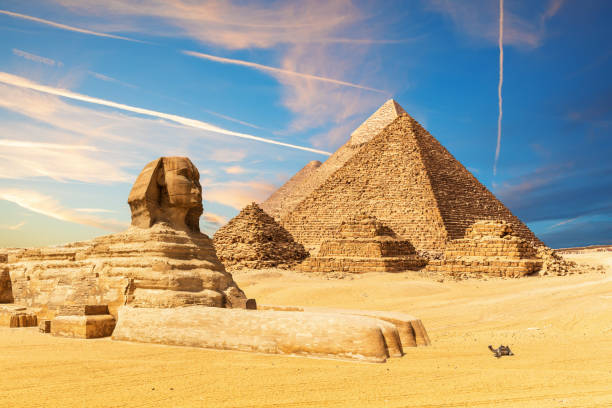
Rising from the Egyptian desert like a geometric mountain, the Great Pyramid of Giza has fascinated humanity for more than four thousand years.
Built during the reign of Khufu around 2560 BCE, the pyramid originally stood about 146 meters tall and was constructed from approximately 2.3 million stone blocks, some weighing several tons.
Egyptologists have proposed numerous explanations for how the pyramid was built. Evidence suggests that large teams of laborers—not slaves as once believed—quarried limestone blocks, transported them across the Nile, and dragged them up ramps toward the construction site.
Yet critical questions remain unresolved. No definitive blueprint of the ramp system has been found. Some stones were transported from quarries hundreds of kilometers away, raising questions about logistics and engineering precision.
The pyramid’s alignment with the cardinal directions is astonishingly accurate. Its sides deviate from true north by only a fraction of a degree. How ancient builders achieved such precision with limited tools remains debated.
Modern archaeology continues to reveal new chambers and hidden voids within the structure using muon tomography and other scanning technologies. But the complete story of its construction still eludes us.
The pyramid stands as both an achievement and a riddle carved in stone.
2. The Disappearance of the Indus Valley Civilization
More than four thousand years ago, a sophisticated civilization flourished along the Indus River in what is now Pakistan and northwest India. Cities such as Mohenjo-daro and Harappa displayed remarkable urban planning.
These cities featured grid-based streets, advanced drainage systems, standardized brick sizes, and long-distance trade networks stretching across Asia.
Then the civilization faded.
Around 1900 BCE, urban centers were gradually abandoned. Trade declined, writing disappeared, and population patterns shifted.
One of the biggest obstacles to understanding the Indus civilization is its undeciphered writing system. Hundreds of symbols appear on seals and artifacts, but no bilingual inscription—like the Rosetta Stone—has been found.
Several theories attempt to explain the collapse. Climate change may have altered monsoon patterns. Rivers may have shifted course, disrupting agriculture. Some scholars suggest social or economic transformation rather than sudden collapse.
Without deciphering the script, the voices of the Indus people remain silent.
An entire civilization flourished and vanished, leaving behind cities but no readable story.
3. The Purpose of Stonehenge
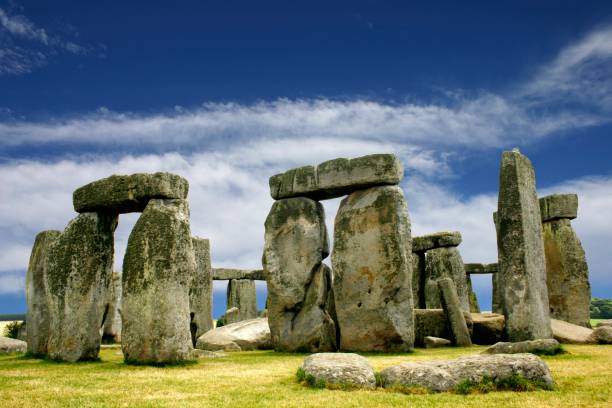
On a grassy plain in southern England stands one of the most recognizable prehistoric monuments in the world: Stonehenge.
The structure was built in stages between roughly 3000 BCE and 1600 BCE. Massive stones weighing up to 25 tons were transported from quarries many kilometers away. Some smaller “bluestones” came from Wales, over 200 kilometers distant.
The monument aligns with the sunrise of the summer solstice and the sunset of the winter solstice, suggesting astronomical significance.
But what was its purpose?
Archaeologists have proposed several possibilities. It may have been a ceremonial center, a burial site, an astronomical observatory, or a place for healing rituals.
Excavations have revealed human cremation remains and evidence of large gatherings. Yet the precise meaning of the monument within the culture that built it remains uncertain.
Stonehenge raises a deeper question about prehistoric societies: how communities without metal tools or written language organized such monumental construction.
The stones endure. Their meaning remains partially hidden in the distant past.
4. The Voynich Manuscript
Among the most puzzling books ever discovered is the Voynich Manuscript.
Dating to the early 15th century, the manuscript is filled with mysterious writing and strange illustrations. Pages depict unfamiliar plants, astronomical diagrams, bathing women, and elaborate biological imagery.
The script has defied all attempts at decipherment. Linguists, cryptographers, computer scientists, and historians have spent decades analyzing it.
Some believe it represents a natural language encoded in an unknown script. Others suspect it might be an elaborate cipher. A few researchers have even proposed that it could be a sophisticated hoax.
Radiocarbon dating confirms the parchment is genuine medieval material. Statistical analysis suggests the text has structure similar to real languages.
Yet no one can read it.
Until its script is decoded, the manuscript remains a silent book—an entire world of knowledge locked behind an unbroken code.
5. The Disappearance of the Maya Civilization
In the dense jungles of Central America lie the ruins of cities once inhabited by the ancient Maya civilization.
At their peak between 250 and 900 CE, the Maya built towering pyramids, developed complex calendars, and mastered astronomy and mathematics.
Then many of their great cities—such as Tikal—were abandoned.
The so-called Classic Maya collapse remains one of archaeology’s greatest mysteries.
Unlike sudden disasters, the decline appears gradual and regionally varied. Evidence suggests a combination of factors: prolonged drought, environmental degradation, warfare, and political instability.
Tree-ring data and sediment analysis indicate severe droughts may have played a role. Overpopulation may have strained agricultural systems.
Yet the Maya people themselves did not disappear. Millions of their descendants still live across Mexico and Central America.
What collapsed was not the culture but the network of urban centers.
The mystery lies in how such an advanced civilization unraveled—and why recovery never restored those cities to their former prominence.
6. The Fate of the Roanoke Colony
In 1587, English settlers established a colony on Roanoke Island in present-day North Carolina.
Three years later, when supply ships returned, the colony had vanished.
No bodies were found. No signs of battle appeared. The only clue was a word carved into a wooden post: “CROATOAN.”
The lost colony of Roanoke Colony has puzzled historians for centuries.
One theory suggests the colonists integrated with local Indigenous groups. Archaeological evidence indicates some English artifacts appeared in nearby native communities.
Other possibilities include disease, famine, relocation, or conflict.
Because the colony disappeared during a time of limited documentation, definitive answers remain elusive.
The settlers stepped into history—and then disappeared from it.
7. The Nazca Lines
Across the arid plains of southern Peru stretch enormous geoglyphs known as the Nazca Lines.
These figures include animals, geometric shapes, and long straight lines etched into the desert surface. Some extend hundreds of meters and are best visible from the air.
Created between roughly 500 BCE and 500 CE by the Nazca culture, the lines were formed by removing dark surface stones to reveal lighter soil beneath.
Why were they made?
Some researchers believe they had astronomical significance. Others argue they were ritual pathways connected to water ceremonies in an extremely dry environment.
Recent studies suggest that some figures may have marked pilgrimage routes or symbolic connections between communities and deities.
Despite decades of research, the full cultural meaning of the Nazca Lines remains uncertain.
The desert preserved them perfectly. Their message is still being deciphered.
8. The Antikythera Mechanism
In 1901, divers exploring a shipwreck off the Greek island of Antikythera discovered a remarkable device.
Now known as the Antikythera mechanism, it dates to around 100 BCE and contains dozens of bronze gears arranged in a complex mechanical system.
Advanced imaging techniques revealed that the device functioned as an astronomical calculator capable of predicting eclipses, tracking planetary cycles, and modeling the motions of the Sun and Moon.
Its complexity rivals mechanical clocks that would not appear in Europe until more than a thousand years later.
The mechanism raises profound questions. Who built it? How widespread was this level of mechanical technology in ancient Greece? And why did such sophisticated engineering disappear for centuries?
It suggests that ancient technological knowledge may have been far more advanced—and perhaps more fragile—than once believed.
9. The Location of Cleopatra’s Tomb
Few figures from antiquity captivate the imagination like Cleopatra VII.
After her defeat by Roman forces led by Octavian in 30 BCE, Cleopatra reportedly died by suicide, possibly through an asp bite.
Ancient accounts claim she was buried with Mark Antony in a lavish tomb.
Yet despite centuries of searching, the tomb has never been found.
Archaeologists believe it may lie somewhere near Alexandria, possibly submerged beneath the Mediterranean due to earthquakes and coastal subsidence.
Finding the tomb would be one of the greatest discoveries in archaeology. For now, the resting place of Egypt’s most famous queen remains hidden.
10. The Lost City of Atlantis
The legend of Atlantis originates with the Greek philosopher Plato.
In his dialogues, Plato described a powerful island civilization that existed thousands of years earlier before being destroyed by earthquakes and floods in a single day and night.
Some scholars believe Atlantis was purely fictional, intended as a philosophical allegory about the rise and fall of societies.
Others speculate it may have been inspired by real events, such as the eruption of Thera around 1600 BCE, which devastated the Minoan civilization.
Despite countless searches across oceans and continents, no definitive evidence of Atlantis has been found.
The mystery persists because the story blends mythology, philosophy, and historical possibility.
Atlantis exists somewhere between imagination and memory.
11. The Identity of Jack the Ripper
In 1888, a series of brutal murders terrorized London’s Whitechapel district.
The killer became known as Jack the Ripper.
Despite extensive investigations, the murderer’s identity was never confirmed.
Over the decades, numerous suspects have been proposed, ranging from doctors to artists to members of the royal family. Modern forensic analysis has attempted to examine DNA from letters and evidence, but the results remain disputed.
The case fascinates historians and criminologists because it occurred at the dawn of modern policing.
Jack the Ripper vanished into anonymity, leaving behind one of the most infamous unsolved crimes in history.
12. The Collapse of the Easter Island Civilization
In the remote Pacific Ocean lies Easter Island, home to the iconic stone statues called moai.
These towering figures were carved by the Rapa Nui people between roughly 1200 and 1600 CE.
For years, scholars believed the island’s civilization collapsed due to ecological destruction caused by deforestation.
More recent research suggests the story may be more complex. The society may have remained stable until European contact brought disease, slavery, and disruption.
How the statues were transported across the island—some weighing more than 70 tons—remains a fascinating engineering puzzle.
Easter Island illustrates how fragile historical narratives can be. Even when evidence exists, interpretation continues to evolve.
13. The Disappearance of the Ark of the Covenant
According to biblical tradition, the Ark of the Covenant contained the stone tablets of the Ten Commandments.
The Ark was housed in the Temple of Jerusalem until it vanished from historical records around the time of the Babylonian conquest in 586 BCE.
Since then, numerous theories have emerged. Some claim it was hidden before the temple’s destruction. Others believe it was taken to Ethiopia, where a church in Aksum claims to guard it.
No verified archaeological evidence has confirmed the Ark’s location.
For historians and archaeologists, the Ark represents the intersection of faith, legend, and historical investigation.
14. The Dyatlov Pass Incident
In 1959, nine experienced hikers died under mysterious circumstances in Russia’s Ural Mountains near what is now called Dyatlov Pass.
Their tent was found cut open from the inside. Some hikers had fled into the snow barefoot. Others suffered severe injuries.
Initial investigations were inconclusive.
Modern scientific analysis suggests a rare type of avalanche may have triggered panic, forcing the hikers to flee. Computer modeling has demonstrated how slab avalanches could occur under specific conditions.
Yet questions remain about some injuries and unusual circumstances.
The Dyatlov Pass incident remains one of the most haunting mysteries of modern exploration.
15. The Origin of the Sea Peoples
Around 1200 BCE, powerful civilizations across the eastern Mediterranean collapsed during a period known as the Late Bronze Age Collapse.
Ancient Egyptian records refer to invading groups called the Sea Peoples.
These mysterious raiders attacked coastal cities and disrupted trade networks throughout the region.
The origins of the Sea Peoples remain uncertain. They may have been displaced populations from the Aegean, refugees from climate disruptions, or coalitions of maritime warriors.
Their invasions contributed to the fall of several major civilizations, including the Hittite Empire.
Yet despite their enormous historical impact, their exact identity and homeland remain unclear.
The Enduring Power of Mystery
Modern science has transformed our understanding of the past. Archaeology uncovers buried cities. DNA analysis reconstructs migrations. Satellite imagery reveals hidden structures beneath forests and deserts.
Yet history still contains vast blank spaces.
Every unanswered question reminds us that the past is not fully known. It is a puzzle constantly being reassembled from fragments—bones, pottery, inscriptions, ruins, and stories passed through generations.
The mysteries explored here endure not because humanity lacks intelligence, but because time erases evidence. Documents decay. Cities crumble. Languages vanish.
And yet curiosity persists.
Every excavation, every new scanning technology, every deciphered inscription brings us closer to understanding our ancestors. Somewhere beneath sand, ice, forests, or oceans, answers may still lie waiting.
History is not finished. It is still being discovered.