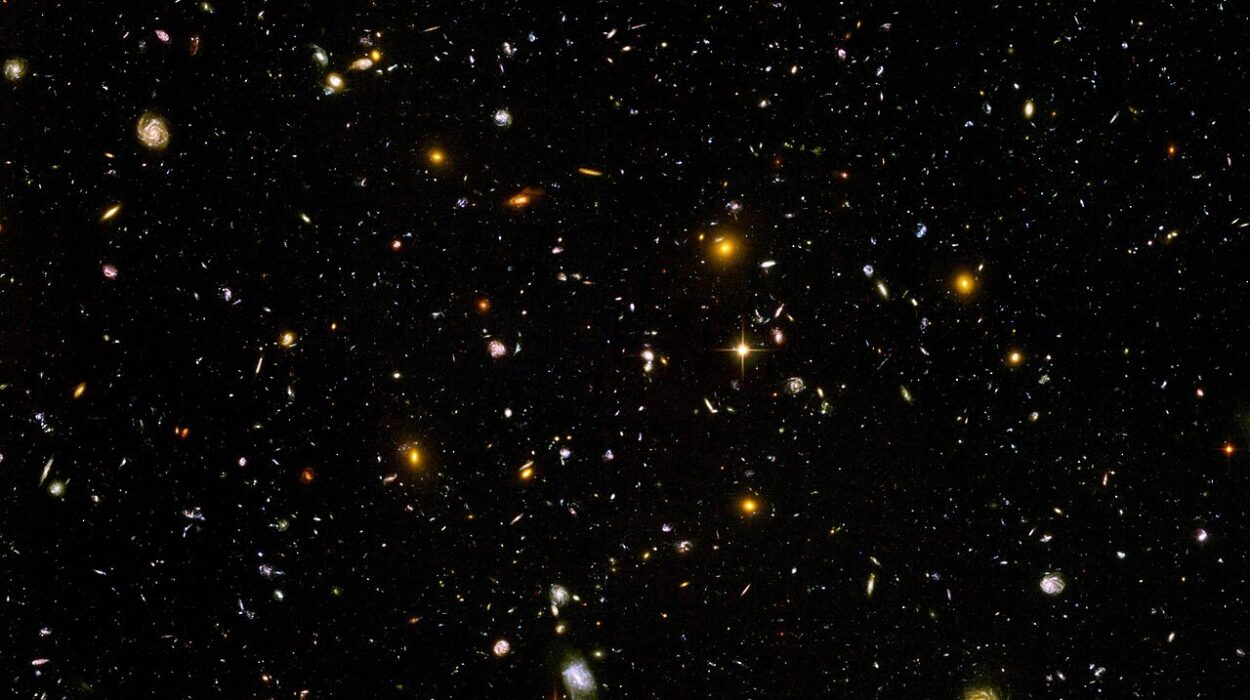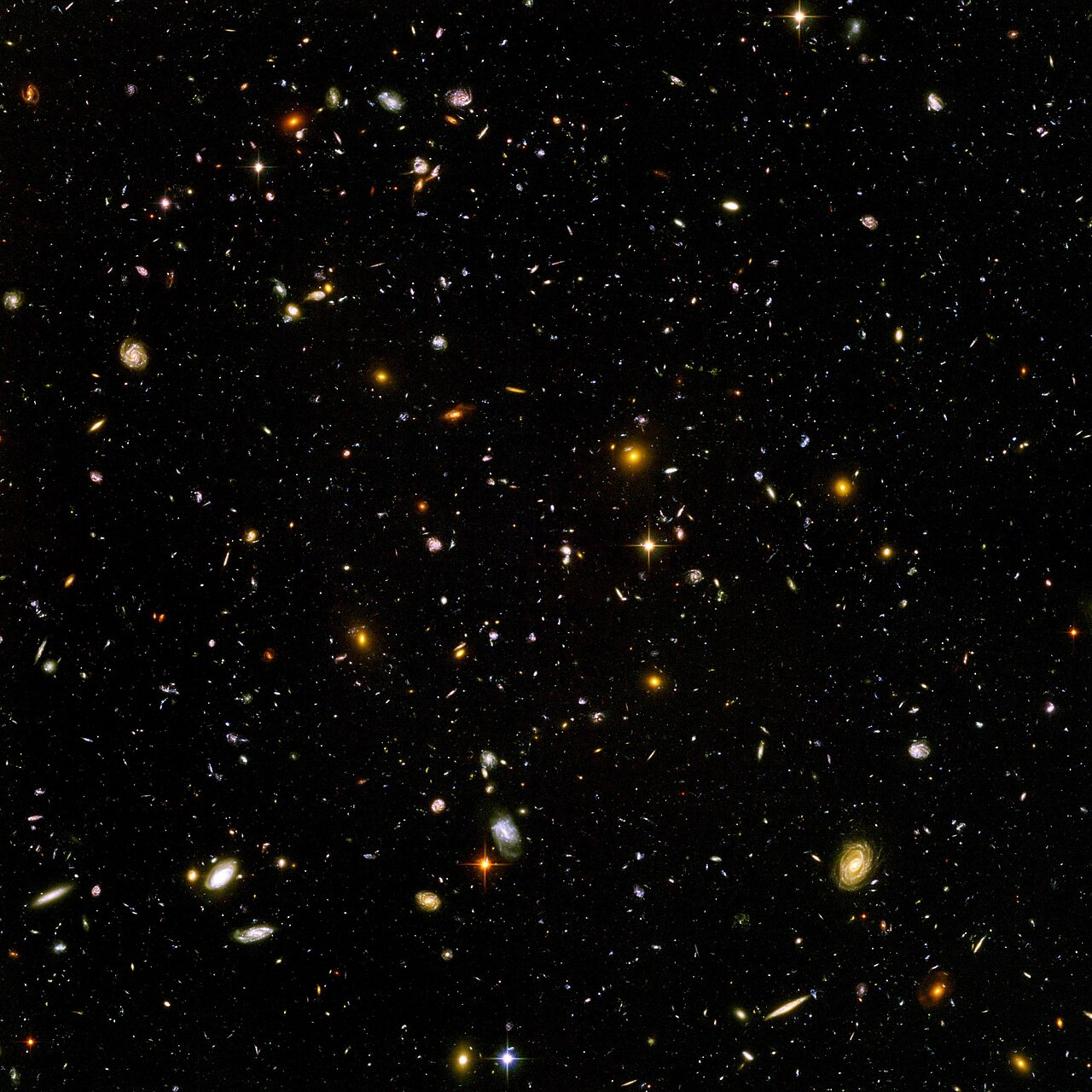
Deep space begins where familiar boundaries fade away. It stretches far beyond the planets, beyond the comforting glow of our Sun, and into a vast cosmic ocean where galaxies drift like distant islands. For centuries, humans have gazed upward and imagined the stars as quiet, steady lights scattered across the sky. But modern astronomy has revealed something far more astonishing. The universe is not calm or simple. It is dynamic, violent, mysterious, and often deeply perplexing.
The deeper scientists peer into space, the stranger reality becomes. Giant explosions outshine entire galaxies. Invisible matter shapes cosmic structures. Time itself behaves differently in extreme environments. Even the emptiest regions of space are not truly empty.
Despite extraordinary technological achievements—space telescopes, interplanetary probes, gravitational-wave detectors—many of the universe’s most profound secrets remain unresolved. Each discovery opens new questions, and sometimes those questions are more mysterious than the answers.
Below are ten mysterious facts about deep space that reveal just how strange, beautiful, and unsettling the cosmos truly is.
1. Most of the Universe Is Invisible
One of the most shocking discoveries in modern astronomy is that the universe we can see is only a tiny fraction of what actually exists.
Every star, planet, nebula, and galaxy—the glowing objects visible through telescopes—represents less than five percent of the total content of the universe. The remaining ninety-five percent consists of two invisible components known as dark matter and dark energy.
Dark matter does not emit, absorb, or reflect light, making it impossible to observe directly with telescopes. Yet astronomers know it exists because of its gravitational effects. Galaxies rotate too quickly for the visible matter inside them to hold together. Something unseen must be providing additional mass and gravitational pull.
Even more mysterious is dark energy. Observations of distant supernovae have shown that the expansion of the universe is accelerating. Instead of slowing down under gravity, galaxies are moving away from each other faster over time. This acceleration is attributed to dark energy, an unknown form of energy that permeates space itself.
Together, dark matter and dark energy dominate the cosmos. In other words, nearly everything in the universe is something we cannot directly detect or fully understand.
Deep space is not simply filled with stars. It is mostly composed of something entirely unknown.
2. The Universe Is Expanding Faster Than Expected
In the early twentieth century, astronomers discovered that galaxies are moving away from us. This observation revealed that the universe itself is expanding. The farther a galaxy is from Earth, the faster it appears to recede.
This expansion is described by the Hubble constant, which measures the rate at which space stretches over time. However, modern measurements of the Hubble constant have produced an unsettling mystery.
Different methods of calculating the expansion rate yield different results. Measurements based on observations of the early universe—using the cosmic microwave background radiation—suggest one value. Measurements based on observations of nearby galaxies and supernovae suggest a higher value.
This discrepancy is known as the “Hubble tension.” It implies that something in our current understanding of cosmology might be incomplete or incorrect. Perhaps unknown physical processes occurred in the early universe. Perhaps dark energy behaves differently than expected.
Whatever the explanation, the universe is expanding in ways we do not yet fully understand.
3. Black Holes Can Warp Time
Black holes are among the most extreme objects in the universe. They form when massive stars collapse under their own gravity, compressing matter into incredibly dense regions.
Near a black hole, gravity becomes so intense that it warps space and time themselves. According to Einstein’s theory of general relativity, time slows down in strong gravitational fields. This effect is known as gravitational time dilation.
For an observer far from a black hole, a clock near the event horizon would appear to tick slower and slower. From their perspective, time nearly stops at the boundary where escape becomes impossible.
Inside the event horizon, the structure of spacetime becomes so distorted that all possible paths lead toward the singularity at the center. The laws of physics as we know them break down in these regions.
Black holes demonstrate that time is not an absolute, universal flow. In deep space, time itself can stretch, slow, and behave in ways that challenge our everyday intuition.
4. The Coldest Places in the Universe Are Almost Absolute Zero
Space may appear dark and empty, but temperature still exists there. The average temperature of deep space is about 2.7 degrees above absolute zero, corresponding to the faint afterglow of the Big Bang known as the cosmic microwave background radiation.
Absolute zero is the theoretical temperature at which atomic motion nearly stops. At 2.7 Kelvin, particles in deep space move extremely slowly.
Some regions are even colder. Vast molecular clouds—where stars are born—can have temperatures just a few degrees above absolute zero. In these frozen environments, atoms and molecules drift slowly, sometimes combining into complex chemical structures.
Despite the cold, these clouds are also the birthplaces of stars and planetary systems. Gravity slowly gathers gas and dust, eventually igniting nuclear fusion in newly formed stars.
In the quiet cold of deep space, the seeds of cosmic creation emerge.
5. Cosmic Explosions Can Outshine Entire Galaxies
The universe is capable of releasing unimaginable amounts of energy in extremely short periods of time. Among the most powerful events known are gamma-ray bursts.
Gamma-ray bursts occur when massive stars collapse into black holes or when neutron stars collide. In just seconds, they can release more energy than the Sun will produce in its entire lifetime.
For a brief moment, a gamma-ray burst can outshine an entire galaxy containing billions of stars.
These bursts are detected as intense flashes of high-energy radiation from distant galaxies. Some originate billions of light-years away, meaning their signals began traveling toward Earth long before our solar system even formed.
Although these explosions are extraordinarily powerful, they are also rare and usually far away. Still, they demonstrate how violent and energetic deep space can be.
6. The Universe Contains Gigantic Cosmic Voids
When astronomers map the large-scale structure of the universe, they discover that galaxies are not evenly distributed. Instead, they form vast filaments and clusters, creating a structure often described as the cosmic web.
Between these filaments lie enormous regions called cosmic voids. These voids contain very few galaxies and can span hundreds of millions of light-years.
Inside a cosmic void, the night sky would look dramatically different. With few nearby galaxies, the universe would appear much darker.
The existence of these vast empty regions raises intriguing questions about how matter formed structures after the Big Bang. Gravity pulled matter into clusters and filaments, leaving voids behind.
These immense cosmic gaps remind us that the universe is not just full of galaxies—it is also defined by enormous emptiness.
7. Some Stars Are Older Than Entire Galaxies
Stars are often associated with youth and energy, but some of them are incredibly ancient.
Certain stars in the Milky Way’s halo are estimated to be nearly as old as the universe itself. These stars formed shortly after the Big Bang, when the first generations of stellar objects ignited.
These ancient stars contain extremely low amounts of heavy elements. Early in cosmic history, the universe contained mostly hydrogen and helium. Heavier elements were produced later inside stars through nuclear fusion and supernova explosions.
Studying these ancient stars allows astronomers to glimpse the earliest stages of cosmic evolution.
They are living fossils from a time when the universe was young and galaxies were still forming.
8. The Largest Structures in the Universe Are Almost Incomprehensible
Deep space contains structures so vast that they challenge human imagination.
Galaxies group together into clusters, which themselves form superclusters. These massive assemblies stretch across hundreds of millions of light-years.
One of the largest known structures is the Hercules–Corona Borealis Great Wall, a gigantic region of galaxies that spans billions of light-years.
The existence of such enormous structures raises interesting questions about the uniformity of the universe. According to standard cosmological models, the universe should appear roughly uniform at the largest scales. Structures this large approach the limits of that assumption.
When we study these cosmic giants, we are looking at the architecture of the universe itself.
9. Neutron Stars Contain Matter in Exotic States
When massive stars explode as supernovae, their cores can collapse into neutron stars—objects so dense that a teaspoon of their material would weigh billions of tons on Earth.
Inside a neutron star, gravity compresses matter to extraordinary densities. Atoms are crushed together until electrons merge with protons, forming neutrons.
The interior of a neutron star may contain exotic states of matter that cannot be produced in laboratories. Some theories suggest the presence of quark matter, where particles normally confined inside protons and neutrons exist freely.
Neutron stars also possess extremely strong magnetic fields and can rotate hundreds of times per second.
These strange objects represent natural laboratories where the laws of physics are pushed to their limits.
10. The Observable Universe Has a Cosmic Horizon
Even with the most powerful telescopes, we cannot see everything in the universe. There is a limit to how far we can observe, known as the observable universe.
Light travels at a finite speed, and the universe has a finite age. This means that light from extremely distant regions has not had enough time to reach us.
The observable universe extends about 46 billion light-years in every direction. Beyond this horizon, there may be countless galaxies and structures—but their light has not yet arrived.
Because the universe continues expanding, some regions may remain forever beyond our observational reach.
This cosmic horizon reminds us that our knowledge of the universe, though vast, may represent only a small portion of a much larger reality.
The Endless Mystery of the Cosmos
Deep space is not just a distant backdrop to our existence. It is a realm filled with astonishing phenomena, hidden forces, and unanswered questions.
Invisible matter shapes galaxies. Time bends around black holes. Stars explode with unimaginable power. Entire regions of the universe lie forever beyond our view.
And yet, despite all these mysteries, humanity continues to explore. Telescopes grow more powerful, spacecraft venture farther, and new technologies reveal deeper layers of cosmic reality.
The universe does not easily reveal its secrets. But every discovery—every faint signal from deep space—brings us one step closer to understanding the grand story of existence.
In the end, the greatest mystery may not be the universe itself.
It may be that a species on a small blue planet has developed the curiosity and intelligence to ask these questions at all.