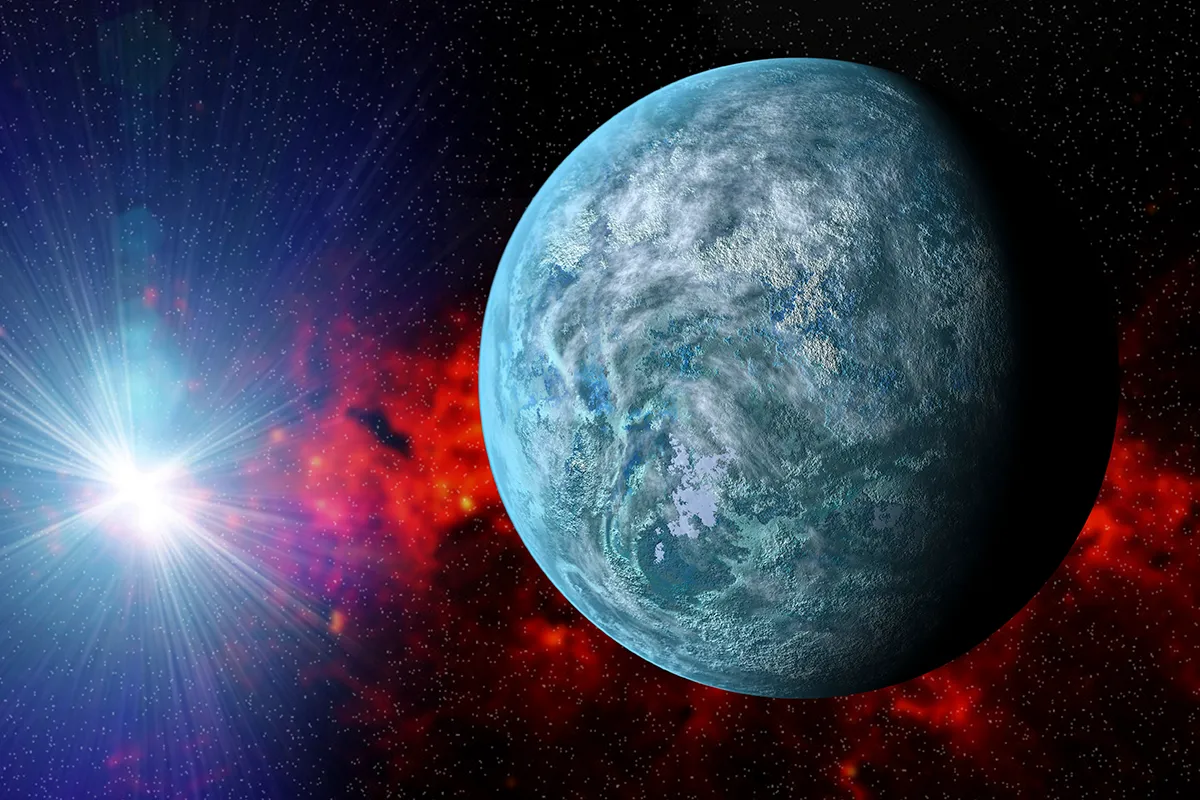
Among the many surprises delivered by modern astronomy, few are as striking as the discovery of super-Earths. These planets, larger than Earth yet smaller than Neptune, appear to be one of the most common outcomes of planet formation in our galaxy. They orbit close to their parent stars, exist in a wide range of temperatures, and display remarkable diversity in composition and structure. And yet, despite their apparent abundance elsewhere, our own Solar System contains none. This absence is not a trivial curiosity. It is a profound clue about how planets form, migrate, and survive, and about why our planetary home looks the way it does.
To ask why super-Earths are missing from our Solar System is to ask a deeper question about cosmic chance and necessity. Did something unusual happen here, or are we simply one outcome among many possible planetary architectures? The answer, still unfolding, lies at the intersection of observation, theory, and a growing appreciation for the complexity of planetary systems.
What Astronomers Mean by Super-Earths
The term “super-Earth” is deceptively simple. It does not imply that these planets are Earth-like in the everyday sense of oceans, continents, or life. Instead, it refers primarily to mass and size. Super-Earths typically have masses between about two and ten times that of Earth, and radii up to roughly twice Earth’s radius. Beyond these broad limits, their properties can vary dramatically.
Some super-Earths appear to be rocky, with dense interiors composed largely of iron and silicate minerals. Others are enveloped in thick layers of gas or volatile-rich material, blurring the line between terrestrial planets and mini-Neptunes. This diversity suggests that “super-Earth” is not a single type of world but a category encompassing multiple evolutionary pathways.
What unites them is their statistical prominence. Surveys of exoplanets have revealed that super-Earths are far more common than gas giants like Jupiter and Saturn, and perhaps even more common than Earth-sized planets. From a galactic perspective, they may represent the default outcome of planet formation. This makes their absence from our Solar System all the more striking.
The Discovery That Changed Planetary Science
Before the discovery of exoplanets, theories of planet formation were largely based on a single example: our own Solar System. In this framework, small rocky planets formed close to the Sun, gas giants formed farther out, and icy bodies populated the outer regions. This tidy arrangement seemed natural, even inevitable.
The first confirmed detections of exoplanets in the 1990s shattered this sense of inevitability. Astronomers found giant planets orbiting extremely close to their stars, worlds unlike anything in our Solar System. As detection methods improved, a new pattern emerged. Many stars hosted planets with sizes between Earth and Neptune, often packed into tight, compact systems. These were the super-Earths.
The sheer number of such planets forced a reevaluation of long-standing ideas. If super-Earths are so common elsewhere, why did none form here, or why did none survive? The Solar System, once considered a typical planetary system, began to look increasingly unusual.
How Super-Earths Form
Understanding the absence of super-Earths requires first understanding how they form. Planet formation begins in a protoplanetary disk, a rotating disk of gas and dust surrounding a young star. Within this disk, microscopic grains collide and stick together, gradually growing into larger bodies. Over time, these bodies can become planetary embryos and, eventually, full-fledged planets.
In many models, super-Earths form efficiently in the inner regions of the disk. There, solid material is abundant enough to build massive rocky cores relatively quickly. If these cores form before the disk gas dissipates, they may also accrete gaseous envelopes, becoming volatile-rich super-Earths or mini-Neptunes.
Another pathway involves migration. Planets may form farther out in the disk and then move inward due to gravitational interactions with the disk gas. This inward migration can lead to the accumulation of multiple planets in close orbits, a configuration commonly observed in super-Earth systems.
These processes appear to be common in the galaxy. The puzzle, then, is not how super-Earths form, but why these processes did not produce such planets in our Solar System.
The Role of Jupiter: Guardian or Disruptor
One of the most compelling explanations centers on Jupiter. As the most massive planet in our Solar System, Jupiter exerts a powerful gravitational influence. Its early formation may have fundamentally altered the architecture of the planetary system.
In some models, Jupiter formed relatively quickly and acted as a barrier to inward migration. By opening a gap in the protoplanetary disk, Jupiter could have prevented material from the outer disk from flowing inward. This would have starved the inner Solar System of the mass needed to build super-Earths, limiting planet growth to smaller, Earth-sized bodies.
Another possibility is more dramatic. Jupiter may have migrated inward early in its history before reversing course and moving outward again. This scenario, sometimes referred to as the “Grand Tack,” suggests that Jupiter’s movement reshaped the distribution of material in the inner Solar System. By scattering and depleting solid material, Jupiter could have disrupted the formation of large inner planets.
In both cases, Jupiter’s presence plays a central role. Rather than simply being a distant gas giant, Jupiter may have acted as an architect, sculpting the inner Solar System and preventing the emergence of super-Earths.
Saturn and the Dynamics of Migration
Jupiter did not act alone. Saturn, the second-largest planet, also influenced the early Solar System. The gravitational interaction between Jupiter and Saturn could have stabilized their orbits and shaped their migration paths. Together, these two giants may have created a dynamic environment that differed markedly from systems lacking such massive outer planets.
In planetary systems without Jupiter-like giants, inward migration of super-Earths may proceed unhindered, leading to tightly packed inner systems. In contrast, the combined gravitational effects of Jupiter and Saturn could have disrupted or halted such migration in our Solar System.
This highlights an important point: planetary systems are not assembled piece by piece in isolation. They emerge as interconnected systems, where the fate of one planet is tied to the presence and timing of others. The absence of super-Earths may thus be an emergent property of the Solar System as a whole.
Timing Is Everything: The Importance of Disk Lifetimes
The formation of planets unfolds against the backdrop of a protoplanetary disk that exists only for a limited time. Typically, the gas component of such disks dissipates within a few million years. This timescale is crucial, because it determines how much material is available for planet growth and migration.
If the inner Solar System lost its gas relatively early, this could have limited the growth of planetary embryos. Without gas, migration slows dramatically, and the accretion of thick atmospheres becomes impossible. In this scenario, Earth and its neighboring planets may represent the largest bodies that could form before the disk vanished.
In contrast, systems that retain gas longer may allow inner planets to grow larger and migrate inward, forming super-Earths. Small differences in disk lifetime, driven by factors such as stellar radiation and disk mass, could thus lead to dramatically different planetary outcomes.
Collisions, Chaos, and Planetary Survival
Planet formation is not a gentle process. It involves countless collisions, some constructive and others destructive. In the inner Solar System, the final assembly of terrestrial planets likely involved a series of giant impacts between planetary embryos. These collisions shaped the masses, compositions, and orbits of the planets we see today.
It is possible that super-Earth-sized bodies did form early in the Solar System, only to be destroyed or ejected through violent interactions. Gravitational perturbations from Jupiter and Saturn could have destabilized inner orbits, leading to collisions that broke large bodies apart or flung them into the Sun.
While direct evidence for such lost planets is difficult to obtain, simulations suggest that early planetary systems can be highly chaotic. The absence of super-Earths today does not necessarily mean they never existed. It may mean that they were casualties of a turbulent youth.
The Inner Solar System’s Fine Balance
Earth occupies a delicate position. Its mass is large enough to retain an atmosphere and support geological activity, yet small enough to avoid becoming a gas-dominated world. This balance may be a consequence of the same processes that prevented super-Earth formation.
In systems with super-Earths, inner planets often orbit very close to their stars, receiving intense radiation. Such environments can strip atmospheres or lead to extreme surface conditions. The relatively moderate orbits of Earth and Venus may reflect a different evolutionary pathway, one that favored long-term stability over rapid growth.
This perspective reframes the absence of super-Earths not as a deficiency, but as a defining feature that may have enabled the emergence of habitable conditions. While life could, in principle, exist on super-Earths, the specific combination of mass, composition, and orbit that characterizes Earth may be less common in systems dominated by large inner planets.
Super-Earth Atmospheres and Interior Worlds
Studies of super-Earths have revealed that many possess thick atmospheres, often rich in hydrogen and helium. These envelopes can significantly alter surface conditions, creating high pressures and temperatures. Even rocky super-Earths may experience extreme environments due to their strong gravity and internal heat.
The interiors of super-Earths are also likely to differ from Earth’s. Higher pressures can lead to exotic mineral phases and altered mantle dynamics. Plate tectonics, a key driver of Earth’s climate stability, may or may not operate in the same way on more massive planets.
These differences underscore that super-Earths are not simply scaled-up versions of our planet. Their prevalence elsewhere does not imply that Earth-like conditions are rare, but it does highlight the diversity of planetary outcomes.
Observational Bias and the Illusion of Absence
While the absence of super-Earths in our Solar System is real, it is worth acknowledging the role of observational bias in shaping our perspective. Exoplanet detection methods are most sensitive to large planets close to their stars. As a result, super-Earths in tight orbits are easier to detect than Earth analogs in wider orbits.
This bias may exaggerate the apparent dominance of super-Earths in the galaxy. Earth-sized planets at Earth-like distances are more difficult to find, and many may remain undetected. The Solar System may not be as unusual as it seems, but rather one example among a spectrum of possibilities.
Even so, the data collected so far strongly suggest that super-Earths are genuinely common. Their absence here remains a meaningful clue, even if our statistical picture continues to evolve.
Comparing Planetary Architectures
When astronomers compare planetary systems, a striking pattern emerges. Many systems feature multiple super-Earths packed into close orbits, often with near-resonant periods. These systems appear dynamically calm today, but their formation likely involved significant migration and interaction.
The Solar System, by contrast, exhibits wide orbital spacing and a clear separation between small inner planets and large outer giants. This architecture may be less common, but it is not unique. Other systems with similar configurations have been identified, suggesting that multiple evolutionary pathways are possible.
Understanding why some systems end up with super-Earths while others do not requires statistical studies across many stars. These comparisons help disentangle the roles of stellar mass, disk properties, and early dynamical events.
Implications for Habitability and Life
The absence of super-Earths has important implications for the search for life. If super-Earths dominate planetary systems, does this mean that Earth-like planets are rare? Or does it mean that habitable environments can arise in a wider range of planetary contexts?
Some super-Earths may possess stable climates and liquid water, especially if they orbit within the habitable zone of their stars. Their larger masses could allow them to retain atmospheres and sustain geological activity for long periods. On the other hand, thick atmospheres and high pressures could also inhibit habitability.
The Solar System’s configuration, with modestly sized terrestrial planets and distant gas giants, may represent one pathway to habitability. Whether it is a common or rare pathway remains an open question, one that drives much of modern exoplanet research.
The Solar System as a Case Study in Chance
The emerging picture suggests that the Solar System’s lack of super-Earths is not the result of a single factor, but of a confluence of circumstances. The timing of Jupiter’s formation, the dynamics of migration, the lifetime of the protoplanetary disk, and the chaotic nature of early collisions all played roles.
This complexity highlights the role of chance in planetary evolution. Small differences in initial conditions can lead to vastly different outcomes. In this sense, the Solar System is not a template, but a case study, illustrating one way that nature can assemble a planetary system.
Recognizing this contingency does not diminish the importance of physics. On the contrary, it emphasizes the need for detailed models that account for interactions and feedbacks. Physics provides the rules, but the outcome depends on how those rules play out in specific circumstances.
Ongoing Questions and Future Discoveries
Despite significant progress, many questions remain unanswered. Did super-Earths ever form in the early Solar System? How common are Jupiter-like giants, and how often do they influence inner planet formation? What determines whether a system ends up with tightly packed super-Earths or widely spaced terrestrial planets?
Future observations will help address these questions. New telescopes and missions aim to detect smaller planets at greater distances from their stars, filling in gaps in our understanding. Improved measurements of exoplanet atmospheres and compositions will shed light on their formation histories.
As data accumulate, theories will be refined, and the Solar System’s place among planetary systems will become clearer. Each new discovery adds depth to the story, revealing both the diversity and the underlying unity of planetary formation.
A Quiet Rarity, or a Fortunate Outcome
The absence of super-Earths in our Solar System invites reflection as well as analysis. It reminds us that our planetary neighborhood is not a universal standard, but one outcome among many. This realization can be both unsettling and comforting. It challenges assumptions of typicality, yet it also underscores the richness of cosmic possibilities.
From one perspective, the lack of super-Earths may be a fortunate outcome, enabling the existence of stable, temperate worlds like Earth. From another, it is simply a natural consequence of the specific conditions that prevailed during the Solar System’s birth.
Either way, the question of missing super-Earths has transformed planetary science. It has shifted the focus from explaining a single system to understanding a population, from seeking inevitability to embracing diversity. In doing so, it has deepened our appreciation of the universe and of the delicate chain of events that led to our own existence.
Conclusion: Learning from What Is Not There
Super-Earths dominate the exoplanet census, yet their absence from our Solar System speaks volumes. It tells a story of early giants, shifting disks, and chaotic beginnings. It reveals how planetary systems are shaped not only by universal laws, but by timing, interaction, and chance.
By studying what is missing as carefully as what is present, astronomers gain insight into the processes that build worlds. The quiet space where super-Earths might have been is not empty of meaning. Instead, it is a window into the history of our cosmic home, a reminder that understanding the universe often begins with asking why things are the way they are, and why they might have been otherwise.